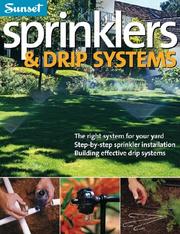
Start with Sunset's Sprinklers & Drip Systems, published as Sprinklers and Drip Systems, which is the clearest step-by-step homeowner guide to planning a layout, laying pipe, setting heads and wiring valves. Everything later on this list assumes you can already picture the hardware.
The thing most homeowners skip, and pay for later, is the middle problem. A system that runs is not a system that waters. Precipitation rate, distribution uniformity, matched precipitation between heads, friction loss along a run, and zoning to the flow you actually have at the meter are what decide whether a lawn ends up with dry arcs and a flooded corner. The general how-to books cover installation, the professional landscape-irrigation texts cover the sizing, and the rainwater and greywater books cover the supply. This path takes those in that order, assuming you have a yard, a hose bib and no system yet.
The installation manuals
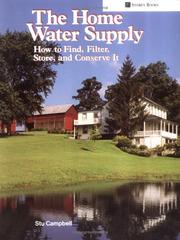
Sprinklers & Drip Systems is the starting point. Black and Decker the Complete Guide to Landscape Projects is a general yard-projects book whose irrigation chapters are unusually clear on trenching, sleeving under paths and tying into an existing supply — the parts Sunset assumes you know. Stu Campbell's The home water supply is the Storey classic on finding, storing, piping and pressurising water on a property, and it belongs at this stage because pressure and flow at the meter are the constraint that decides what system you can build at all. Most irrigation books begin after that question has been answered.
Drip, and using much less water
Robert Kourik's Drip irrigation for every landscape and all climates is still the best single home guide to emitter-based irrigation: emitter choice, spacing, filtration, and how to avoid the clogging that makes people give up on drip after one season. It is the anchor of this path. David Bainbridge's Gardening with less water covers buried clay pots, wicks, deep pipes and the other low-tech delivery methods that beat sprinklers on efficiency, and it makes the case that the right answer is often not a sprinkler system at all. Pam Penick's The water-saving garden is the design side — hydrozones, rain gardens, plant choice, and reducing the irrigated area in the first place, which is the largest single saving available. Sunset's Waterwise gardening is the older companion volume, useful mainly for its regional planting and watering-schedule tables; treat it as optional if the previous two have already answered your questions.
The design maths
Stephen Smith's Landscape Irrigation, published as Landscape Irrigation: Design and Management, is the readable professional text on the numbers: calculating what a head actually applies per hour, and zoning within your available gallons per minute. It is the single most useful upgrade over any homeowner guide and the reason many amateur systems water badly. Richard Choate's Turf irrigation manual is the long-standing industry manual on turf and landscape design, heavy on hydraulics tables and head-layout geometry — a reference to keep beside Smith rather than read through. Claude Pair's Sprinkler irrigation is the Sprinkler Irrigation Association's classic engineering reference. It is dated and agricultural in emphasis, and it is where the sprinkler-hydraulics conventions the homeowner books quote originally came from.
Where the water comes from
Brad Lancaster's Rainwater Harvesting For Drylands And Beyond takes a principles-first approach to catching water in the landscape before it ever reaches a tank; read it before buying storage, because most of his highest-value interventions are earthworks and cost almost nothing. Art Ludwig's Water Storage covers tanks, cisterns and ponds — sizing, materials, siting, and the plumbing needed to get stored water back into an irrigation system at usable pressure. Ludwig's The New Create an Oasis With Greywater is the standard guide to reusing laundry and shower water for landscape irrigation, including branched-drain designs and the health and plumbing-code constraints that decide whether an install is legal where you live.
Two practical notes the books all repeat: backflow prevention is a code requirement rather than an optional refinement, and greywater and rainwater rules vary enormously between jurisdictions, so check locally before you dig. Follow the full ordered path below for stage goals and study plans.
Follow the full ordered path here: Home Irrigation and Sprinkler Systems: The Best Books to Read First.
Ready to learn something deeply?
Build a reading path — free