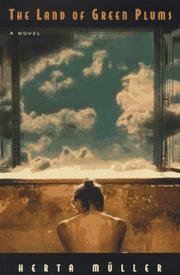
Start with The Land of Green Plums. It is the book the Nobel committee named in 2009 and, more usefully, it is the one with a followable through-line: four young people under Ceausescu, watched, interrogated, and picked off one at a time. There is a group of friends, there are consequences, and events happen in an order you can hold onto.
That last point is the whole reason this path exists. Müller's prose is fragmentary by design — images recur instead of scenes, sentences break where you expect them to continue, and the surveillance state is rendered in the syntax rather than explained in the plot. Done well, that is compression, and it is why she is worth reading. Encountered in the wrong book first, it reads as impenetrable, and readers conclude she is difficult for its own sake. The Land of Green Plums is the one that teaches you to read the others.
Start here
The Land of Green Plums (1994) works because the fear has a shape. People are followed, letters are opened, and friends die in ways the state calls suicide. The method is already fully present — the recurring objects, the flat declarative sentences that turn out to be metaphors — but there is enough narrative scaffolding to hold you while you learn it.
The village and the deportation
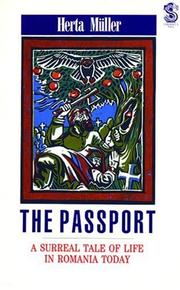
Then the two most concentrated works, in either order. The Passport is under a hundred pages and is the purest example of what she does: a village miller tries to buy his family's way out of Romania, and the book proceeds by images rather than by scenes. If you can read this one, you can read anything of hers.
The Hunger Angel (2009) is her hardest book and, most readers agree, her greatest. Five years in a Soviet labour camp, built from the testimony of the poet Oskar Pastior, who died before the book was finished. Hunger is given a voice of its own and addressed directly. Worth knowing: it emerged after publication that Pastior had been recruited as a Securitate informer, a fact Müller has written about herself, and it complicates the book without diminishing it.
Surveillance
The Appointment (1997) stays inside a single tram ride to a Securitate interrogation. That is the entire novel — the journey, and everything the narrator thinks on the way. It is the most claustrophobic thing on the list and it is short.
The Fox Was Ever the Hunter (1992) covers the last months of the regime, tracked through a fox-fur rug that is cut apart piece by piece while its owner is away. It is the most elliptical of the novels and the one most likely to lose a reader who came in cold, which is exactly why it sits this far down.
The beginning
Finish with Nadirs (1982), her debut: short pieces about the German-speaking Banat village in Romania where she grew up. Romanian censors cut it, an uncut edition appeared in Germany, and the resulting pressure is a large part of what forced her out of the country. As a first book it is bewildering. Read last, it explains the material everything else is made from.
Should you read her chronologically?
Chronological order starts with Nadirs and The Fox Was Ever the Hunter — the two most elliptical books — and that is precisely the sequence that produces readers who bounce off her. The gain from chronology here is small, because she is not an author whose method visibly develops; she arrives more or less fully formed and gets harder. Read for accessibility instead.
Where to stop
One book is a legitimate stopping point, and The Land of Green Plums is the one to have read. Two books, adding The Hunger Angel, gets you both of her registers: the political present and the historical catastrophe. If the fragmentary style has not converted you by then, the later books will not convert you either — they are more of it, not less. Her poetry and collage work exist in English in small editions and are outside what most readers can easily obtain.
More reading paths in world literature are on Discover.
Follow the full ordered path here: Herta Muller in Order: Where to Start with the Nobel Laureate of Ceausescu's Romania.