Best Books on Heat Transfer, in Reading Order
Heat transfer is taught in a fixed order for a good reason: conduction, then convection, then radiation, then the equipment that combines all three. This path follows that sequence but front-loads one readable history and the thermodynamics prerequisite, because students who arrive at the subject without a firm grip on the first and second laws spend the whole course confused about what an energy balance is. The middle stage is a single comprehensive textbook — pick one and work it — and the later stages are the mode-specific references practising engineers actually keep, ending with heat exchanger design and the transport-phenomena view that unifies the whole subject.
Orientation and the thermodynamics you need first
IntermediateBe fluent with the first and second laws, energy balances and property tables, and understand where the science of heat came from before treating it as a set of correlations.
▸ Study plan for this stage
Pace: Six to eight weeks, and the split is deliberately uneven. Einstein's Fridge (320 pages) is the one book in this path you read in an armchair — a week, no problems, no notes required. Çengel's Thermodynamics (992 pages) is the prerequisite and should be worked rather than read: five to seven weeks on
- The distinction that defines the whole path: thermodynamics answers how much energy moves and in which direction, heat transfer answers how fast — and students who blur the two spend a semester confused
- The closed-system and control-volume forms of the first law, and the discipline of drawing the boundary before writing anything down
- Property evaluation from tables and charts — saturated versus superheated states, quality, interpolation — which is the mechanical skill every later energy balance depends on
- The second law as a statement about direction and about the impossibility of certain devices, with Clausius and Kelvin-Planck as two faces of one claim
- Entropy generation and the entropy balance, which is the correct tool for locating irreversibility in a device rather than merely noting that it exists
- Carnot efficiency as the bound every real device is measured against, and the reason a heat exchanger with a large temperature difference is thermodynamically expensive even when it works
- The historical arc Sen traces from Carnot's engine through Clausius and Boltzmann to Shannon, which supplies the reason entropy has two apparently unrelated definitions
- Steady flow devices — nozzles, turbines, compressors, throttles and heat exchangers — analysed as control volumes, since the last of these is where this path ends up
- State the first law for a control volume with one inlet and one outlet, and say what each term means physically.
- Given a pressure and a temperature, how do you determine whether a substance is compressed liquid, saturated mixture or superheated vapour — and what do you do next in each case?
- Why does the Carnot efficiency depend only on the two reservoir temperatures, and what does that imply for a heat exchanger design?
- What is entropy generation, and how would you use an entropy balance to find the worst component in a plant?
- Sen traces two definitions of entropy to two different origins. What are they, and what connects them?
- Work at least twenty control-volume energy balance problems from Çengel until drawing the boundary and writing the balance is automatic. This is not optional preparation — it is the operation you will perform hundreds of times later.
- Take a steam turbine problem and solve it twice, once with the ideal-gas assumption and once from steam tables. The size of the discrepancy is the argument for property tables.
- Compute the entropy generation for a heat exchanger transferring a fixed duty across a small and then a large temperature difference. The result is the thermodynamic case for the design practice you will meet in the final stage.
- After Einstein's Fridge, write half a page on what Carnot actually proved without knowing what heat was. It is a useful reminder that the second law came before the mechanism.
Next up: With the first and second laws secure and control volumes automatic, the rate question can finally be asked properly — which is what the comprehensive course in the next stage exists to answer.

The one book here you read for pleasure rather than for problems: a history of thermodynamics from Carnot and Clausius through Boltzmann to information theory. It is not a heat transfer book, and it is placed first precisely because everything after it is a textbook — it gives the subject a story before it becomes a set of equations.

The prerequisite. Heat transfer answers 'how fast', but only after thermodynamics has answered 'how much' and 'in which direction'. Work the energy-balance and second-law chapters until closing a control volume is automatic; skim the cycles.
One comprehensive course, worked through
IntermediateSolve standard conduction, convection and radiation problems, use dimensionless groups and correlations correctly, and size a simple heat exchanger by LMTD and effectiveness-NTU.
▸ Study plan for this stage
Pace: Six to nine months, and this is the core of the path. Çengel and Ghajar (1,024 pages) is the gentlest entry and takes two to three months read normally with selected problems. Incropera and DeWitt (975 pages) is the one to work rather than read — three to four months, ten to fifteen problems per cha
- Fourier's law and the thermal resistance network: series and parallel resistances, contact resistance, and the reason a composite wall problem is really a circuit problem
- The lumped capacitance model and the Biot number that licenses it, then transient conduction proper via one-term approximations and Heisler charts, then separation of variables when the approximations fail
- The dimensionless groups and what each one physically compares: Reynolds, Prandtl, Nusselt, Grashof, Rayleigh, Peclet and Biot — knowing the ratio each represents is worth more than memorising any correlation
- External and internal flow correlations, entrance versus fully developed regions, and constant-wall-temperature versus constant-flux boundary conditions producing different Nusselt numbers
- Free convection as a coupled problem where the flow is driven by the heat transfer it carries, which is why Rayleigh number correlations behave differently from forced-flow ones
- Radiation fundamentals — blackbody emission, the Stefan-Boltzmann law, emissivity, view factors and the radiosity network for enclosures of gray diffuse surfaces
- Heat exchanger analysis by both routes: log mean temperature difference with its correction factor for a rating problem, and effectiveness-NTU when an outlet temperature is unknown
- Lienhard's contribution, which is honesty about provenance — correlations are fits to data with real scatter, often plus or minus twenty percent or worse, and treating them as exact is the most common error of a self-taught engineer
- Write Fourier's law and derive the thermal resistance of a plane wall, a cylindrical shell and a spherical shell.
- When is the lumped capacitance model valid, and what exactly is the Biot number comparing?
- What does the Prandtl number compare physically, and what does a Prandtl number of 0.01 versus 100 tell you about the two boundary layers?
- For internal flow, why do constant wall temperature and constant wall heat flux give different fully developed Nusselt numbers?
- When would you use effectiveness-NTU rather than LMTD, and why is the choice about what you know rather than about accuracy?
- How accurate is a typical convection correlation, and what should you do with that number in a design?
- Build a one-page correlation sheet in your own handwriting: for each geometry and regime, the correlation, its range of validity, and its stated accuracy. Rebuild it from memory at the end of the stage.
- Solve a full transient conduction problem three ways — lumped capacitance, one-term approximation, and separation of variables — and compare. The exercise shows you exactly what each simplification costs.
- Size the same heat exchanger by LMTD and by effectiveness-NTU and confirm the answers agree. If they do not, you have found your own misunderstanding, which is the point.
- Take one radiation enclosure problem with three surfaces and set up the full radiosity network by hand before solving it. Doing it once makes every later radiation problem readable.
- Pick five correlations you used in Incropera and find where Lienhard discusses their origin and uncertainty. Write one line each on how much you should now trust them.
Next up: A survey course gives you correlations that work inside their validity ranges; the next stage is for the problems that fall outside them, where you need the analysis rather than the fit.

The gentlest of the three standard texts and the best starting point if you are learning alone: physical explanations first, worked examples in abundance, mathematics kept in proportion. Read it before Incropera, not instead of it.
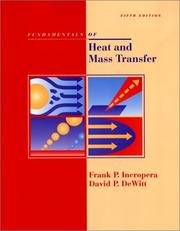
The standard text of the field, and the one whose notation, correlation tables and problem sets you will meet again everywhere else. This is the core of the path — work the problems rather than reading it, and treat the correlation summaries at each chapter's end as the reference you will keep.
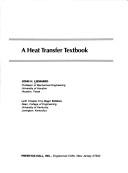
Placed third as the corrective: Lienhard is more physical and more honest about where correlations come from and how uncertain they are, and it is freely available from MIT. Read it after Incropera to understand why the equations you have been applying take the form they do.
Mode by mode, in depth
BeginnerHandle problems a survey text only gestures at — transient and multidimensional conduction, turbulent and buoyancy-driven convection, and participating-medium radiation.
▸ Study plan for this stage
Pace: A year or more, and this stage is a reference library rather than a reading list. Carslaw and Jaeger (510 pages) is a lookup volume — spend a week learning its organisation and its notation, then use it. Kays (601 pages) is the one to work through properly, two to three months. Bejan (704 pages) tak
- Carslaw and Jaeger as a catalogue of exact solutions to the heat equation, which is why a 1947 book has not aged: semi-infinite solids, the error-function solutions, moving sources, composite media and periodic boundary conditions
- Kays's development of the boundary layer from the momentum and energy integral equations, and the laminar and turbulent internal flow solutions the standard correlations are fits to
- The heat-momentum analogy — Reynolds analogy and the Colburn j-factor — which is the reason friction data can predict heat transfer, and the conditions under which the analogy fails
- Turbulent transport modelling at the level of eddy diffusivity and the turbulent Prandtl number, which is where correlation-based practice runs out
- Bejan's scale analysis as a genuinely different method: get the order of magnitude and the functional form from the governing equations before solving anything, which transfers to problems no correlation covers
- Natural convection treated properly — boundary layer scaling, enclosures, and the transition criteria — plus convection in porous media via Darcy and Brinkman models, for which Bejan is the standard reference
- The radiative transfer equation and participating media: absorption, emission and scattering along a path, which is what the survey texts leave out entirely
- Numerical methods for radiation in Modest: discrete ordinates, finite volume and Monte Carlo, which is what any real furnace or combustion calculation actually uses
- For a semi-infinite solid with a step change in surface temperature, what is the solution and where does the error function come from?
- State the Reynolds analogy. Under what conditions does it hold, and what breaks it?
- Use scale analysis to obtain the Nusselt number dependence for laminar natural convection on a vertical plate. What did you not need to solve?
- What is the turbulent Prandtl number, what is it approximately, and what does its near-constancy let you get away with?
- Write the radiative transfer equation and identify each term. What does a participating medium do that a transparent one does not?
- Where do Kays and Bejan actually disagree about method, and which approach would you use for an unfamiliar geometry?
- Take one transient conduction problem from your work or study and find it, or its nearest neighbour, in Carslaw and Jaeger. The skill being practised is search, and it takes one session to acquire.
- Derive the laminar flat-plate energy integral solution from Kays by hand, then compare the resulting Nusselt correlation with the one you memorised from Incropera. Seeing where the constant comes from changes your relationship to the whole correlation sheet.
- Do three scale-analysis problems from Bejan and, for each, compare your order-of-magnitude result with the exact solution. The typical agreement is startling and is the point.
- Set up a one-dimensional participating-medium radiation problem from Modest and solve it under the gray assumption, then estimate the error the assumption introduces.
- Write two pages on when correlation-based practice is sufficient and when it is not, citing one problem from each of the four books. This is the professional judgement the stage exists to build.
Next up: Analysis in depth is what lets you design rather than look up — which is what the last stage does, first in the equipment the subject exists for and then in the unified formulation that makes all three modes one problem.
Carslaw and Jaeger is still the reference for analytical conduction solutions seventy years on, and this is not a case of an outdated book surviving on reputation — it is a catalogue of exact solutions to the heat equation, which does not age. Use it as a lookup, not a read-through.

The classical graduate treatment of boundary layers, laminar and turbulent internal flow, and the heat–momentum analogy. Read this before Bejan: it is the conventional development, and Bejan is the argument with it.

Bejan builds convection from scaling arguments rather than correlation-fitting, which is a genuinely different way of thinking about the subject and the one that transfers best to unfamiliar problems. Also the standard reference for natural convection and porous media.

Radiation is the mode survey texts cut shortest and the mode that dominates in combustion, furnaces and space systems. Modest is the definitive treatment, including participating media and the numerical methods used in practice.
Equipment and the unified view
BeginnerDesign and rate real heat exchangers, and see conduction, convection and diffusion as one transport problem rather than three separate courses.
▸ Study plan for this stage
Pace: Five to six months. Heat Exchangers (528 pages) takes two months and should be worked as design problems rather than read, since exchanger design is disciplined application rather than new theory. Transport Phenomena (780 pages) is the hardest book in the path and takes three to four months; work th
- Exchanger classification and selection: shell-and-tube, plate, plate-fin, compact and air-cooled, and the duty, pressure, temperature and fouling considerations that decide between them
- The rating problem versus the sizing problem — given a geometry find the duty, or given a duty find the geometry — which is the distinction that determines whether you reach for LMTD or effectiveness-NTU
- Shell-side analysis and the Bell-Delaware method, which handles the leakage and bypass streams the idealised Kern method ignores
- Pressure drop as a co-equal design constraint: an exchanger that meets its thermal duty and exceeds its allowable pressure drop is a failed design, and the two objectives pull against each other
- Fouling factors and their effect on required area, plus the honest fact that fouling resistances are among the least reliable numbers in engineering practice
- Bird, Stewart and Lightfoot's central claim: momentum, energy and mass transport obey the same mathematical structure, so the analogies you have been applying piecemeal are consequences of a single formulation
- The shell balance method as the pedagogical spine — set up a differential balance on a shell, take the limit, apply boundary conditions — repeated in turn for the three transports
- The equations of change in their general vector form, and the recognition that Fourier, Newton and Fick are the three constitutive relations plugged into one framework
- Given a duty, two fluids and an allowable pressure drop, what is the sequence of decisions in designing a shell-and-tube exchanger?
- What does the Bell-Delaware method account for that a simple shell-side correlation does not?
- How does a fouling factor enter the overall heat transfer coefficient, and how much can a plausible range of fouling values change the required area?
- Derive the temperature profile for laminar flow in a tube with constant wall flux by the shell balance method, as Bird does.
- State the analogy between Fourier's, Newton's and Fick's laws precisely. What is the corresponding dimensionless group in each case?
- Where does the analogy between heat and mass transfer break down, and why?
- Design one shell-and-tube exchanger end to end for a specified duty: choose the configuration, size it, check the pressure drop on both sides, apply fouling factors, and iterate. This single problem uses everything in the previous three stages.
- Redo the same design with a fouling factor doubled and record how much area you need. The sensitivity is the reason experienced engineers argue about fouling numbers.
- Work at least ten shell balance problems from the early chapters of Transport Phenomena — momentum, then heat, then mass — and note that you performed the identical operation each time.
- Write the equations of change for momentum, energy and species side by side and mark the corresponding terms. One page, and it is the summary of the entire path.
- Finish by taking one problem you solved with a correlation in stage two and re-deriving it from the equations of change. If the two agree, the path has done its job.
Next up: This is the end of the path — thermodynamics, the standard course, the mode-specific analysis and the equipment — and the natural next step is computational: a CFD or thermal solver used with enough understanding to know when its answer is wrong.
The application the whole subject exists to serve: selection, thermal design, rating, pressure drop and fouling for shell-and-tube and compact exchangers. Read it once the correlations from the survey text are second nature, since exchanger design is mostly the disciplined application of them.
Ends the path by collapsing it: Bird, Stewart and Lightfoot treat momentum, heat and mass transfer as one subject with one mathematical structure. Demanding, chemical-engineering in flavour, and the book that makes the analogies you have been using piecemeal look inevitable.
Discussion
Keep reading
Paths that share books, cover the same subject, or open a related topic.