H.P. Lovecraft Reading Order: Where to Start
Lovecraft wrote no novels to speak of and never assembled his own books, so there is no publication order to follow — only a sensible order of stories. This path takes the individual tales and novellas rather than the endless competing omnibus editions, starting with the three that define the Mythos, moving to the longer works, and ending with the earlier horror and the essay that explains what he thought he was doing. His racism is not incidental to the work and several of these stories carry it openly; read with that in view rather than around it.
Start here: the three essential stories
BeginnerMeet the Lovecraft formula — a researcher assembling documents toward a conclusion that destroys him — in the three stories everything else refers back to.
▸ Study plan for this stage
Pace: Two weeks, one story per sitting. These are short — The Call of Cthulhu runs about fifty pages, The Colour Out of Space and The Dunwich Horror each a long evening — but the page counts attached to the editions listed here belong to collections rather than to the single tales, so plan by story, not b
- Say this before anything else: Lovecraft was a racist, the racism is explicit and pervasive, and it is inside the fiction rather than confined to his letters. Fear of foreigners, of mixed ancestry and of hereditary contamination is not a stain on the horror — in several major stories it is the mecha
- There is no publication order to follow. Lovecraft wrote no real novels, assembled no collections of his own, and published in pulp magazines, so every omnibus is somebody's later arrangement. What follows is an order of stories, not of books.
- The Lovecraft formula, established in The Call of Cthulhu: a scholarly narrator assembles documents — a dead relative's papers, a police report, a sailor's diary — and reasons his way to a conclusion that destroys him. The dread is structural, produced by the reader arriving before the narrator does
- The Call of Cthulhu is built in three separately-sourced fragments that only mean anything laid side by side. That triangulation is the whole design, and it is why the story founded a shared mythology rather than just a monster.
- Its cult is described in openly racial terms — the Louisiana swamp worshippers and the ships' crews are characterised by ancestry and 'degeneracy'. This is the first place on the path where the point above stops being abstract.
- The Colour Out of Space has almost no Mythos machinery: no Necronomicon, no named god, no cult. Lovecraft called it his own favourite, and read second it shows that the effect never depended on the furniture.
- The Dunwich Horror supplies the props the longer works assume — Arkham, Miskatonic University, the Necronomicon used in earnest, Yog-Sothoth. It is also his most conventional story in shape, with scholars who win, which makes it the odd one out morally.
- Lovecraft's horror is cosmic rather than supernatural: the universe is indifferent and vast, humanity is recent and irrelevant, and knowledge is the danger. Nothing here is evil in a moral sense, which is the distinction that separates him from the Gothic tradition he came out of.
- What does each of the three sections of The Call of Cthulhu contribute that the other two cannot, and why does the sailor's account have to come last?
- The Colour Out of Space refuses to name or explain its entity at any point. What does that refusal achieve that a named god would not?
- In The Dunwich Horror the investigators succeed. How does that change the emotional register compared with the other two stories?
- Where in these three stories does the fear attach to ancestry, bloodline or foreignness rather than to the cosmic entity? Name the passages.
- What is Lovecraft's prose actually doing when it insists something is indescribable and then describes it for a paragraph?
- Read The Call of Cthulhu with a pen and mark where each fragment of evidence enters. You should be able to reconstruct the timeline the narrator builds, which is not the order it is told in.
- After The Colour Out of Space, list every sensory detail used for the colour itself. There are very few, and noticing how few is the lesson.
- Keep a running glossary from The Dunwich Horror onward: Arkham, Miskatonic, the Necronomicon, Yog-Sothoth, Abdul Alhazred. The later novellas assume all of it without a word of reintroduction.
- Mark the racial passages as you hit them rather than reading past them. Naming them as you go is what keeps this an honest reading rather than a managed one.
Next up: You now have the formula and the vocabulary, which is exactly what the three central novellas assume before their first page.

The founding document of the Mythos: three fragments of evidence, a sunken city and a thing that is only sleeping. Short, and it establishes the structure every later story reuses.

A meteorite falls on a New England farm and something with no name begins draining the land. Lovecraft's own favourite, and the one with the least Mythos machinery — read it second for contrast.

Backcountry Massachusetts, the Whateley family and the Necronomicon used in earnest. It gives you Miskatonic University and Arkham, which the longer works assume.
The Mythos at full stretch
IntermediateRead the three central novellas and see the cosmic scale open up — deep time, other planets, and humanity as an accident.
▸ Study plan for this stage
Pace: Three to four weeks. The Whisperer in the Darkness and The Shadow Over Innsmouth are each a hundred pages or so and read in two or three sittings apiece; At the Mountains of Madness is the long one and needs a week to ten days on its own. Do not start Mountains tired — its first third is expedition
- The Whisperer in the Darkness is the best-plotted thing he wrote. It runs as a correspondence, so the reader watches a relationship between two letter-writers change character without either of them saying so, and the horror arrives through a shift in tone rather than an event.
- It also introduces Lovecraft's most science-fictional idea: the Mi-Go, extraterrestrial fungi who transport human brains between worlds in metal cylinders. Cosmic horror here is a technology, not a curse.
- The Shadow Over Innsmouth is his most purely frightening story and the most straightforwardly exciting: a decayed port, a hotel room with a locked door, and a night-time chase that is pure pursuit narrative.
- It is also where the racial anxiety under the whole body of work is most exposed. The horror is interbreeding, the town's decline is written as racial degeneration, and the ending turns on the narrator discovering the taint in his own ancestry. There is no way to read this story attentively and trea
- At the Mountains of Madness is his most ambitious work and the most nearly science fiction: an Antarctic expedition uncovers a city that predates humanity by hundreds of millions of years, and reads its history off the walls.
- The famous turn in Mountains is that the Elder Things become sympathetic. Dyer's narration ends up granting more fellow-feeling to a non-human species than Lovecraft's fiction ever grants to human beings unlike himself, which is worth sitting with.
- The shoggoths, and the slave revolt that destroyed the Elder Things' civilisation, are the story's second engine. Lovecraft's terror of a servile class rising is doing real work here, and it is continuous with the racial fear elsewhere on this path.
- Deep time is the actual subject of Mountains. Human history occupies the last inch of the record the expedition reads, and the story's dread is chronological rather than physical.
- In The Whisperer in the Darkness, at what point in the correspondence does the reader know something the narrator does not? What is the first sentence that gives it away?
- What does Innsmouth's geography — the reef, the harbour, the road out — contribute to the fear, and how much of the story is simply a chase?
- Innsmouth's final paragraphs reverse the story's premise. What has actually frightened the narrator by the end, and what does that reveal about what frightened Lovecraft?
- How does At the Mountains of Madness use the language of scientific reporting, and what happens to that register when Dyer reaches the city?
- Why are the Elder Things treated with respect and the shoggoths with revulsion? What is the difference the story is actually drawing?
- Which of the three is most frightening, and is it frightening for cosmic reasons or human ones?
- Read The Whisperer in the Darkness in as few sittings as possible. Its effect is cumulative and depends on holding the earlier letters in mind.
- Sketch Innsmouth from the description — the streets named, the route the narrator takes, the position of the reef. The story is built on a map and reads far better once you have it.
- In Mountains, keep a timeline of the Elder Things' history as Dyer reconstructs it. The story is a work of imaginary archaeology and reading it as one is the difference between tedium and awe.
- After Innsmouth, write two or three sentences plainly stating what the story's horror is about. Doing it in your own words is the most useful thing on this path.
- Note the point in Mountains where Danforth sees the thing he will not describe. Lovecraft ends his most ambitious work on a refusal, and it is either his best or his laziest move.
Next up: Having read him at his most cosmic, the next stage takes the three longest works, including the one that is not cosmic horror at all.

Letters from a Vermont farmer about things in the hills, and a correspondence that goes badly wrong. The best-plotted of the medium-length tales and a bridge from the short stories to the novellas.
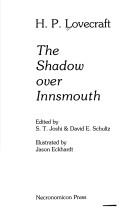
A decayed fishing port, a hotel room and a chase through the streets at night. The most purely frightening thing he wrote, and the story where the racial anxiety underneath the horror is most exposed.
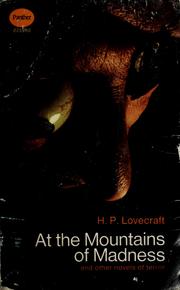
An Antarctic expedition uncovers a city predating humanity. His most ambitious work, and it requires the patience the shorter stories build.
The long ones
IntermediateTake on the three longest works, including the dream-cycle, and be able to distinguish Lovecraft the cosmic horror writer from Lovecraft the Dunsanian fantasist.
▸ Study plan for this stage
Pace: Four to five weeks. The Case of Charles Dexter Ward is around 130 pages and slow, The Shadow Out of Time about 90 pages of actual story despite the edition's page count, and The Dream-Quest of Unknown Kadath roughly 100 pages that read much more slowly than their length suggests. Ward and Shadow Out
- The Case of Charles Dexter Ward is the closest thing Lovecraft wrote to a novel, and he never published it in his lifetime. It is antiquarian rather than cosmic — Providence, genealogy, colonial documents, an ancestor who should be dead.
- Ward is the most local of the major works. Lovecraft's real subject here is his own city's eighteenth-century architecture and street plan, and the horror is a native New England one about the past being physically still present.
- The 'essential saltes' resurrection method is the most memorable single idea in Lovecraft outside the Mythos, and it is drawn from period occult writing rather than invented.
- The Shadow Out of Time is the purest statement of his deep time and the direct companion to At the Mountains of Madness — same geological scale, same archive-reading, same Antarctic-style discovery of a predecessor civilisation, but told from inside the body that was borrowed.
- Its premise is a five-year amnesia during which something else was living in Peaslee's body. The dread is retroactive: the reader spends the story learning what already happened, which is the Lovecraft structure at its most efficient.
- The Great Race of Yith survive by taking over other species' bodies across time. This is the one Lovecraft entity that is neither malevolent nor indifferent but simply pragmatic, which makes it the strangest thing in his cosmology.
- The Dream-Quest of Unknown Kadath is the outlier and should be read knowing it. No documents, no cosmic indifference, no Mythos in any usual sense — it is a picaresque wander through invented geography in the manner of Lord Dunsany, whom Lovecraft was consciously imitating.
- Randolph Carter's dream-cycle is where Lovecraft the fantasist lives. If the cosmic stories work on you and this one does not, that is a normal reaction and not a failure of attention; they are two different writers sharing a name.
- How does Willett's investigation in Ward differ from the document-assembly method of The Call of Cthulhu, and what does having an active investigator change?
- Ward is set in a real, mapped Providence. What does using a real city do that the invented Arkham could not?
- In The Shadow Out of Time, what does Peaslee learn in the final pages that he could not have learned from the archives alone?
- The Great Race are neither hostile nor indifferent to humanity. Where does that leave the cosmic horror the rest of the work depends on?
- What is the Dream-Quest actually about, if anything, and does its ending justify the journey?
- Set Ward beside Innsmouth. Both are stories about ancestry. What makes one an antiquarian mystery and the other a story about blood?
- Read Ward with a map of Providence's East Side open. The College Hill streets, the waterfront and the Pawtuxet road are all real and all named.
- In The Shadow Out of Time, write down the timeline in the order it happened rather than the order it is told. The gap between the two is where the story's power sits.
- Read the Dream-Quest in short sessions, as episodes. It was written in a rush and never revised, and it behaves like a serial rather than a novel.
- After all three, sort every story on this path so far into cosmic horror, New England antiquarian horror and Dunsanian fantasy. Most readers find the three piles explain their own preferences.
- Compare the closing paragraph of The Shadow Out of Time with the closing paragraph of At the Mountains of Madness. Two versions of the same refusal, five years apart.
Next up: The major fiction is done; what remains is the early work he built the method out of and his own account of the tradition he was writing in.
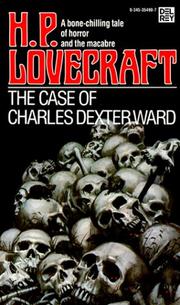
The closest thing he wrote to a novel: a Providence antiquarian, an ancestor and a resurrection. Slower than the novellas, and much better once you know the vocabulary.
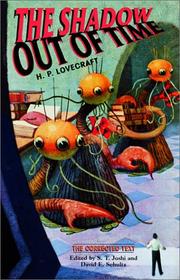
A professor loses five years of his life to something that borrowed his body. The purest statement of Lovecraft's deep time, and a direct companion to At the Mountains of Madness.
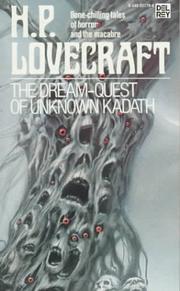
Randolph Carter's journey through the Dreamlands — no Mythos, no documents, just invention. A genuine outlier, so read it once you know what it is departing from.
The completist tail: early horror and the theory
IntermediateRound out the body of work with the pre-Mythos horror and Lovecraft's own account of the genre, and be able to place him in the tradition he was writing inside.
▸ Study plan for this stage
Pace: Two to three weeks. The Rats in the Walls and The Dreams in the Witch House are each a single long evening. Supernatural Horror in Literature is a hundred pages of dense critical essay with no narrative pull whatsoever — read it in six or seven short sittings, one section at a time, rather than tryi
- The Rats in the Walls is early, pre-Mythos and shaped by Poe: an American restores his ancestral English priory, hears something in the walls, and descends into what is under it. The final page, in which the narrator's language regresses through centuries of English into something pre-linguistic, is
- It is also one of the ugliest things in the body of work: the narrator's cat carries a name that is a racial slur, printed in full in every unexpurgated text, and it recurs throughout the story. Some editions silently alter it, which is worth knowing so you can tell which text you are holding. This
- The story's horror is hereditary degeneration — the discovery that the family's crime is in the blood and the narrator carries it. That structure recurs in Innsmouth almost exactly, ten years later.
- The Dreams in the Witch House fuses his interests most oddly: a mathematics student works out that non-Euclidean geometry is a physical doorway, and the folkloric New England witch and the modern physics turn out to be describing the same thing.
- It is a late deep cut rather than an entry point, and reads poorly to anyone who has not already absorbed Arkham, the Mythos and Lovecraft's habit of giving occult material a scientific justification.
- Supernatural Horror in Literature is the best closing text on this path because it is Lovecraft explaining what he thought he was doing. Its opening claim — that the oldest and strongest emotion is fear, and the oldest and strongest fear is fear of the unknown — is the thesis all the fiction execute
- The essay traces the weird tale from the Gothic novel through Poe, Machen, Blackwood, M.R. James and Dunsany. It shows how consciously derivative Lovecraft was, and it is by some distance the most useful reading list anyone finishing this path could be handed.
- Reading the criticism last also settles the question the whole path raises: the man who wrote these arguments about atmosphere and cosmic scale is the same man whose fiction runs on a fear of contamination, and the essay does nothing to separate them.
- What makes the last page of The Rats in the Walls work, and could the same trick be repeated?
- How closely does The Rats in the Walls prefigure The Shadow Over Innsmouth in structure? List the shared elements.
- In The Dreams in the Witch House, what is gained by explaining a witch's power as geometry rather than as magic?
- In Supernatural Horror in Literature, which writers does Lovecraft rate highest, and what specifically does he say they do that Gothic novelists did not?
- Having read the essay, which of his own stories comes closest to the standard he sets in it?
- Where does the essay's account of the weird tale fail to explain the fiction you have just read?
- Check which text of The Rats in the Walls your edition prints. If the cat's name has been altered, note that you are reading a modified version and know what was modified.
- Read the opening two pages of Supernatural Horror in Literature before the two stories rather than after. It gives you Lovecraft's own criteria to test them against.
- Take the essay's list of authors and pick two — Machen and Blackwood are the obvious pair — and read one story by each. The influence is direct and unmistakable.
- Write down, in one paragraph, what Lovecraft actually contributed to horror that was not already in Poe, Machen or Dunsany. The essay makes this genuinely answerable.
- Finally, write a second paragraph on how you would describe this writer to someone who has not read him. If it does not include the racism, the description is not accurate.
Next up: You have the fiction, the outliers and Lovecraft's own theory, which is enough to read anything else of his — or anyone he influenced — without a guide.

An American restores his ancestral English priory and finds what is under it. Early, Poe-shaped, and one of his most effective endings — also one of his ugliest pieces of racial naming.

A mathematics student in Arkham finds non-Euclidean geometry is a doorway. The oddest fusion of his interests, and a late deep cut for readers already inside the Mythos.

His long essay on the weird tale, from Gothic novels through Machen and Blackwood. Not fiction, but the best possible closing text: it is Lovecraft explaining the tradition he placed himself in.
Discussion
Keep reading
Paths that share books, cover the same subject, or open a related topic.