Graham Greene Reading Order: Where to Start
Graham Greene's fiction spans three overlapping modes — fast-paced "entertainments," morally tortured Catholic novels, and late-career political thrillers — each deepening his obsessions with guilt, betrayal, and faith. This curriculum begins with his most accessible and propulsive work, builds through the dense theological novels at his artistic peak, and closes with the cooler, more ironic political fiction of his final decades. Reading in this order lets each stage sharpen the vocabulary — moral ambiguity, the "Greene-land" atmosphere, the hunted protagonist — needed to fully inhabit the next.
First Steps into Greene-land
BeginnerGet hooked on Greene's voice, pace, and atmosphere through his most plot-driven, accessible entertainments — and absorb his signature themes of pursuit, loyalty, and moral compromise.
▸ Study plan for this stage
Pace: 6–8 weeks total: Week 1–2 — "The Third Man" (~30 pages/day; it's a novella, so allow time to re-read key scenes); Week 3–4 — "Our Man in Havana" (~25–30 pages/day, savoring the comic tone); Week 5–7 — "The Quiet American" (~20–25 pages/day, reading more slowly to track Fowler's unreliable narration)
- Greene's 'Entertainments' vs. serious novels — how The Third Man and Our Man in Havana wear genre conventions (thriller, spy comedy) as a disguise for moral inquiry
- The atmosphere of moral ruin: how post-war Vienna in The Third Man, Batista-era Havana in Our Man in Havana, and French-colonial Saigon in The Quiet American are not mere backdrops but active forces that corrupt and expose characters
- The pursuit structure — Greene's plots are built around chases, hunts, and surveillance, and how the pursuer is always implicated in what they chase (Martins hunting Lime, Hawthorne hunting Wormold's 'network', Pyle's idealism hunting a new Vietnam)
- Loyalty vs. betrayal as Greene's central moral engine: Harry Lime betraying Martins and the penicillin victims; Wormold's loyalty to Milly overriding loyalty to the state; Fowler's betrayal of Pyle and whether it is justified
- The unreliable or self-deceiving narrator: Rollo Martins romanticizes Lime until he can't; Fowler in The Quiet American constantly protests his own detachment ('I am not involved') while being deeply, fatally involved
- Moral compromise and the 'lesser evil': Greene's characters rarely choose between good and evil — they choose between two forms of complicity, a theme crystallized in Fowler's final act against Pyle
- Greene's prose style at the sentence level: economy, cinematic scene-setting, dialogue that conceals as much as it reveals, and the use of weather/light/smell to externalize inner states
- The role of innocence as danger: Pyle in The Quiet American is Greene's most explicit argument that naïve idealism causes more harm than cynical experience — trace how this idea appears in embryo in Martins and Wormold
- In The Third Man, Rollo Martins arrives in Vienna expecting a simple story about his friend Harry Lime — how does Greene systematically dismantle Martins's romantic loyalty, and what does the famous final shot of Anna on the road suggest about the cost of disillusionment?
- Our Man in Havana is often called a farce, yet it ends in genuine violence and grief. How does Greene use Wormold's escalating lies to expose the absurdity of Cold War intelligence culture, and at what precise moment does the comedy curdle into something darker?
- Fowler in The Quiet American insists repeatedly that he is 'not involved' and has 'no politics.' By the novel's end, is this self-portrait credible? What specific actions and omissions reveal the gap between what Fowler says about himself and what he actually does?
- All three books are set in countries under foreign pressure or occupation (post-war Vienna, Batista's Cuba, French Indochina). How does Greene use these specific political landscapes to make moral compromise feel structurally inevitable rather than a personal failing?
- Identify one scene in each book where a character's loyalty to a single person (rather than a cause or country) drives them to an ethically questionable act. What does Greene seem to be saying about personal loyalty as a moral value?
- How does Greene's prose style — particularly his use of physical setting and sensory detail — function differently in the near-cinematic brevity of The Third Man versus the more expansive, retrospective narration of The Quiet American?
- The Lime Test — After finishing The Third Man, write a one-page 'defense of Harry Lime' from Martins's perspective at the START of the novel, then a one-page 'prosecution of Harry Lime' from Martins's perspective at the END. Compare the two: what changed, and what does that gap reveal about how Greene constructs moral revelation?
- Atmosphere Mapping — Choose one scene from each of the three books in which the physical setting (a street, a room, a landscape) feels morally charged. Write a short paragraph for each explaining exactly which sensory details Greene chooses and what emotional or ethical state they externalize. This trains close reading of Greene's cinematic technique.
- The Involvement Audit — Keep a running log as you read The Quiet American: every time Fowler claims detachment or non-involvement, note the page and the claim. By the end, review the list against his actual actions. Write a 200-word verdict: is Fowler a liar, a self-deceiver, or something more complicated?
- Genre Disguise Exercise — Our Man in Havana borrows the conventions of a spy thriller. List 5 classic spy-genre conventions Greene uses and, beside each, note how he subverts or satirizes it. Then ask: what serious point does each subversion make about real-world espionage or Cold War politics?
- Comparative Loyalty Chart — Draw a simple table with columns for each book and rows for: (1) who the protagonist is loyal to, (2) what that loyalty costs them, (3) who or what they betray, and (4) whether Greene frames the betrayal as justified. Use this chart as a discussion or journaling prompt to articulate Greene's evolving moral vision across the three books.
- Sentence Imitation — Select one paragraph of pure scene-setting from each book (e.g., the opening description of post-war Vienna, Wormold's shop, or Fowler's Saigon apartment). Rewrite each paragraph in your own words, then compare yours to Greene's. Identify three specific word choices or structural decisions Greene made that you did not — this is the fastest way to internalize his style.
Next up: Mastering these three plot-driven entertainments gives you the narrative instincts and thematic vocabulary — pursuit, betrayal, moral compromise, the danger of innocence — needed to follow Greene into his more psychologically and spiritually demanding novels, where the same tensions are pressed to breaking point without the safety net of genre plot.
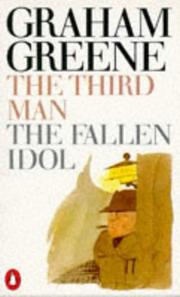
Originally a novella written as a film treatment, this is the perfect entry point: short, gripping, and packed with Greene's atmosphere of postwar moral ruin. It introduces the 'hunted man' and the betrayal motif that run through everything he wrote.

A comic spy entertainment that reads quickly and shows Greene's lighter, satirical side. Reading it second reveals how playfully he can subvert the thriller genre while still landing genuine emotional punches.
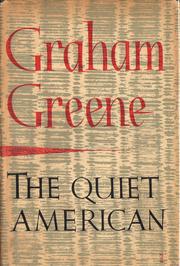
The bridge between entertainment and serious novel — a political thriller set in Vietnam that is also a devastating study of innocence, imperialism, and complicity. Its relative brevity and propulsive plot make it ideal before tackling the heavier Catholic works.
The Catholic Novels: Sin, Grace, and Damnation
IntermediateEngage with Greene's most celebrated and theologically rich fiction, understanding how Catholic guilt, the possibility of grace, and the 'sinner as saint' paradox operate across his major works.
▸ Study plan for this stage
Pace: 8–10 weeks total: ~2.5–3 weeks per novel, reading roughly 20–25 pages per day. Suggested breakdown — Brighton Rock (weeks 1–3): read in four sittings, pausing after Parts 1, 3, 5, and 7 to reflect; The Power and the Glory (weeks 4–6): read in three sittings aligned with the novel's three-part struct
- The 'sinner as saint' paradox: how Greene's protagonists (Pinkie, the whisky priest, Scobie) are simultaneously deeply sinful and spiritually significant, challenging conventional moral categories
- Catholic guilt and the examined conscience: the difference between guilt as spiritual awareness versus guilt as psychological torment, and how each character experiences this distinction differently
- The possibility of grace: Greene's insistence, drawn from his reading of theologians like Péguy and Mauriac, that damnation is never certain and grace can operate through the most unlikely vessels
- Damnation as a theological choice: Pinkie's defiant self-damnation, the whisky priest's fearful humility, and Scobie's calculated despair as three distinct postures toward God
- The 'appalling strangeness of the mercy of God': the epigraph to Brighton Rock as a lens for all three novels — how divine mercy operates in ways that confound human justice and social morality
- Pity as a fatal flaw: in The Heart of the Matter especially, how Scobie's pity for others masquerades as love and becomes the mechanism of his spiritual destruction
- The Church as institution vs. personal faith: the tension between official Catholic doctrine and the raw, private, often heterodox spiritual lives Greene's characters actually live
- Greene's 'Greeneland' atmosphere: the use of seedy, morally exhausted settings (Brighton's underworld, a nameless Latin American police state, colonial West Africa) as theological landscapes that externalize interior spiritual states
- In Brighton Rock, Rose and Pinkie are both Catholics, yet their faith manifests in radically opposite ways — Rose in hope, Pinkie in a kind of inverted theology of evil. What does this contrast reveal about Greene's view of the relationship between belief and morality?
- The whisky priest in The Power and the Glory is objectively a failed priest — cowardly, alcoholic, the father of a child — yet Greene presents him as genuinely holy. What specific scenes or moments in the novel make this case, and what theological logic underpins it?
- Scobie in The Heart of the Matter commits sacrilege by taking communion in a state of mortal sin, and ultimately dies by suicide — acts the Church considers gravely sinful. Does the novel invite the reader to condemn him, pity him, or something more ambiguous? How does Greene manage this?
- All three novels feature a tension between human justice/social order and divine mercy. Identify one representative figure of 'human justice' in each novel (e.g., Ida Arnold, the Lieutenant, Wilson/the Church hierarchy) and analyze how Greene positions them against his protagonists.
- How does the physical setting of each novel function as more than mere backdrop — in what ways do Brighton's neon-lit violence, the Mexican jungle, and the West African coast each become theological environments?
- Across all three novels, Greene's protagonists make a decisive, self-aware choice that seals their fate. Compare these three choices: what do they share, and what does each reveal about Greene's evolving understanding of sin, free will, and the limits of grace?
- Keep a 'theological journal' as you read each novel: after every major chapter or section, write 2–3 sentences identifying one moment of potential grace and one moment of sin or spiritual failure. At the end of all three books, compare your entries to trace Greene's evolving theology across the trilogy.
- Write a 500-word close reading of a single passage from each novel that you believe best encapsulates that book's central theological tension — for example, Pinkie's 'I believe in hell' speech in Brighton Rock, the whisky priest's final night in his cell in The Power and the Glory, or Scobie's communion scene in The Heart of the Matter. Focus on Greene's word choices, imagery, and narrative tone.
- Create a comparative character matrix: draw a grid with the three protagonists as columns and the following rows as categories — their sin, their self-knowledge, their relationship to the Church, their capacity for love, and their final spiritual status (as Greene implies it). Use direct textual evidence for each cell.
- Research the theological concept of 'invincible ignorance' and the debate around whether a soul in despair can still receive grace (drawing on Catholic thinkers Greene admired, such as Charles Péguy). Write a one-page reflection on how this concept applies to one of the three protagonists.
- Stage a written 'debate' between Ida Arnold (Brighton Rock) and the whisky priest (The Power and the Glory) on the question: 'Is it better to be a good person or a holy one?' Write one paragraph in each character's voice, staying true to their worldview as Greene presents it.
- Re-read the final page of each novel back-to-back in a single sitting. Write a short comparative note (one paragraph per novel) on how Greene uses endings — what is resolved, what is deliberately left open, and what emotional and theological register each ending strikes.
Next up: Mastering the theological architecture of these three novels — sin, grace, damnation, and the sinner-saint — gives the reader the doctrinal and emotional vocabulary needed to appreciate how Greene's later and more ambiguous works interrogate, complicate, and sometimes quietly abandon these Catholic certainties.
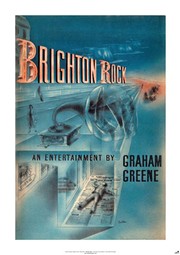
The first of the great Catholic novels and the darkest portrait of evil Greene ever drew. Starting here establishes the theological framework — mortal sin, damnation, the mercy of God — that The Power and the Glory and The Heart of the Matter will deepen.
Widely considered Greene's masterpiece, this novel of a 'whisky priest' on the run in anti-clerical Mexico is the fullest expression of his Catholic vision. Reading Brighton Rock first makes the paradox of the flawed holy man far more resonant.

A West African colonial setting and a police officer's slow moral disintegration complete the Catholic trilogy. It is the most psychologically interior of the three, and by this point the reader has the tools to follow its agonizing spiritual logic.
The Late Political Fiction
ExpertAppreciate how Greene's final phase — cooler, more ironic, geopolitically wide-ranging — synthesizes his earlier preoccupations into a mature, disillusioned worldview, and understand his lasting influence on political fiction.
▸ Study plan for this stage
Pace: 10–12 weeks total; roughly 3–4 weeks per novel at ~25–30 pages/day. Suggested pacing: "The Comedians" (weeks 1–3), "The Honorary Consul" (weeks 4–7, slightly longer due to its dense ensemble structure), "The Human Factor" (weeks 8–11), with week 12 reserved for comparative reflection, essay drafting
- Disillusioned humanism: Greene's late-phase rejection of ideological certainty in favour of flawed, morally exhausted protagonists (Brown in 'The Comedians', Charley Fortnum and Eduardo Plarr in 'The Honorary Consul', Maurice Castle in 'The Human Factor') who act from loyalty or pity rather than con
- Geopolitical theatre as moral landscape: Haiti under Duvalier, a fictional Paraguayan border town, and Cold War London/South Africa each function not merely as backdrop but as active moral pressure on character — Greene uses specific, researched political regimes to universalise the corruption of po
- The comedy of despair — irony as worldview: the title 'The Comedians' announces a governing metaphor Greene sustains across all three novels; characters perform roles they no longer believe in, and irony becomes the only honest register left to the disillusioned witness
- Loyalty versus ideology: all three novels stage a central conflict between abstract political commitment and intimate personal loyalty (to a friend, a lover, a family) — Greene consistently shows the personal winning, at catastrophic cost
- The complicit bystander and the question of engagement: Brown, Plarr, and Castle are each drawn into political violence despite their instinct to remain uninvolved; Greene interrogates whether neutrality is a moral position or a moral failure
- Catholicism in recession: unlike the earlier Catholic novels, religious faith in this phase is vestigial, referenced but no longer redemptive — its absence shapes the characters' inability to find transcendence in suffering
- The spy/thriller form as literary vehicle: 'The Human Factor' most explicitly, but all three novels, borrow genre conventions (the thriller, the political novel, the hostage narrative) and then subvert or hollow them out to expose the human cost beneath the plot machinery
- Greene's influence on political fiction: the template of the morally compromised Western observer embedded in a volatile postcolonial or Cold War setting — visible in later writers such as le Carré, Naipaul, and Didion — finds its fullest articulation in these three novels
- In 'The Comedians', Brown repeatedly describes himself and others as 'comedians' — what precise meaning does Greene load into this term, and how does it evolve from the novel's opening to its close?
- How does the hostage scenario in 'The Honorary Consul' function as a structural metaphor for Greene's broader argument about political violence — who is truly 'held hostage' by the end, and why?
- Maurice Castle in 'The Human Factor' commits espionage not for ideology but for love and gratitude — how does Greene use this motivation to critique both Cold War spy fiction conventions and the political systems Castle serves?
- Across all three novels, Greene sets his stories in societies under authoritarian or colonial stress (Duvalier's Haiti, a Stroessner-era Paraguayan border, apartheid South Africa and Cold War London) — what consistent argument does he make about how extreme political environments deform individual moral agency?
- How does the treatment of Catholicism differ between these late novels and Greene's earlier work, and what does its diminished role reveal about the evolution of his worldview?
- Identify a moment in each novel where a character chooses personal loyalty over political or institutional duty — what are the consequences, and what does the pattern across all three books suggest about Greene's ultimate moral position?
- Close-reading journal: After finishing each novel, write a 400–600 word entry tracing one recurring image or motif (e.g., heat and physical discomfort in 'The Comedians', the river in 'The Honorary Consul', the suburban commute in 'The Human Factor') and argue how it reinforces the novel's political or moral theme — compare all three entries at the end of the stage
- Character motivation map: For Brown, Plarr, and Castle, draw a simple diagram showing the competing loyalties pulling each character (personal relationships, political allegiances, self-preservation, moral principle) — annotate each tension with a specific quotation from the text, then write a paragraph explaining which tension ultimately determines each man's fate
- Comparative political context essay (800–1,000 words): Research the actual regimes Greene drew on — Duvalier's Haiti, Stroessner's Paraguay, apartheid South Africa — and write a short essay arguing how accurately or selectively Greene represents each, and what fictional liberties reveal about his thematic priorities rather than his journalistic ones
- Genre subversion analysis: Re-read the climactic sequence of 'The Human Factor' with the conventions of a classic Cold War thriller in mind (the double agent, the extraction, the confrontation). Write a one-page analysis of every moment where Greene deliberately withholds or deflates the genre's expected satisfactions, and explain the effect on the reader's moral experience
- Influence tracing exercise: Read one short excerpt (10–15 pages) from a later political novel — for example, John le Carré's 'The Spy Who Came in from the Cold' or Joan Didion's 'A Book of Common Prayer' — and write a structured comparison (one page) identifying at least three specific narrative or thematic techniques that echo Greene's late fiction as encountered in this stage
- Synthesis discussion or essay: Write a 1,000-word response to the question 'Is Greene ultimately a political writer or a writer who uses politics?' — drawing evidence exclusively from 'The Comedians', 'The Honorary Consul', and 'The Human Factor', and taking a clear, argued position
Next up: Mastering Greene's late political fiction — its ironic detachment, its postcolonial settings, and its hollowed-out genre forms — equips the reader to engage critically with the broader tradition of Cold War and postcolonial literary fiction that Greene helped define, making the transition to comparative or successor authors (le Carré, Naipaul, Didion, or Conrad as precursor) both historically grou
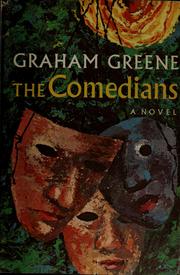
Set under the terror of Duvalier's Haiti, this novel marks the turn toward explicit political engagement. The Catholic guilt is still present but now filtered through a more detached, sardonic narrator — a tonal shift the earlier stages prepare you to notice.
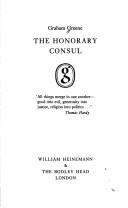
Often cited as his finest late novel, this South American hostage drama weaves together politics, faith, and failed love with extraordinary economy. It rewards readers who have followed the full arc of his career.

His most sustained and personal spy novel, written in full knowledge of his friend Kim Philby's real betrayal. It closes the curriculum by returning to the world of the entertainments but now with the full moral and political weight of a lifetime's writing behind it.
Discussion
Keep reading
Paths that share books, cover the same subject, or open a related topic.