Ford Madox Ford Reading Order: Where to Start
Ford Madox Ford wrote more than eighty books and is remembered for five, so the reading order is mostly a matter of knowing what to skip. Start with The Good Soldier, the short novel that invented most of what we mean by an unreliable narrator, then read Parade's End as four separate novels rather than the single omnibus it is usually sold as, because the fourth was disowned by Ford himself and readers still argue about whether it belongs. After that, the historical fiction and the memoirs are optional but rewarding, and the memoirs come with a warning: Ford lied in them constantly and knew he was doing it.
Start Here
IntermediateRead the short novel that is Ford's whole technique in miniature, and learn to distrust a narrator on purpose.
▸ Study plan for this stage
Pace: 2 weeks for 198 pages, and read it twice. First pass at 30 pages a sitting, just following what Dowell tells you; then a second pass immediately, which takes half as long and is a different book. The Good Soldier is the rare novel where rereading is not optional enrichment but the way the design bec
- The opening sentence — this is the saddest story I have ever heard — is the whole method: the narrator has heard it rather than understood it, and he is telling you so on line one
- John Dowell is the founding case of the modern unreliable narrator, and his unreliability is not lying but incomprehension: he reports accurately and interprets catastrophically
- The time-shift is Ford's central technique — events arrive in the order a person would recall them in conversation, not the order they happened, with the same scene returned to repeatedly and revised
- This is what Ford and Conrad called literary impressionism: rendering the impression an event makes rather than the event, on the argument that this is how experience actually arrives
- Almost nothing in the novel is stated once and left; facts are given, contradicted, and re-given with a different emphasis, and tracking that revision is the reading
- The plot itself — two couples, nine years of a Nauheim spa season, adultery, suicide — is melodrama, and Ford chose melodrama deliberately so the technique would have something lurid to work against
- The novel is under 200 pages and teaches you everything Parade's End then runs across four volumes, which is why nothing else can be the entry point
- What does Dowell fail to understand, and at what point does the reader understand it before him? Mark the page.
- Pick one event that is narrated more than once. What changes between tellings, and what does Ford want the change to do?
- Is Dowell a fool, a coward, or complicit? The novel supports all three and the choice determines your reading.
- How would the same story read told chronologically? Sketch the first three chapters that way and see what dies.
- Why does Ford use a melodramatic plot for a technically radical novel — what would a subtler plot have cost him?
- On the second reading, keep a chronology of what actually happened in date order. Building it is the exercise; the gap between it and the narration is the novel.
- Underline every hedge in Dowell's narration — I think, perhaps, I do not know. The density is the characterisation.
- Read the last ten pages twice. Dowell's final position on Edward Ashburnham is the book's real ending and it is easy to miss.
- Write half a page in Dowell's voice about an ordinary event. It will teach you what the time-shift feels like from inside.
Next up: You now know the technique in miniature; Parade's End is the same instrument applied to a war, a marriage and a class, at ten times the length.
This is the saddest story I have ever heard, told by a man who understands almost nothing that happened to him. Under two hundred pages, and it teaches you the time-shift method that Parade's End then runs for four volumes.
Parade's End, in Order
IntermediateRead the tetralogy as four novels, following Christopher Tietjens from Edwardian England into the trenches and out the other side.
▸ Study plan for this stage
Pace: 10–12 weeks. Some Do Not is 331 pages, No More Parades 305, A Man Could Stand Up 275 and Last Post 285 — roughly 1,200 pages of dense modernist prose. Budget three weeks each and expect the first hundred pages of Some Do Not to be genuinely hard: Ford drops you into a conversation and withholds the
- The tetralogy follows Christopher Tietjens, a Yorkshire statistician with eighteenth-century convictions, his wife Sylvia, who torments him brilliantly, and Valentine Wannop, a suffragette and classicist, from Edwardian England through the war and out the other side
- Some Do Not is the hardest volume to enter and the one that makes everything after it legible: the golf-course scene, the dogcart in the fog, and Sylvia's opening monologue install the whole situation
- The time-shift from The Good Soldier is now applied to a third-person narrative and to several minds at once, so the reader is assembling a chronology from multiple partial memories
- No More Parades is the war volume: Tietjens at a base depot in France processing drafts under shellfire while his marriage physically follows him to the front. It is the reason the sequence is considered the best English fiction of the First World War
- Its subject is not combat but administration under fire — paperwork, requisitions and command incompetence — which is a truer account of most officers' war than trench heroics
- A Man Could Stand Up is the most technically extreme volume: an Armistice Day frame around a long, hallucinatory section in the front line, with the prose fragmenting under the shelling
- Last Post is the postwar coda, narrated largely by other characters while Tietjens is mostly offstage. Ford later wished he had not written it, and Graham Greene cut it from the edition he oversaw
- That argument is part of reading Parade's End: read Last Post and decide for yourself whether the sequence needs its resolution or is better ending in the ruined uncertainty of the third volume
- Who is Sylvia, and why does the novel give her so much intelligence and so much cruelty at once? Is she a portrait or a device?
- What exactly does the title Some Do Not refer to, and how many meanings does the phrase carry by the end of the volume?
- No More Parades is set almost entirely behind the lines. What does that choice let Ford say about the war that a trench novel could not?
- Where does the prose in A Man Could Stand Up break down formally, and is the breakdown representing shellshock or performing it?
- Ford disowned Last Post and Greene cut it. Having read it, was either of them right?
- Tietjens is described as the last Tory. What does the sequence think died with him, and does it mourn it?
- Keep a character sheet from page one of Some Do Not. Ford introduces people by surname mid-conversation and readers lose Macmaster, Campion and Duchemin within fifty pages.
- Build a date chronology across all four volumes. The sequence covers roughly 1912 to 1920 and never says so in order.
- Read the Armistice section of A Man Could Stand Up aloud. The fragmentation is auditory before it is intellectual.
- After Last Post, write two paragraphs — one arguing the sequence is a tetralogy, one arguing it is a trilogy with an appendix. Then say which you believe.
- Note the passages of pure administrative detail in No More Parades and ask why Ford, a modernist, wanted so much of it.
Next up: With the major fiction behind you, the historical novels show a completely different writer who was working at the same time.
The first volume: Tietjens, his impossible wife Sylvia, and the suffragette Valentine Wannop, before the war. The hardest of the four to enter and the one that makes everything after it legible, so do not start elsewhere.
Tietjens at a base depot in France, processing drafts under shellfire while his marriage follows him to the front. The war volume, and the reason the sequence is considered the best English fiction about the First World War.

Armistice Day framing a long section in the front line. The most technically extreme of the four and the emotional peak of the sequence.
The postwar coda, which Ford later wished he had not written and which Graham Greene cut from his edition. Read it and decide for yourself; that argument is part of reading Parade's End.
The Other Fiction
IntermediateSample the historical novels, where Ford was doing something quite different and doing it well.
▸ Study plan for this stage
Pace: 4–5 weeks. The Fifth Queen is 306 pages in the volume listed here — note that it is the first of three linked novels about Katharine Howard, usually sold together as one book, so check what your edition contains. Ladies Whose Bright Eyes is 350 pages and much lighter. Read The Fifth Queen slowly: th
- Ford wrote more than eighty books and is remembered for about five; this stage is the best of what is usually skipped, and it is optional
- The Fifth Queen is Katharine Howard at the court of Henry VIII, written in dense pseudo-Tudor prose that Conrad called the swan song of historical romance
- It is nothing like The Good Soldier: no unreliable narration, no time-shift, and a heroine of straightforward moral conviction destroyed by a court that has none
- The interest is Thomas Cromwell, drawn as a pure political intelligence, and the novel is a study of how a scrupulous person is dismantled by a functioning bureaucracy
- Ladies Whose Bright Eyes throws a modern publisher back into the fourteenth century after a train crash and is a genuinely odd comic time-travel novel
- Its joke is Ford's real subject in comic form: the past is not a nicer version of the present but an unrecognisable set of assumptions, and the modern man is useless in it
- Ford revised it substantially in a later edition, so the version you read may differ noticeably from the one someone else describes
- Together these show that the impressionist technique was a choice rather than a limitation — he could write conventional narrative well and elected not to
- What does The Fifth Queen's archaic prose achieve that plain modern English would not, and where does it become an obstacle?
- How is Ford's Cromwell different from the Cromwell of more recent historical fiction, and what does the difference reveal about each writer's politics?
- Katharine Howard is honest in a court where honesty is fatal. Is the novel tragic or merely inevitable?
- What is Ladies Whose Bright Eyes actually satirising — the medieval past, the modern present, or the historical novel itself?
- Having read these, why do you think Ford abandoned this mode for what he did in The Good Soldier?
- Read the first chapter of The Fifth Queen twice before continuing. The vocabulary settles on the second pass and then stops being a problem.
- Compare a court scene here with a drawing-room scene in Some Do Not. The subject is identical — power exercised through manners — and the technique is opposite.
- Check which edition of Ladies Whose Bright Eyes you have, and note any prefatory material about the revision.
- Write one paragraph on what Ford thought the past was, using evidence from both books.
Next up: The fiction is done; the memoirs and criticism are Ford explaining himself, and by now you know exactly how much to believe.
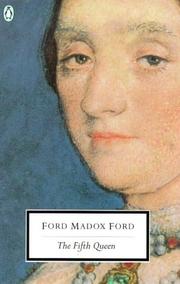
Katharine Howard at the court of Henry VIII, in dense archaic prose that Conrad called the swan song of historical romance. The best of his pre-war fiction and nothing like The Good Soldier.
A modern publisher is thrown back into the fourteenth century after a train crash. An odd, funny time-travel novel; read it after The Fifth Queen as the lighter side of the same medieval obsession.
The Memoirs and the Criticism
IntermediateRead Ford on his own life and on literature, keeping in mind that he treated fact as raw material.
▸ Study plan for this stage
Pace: 6–8 weeks. Joseph Conrad: A Personal Remembrance is 294 pages, Return to Yesterday 417 and The March of Literature 878. The first two read quickly and pleasurably. The March of Literature should not be read straight through — it is 878 pages of one man's opinions about all of world literature, and i
- The governing warning: Ford treated fact as raw material and lied in his memoirs constantly, knew he was doing it, and defended the practice on the grounds that an accurate impression matters more than accurate detail
- Joseph Conrad: A Personal Remembrance was written within weeks of Conrad's death about their years of collaboration, and Ford says openly that it is composed as a novel would be
- It is also the clearest statement anywhere of the impressionist theory that produced The Good Soldier: the doctrine of the rendered scene, the time-shift, and the pursuit of the mot juste in English
- Read it as a manifesto with anecdotes rather than as biography, and it becomes the most useful book in this stage
- Return to Yesterday is pre-war literary London — Henry James, Stephen Crane, W. H. Hudson, the founding of the English Review, which Ford edited and in which he published Lawrence and Pound early
- The anecdotes are entertaining and frequently unverifiable, which by this point in the path is exactly what you expect and part of the pleasure
- The March of Literature was his last book: all of world literature from Confucius onward, written largely from memory by a dying novelist with no scholarly apparatus at all
- It is useless as reference and superb as criticism — a working novelist saying what he actually thinks is alive on the page, wrong about dates and right about sentences
- What does Ford say the novelist's job is, in his own words from the Conrad book — and does The Good Soldier obey it?
- Where can you catch Ford in a demonstrable exaggeration, and does it damage the passage it appears in?
- What did the collaboration with Conrad actually consist of, as far as the book allows you to tell?
- In The March of Literature, pick a writer you know well. Is Ford's judgement of them good criticism despite being unreliable history?
- Having read the whole path, was Ford's habit of invention a moral failing, an aesthetic position, or both?
- Which single Ford book would you press on someone, and what would you warn them about first?
- Extract the technical principles from the Conrad book into a one-page list, then test each against a chapter of Some Do Not.
- Fact-check three anecdotes from Return to Yesterday against any standard account. The results are the point of the exercise.
- Read only the sections of The March of Literature covering writers you have actually read, and note where Ford is illuminating and where he is bluffing.
- Write a short defence of the sentence this is the saddest story I have ever heard as the best opening line in English, using everything the path has given you.
- Rank the eleven books by how much you would recommend them, and be honest that the top two were the first two you read.
Next up: That is Ford's essential shelf — the technique, the tetralogy, the road not taken, and the theory — with the remaining seventy-odd books safely skippable.

Written weeks after Conrad's death about their years of collaboration, and openly composed as a novel would be. The clearest statement of the impressionist theory that produced The Good Soldier.
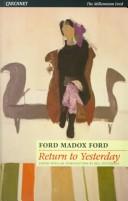
Pre-war literary London — James, Crane, Hudson, the founding of the English Review. Entertaining and unreliable in equal measure, which by this point in the path is exactly what you expect from him.
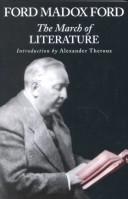
His last book: all of world literature from Confucius onward, written from memory by a dying novelist with no scholarly apparatus at all. Useless as reference, superb as criticism, and the right place to finish.
Discussion
Keep reading
Paths that share books, cover the same subject, or open a related topic.