Learn flute: essential method and technique books for beginners
This curriculum takes a complete beginner from their very first note on the flute through solid intermediate technique, tone development, and musical expression. Each stage builds directly on the last — establishing posture and basic fingerings first, then expanding range and breath control, then refining tone through dedicated études and studies, and finally developing artistry and musicality through repertoire-based method work.
First Notes & Foundations
BeginnerAssemble the flute correctly, form a stable embouchure, produce a clear tone on the first octave, and learn basic fingerings and note reading.
▸ Study plan for this stage
Pace: 4–5 weeks, ~15–20 minutes of focused practice daily, working through one section per week
- Proper flute assembly and care (headjoint, body, footjoint alignment)
- Embouchure formation and mouth position for a stable seal
- Breath support and air stream control for consistent tone production
- Fingering patterns for the first octave (B, A, G, F#, F, E, D, C#, C, B)
- Note reading in treble clef and correlating written notes to finger positions
- Tone quality assessment and troubleshooting common beginner issues
- Posture and hand position for ergonomic playing
- How do you correctly assemble and disassemble the flute to avoid damage?
- What does a proper embouchure feel and look like, and how do you maintain it during playing?
- How does breath support from your diaphragm affect tone quality and consistency?
- Can you play all notes in the first octave (B down to low B) with clear, even tone?
- How do you read a note in treble clef and immediately know which fingers to use?
- What are three common tone problems (airy, squeaky, weak) and how do you fix them?
- Assemble and disassemble the flute 5 times daily until it becomes automatic and smooth
- Practice embouchure formation in a mirror for 2–3 minutes daily without the flute, focusing on lip shape and seal
- Perform long-tone exercises on a single note (start with B or A) for 30–60 seconds, listening for evenness and clarity
- Play scales or note sequences from the book daily, focusing on smooth fingering transitions and consistent articulation
- Read and play simple melodies from the practice book, marking fingerings above notes until they become automatic
- Record yourself playing a simple exercise and listen back to identify tone quality issues
- Practice proper posture and hand position while holding the flute (without playing) for 5 minutes daily to build muscle memory
Next up: This stage establishes the physical and technical foundation—a stable embouchure, reliable fingerings, and clear tone production—that allows you to move into the second octave, articulation techniques, and more complex rhythmic patterns in the next stage.
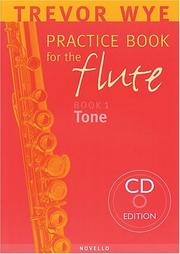
Wye's tone book is the single most recommended starting point for flute tone development worldwide. Beginning here builds the correct embouchure habits and breath support that every later technique depends on.
Building Technique & Range
BeginnerExpand range into the second and third octaves, develop consistent breath control, and establish reliable finger coordination across all basic keys.
▸ Study plan for this stage
Pace: 8–10 weeks, ~15–20 minutes of focused practice daily, with 2–3 days per week dedicated to each volume in sequence (Volume 1: 2–3 weeks, Volume 2: 3–4 weeks, Volume 3: 2–3 weeks)
- Tone production across all registers: understanding how embouchure, air speed, and oral cavity shape affect tone quality in the first, second, and third octaves
- Systematic finger technique: mastering the coordination patterns and hand positions required for smooth, accurate passages in all basic keys
- Breath control and support: developing consistent air pressure and diaphragmatic breathing to sustain notes and execute articulation cleanly
- Articulation styles and clarity: distinguishing between tonguing techniques (single, double, triple) and applying them appropriately to different musical contexts
- Octave transitions: executing smooth shifts between registers without tone breaks or pitch instability
- Finger dexterity and speed: building muscle memory through repetitive technical exercises to achieve reliable coordination under tempo
- Intonation awareness: recognizing how embouchure adjustments and air speed influence pitch across the full range
- How does embouchure shape and air speed need to adjust as you move from the first octave into the second and third octaves?
- What are the three main articulation styles covered in Volume 3, and when would you use each one in a musical phrase?
- Describe the relationship between breath support and consistent tone production across all registers.
- What finger coordination patterns are essential for executing rapid passages cleanly, and how do you practice them systematically?
- How do you identify and correct a tone break when transitioning between octaves?
- What role does daily tone and technique practice play in building reliable intonation across your full range?
- Daily tone production routine: spend 5 minutes on long tones in the first octave, then systematically move into the second and third octaves, listening for consistency in tone quality and pitch stability
- Finger coordination drills from Volume 2: select 3–4 technical exercises per practice session and repeat them slowly, then gradually increase tempo, focusing on accuracy before speed
- Octave leap exercises: practice smooth transitions between octaves using the exercises provided in Volume 2, isolating the embouchure and air adjustments needed
- Articulation practice: dedicate one practice session per week to each articulation style from Volume 3 (single, double, triple tonguing), applying them to simple scales and melodies
- Breath control exercises: practice sustained notes with consistent air pressure, aiming for even tone throughout the duration of each note
- Passage work integration: take a simple melody and apply the tone, technique, and articulation principles learned across all three volumes, performing it at a slow tempo with full attention to quality
- Weekly performance review: record yourself playing a short piece or exercise sequence and listen back to identify areas where tone, technique, or articulation need refinement
Next up: This stage equips you with the foundational tone, technique, and articulation skills needed to tackle more complex musical repertoire and advanced embouchure control in the next stage.
Follows naturally from Book 1, addressing scales, arpeggios, and finger independence with the same clear, methodical approach — the logical next step after tone is stabilized.
Tone Refinement & Artistry
IntermediateAchieve a singing, resonant tone across all three octaves, master vibrato, and begin shaping musical phrases with intention and control.
▸ Study plan for this stage
Pace: 4–6 weeks, ~15–20 minutes of focused practice daily, working through one section per week
- Tone production across all three octaves with consistent resonance and projection
- Vibrato technique: speed, width, and control for expressive playing
- Breath support and air stream management for sustained, singing tone
- Articulation clarity without compromising tone quality
- Phrasing and musical shaping: using dynamics, vibrato, and breath to create intentional musical lines
- Intonation refinement in the upper register and across octave transitions
- Endurance and consistency in tone production over extended passages
- How do you maintain a consistent, resonant tone when moving between the low, middle, and high registers?
- What is the relationship between breath support, air speed, and vibrato control in achieving an expressive tone?
- How can you use vibrato as a musical tool rather than a default embellishment?
- What strategies help you shape a musical phrase with intention, and how do dynamics and vibrato contribute to that shaping?
- How does articulation technique affect tone quality, and how do you maintain clarity without sacrificing resonance?
- What adjustments in embouchure, air direction, or breath support are needed to improve intonation in the upper register?
- Daily long-tone exercises on single notes in each octave, focusing on consistent resonance and minimal vibrato variation
- Vibrato studies: practice varying vibrato speed and width on sustained notes; record yourself to assess consistency
- Octave jump exercises: slur between low, middle, and high register notes to develop smooth transitions and unified tone
- Phrase shaping practice: select a short melodic passage and deliberately shape it using only dynamics, then add vibrato, then add articulation
- Articulation and tone integration: practice scales and arpeggios with different articulation patterns while maintaining tone quality
- Intonation mapping: play long tones in the upper register and use a tuner to identify and correct sharp tendencies
- Endurance building: play extended passages (2–3 minutes) at a steady dynamic level, tracking fatigue points and adjusting breath support
Next up: This stage establishes the technical and expressive foundation needed for advanced repertoire interpretation, allowing you to move into stylistic studies and performance of complete works with mature, controlled artistry.
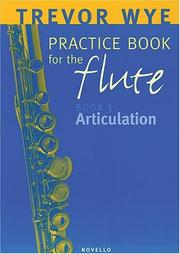
With tone and technique established, articulation becomes the next frontier — Wye's systematic approach to tonguing styles directly elevates musical expression.
Discussion
Keep reading
Paths that share books, cover the same subject, or open a related topic.