Learn archery: form, focus & the shot
This curriculum takes a complete beginner from their very first arrow to disciplined, accurate shooting by building knowledge in four deliberate stages. Each stage adds a new layer — equipment literacy, technical form, mental mastery, and competitive refinement — so that every book lands on a foundation the previous one built.
First Arrows — Gear, Safety & Getting Started
BeginnerUnderstand archery's core vocabulary, choose appropriate equipment, set it up correctly, and shoot safely with basic form from day one.
▸ Study plan for this stage
Pace: 6–8 weeks total. Week 1–4: Read "Archery" by Kathleen Haywood at ~20–25 pages/day, pausing at the end of each chapter to review vocabulary and equipment diagrams. Week 5–8: Read "Beginner's Guide to Traditional Archery" by Brian J. Sorrells at ~15–20 pages/day, cross-referencing Haywood's terminolog
- Core archery vocabulary: bow parts (limbs, riser, nock, fletching, spine), arrow anatomy, and range commands (Haywood)
- Equipment selection: matching draw length, draw weight, and arrow spine to the individual shooter's body and goals (Haywood)
- Bow types overview: recurve vs. compound vs. longbow/traditional, and the trade-offs of each (Haywood + Sorrells)
- Range safety rules: line commands, safe zones, arrow retrieval protocol, and equipment inspection before every session (Haywood)
- Basic shooting form sequence: stance, grip, nocking, drawing, anchor point, aiming, release, and follow-through (Haywood)
- Traditional archery philosophy and instinctive aiming: why form consistency replaces mechanical sighting aids (Sorrells)
- Equipment setup for traditional bows: stringing a longbow/recurve safely, brace height, and arrow rest/shelf tuning (Sorrells)
- Self-diagnosis of beginner errors: identifying common form faults (string slap, plucking the release, collapsing the draw) and their fixes (Sorrells)
- After reading Haywood, can you define at least 15 archery terms — including draw length, draw weight, arrow spine, brace height, and anchor point — and explain how each affects a shot?
- What safety rules must be followed on a shooting line, and what should you do if an arrow falls beyond the line before the 'all clear' command?
- How do you determine the correct draw length and starting draw weight for a new adult shooter, and why does Haywood recommend beginning lighter than you think you need?
- What are the seven steps of the basic shot cycle as described by Haywood, and what physical checkpoint defines each step?
- According to Sorrells, how does instinctive aiming differ from sight-based aiming, and what practice habit does he recommend to build that skill?
- What is the correct procedure for stringing a recurve or longbow safely, and what brace height range does Sorrells recommend checking before every session?
- Vocabulary flashcard drill: After each chapter of Haywood, write one flashcard per new term (front: term; back: definition + why it matters). Aim for a 30-card deck by the end of the book.
- Equipment fit worksheet: Using Haywood's draw-length formula (wingspan ÷ 2.5), calculate your own draw length, then visit or call a local archery shop to verify it on a draw board and compare results.
- Dry-fire-free form practice: With an unstrung bow or a stretch band, rehearse the full seven-step shot cycle from Haywood 10 times per session, narrating each checkpoint aloud until the sequence is automatic.
- Safety scenario quiz: Write out five range scenarios (e.g., 'an arrow lands past the line mid-end') and write the correct response for each, referencing Haywood's safety chapter.
- Stringing and brace-height check log: Using Sorrells' instructions, string and unstring a traditional bow five times, measuring brace height each time and logging whether it falls within the recommended range.
- First live-shooting session journal: Shoot your first 3–5 ends of 3 arrows at close range (5–7 yards), then write a one-page reflection identifying which step of Haywood's shot cycle felt least consistent and one correction from Sorrells to apply next session.
Next up: Mastering the vocabulary, safe habits, and foundational shot cycle in this stage gives the reader a stable physical and conceptual baseline from which the next stage can introduce refined technique, arrow grouping analysis, and progressive distance training without being slowed down by equipment confusion or safety uncertainty.
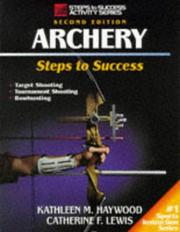
The most widely adopted beginner-to-intermediate archery textbook, covering equipment selection, safety, stance, and the shot cycle in clear, illustrated steps. Read this first to build the vocabulary and mental map every later book assumes.
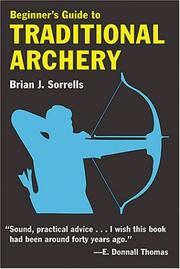
Focuses specifically on recurve and longbow setup and tuning for new shooters, filling in the hands-on equipment detail that a general textbook glosses over. Read second to ground your gear decisions before drilling form.
Building the Shot — Form, Technique & Consistency
BeginnerDevelop a repeatable, biomechanically sound shot cycle — from stance and draw to anchor, aim, and a clean release — and understand how to self-diagnose errors.
▸ Study plan for this stage
Pace: 6–8 weeks total: Weeks 1–3 on "Archery Fundamentals" by Teresa Johnson (~20–25 pages/day, including re-reading key chapters on stance and draw); Weeks 4–8 on "Shooting the Stickbow" by Anthony Camera (~15–20 pages/day, slower pace to absorb the deeper biomechanical and diagnostic detail).
- The six-step (or eight-step) shot cycle as presented in Johnson's 'Archery Fundamentals' — stance, nock, set, set-up, draw, anchor, aim, release, and follow-through — and why each step must be performed in a fixed, repeatable sequence
- Skeletal alignment and bone-on-bone loading: using the skeleton rather than muscle tension to hold draw weight, as emphasized in both Johnson and Camera's frameworks
- Anchor point consistency: the specific contact points (corner of mouth, under chin, string-to-nose) that create a repeatable reference for every shot, contrasted across recurve and longbow styles in Camera's 'Shooting the Stickbow'
- The role of the back muscles (rhomboids, trapezius) in the draw and the danger of 'arm-pulling' — a distinction Camera develops at length for traditional archers
- Clean release and follow-through: why a relaxed, surprise-style release (rather than a deliberate 'let go') produces consistent arrow flight, and how follow-through reveals errors in the shot
- Aiming methods for beginners: instinctive/gap shooting vs. point-of-aim, as introduced in Johnson and expanded for traditional bows in Camera
- Self-diagnosis of common errors — plucking the string, collapsing the draw, torquing the grip, and anticipating the shot — using the error-cause-correction framework both authors provide
- The concept of a pre-shot routine and mental checklist as the glue that holds physical technique together across practice sessions
- After reading Johnson's 'Archery Fundamentals,' can you describe every phase of the shot cycle in sequence and explain what a breakdown in any single phase does to the arrow's flight?
- How does Camera's 'Shooting the Stickbow' define proper back-tension engagement, and how does it differ from the common beginner mistake of pulling with the arm and shoulder?
- What are at least three distinct anchor-point references described across the two books, and which is recommended for which bow style and why?
- If your arrows are consistently hitting left (for a right-handed archer), what are the three most likely form errors both books identify, and how would you isolate which one is the culprit?
- How do Johnson and Camera each describe the ideal release and follow-through, and what does a poor follow-through tell you about what went wrong earlier in the shot cycle?
- What is the difference between gap shooting and instinctive aiming as described in these books, and what practice method does Camera recommend for a beginner building an aiming reference?
- Shot-cycle dry-fire drill (with bow, no arrow): Using Johnson's shot-cycle checklist as a literal printed reference beside you, perform 20 blank-bale draw-and-hold repetitions per session, narrating each phase aloud before moving to the next — do this for the first two weeks before shooting at a target.
- Anchor-point mapping journal: After each practice session, write down (and photograph if possible) your anchor contacts — string to nose, thumb to jaw, finger to corner of mouth — and note any session where the contact felt different; use Camera's anchor descriptions as your benchmark.
- Back-tension isolation exercise: Following Camera's instructions in 'Shooting the Stickbow,' practice the 'push-pull' scapular squeeze with a resistance band or light bow, holding for 5 seconds at full draw 15 times per session, focusing entirely on feeling the rhomboids engage rather than watching the target.
- Error-diagnosis partner drill: Shoot 6-arrow ends while a partner (or phone camera on a tripod) watches only your release and follow-through; after each end, compare observations against the error-cause-correction tables in both books and log one identified fault and one corrective action.
- Blank-bale consistency test: At 3–5 meters from a plain white target, shoot 30 arrows focusing solely on repeating the shot cycle with zero concern for where arrows land; measure group size (not center) across three sessions to track whether mechanical consistency is improving independent of aiming.
- Pre-shot routine card: Write a personal 6–8 step mental/physical checklist synthesizing Johnson's shot cycle and Camera's back-tension cues; laminate it and attach it to your bow bag; recite it silently before every practice end for the remainder of the stage.
Next up: Mastering a repeatable shot cycle and learning to self-diagnose form errors creates the stable mechanical baseline required to meaningfully interpret arrow groupings, tune equipment, and begin exploring distance and precision — the natural focus of the next stage.

The official USA Archery instructional text breaks the shot cycle into discrete, teachable steps and introduces the NASP/USA Archery method. Its structured drills make it the ideal bridge from 'I know what archery is' to 'I can practice deliberately.'

A deep-dive into traditional archery technique and arrow flight that teaches shooters to read their arrows as diagnostic feedback. Reading it after Johnson's fundamentals lets you apply its troubleshooting framework to the form you are already building.
The Inner Game — Focus, Pressure & Mental Skill
IntermediateUnderstand the psychological demands of archery — pre-shot routine, focus under pressure, managing target panic, and building a competition mindset.
▸ Study plan for this stage
Pace: 2–3 weeks, ~20–25 pages/day — "With Winning in Mind" is a concise (~175 pages) but dense mental-skills manual; read slowly, journaling after each chapter rather than racing through it.
- The Mental Management System — Bassham's three-part model of the Conscious Mind, the Subconscious Mind, and the Self-Image, and how all three must be aligned for peak performance
- Self-Image as the performance governor — the principle that you will always perform consistently with how you see yourself, making self-image the primary lever for improvement
- The Pre-Shot Routine (Mental Rehearsal Cycle) — Bassham's structured sequence of mental steps executed before every shot to engage the subconscious and suppress conscious interference
- Directive Affirmations — the specific, present-tense, first-person statements used daily to rewrite self-image and reinforce winning identity
- Goal-Setting with the Mental Management approach — breaking goals into Outcome, Performance, and Process levels, and why focusing on process goals during competition is critical
- Managing pressure and target panic — understanding how over-conscious control (the 'trying harder' trap) triggers target panic, and how trusting the subconscious routine dissolves it
- The Winner's Cycle vs. the Loser's Cycle — how positive self-talk and consistent routine create an upward spiral, while negative self-talk after errors locks in a downward one
- Competition mindset and scoring under pressure — Bassham's techniques for staying in the present shot, resetting after errors, and treating competition as a performance opportunity rather than a threat
- In Bassham's three-part model, what distinct role does each component — Conscious Mind, Subconscious Mind, and Self-Image — play during the execution of an archery shot, and why does conscious interference during the shot degrade performance?
- How does Bassham define Self-Image, and what specific daily practices does he prescribe to raise it? Why does he argue that skill improvement alone, without self-image work, produces inconsistent results?
- Describe the steps of Bassham's Pre-Shot Routine. How does each step function to hand control from the Conscious to the Subconscious Mind at the moment of execution?
- What is the Winner's Cycle, and how does the way an archer responds to a bad shot either reinforce or break that cycle? What does Bassham recommend saying and doing in the 10 seconds after a poor shot?
- How does Bassham differentiate between Outcome, Performance, and Process goals? Which type should dominate an archer's focus during an actual competition end, and why?
- Using Bassham's framework, explain the psychological root of target panic. What mental habits sustain it, and what is his prescribed path out of it?
- Daily Affirmation Writing: Each morning for the full reading period, write 5–10 directive affirmations in Bassham's format ('I am…', present tense, positive, personal) targeting your archery self-image. Track whether your self-talk on the range begins to shift by week 3.
- Pre-Shot Routine Design & Drilling: Using Bassham's template, write out your own step-by-step pre-shot routine on paper. Then, during every practice session, execute it on 100% of shots — including blank-bale shots — and log how often you complete it without interruption.
- Post-Shot Reset Practice: After every shot in practice — good or bad — deliberately perform Bassham's recommended positive reset (e.g., a physical cue + a brief affirmation). Keep a tally of how consistently you do this versus reverting to negative self-talk.
- Winner's Cycle Journaling: After each practice session, write 3 things you did well (no matter how small) before writing anything critical. Model the Winner's Cycle in writing to reinforce the habit of positive self-reinforcement.
- Simulated Pressure Sets: Set up a consequence-based practice drill (e.g., 'I must score X on this 6-arrow end or I restart') and apply your pre-shot routine and post-shot reset under that self-imposed pressure. Note which mental skills hold and which break down.
- Goal Audit: Write out your current archery goals and categorize each as Outcome, Performance, or Process using Bassham's definitions. Rewrite any outcome-only goals into accompanying process goals you can focus on shot-by-shot during your next competition or scored round.
Next up: Bassham's Mental Management System establishes the psychological foundation — self-image, routine, and mindset — that the next stage will build upon by translating these inner skills into refined technical execution and equipment optimization, where a stable mental platform is a prerequisite for diagnosing and improving physical form.

Written by an Olympic rifle gold medalist whose mental management system is widely adopted by elite archers worldwide. It introduces the subconscious/conscious model of performance that underpins every archery mental-skills program — read it before sport-specific mental books.
A West Point performance psychologist's evidence-based guide to building unshakeable confidence and managing pressure. Pairs with Bassham to give you both a system and the neuroscience behind why it works, directly applicable to the archery range.
Precision & Progress — Advanced Technique and Competitive Shooting
ExpertRefine technique to competition standard, understand advanced tuning, develop a structured training plan, and learn how elite archers approach continuous improvement.
▸ Study plan for this stage
Pace: 6–8 weeks, ~20–25 pages/day — Total Archery is dense with biomechanical detail and technical diagrams; plan for slower, deliberate reading with frequent pauses to cross-reference your own form at the range. Re-read key chapters on bone alignment and the shot cycle at least twice before moving on.
- The BowTech System (Body, Bow, and Mind integration) — KiSik Lee's unified framework for elite-level shooting
- Skeletal alignment over muscular effort: using bone structure rather than muscle tension to hold and transfer draw weight
- The nine-phase shot cycle (stance, set-up, pre-draw, draw, anchor, transfer/loading, hold, release, follow-through) and the precise biomechanical role of each phase
- Scapular loading and back tension: activating the rhomboids and trapezius to drive the release rather than the fingers or forearm
- The concept of 'clicker discipline' — using the clicker not as a panic trigger but as a feedback tool for consistent draw length and timing
- Mental process and shot routine: developing a repeatable pre-shot routine and managing performance anxiety at competition level
- Advanced bow tuning principles: brace height, tiller, button pressure, and arrow spine selection as extensions of technique rather than equipment fixes
- Self-diagnosis and continuous improvement: how elite archers use video analysis, coaches' feedback, and training logs to identify and correct micro-errors
- Can you describe each of the nine phases of KiSik Lee's shot cycle and explain the biomechanical purpose of each phase?
- What is the difference between a muscle-driven hold and a skeletal/bone-alignment hold, and why does Lee argue the latter is superior for consistency and injury prevention?
- How should back tension initiate and drive the release, and what physical cues indicate that the transfer from the fingers to the back is happening correctly?
- What role does the clicker play in an advanced archer's shot process, and how should a shooter train to pass through the clicker with back tension rather than a head-drop or body lurch?
- How does KiSik Lee connect bow tuning decisions (button pressure, brace height, spine) to an archer's individual technique, and why is tuning considered technique-dependent?
- What mental and process-based strategies does Lee recommend for maintaining shot-by-shot consistency under competition pressure?
- Shot-cycle journaling: After each range session, write one paragraph per phase of Lee's nine-phase cycle describing exactly what you felt, saw, or struggled with — use this log to track micro-improvements over the 6–8 weeks.
- Blank-bale back-tension drill: Stand 1–2 meters from a blank bale, close your eyes, and execute 20 shots per session focusing exclusively on scapular loading and a surprise release — no aiming, no score pressure; record whether each release felt 'back-driven' or 'finger-driven'.
- Clicker discipline sets: Shoot 5-arrow ends with the sole goal of passing the clicker using back tension only. If you punch or lunge, mark the arrow and review the video; aim to reduce 'bad clicker' shots by 50% over four weeks.
- Video self-analysis: Film your full shot cycle (side and rear angles) every two weeks. Map the footage frame-by-frame against Lee's phase descriptions and identify one specific deviation per session to correct.
- Simulated competition rounds: Once per week, shoot a full scored round (e.g., 70m or 18m indoor) under self-imposed time pressure, applying Lee's pre-shot routine and mental process exactly — score is secondary; routine adherence is the metric.
- Tuning audit: Using Lee's tuning principles, conduct a full bow audit — paper tune, walk-back tune, and check tiller and brace height — then deliberately change one variable (e.g., button pressure), shoot 10 ends, and document the effect on arrow flight and feel to build intuitive tuning knowledge.
Next up: Mastering Lee's biomechanical framework and competition mindset in Total Archery equips the reader with the technical vocabulary and self-diagnostic habits needed to engage with specialized coaching literature, sport-science research, or discipline-specific competitive manuals at the highest level.

The definitive technical manual of the Korean Olympic archery system — the most successful in the world — covering biomechanics, muscle activation, and the full-draw position in exhaustive detail. This is the book serious recurve archers study to move from good to excellent.
A structured training and competition guide from a high-performance coach that ties together technique, periodization, and mental preparation into a coherent improvement plan. Read last: it assumes you have solid form and mental skills, and shows you how to systematically push further.
Discussion
Keep reading
Paths that share books, cover the same subject, or open a related topic.