Fables Reading Order and Reading Guide
Fables is a 150-issue comic collected into twenty-two trade paperbacks, and the reading order is simply the numbered volumes — but the series has a natural shape most guides miss. Volumes one to eleven are one continuous war story against the Adversary who drove the fairy-tale characters out of their Homelands, and that arc has a real ending; everything after it is a second, looser series. Read the collected volumes in order, stop at volume eleven to see whether you want to keep going, and save the spin-offs and the prose novel for after, since they assume you already know who these people are.
Start Here
BeginnerMeet Fabletown, learn the premise — exiled fairy-tale characters living in secret in New York — and see the series' two default modes, the murder mystery and the political thriller.
▸ Study plan for this stage
Pace: 1 week. The first two collections are 128 pages each and each holds a complete arc — a single evening apiece is realistic. Resist reading them in an hour: comics reward reading the art, and Fables in particular hides plot information in background detail and in the panel borders. If you find yoursel
- The premise: characters from fairy tales and folklore, driven out of their Homelands by a conqueror known only as the Adversary, living in secret among ordinary New Yorkers in a community called Fabletown
- Volume one is a locked-room murder mystery — Rose Red apparently killed, investigated by Bigby Wolf, now the town sheriff — and its real job is introducing a very large cast through interrogation
- The genre-per-arc habit starts immediately: the series switches between mystery, political thriller, war story and fable, and expects you to follow
- Fabletown runs on the Amnesty, a general pardon for crimes committed in the Homelands, which is why murderers and monsters live next door to their victims — the entire political premise of the series
- Volume two moves upstate to the Farm, where non-human Fables are confined because they cannot pass as human, and stages a revolution there
- That volume establishes the fault line the whole series runs on: who counts as a citizen of Fabletown, and what the community will do to people who do not
- The art is by several hands over the run, with Mark Buckingham as the defining artist; his decorated page borders often carry motifs relevant to the arc, so they are worth looking at rather than through
- Two collections is the correct trial size — if the cast and the tone have not caught you by the end of the Farm story, the remaining twenty volumes will not change your mind
- Who is actually being introduced in volume one, and how does the murder-mystery structure let Willingham do it without exposition?
- What is the Amnesty, and what does it make possible that a conventional community could not sustain?
- The Farm revolution has a leader with a reasonable grievance and unreasonable methods. Where does the book place your sympathy, and does it hold?
- How does the resolution of volume two treat the losing side, and what does that tell you about how Fabletown governs?
- What is the art doing on a page you enjoyed — panel layout, borders, colour — that the script alone could not?
- Make a cast list after volume one with each character's fairy-tale origin. Roughly thirty named Fables appear across the run and the early volumes assume you are keeping up.
- Reread one page of volume two looking only at the backgrounds and borders. Note what you missed the first time.
- Write down what you think the Adversary is after two volumes. Keep the note; the answer comes in stage three.
- Check which edition you are buying: the numbered trade paperbacks, the Deluxe hardcovers and the Compendiums cover the same material with different numbering, and mixing them mid-run causes gaps.
Next up: The premise and the politics are set; the next volumes drop the case-of-the-arc shape and start running plots across several books at once.
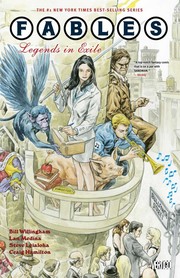
Rose Red is apparently murdered and Bigby Wolf, now the town sheriff, investigates. A straight locked-room mystery that exists to introduce the cast, and the only place to start.

Revolution among the non-human Fables confined to the upstate Farm. Read second because it establishes the political fault line — who counts as a citizen of Fabletown — that drives the entire war arc.
The First Long Arc
BeginnerSettle into the series as it stops being a mystery-of-the-month and starts running long plots across multiple volumes.
▸ Study plan for this stage
Pace: 2 weeks. Volumes three, four and five run 192, 216 and 168 pages. Volume four is the densest of the three and worth a second pass; volume five is quieter and can be read quickly. Read all three within a fortnight — the plotting starts carrying across volumes here, and long gaps between books cost yo
- Volume three is where the series stops being mystery-of-the-month: a tabloid reporter threatens to expose Fabletown, and Bigby and Snow White end up in the woods together
- That trip is the start of the central relationship, and almost everything emotional in the next eight volumes depends on it
- Volume four brings the Adversary's forces to New York for the first time, and the stakes move from domestic to existential
- It is also the series' first large-scale battle and a good measure of whether Willingham's action storytelling works for you — it is dense, with a lot of simultaneous fronts
- Volume five is the aftermath by design: a new mayor, Bigby's exile, and Snow White raising her children on the Farm
- The quiet volume is doing structural work — it installs the leadership problem that drives the entire war arc, and the series repeatedly uses a calm book to reload
- Fabletown's politics harden here: the community is now openly a wartime government, with the security services running the town
- By the end of volume five the series has its permanent shape — a long war plot, a domestic plot, and single-issue side stories tucked between arcs
- What changes between Bigby and Snow White in volume three, and how does the series avoid stating it directly?
- How does Willingham stage a battle with dozens of characters — what does he do to keep it legible, and where does it fail?
- Volume five removes the series' most popular character from the board. What does that free the story to do?
- Who governs Fabletown by the end of this stage, and how did that happen without an election anyone would recognise?
- Which of these three volumes could be cut without damage? Answering that tells you what the series thinks is essential.
- After volume four, list every faction now in play. There are more than you would guess and the war arc assumes you can tell them apart.
- Track Snow White's authority across the three volumes — what she can order, and who obeys.
- Pick one action sequence and describe how the panel layout controls the pacing. It is the clearest lesson in comics craft the series offers so far.
- Note any single-issue standalone stories in these volumes. They are usually the best-drawn pages in the book and readers skip them.
Next up: With Fabletown established and threatened, the series can finally leave it and show you the enemy on his own ground.

A tabloid reporter threatens to expose Fabletown, and Bigby and Snow White end up in the woods. The volume where the central relationship starts, which every later book depends on.
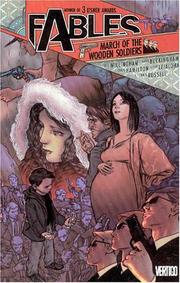
The Adversary's forces finally arrive in New York. The first real turning point of the series and the moment the stakes stop being domestic.

The aftermath: a new mayor, Bigby's exile and Snow White's children. Quieter by design, and it sets up the leadership problems that run through the war.
The Road to War
IntermediateFollow the series as it moves out of Fabletown and into the Homelands, and meet the Adversary properly.
▸ Study plan for this stage
Pace: 3 weeks. Volumes six, seven, eight and nine run 190, 144, 159 and 200 pages. Volume six is the one to read carefully and without interruption; volumes seven and eight are shorter and lighter; volume nine is short but chilling and worth a slow read. Four volumes in three weeks is comfortable, and thi
- Volume six contains the single biggest revelation in the series — the Adversary's identity — reached through Boy Blue's one-man mission across the conquered Homelands
- Do not read a summary, a wiki entry or a back-cover blurb before this volume. The reveal is genuinely well built and trivially spoiled
- It also opens up the Homelands as a setting, which changes the scale of the series permanently: this is no longer a story about a neighbourhood
- Volume seven brings a delegation from the Arabian Fables with very different politics, and it widens the world just before the war narrows it again
- It is also the volume most often criticised for how it handles that delegation, and it is worth reading with that criticism in mind rather than around it
- Volume eight sends Bigby into the Empire on a diplomatic mission and gives the Fabletown storyline its wedding — the bridge between the reveal and the war
- Volume nine is the Empire war-gaming an invasion of the mundane world in cold procedural detail, and it is structurally the most chilling thing in the run
- The pattern across these four is deliberate: reveal, widen, breathe, threaten — and then the shooting starts
- Why is the Adversary's identity the right answer for this series thematically, and not merely a surprise?
- What does Boy Blue's journey show you about the Homelands that exposition could not?
- How does the Arabian delegation's arrival test Fabletown's politics, and what does the volume conclude?
- Volume nine consists largely of the enemy planning. Why is that more frightening than the battle would be?
- By the end of this stage, whose side is the series on — and has it complicated that at all?
- Go back to the note you made in stage one predicting the Adversary. Compare it with the reveal and work out what clues you had.
- After volume seven, write down what the series seems to think about the Arabian Fables, and read a critical discussion of that arc afterwards.
- Map the Homelands as the series describes them: which worlds are conquered, which are free, and how travel between them works.
- Read volume nine's planning sequences twice, once for plot and once for tone. The flat bureaucratic register is the whole effect.
Next up: Everything is now positioned for the war, which is where the story begun in volume one actually ends.

Boy Blue goes on a one-man mission through the conquered worlds, and the Adversary's identity is revealed. The single biggest reveal in the series; do not read a summary first.
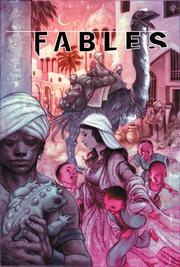
A delegation from the Arabian Fables arrives with very different politics. Read in place because it widens the world just before the war narrows it again.
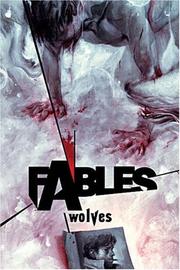
Bigby is sent into the Empire on a diplomatic mission, and the Fabletown storyline gets its wedding. The bridge volume between the reveal and the war.
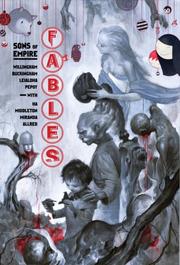
The Empire war-games its invasion of the mundane world in cold detail. Structurally the most chilling volume and the last one before the shooting starts.
The War and What Follows
IntermediateFinish the Adversary saga, which is a genuine ending, and see how the series restarts afterwards.
▸ Study plan for this stage
Pace: 2–3 weeks. Volumes ten, eleven and twelve run 224, 177 and 192 pages. Volume ten deserves to be read in one sitting — it is the emotional peak of the series. Volume eleven is the war itself and moves fast. Then stop before volume twelve and decide, because that volume is a door rather than a conclus
- Volume ten is Flycatcher's book: the janitor frog prince, background scenery for nine volumes, becomes the most important character in the series
- It is usually named the best volume of the run, and it works precisely because the series spent nine volumes letting you ignore him
- Volume eleven is the war, and it is a real ending — the story begun in volume one with the exile from the Homelands is genuinely concluded
- This is a legitimate stopping point, and the honest recommendation: if you read only eleven volumes of Fables, stop here and you will have read a complete, well-shaped story
- Volume twelve restarts the series — victory has consequences, and a new and worse threat is released almost immediately
- Warning worth having before you commit: the second half of Fables is widely considered weaker than the first. The volumes following this one are the run's low point for most readers — the new antagonist is less interesting than the Adversary, and the plotting becomes episodic
- The series does recover somewhat in its final stretch and reaches a real ending at volume twenty-two, but few readers rate the back half alongside volumes one to eleven
- So volume twelve is best read as an audition for the second series rather than as the next chapter of the first
- Why does Flycatcher's story work, and what would be lost if he had been introduced as a major character in volume one?
- Is volume eleven a satisfying ending? Test it by asking what is genuinely unresolved at its last page.
- What does volume twelve set up, and does the new threat interest you as much as the Adversary did?
- Willingham ended his main story at the halfway point of the run. What does that tell you about how long-form comics get made?
- If you are stopping here, what would you say the series was about? If you are continuing, what are you hoping for?
- Reread Flycatcher's earlier appearances in volumes one to nine after finishing volume ten. He is on more pages than you noticed.
- Write a one-paragraph ending for the series as of volume eleven, then compare it with what volume twelve actually does.
- Decide explicitly, in writing, whether you are continuing past volume twelve. The dip is real and going in unaware is how readers abandon the series mid-run and feel cheated.
- Look at how the art changes across the war volumes — several artists work on the battle issues, and the shifts are visible.
Next up: With the main story complete, the companion material can be read for what it is: side stories for readers who already know Fabletown.

Flycatcher, the janitor frog prince, becomes the most important character in the series. Usually named the best volume of the run, and it only works because nine volumes have treated him as background.

The war itself, and the end of the story begun in volume one. A legitimate stopping point: if you read only eleven volumes of Fables, stop here.

Victory has consequences, and a new and worse threat is released. Read it to see the series relaunch itself, and to decide whether you want the second half.
The Companion Books
BeginnerRead the spin-offs and the prose novel, all of which assume you already know Fabletown.
▸ Study plan for this stage
Pace: 1 week. Peter and Max is 368 pages of illustrated prose rather than comics, so it reads at novel speed — three or four evenings. Read it after the main run, never as an introduction; it assumes you know what a Fable is and why one would be living quietly in the mundane world.
- Peter and Max is a prose novel set in the Fables world, illustrated but not a comic — the change of medium is the main thing to adjust to
- Its subject is the Piper brothers, Peter Piper and Max Piper, and it splits between their Homelands childhood and the present day
- The Pied Piper legend is the engine, reworked so that the familiar story becomes a family grievance carried across centuries
- It is the most self-contained thing in the franchise: no knowledge of the war arc is required beyond the basic premise, and no main-series plot depends on it
- As prose, Willingham is plainer than he is as a comics writer — the pleasure is fairy-tale storytelling rather than the panel-level craft of the main run
- That makes it a reasonable place to stop: it gives you one more complete Fables story without committing you to the weaker second half of the comic
- It also shows how portable the premise is, which is why the franchise generated spin-offs at all
- What does prose let this story do that the comic could not, and what does it lose?
- How does the novel rework the Pied Piper legend, and is the reworking as sharp as the main series' handling of the Adversary?
- Does knowing the main run change how you read Peter and Max, or is it genuinely standalone?
- The two timelines alternate. Does that structure earn itself here as it does in the comics?
- Having finished the path, was Fables a story about exile, about government, or about fairy tales — and does the novel support your answer?
- Read the first chapter aloud. The prose is deliberately fairy-tale cadenced and it is easier to hear than to see.
- Compare a scene in the novel with an equivalent scene in the comics and note what the illustrations are and are not doing.
- Write a short recommendation of where a new reader should stop in the main series, using everything you now know. It is the most useful thing you can pass on.
- List which Fables characters you would want a spin-off about, then check whether one exists. Several do, and this is how to decide if you want them.
Next up: You have the complete main story, an honest warning about the back half, and one standalone novel — which is the whole of what Fables can offer a first-time reader.

A prose novel about the Piper brothers, illustrated but not a comic. The most self-contained thing in the franchise and a reasonable place to stop.
Discussion
Keep reading
Paths that share books, cover the same subject, or open a related topic.