Warriors books in order: where to start with Erin Hunter
Erin Hunter is not a person. It is a shared pen name held by a rotating team — the editor Victoria Holmes plotted the early books, and Kate Cary, Cherith Baldry, Tui Sutherland, Gillian Philip and others have written under it since — which is why the name spans several enormous animal series at once and why a search for it returns eighty-plus Warriors books plus Seekers, Survivors and Bravelands with no obvious front door. That is the problem this path solves. Warriors is the series people mean, it is divided into arcs of six novels each, and the only correct place to begin is the first book of the first arc: Into the Wild. This path runs the original arc in full, then the second arc in full, then names the entry point for each later arc and each sibling series, so you can see the shape of all eighty books without reading them blind.
Arc One: The Prophecies Begin
BeginnerRead the original arc from the beginning and learn the world's fixed rules — the four warrior Clans, the warrior code, the naming system that turns a kit into an apprentice into a warrior — which every later book assumes without re-explaining.
▸ Study plan for this stage
Pace: Four to six weeks. The five books here run roughly 300 to 340 pages each and a committed reader gets through one in three or four days, so a book a week is a comfortable pace and faster is entirely normal for this series. Read them strictly in order: Into the Wild, Fire and Ice, Forest of Secrets, R
- The four Clans — ThunderClan, ShadowClan, WindClan, RiverClan — their territories, and the Gatherings at the full moon under a truce. Into the Wild teaches this and no later book re-teaches it.
- The warrior code, which functions as the series' constitution. Learn the individual articles as they are stated, because most of the plots across all eighty books are generated by a character breaking one or by two articles conflicting.
- The naming system: kit, then apprentice with a -paw suffix, then warrior with a new full name granted at a ceremony, then leader with -star and nine lives. Rusty becomes Firepaw becomes Fireheart, and tracking a name change is how you track a character's position.
- StarClan, the ancestral spirits, and the medicine cat as the interpreter of their signs. Prophecy in this series is real within the fiction but consistently ambiguous, which is what makes it usable as plot machinery rather than as a spoiler.
- The outsider premise of arc one: Rusty is a kittypet, a house cat, and Fireheart's entire arc runs on having to be twice as correct as any Clan-born cat. Every accusation against him traces back to his origin.
- Tigerclaw as an antagonist who is trusted by almost everyone for the first two books. Forest of Secrets is where the ambiguity ends, and it is the volume that makes the second half of the arc work.
- The parentage secrets set up in Forest of Secrets drive plots for the next twenty books across two arcs. This is the specific reason the third book cannot be skipped.
- Rising Storm and A Dangerous Path are consequence books — the leadership vacuum, the fire, the external threat that forces the Clans together. They function as one long approach to the finale rather than as standalone adventures.
- State the articles of the warrior code as they are given across the first two books. Which one does Fireheart break first, and why?
- How does the naming system work, and what has to happen for a cat's name to change? Give the sequence for one character.
- Why does Fireheart's origin as a kittypet keep resurfacing? Name three separate occasions and who raises it each time.
- What is revealed in Forest of Secrets, and which later plot points depend on it?
- Track Tigerclaw across the first three books. What did the reader have available to suspect him before the reveal, and what was withheld?
- By the end of A Dangerous Path, what problem do all four Clans share, and what has to happen for it to be resolved?
- Build a Clan roster as you read: name, Clan, rank, and mentor or apprentice, updated at the end of each book. With sixty-plus named cats in arc one this is the difference between following the plot and losing it, and you will use the same roster in arc two.
- Write out the warrior code as a numbered list from what the books actually state, then mark beside each article the point where a character breaks it and what happened. The list is the series' engine and this is the fastest way to see it working.
- Track every name change in the five books and note what the new name refers to — an appearance, a quality, an act. The names are chosen deliberately and reading them as commentary tells you what the Clan thinks of a cat.
- Reread the first three chapters of Into the Wild after finishing Forest of Secrets. Write down every scene involving Tigerclaw that reads differently now. This is the cleanest available demonstration of how the series plants information.
- Draw the map of the forest territories from the descriptions in the books — the four Clan territories, Fourtrees, the Thunderpath, Sunningrocks. Keep the drawing; arc two destroys this map on purpose and the loss lands harder if you have made it yourself.
Next up: Five books have built the world and set the finale in motion; the next stage closes arc one properly and adds the single Super Edition that works as its epilogue.
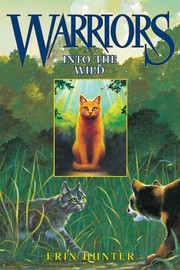
The correct first book of the whole enterprise: a house cat called Rusty leaves his garden and joins ThunderClan. Everything about the Clans, the code and the naming convention is taught here. Search for it under Erin Hunter rather than the title alone, and note that queries shaped as Warriors: Into the Wild return a three-book bind-up instead of the novel.
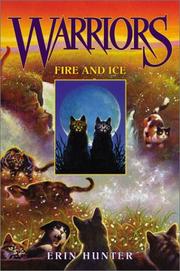
Second. Rusty is now Fireheart, and the book turns on the loyalty question the whole arc runs on — an outsider who has to be twice as correct as anyone born to the Clan. Introduces the WindClan and RiverClan politics that arc two later inherits.
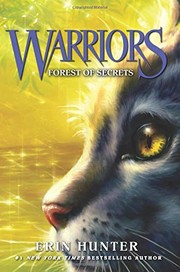
Third, and the one where the series stops being a school story with cats: the parentage secrets that drive the next twenty books are set up here, and the antagonist stops being ambiguous. Skipping it makes book four unreadable.

Fourth. The consequences of book three land — a leadership vacuum, a fire, and the first real cost to a character the reader likes. This is the volume most often cited as where younger readers get properly hooked.

Fifth, and the setup for the finale: an external threat forces the four Clans into the arrangement the last book has to resolve. Read it immediately before The Darkest Hour; the two function as one long ending.
The Finale, and the One Extra Book Worth Reading Next
BeginnerFinish arc one properly, then take the single standalone Super Edition that follows directly on from it rather than jumping straight to arc two.
▸ Study plan for this stage
Pace: Two to three weeks. The Darkest Hour is a standard-length Warriors novel of around 320 pages; Firestar's Quest is a Super Edition and much longer at roughly 500 pages, so allow a fortnight for the pair. Read The Darkest Hour immediately after A Dangerous Path — the two really are one ending — and th
- The Darkest Hour resolves the prophecy Into the Wild opened with, which is why arc one is a genuinely complete six-book story. A reader can stop here having read a whole novel-length arc, and it is worth knowing that before committing to eighty books.
- BloodClan as an antagonist that exists outside the warrior code entirely, which is the point: the code is tested by an enemy who has never agreed to it.
- The nine lives ceremony and what it actually costs, which the book stages in full. This is the mechanism the series has been referring to since book one and it is finally shown.
- What the ending closes and what it deliberately leaves open. Firestar's Quest exists because of a specific unresolved question in The Darkest Hour, and identifying that question before you start the Super Edition makes it read as an epilogue rather than as a detour.
- Super Editions as a format: longer standalone novels sitting outside the numbered arcs, some prequels, some side-quests. Firestar's Quest is the first and the only one that belongs at this point in a reading order.
- The other Super Editions — Bluestar's Prophecy, Crookedstar's Promise, Yellowfang's Secret, Tallstar's Revenge — are prequels covering the generation before arc one, and can be read at any point after this. Bluestar's Prophecy in particular reframes arc one and is best saved until arc one is finishe
- The change of leadership at the end of arc one is what makes arc two possible, because the viewpoint has to move to a new generation and the old protagonist has to move up rather than out.
- What prophecy does The Darkest Hour fulfil, and where was it first stated?
- How does BloodClan differ from the four Clans structurally, not just morally? What does the difference let the book test?
- Describe the nine lives ceremony as the book presents it. What is given, by whom, and what is asked in return?
- What question does The Darkest Hour leave open that Firestar's Quest answers?
- Firestar's Quest is twice the length of a normal Warriors book. What does it do with the extra space — more plot, more travel, more interiority?
- If a reader stopped at The Darkest Hour, what would they have read? Describe it as a complete story.
- Reread the prophecy as stated in Into the Wild, then reread the final chapter of The Darkest Hour, and write down exactly how the wording is fulfilled. Warriors prophecies are deliberately ambiguous and checking the fit is the pleasure of them.
- Update your Clan roster with every death in The Darkest Hour and mark how long each cat had been in the books. The casualty list across six volumes is the most direct measure of what the series is willing to do.
- Before opening Firestar's Quest, write down what you think it will be about, based only on what The Darkest Hour left unresolved. Check afterwards. If you were right, you have understood how this series structures its hooks.
- Compare the pacing of Firestar's Quest with a standard arc-one book: count chapters, and note where the halfway point falls in the plot of each. The Super Edition format is genuinely different and the comparison makes the difference concrete.
Next up: Arc one is a finished story with an epilogue; the second arc moves to a new generation and destroys the forest the first six books were set in.
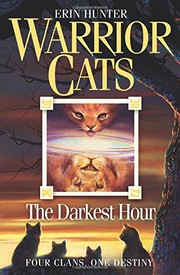
The sixth and last book of the original arc, and a genuine conclusion — it resolves the prophecy the first book opened with. Stop here and you have read a complete six-book story; nothing later is required.

The first Super Edition — a longer standalone that sits between the arcs and answers a question The Darkest Hour deliberately left open. Read it here, not later: it works as an epilogue to arc one and it is the cleanest demonstration of what the Super Editions are for. The others (Bluestar's Prophecy, Crookedstar's Promise, Yellowfang's Secret, Tallstar's Revenge) are prequels and can be read any time after this.
Arc Two: The New Prophecy
BeginnerRead the second arc, which moves the story to a new generation and relocates the Clans entirely — the point at which Warriors stops being one story and becomes a continuing world.
▸ Study plan for this stage
Pace: Four to six weeks for the five books listed, plus one more for Sunset, the sixth volume, which closes the arc and is not in this catalogue list — find it before you start, so the arc does not stop one book short. Each is around 300 to 340 pages. Read in order: Midnight, Moonrise, Dawn, Starlight, Tw
- The generational handover: the viewpoint shifts to the next generation of cats and the arc-one protagonists become the leadership. Your roster from arc one is what makes this readable.
- The quest structure of Midnight and Moonrise — one cat from each Clan sent on a journey — which the first arc never used. It puts cats from rival Clans in forced co-operation and changes what the books can be about.
- The Tribe of Rushing Water in Moonrise: a cat society with entirely different customs, beliefs and naming conventions. Its function is to demonstrate that the warrior code is one arrangement and not a law of nature.
- Dawn is the pivot of the entire series, not just of the arc. The forest is destroyed by human construction and the Clans have to leave. Every book published afterwards is set somewhere else.
- The migration and the arrival at the lake in Starlight, which is a slower book because rebuilding territories, boundaries and sacred sites is inherently less dramatic than fighting over them. It is structurally necessary and most readers find it the weakest of the six.
- The lake territories are where roughly the next fifty books happen. Learning the new geography in Starlight is an investment, not an interruption.
- Twilight sets up the arc's political and romantic conflicts for the finale, and Sunset resolves them. The cross-Clan relationships introduced here are the source of most of arc three's plot.
- The tone shifts across the two arcs: arc one is about an outsider proving himself inside a stable society, arc two is about a stable society losing its place and having to rebuild. The first is a coming-of-age story and the second is a displacement story.
- Who is sent on the journey in Midnight, from which Clan, and what does each bring that the others do not?
- How does the Tribe of Rushing Water organise itself, and what specific belief of the Clans does it contradict?
- In Dawn, what destroys the forest and how do the cats understand what is happening to them? Note the gap between the two.
- What has to be rebuilt at the lake in Starlight, and in what order? Why does that order matter to the Clans?
- Which cross-Clan relationships are established in Twilight, and which article of the warrior code does each violate?
- Compare the arc-one and arc-two protagonists. What is each trying to prove, and to whom?
- Draw the lake territories from Starlight as you drew the forest in arc one, and put the two maps side by side. The books ask you to feel a loss of place, and having made both maps yourself is the only way that fully lands.
- Extend your Clan roster through arc two, marking which arc-one cats are still alive and what rank they now hold. The generational turnover is easier to see in a table than in the prose.
- Take the warrior code list you built in arc one and mark every article the Tribe of Rushing Water does not share. The differences are the argument Moonrise is making.
- Reread the last chapter of The Darkest Hour and the first chapter of Midnight consecutively, and note everything the new arc assumes you remember. This is the test of whether arc two can be started cold — it cannot, and the exercise shows why.
- Track the food supply across Dawn and Starlight, noting every mention of prey, hunger and hunting. The migration is written as a survival narrative and the prey references are how the pressure is kept present.
Next up: Two complete arcs is twelve books and a coherent story; from here the series continues indefinitely, and the next stage names where each subsequent arc begins so you can keep going without guessing.
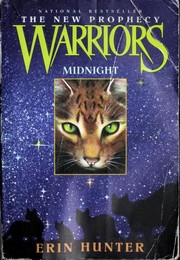
Book one of arc two, and the correct next novel after Firestar's Quest. The viewpoint shifts to the next generation, and one cat from each Clan is sent on a journey — a structure the first arc never used.

Second. The journey continues into the mountains and introduces the Tribe of Rushing Water, a society with its own rules that exists to show the warrior code is not the only way to organise cats.

Third, and the turning point of the arc: the forest the first six books were set in is destroyed by human construction, forcing the migration that defines every book after it. Do not read out of order here — the geography of the entire later series changes in this volume.

Fourth. The Clans arrive at the lake and have to rebuild their territories and their religious sites from nothing. Slower than the others and structurally necessary — the lake setting is where the next fifty books happen.

Fifth, and the one that sets the arc's romantic and political conflicts up for the finale. The sixth and final book of this arc is Sunset, which closes the New Prophecy story; read it straight after this one before moving on.
The Later Arcs: Entry Points Only
IntermediateLearn where each subsequent Warriors arc begins so you can keep going indefinitely without hunting for the right first book, and understand that arcs three onward are read in sequence rather than sampled.
▸ Study plan for this stage
Pace: Open-ended. Each later arc is six books of around 300 to 340 pages, so an arc is a two-month project at a book a week. This stage gives you the first book of arcs three and four rather than the whole run: read The Sight, and if the arc holds you, finish Power of Three before starting The Fourth Appr
- The Sight opens Power of Three, and it is the first book in the series that assumes you have read both earlier arcs. Three kits with unusual abilities, and a plot built on relationships established back in Forest of Secrets.
- Why this is not an entry point, stated plainly: the arc's central reveal is about parentage, and it depends on the reader knowing the family trees from arcs one and two. A newcomer starting here gets a decent adventure and misses the entire point.
- The Dark Forest as the counterpart to StarClan — the afterlife for cats who broke the code — which becomes the series' long antagonist across arcs three and four. Tigerclaw's presence in it is why arc one keeps mattering eighteen books later.
- The Fourth Apprentice opens Omen of the Stars, which follows directly from the end of Power of Three and completes the story the two arcs share. Read out of order it spoils arc three's central identity reveal.
- Arcs three and four are best understood as one twelve-book story with a break in the middle, in the way arcs one and two are not. This is the structural fact that determines how to read them.
- The later arcs after Omen of the Stars — Dawn of the Clans as a prequel arc about the founding of the Clans, and the arcs following it — continue the same pattern of six books each with a stated entry point. The principle established here carries forward: find the first book of the arc and read the
- The publication rate is the practical constraint on this series more than the plotting is. Knowing the arc boundaries is what lets a reader stop at a genuine ending rather than in the middle of one.
- Reading the Super Edition prequels between arcs is the standard way experienced readers pace themselves, and Bluestar's Prophecy in particular changes how arcs one and three read.
- What do the three protagonists of Power of Three have that other cats do not, and where does the prophecy about them come from?
- Which arc-one revelation does arc three's central reveal depend on? Name the book and the scene.
- What is the Dark Forest, how does it differ from StarClan, and which named cats from arc one are in it?
- Why must The Fourth Apprentice be read after the whole of Power of Three rather than in place of any of it?
- How would you explain to a new reader why they cannot start at The Sight, without spoiling arc three?
- Where are the genuine stopping points in this series, and what does each one close?
- Build the family tree across arcs one to three from your roster. Warriors' plots run on parentage and a tree drawn from your own notes will predict at least one of arc three's reveals before the book states it.
- Before reading The Sight, list every unresolved thread from arcs one and two. Check the list against what arc three picks up. The overlap is the argument for reading in order.
- Take one arc-one character who appears in the Dark Forest and write their whole arc in five sentences, from first appearance to final state. The span is eighteen books and writing it out is what makes the later arcs feel earned rather than arbitrary.
- Look up the first book of every Warriors arc published to date and write the list out in publication order with the arc name beside each. Keeping that list is the single most practical thing a reader of this series can do, and it is the actual purpose of this stage.
Next up: Warriors is only part of what the Erin Hunter name covers; the last stage is the sibling series, each of which starts clean and needs none of the eighty books behind it.
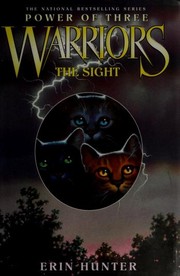
Book one of arc three, Power of Three, and the first book to assume you have read both earlier arcs — three kits with unusual abilities, and a plot that pays off relationships established in arc one. This is the entry point; do not start a newcomer here.

Book one of arc four, Omen of the Stars, which follows directly from the end of Power of Three and completes the story those two arcs share. Reading it out of order spoils the central identity reveal of arc three.
The Other Erin Hunter Series
IntermediateSee what else the pen name covers, and pick up whichever sibling series suits the reader — each is independent of Warriors and starts clean.
▸ Study plan for this stage
Pace: Two to three weeks for the two books, or longer if either series takes. The Quest Begins and The Empty City are both around 300 pages and read at the same pace as a Warriors novel. Each is the first book of an independent series with its own continuity, so either can be picked up cold. Both involve
- Erin Hunter is a pen name held by a rotating team rather than an individual — the editor Victoria Holmes plotted the early Warriors books and Kate Cary, Cherith Baldry, Tui Sutherland, Gillian Philip and others have written under it. That is why one name spans four enormous series, and it explains t
- The Quest Begins opens Seekers: three bear cubs of different species — black, grizzly, polar — thrown together. The natural history is more grounded than in Warriors and the environmental thread, particularly around sea ice, is explicit rather than implied.
- Seekers is the outlier of the four series in structure: fewer viewpoint animals, less social machinery, more travel. A reader who liked Warriors for the Clan politics may find it thin; a reader who liked it for the survival will prefer it.
- The Empty City opens Survivors, the dog series, set after an earthquake empties a city. Packs replace Clans, and the transfer of structure is close enough that it is the easiest sideways move for a Warriors reader.
- Survivors starts with a lone dog rather than a society, which inverts the Warriors opening: Rusty joins a Clan, Lucky has to decide whether to join anything at all.
- Bravelands is the team's later series, set on the African savannah with three viewpoint animals from different species, and it begins with Broken Pride if you want a fourth option.
- Across all four series the underlying shape is the same — an animal society with a code, an outsider protagonist, a prophecy, and a threat that tests the code — which is worth naming, because recognising the formula is what lets a reader choose intelligently between them rather than reading all eigh
- What is Erin Hunter, and how does knowing that change how you read the consistency of the series?
- How do the three bear cubs in The Quest Begins differ from each other, and what does each species contribute that the others cannot?
- How does Survivors organise its dogs, and how closely does the structure map onto the Clans?
- The Empty City begins with a lone dog rather than a society. What does that change about the opening compared with Into the Wild?
- Identify the shared formula across Warriors, Seekers and Survivors. Name the four common elements.
- Which of the three series would you recommend to a specific reader you know, and what would you say about the other two?
- Read the first chapter of Into the Wild, The Quest Begins and The Empty City consecutively and compare how each establishes its animal society and its outsider. Three openings by the same team using the same formula is the clearest way to see the formula itself.
- Take the four common elements you identified and fill in a grid: code, outsider, prophecy, threat, one row per series. Where a series lacks one, note what it uses instead.
- Note the natural history in The Quest Begins that a Warriors book would not include — feeding, hibernation, range, ice. Seekers is the one series where the biology constrains the plot, and cataloguing it shows how.
- Write the recommendation you would actually give someone who has finished the first two Warriors arcs and wants to know what next, covering all four options in four sentences. That recommendation is the deliverable of this whole path.
Next up: This is the final stage; between the two complete Warriors arcs, the correct entry point to every later arc, and the three sibling series, you can navigate all eighty-odd Erin Hunter books without ever having to guess where a story starts.

Book one of Seekers, the bear series: three bear cubs of different species, written with more real natural history than Warriors and a stronger environmental thread. Completely separate continuity — a good second series for a reader who has finished arc two and wants something new rather than more.

Book one of Survivors, the dog series, set after an earthquake empties a city. The closest of the sibling series to Warriors in structure — packs instead of Clans — so it is the easiest transfer for a reader who wants the same shape with different animals. The team's later series, Bravelands, begins with Broken Pride if you want African savannah instead.
Discussion
Keep reading
Paths that share books, cover the same subject, or open a related topic.