Learn embedded systems programming: books in order
This curriculum takes an intermediate programmer from solid C fundamentals into the heart of embedded systems, firmware architecture, and real-time operating systems. Each stage builds on the last — hardware awareness first, then bare-metal coding discipline, then RTOS and production-grade firmware design — so no concept is introduced before the reader has the vocabulary to absorb it.
Hardware Foundations for Software People
IntermediateUnderstand how microcontrollers work at the register and memory level, and how C maps directly onto hardware — the mental model every embedded developer needs.
▸ Study plan for this stage
Pace: 8–10 weeks, ~40–50 pages/day (mix of dense electronics theory and code examples)
- Digital logic fundamentals: gates, flip-flops, and how transistors form the basis of computation
- Microcontroller architecture: CPU, registers, memory (RAM, ROM, flash), and the fetch-execute cycle
- Memory layout and addressing: stack, heap, data segment, and how variables map to physical memory locations
- Bit manipulation and bitwise operations as the primary interface to hardware registers
- Interrupts and exceptions: how hardware events trigger code execution and break normal program flow
- C language mapping to hardware: how operators, function calls, and data types compile to assembly and register operations
- Peripheral control via memory-mapped I/O: reading and writing to hardware registers to control LEDs, timers, and sensors
- Timing and synchronization: clock cycles, instruction timing, and why execution speed matters in embedded systems
- How does a transistor work, and how do transistors combine to form logic gates and flip-flops that store state?
- Draw and explain the memory map of a typical microcontroller: where does code live, where does the stack grow, and what is the heap?
- Write C code that uses bitwise operations to set, clear, and toggle a specific bit in a register without affecting other bits.
- Explain how a function call in C translates to stack operations and register usage at the assembly level.
- How do interrupts work, and why is the interrupt service routine (ISR) different from normal function calls?
- Given a hardware datasheet, write C code to configure a peripheral (e.g., a timer or UART) by writing to its control registers.
- Work through The Art of Electronics Part I (Chapters 1–3): build a simple circuit with logic gates on a breadboard or simulator, verify truth tables, and trace how signals propagate.
- Study the microcontroller block diagram from your target chip's datasheet; map each functional block (CPU, memory, peripherals) to the concepts in Barr's Chapter 2.
- Write a C program that declares variables of different types (int, char, pointer) and use a debugger or memory inspector to observe their actual addresses and byte layout in RAM.
- Implement bit manipulation functions (set_bit, clear_bit, toggle_bit, read_bit) and test them on an actual microcontroller or emulator to control GPIO pins.
- Trace through a simple C function by hand: write out the assembly, show how arguments are passed in registers, and how the return value is stored.
- Write a bare-metal interrupt handler (ISR) that responds to a button press or timer overflow; verify that the ISR executes asynchronously and doesn't interfere with main program flow.
Next up: This stage builds the mental model—understanding that C code is a thin abstraction over registers and memory—which is essential before moving to practical peripheral programming, real-time constraints, and embedded design patterns in the next stage.

Gives the essential electronics intuition (voltage, current, digital logic, peripherals) that makes datasheets and schematics readable. Read selectively — focus on digital chapters to build hardware literacy without getting lost in analog theory.
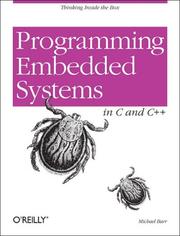
A concise, practical introduction to embedded C on real microcontrollers. Covers memory maps, I/O registers, interrupts, and toolchains — exactly the vocabulary needed before going deeper.
Bare-Metal C Mastery
IntermediateWrite robust, portable firmware in C with full control over memory, peripherals, and timing — without an OS underneath.
▸ Study plan for this stage
Pace: 8–10 weeks, ~25–30 pages/day (approximately 2–3 weeks per book with overlap for hands-on practice)
- Memory management in bare-metal environments: stack, heap, static allocation, and avoiding fragmentation without OS support
- Hardware abstraction layers (HALs) and register-level programming: accessing peripherals directly through memory-mapped I/O and bit manipulation
- C coding standards for embedded systems: naming conventions, code organization, and defensive programming to prevent common firmware bugs
- Timing, concurrency, and interrupt handling: managing real-time constraints, ISRs, and race conditions in bare-metal code
- Testing embedded C code without an OS: unit testing strategies, test doubles (mocks/stubs), and hardware-in-the-loop verification
- Portability and modularity: writing C code that works across different microcontroller architectures with minimal refactoring
- Debugging bare-metal firmware: using tools like JTAG, serial output, and assertions to diagnose hardware-level issues
- State machines and event-driven design: structuring firmware to handle asynchronous events reliably in resource-constrained environments
- How do you design a hardware abstraction layer (HAL) in C that isolates platform-specific register access from application logic, and why is this critical for portability?
- What are the key differences between testing embedded C code versus testing desktop applications, and how do you apply unit testing to code that directly controls hardware?
- Explain the risks of dynamic memory allocation in bare-metal systems and describe at least two alternative strategies for managing memory without malloc/free
- How do you safely handle interrupts and shared data in bare-metal C code, and what coding patterns prevent race conditions?
- What does a coding standard for embedded systems address that general C standards do not, and how does following one reduce firmware defects?
- Design a simple state machine in C for a bare-metal application (e.g., a button handler or LED controller) that handles asynchronous events without an OS
- Read 'Making Embedded Systems' (Weeks 1–3): Complete the book's end-of-chapter exercises; implement at least one small project from the book (e.g., a simple state machine or interrupt handler) on real hardware or a simulator
- Study 'Embedded C Coding Standard' (Weeks 3–5): Apply the standard's rules to refactor code from the first book; document your changes and justify them against the standard's guidelines
- Write a hardware abstraction layer (HAL) for a microcontroller peripheral (e.g., UART, GPIO, or timer): isolate register access in a module, then write portable application code that uses the HAL
- Implement unit tests for a bare-metal C module using a framework like Unity or CppUTest (from 'Test-Driven Development for Embedded C'): write tests before code, use mocks for hardware dependencies, and verify behavior without a real microcontroller
- Build a small bare-metal firmware project (4–6 weeks, ongoing): e.g., a multi-state LED blinker with button input, UART communication, or sensor reading; apply all three books' lessons (design, coding standard, TDD)
- Debug a deliberately buggy bare-metal C program: identify memory corruption, race conditions, or timing issues using print statements, assertions, and a debugger; document root causes and fixes
Next up: This stage equips you with the discipline, patterns, and testing mindset to write reliable bare-metal firmware in C; the next stage will introduce real-time operating systems (RTOS) and how to apply these same principles at a higher level of abstraction, managing multiple concurrent tasks and hardware resources through kernel services.
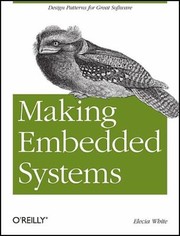
The single best practical guide to real-world firmware design: hardware abstraction, drivers, state machines, and debugging. Read first in this stage to establish professional patterns.
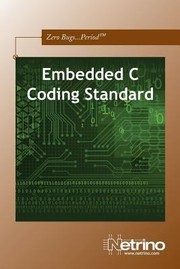
A short but essential read on writing safe, maintainable embedded C — covers bit manipulation, volatile, fixed-width types, and MISRA-aligned practices that underpin all serious firmware.
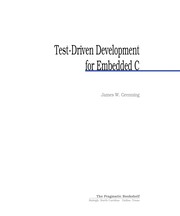
Introduces TDD and unit-testing discipline specifically for embedded systems, teaching how to write testable firmware and mock hardware — a skill that separates hobbyists from professionals.
ARM Architecture & Low-Level Systems
IntermediateGo deep on the ARM Cortex-M architecture — the dominant embedded processor family — understanding its pipeline, exception model, memory protection, and startup sequence.
▸ Study plan for this stage
Pace: 8–10 weeks, ~40–50 pages/day (with code walkthroughs and hands-on labs)
- ARM Cortex-M processor family variants (M0, M3, M4, M7) and their architectural differences
- Instruction set fundamentals: Thumb-2 instruction encoding, addressing modes, and common instruction patterns
- Pipeline architecture and execution stages; hazards and stalling behavior
- Exception and interrupt handling model: NVIC, priority levels, exception entry/exit, and stack frames
- Memory protection unit (MPU) configuration and access control mechanisms
- Startup sequence: boot code, vector tables, stack initialization, and C runtime setup
- Register conventions and calling conventions (AAPCS) for ARM Cortex-M
- Memory organization: code, data, stack, and heap regions; linker script interpretation
- What are the key architectural differences between Cortex-M0, M3, M4, and M7, and when would you choose each for a project?
- Explain the ARM Cortex-M exception model: how does the NVIC prioritize interrupts, and what happens during exception entry and exit?
- How does the Thumb-2 instruction set work, and what are the main addressing modes used in embedded code?
- Walk through a complete startup sequence from reset: what happens in the bootloader, vector table setup, and C runtime initialization?
- How does the Memory Protection Unit (MPU) work, and what access violations can it detect?
- What are the ARM AAPCS calling conventions, and why do they matter for mixing assembly and C code?
- Write a bare-metal startup assembly file for a Cortex-M4: initialize the stack pointer, set up the vector table, and jump to main()
- Implement a simple interrupt handler in assembly that saves registers, calls a C function, and restores state correctly
- Analyze a linker script and memory map; identify code, data, BSS, stack, and heap regions; explain how the linker places symbols
- Configure the NVIC for multiple interrupts with different priorities; write ISRs that demonstrate priority preemption
- Set up the MPU to create a protected memory region and trigger an access violation; observe the fault handler behavior
- Disassemble compiled C code (using objdump or similar) and identify Thumb-2 instructions, addressing modes, and calling convention usage
- Build a complete embedded project (e.g., GPIO control, timer interrupt) mixing assembly and C; verify correct register passing and stack alignment
Next up: Mastery of ARM Cortex-M architecture and low-level systems mechanics prepares you to tackle real-world embedded OS concepts—scheduling, context switching, and resource management—where understanding the hardware foundation is essential.
The authoritative reference on Cortex-M internals: NVIC, SysTick, MPU, fault handling, and the ABI. Reading this unlocks every ARM datasheet and makes startup code fully comprehensible.

Bridges high-level C and assembly on Cortex-M, reinforcing how the compiler and linker produce machine code — critical for debugging hard faults and optimizing tight loops.
Real-Time Systems & RTOS
ExpertDesign and implement real-time firmware using an RTOS: tasks, scheduling, synchronization primitives, and deterministic timing guarantees.
▸ Study plan for this stage
Pace: 6–8 weeks, ~40–50 pages/day with hands-on coding sessions 3–4 times per week
- Task creation, states, and lifecycle management in FreeRTOS: how tasks are created, scheduled, and transitioned between running, ready, blocked, and suspended states
- Context switching and the FreeRTOS scheduler: preemptive vs. cooperative scheduling, tick interrupts, and how the kernel maintains deterministic timing
- Synchronization primitives (semaphores, mutexes, queues): preventing race conditions, deadlock avoidance, and ensuring thread-safe access to shared resources
- Task communication patterns: inter-task messaging via queues, event groups, and direct-to-task notifications for coordinating work across tasks
- Priority-based scheduling and priority inversion: assigning task priorities, understanding how priority affects execution order, and mitigating priority inversion with priority inheritance
- Memory management in FreeRTOS: heap allocation strategies, stack sizing for tasks, and avoiding memory fragmentation in embedded systems
- Timing and delays: using vTaskDelay, vTaskDelayUntil, and tick timers to achieve deterministic, real-time behavior with known latency bounds
- Interrupt handling and ISR-safe APIs: writing interrupt service routines that interact safely with FreeRTOS tasks and understanding deferred interrupt processing
- Explain the difference between preemptive and cooperative scheduling in FreeRTOS, and describe when each is appropriate for a real-time system.
- How do you create a task in FreeRTOS, and what parameters must you configure to ensure it runs reliably (stack size, priority, entry point)?
- What is priority inversion, why is it problematic in real-time systems, and how does FreeRTOS's mutex priority inheritance mechanism prevent it?
- Describe the differences between semaphores, mutexes, and queues in FreeRTOS, and give a concrete example of when you would use each for inter-task synchronization.
- How does the FreeRTOS tick interrupt drive the scheduler, and what is the relationship between tick rate and timing determinism?
- Write pseudocode or explain the steps to safely pass data from an interrupt service routine (ISR) to a task without causing race conditions.
- Create and run a simple FreeRTOS project on a Cortex-M3 board (or simulator) with three tasks at different priorities; observe and document task scheduling and context switching behavior.
- Implement a producer–consumer pattern using a FreeRTOS queue: one task produces data at a fixed interval, another consumes and processes it; measure latency and jitter.
- Write a task that uses a mutex to protect access to a shared resource (e.g., a counter or UART output); intentionally create contention and verify that mutual exclusion works.
- Implement a task that uses vTaskDelayUntil to execute at a precise, fixed rate (e.g., 100 Hz); measure actual execution intervals and compare against the target.
- Create a scenario with two tasks where priority inversion could occur (e.g., high-priority task waiting for a resource held by low-priority task); implement priority inheritance via mutex and observe the effect.
- Build a multi-task system with event groups: one task signals an event, multiple tasks wait on different event bits and respond accordingly; verify synchronization correctness.
Next up: This stage equips you with the foundational knowledge of RTOS task management, scheduling, and synchronization—the building blocks for the next stage, which will likely focus on advanced real-time patterns, hardware integration, and optimizing for specific embedded constraints like power consumption and memory limits.
The classic RTOS textbook — walks through a complete, readable RTOS implementation in C. Understanding how a kernel is built from scratch makes every FreeRTOS or Zephyr API call intuitive.

The definitive practical guide to FreeRTOS, the most widely deployed embedded RTOS. Read after Labrosse so the API concepts map onto a solid mental model of kernel internals.
Production Firmware & Systems Thinking
ExpertArchitect complete, maintainable, production-quality embedded software systems — handling complexity, safety, and long-term evolution.
▸ Study plan for this stage
Pace: 8–10 weeks, ~25–30 pages/day (mix of dense technical chapters and practical exercises)
- Firmware modularity and reusable component architecture: designing self-contained, testable modules that reduce duplication and enable code reuse across projects
- Abstraction layers and hardware independence: decoupling application logic from hardware-specific code through well-designed interfaces and HALs
- Software quality metrics and defect prevention: establishing measurable quality standards, code review practices, and systematic approaches to catching bugs early
- Safety-critical system design: understanding failure modes, defensive programming, and architectural patterns for systems where failures have real consequences
- Configuration management and long-term maintainability: version control strategies, documentation practices, and design patterns that enable teams to evolve code safely over years
- Testing strategies for embedded systems: unit testing, integration testing, and hardware-in-the-loop validation tailored to resource-constrained environments
- Design patterns and architectural principles: applying proven solutions (state machines, layered architectures, dependency injection) to complex embedded problems
- Risk assessment and tradeoff analysis: evaluating cost, performance, reliability, and maintainability to make informed architectural decisions
- How would you design a firmware module to be reusable across three different hardware platforms with different microcontrollers? What abstraction layers would you create?
- Describe a complete testing strategy for a safety-critical embedded system (e.g., medical device, automotive). How would you validate it without access to the final hardware?
- What are the key differences between firmware designed for a one-off prototype versus firmware designed for a product that will be maintained and evolved over 10 years?
- How do you identify and mitigate the highest-risk failure modes in an embedded system? Walk through a concrete example from your domain.
- Explain how you would structure a firmware codebase to minimize the impact of hardware changes and enable parallel development across a team.
- What metrics would you track to assess the quality and maintainability of your embedded software, and how would you use them to guide refactoring decisions?
- Refactor a previous embedded project (or a provided legacy codebase) to extract a reusable hardware abstraction layer (HAL). Document the interfaces and demonstrate that the same application code runs on two different microcontroller families.
- Design and implement a comprehensive unit test suite for a non-trivial firmware module (e.g., a state machine, a protocol handler). Aim for >80% code coverage and run tests on your development machine without hardware.
- Conduct a failure mode and effects analysis (FMEA) on a real or hypothetical embedded system. Identify the top 5 failure modes, assess their severity and likelihood, and propose architectural mitigations.
- Create a detailed architecture document for a moderately complex embedded system (e.g., IoT sensor node, motor controller). Include block diagrams, module responsibilities, interfaces, and rationale for key design decisions.
- Implement a state machine for a real-world embedded scenario (e.g., device power management, communication protocol) using a design pattern from the books. Write unit tests and document state transitions.
- Perform a code review (peer or self-review) on a substantial piece of embedded code using a checklist derived from quality principles in the books. Document findings and propose refactorings.
Next up: This stage equips you with the architectural thinking and quality practices needed to design systems that scale and survive real-world constraints; the next stage will likely deepen your expertise in specialized domains (real-time systems, IoT, automotive, medical devices) or advanced techniques (formal verification, security hardening, distributed embedded systems).

Focuses on designing portable, reusable firmware components with HALs and design patterns — the bridge from writing code that works to writing code that ships and scales.

A senior-level treatment of reliability, defensive coding, and system-level thinking for embedded software. The ideal capstone — it reframes everything learned as part of building dependable systems.
Discussion
Keep reading
Paths that share books, cover the same subject, or open a related topic.