Best Elmore Leonard Books, in Reading Order
Leonard wrote forty-five novels and there is no series to follow, so the only real question is which one hands you the voice fastest. This order starts with the two most enjoyable crime novels, works outward through the Florida books that defined his peak, then the Detroit novels, and ends with the westerns he wrote for twenty years before anyone called him a crime writer. Characters wander between books — Chili Palmer, Raylan Givens, Karen Sisco — but every title stands completely on its own.
Start here
BeginnerGet the Leonard voice — all dialogue, no adverbs, no scene the reader can skip — in the two novels that convert people fastest.
▸ Study plan for this stage
Pace: Ten days for both. Get Shorty and Out of Sight are around 300 pages each and almost pure dialogue, so they read at roughly twice the speed of the page count. The only thing that slows people down is the opening chapter of Get Shorty, where Leonard drops you mid-conversation with no orientation at al
- Leonard's rule in practice: he leaves out the parts readers skip. There is no weather, no throat-clearing description, and no scene that exists to set up another scene
- Point of view moves between characters chapter by chapter, always sitting inside whoever is currently mistaken about something. That is where the comedy comes from
- Nobody in a Leonard novel gets a physical description worth remembering. You learn who people are entirely from how they talk and what they notice
- Get Shorty's joke is structural: Chili Palmer's loan-shark skills transfer to Hollywood without modification, which is a statement about both businesses
- Out of Sight runs on a single risky idea — the cop and the robber are attracted to each other and both know it is unworkable — and Leonard refuses to resolve it cheaply
- The trunk scene in Out of Sight is the most-quoted passage he wrote. Notice that it is two people talking in the dark with no action at all
- Dialogue attribution is almost always plain said. Leonard thought anything fancier pulled the reader out, and reading a chapter aloud shows you why
- What information does Get Shorty withhold in its first chapter, and how long does Leonard make you wait for it?
- How does Leonard signal a point-of-view change without announcing it, and how quickly can you spot one?
- In Out of Sight, what keeps Karen Sisco and Jack Foley from simply acting on what they want, and how is that constraint the plot?
- Pick any scene and identify what a conventional thriller writer would have added that Leonard cut. What is lost, and what is gained?
- Both books are funny. What is the joke actually about in each — who is being satirised?
- Read the first two pages of Get Shorty aloud. The rhythm is the whole method and hearing it once recalibrates how fast you read the rest
- Take one chapter and mark every line that is not dialogue. Count them. The ratio is the lesson
- Write down the first thing each new character says. Leonard introduces people through a first line more often than through description, and the pattern becomes obvious once you look for it
- After finishing both, try to summarise the plot of Get Shorty in five sentences. The difficulty is instructive — the pleasure was never in the plot
Next up: You now have the voice in your ear, which is the only prerequisite for the Florida novels where that voice is fully assembled.
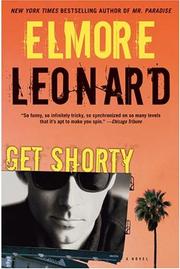
A Miami loan shark goes to Hollywood and discovers the movie business runs on the same skills. The single best introduction: pure momentum, and the plot is a lesson in how Leonard thinks about storytelling.
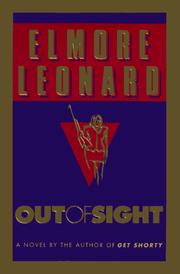
A bank robber and the federal marshal chasing him spend the whole book falling for each other. Read second — it is the most charming thing he wrote and shows the range beyond comedy.
The core: the Florida novels
BeginnerCover the 1980s and early 1990s run most critics call his peak, and start recognising the recurring type — a competent nobody who is smarter than the criminals around them.
▸ Study plan for this stage
Pace: Five to six weeks, roughly a book a week. LaBrava, Glitz, Freaky Deaky and Rum Punch are all 300 to 350 pages and none of them requires slow reading. The one genuine adjustment is Freaky Deaky, which has more moving parts than the others and rewards not putting it down for a week in the middle.
- The recurring Leonard type: a competent, unglamorous person — a photographer, a flight attendant, a process server — who turns out to be smarter than every criminal around them
- LaBrava is where the mature style locks in. It won the Edgar, and the South Beach setting gives Leonard a whole ecology of hustlers to move between
- Glitz is the most conventionally thriller-shaped book in this stage, with a genuine stalker plot. It is also the bestseller that finally made him famous after thirty years of work
- Freaky Deaky uses 1960s radicals gone to seed as a comic engine, and it is the funniest thing he wrote. The bomb-squad cop reassigned to sex crimes is the setup for the entire book
- Rum Punch is the best-plotted of the four: Jackie Burke plays the ATF, a gun runner and a bail bondsman against each other simultaneously, and the money-exchange sequence is a piece of clockwork
- Leonard's villains are stupid in specific, observed ways. He is never interested in a criminal mastermind, and the plots turn on somebody misjudging somebody else
- Florida in the 1980s — cocaine money, Cuban and Haitian Miami, retirement condos — functions as a social setting Leonard renders through speech patterns rather than exposition
- What does LaBrava's photographer see that other characters do not, and how does Leonard use looking as a plot skill?
- Glitz has a more frightening antagonist than the other three. Does that make it a better book or a more ordinary one?
- How does Freaky Deaky get comedy out of political radicalism without arguing about politics?
- Walk through the money handover in Rum Punch from each participant's point of view. Who understands what, and when?
- What do the four protagonists in this stage have in common, and what does that tell you about what Leonard valued in a person?
- After Rum Punch, watch how much of the plot you can reconstruct from memory. It is the one Leonard plot that is genuinely worth diagramming
- Pick the best scene in each of the four and write one line on why. Doing it forces you to notice that your favourite scenes are almost never the violent ones
- Read a page of Glitz and a page of Get Shorty back to back and describe the difference in tone. Same voice, different weather
- Keep a list of minor characters who steal their scene. Leonard's supporting cast is where the writing shows off, and the list gets long fast
Next up: The Florida books show Leonard at his warmest and funniest, which is exactly the contrast the Detroit novels need.
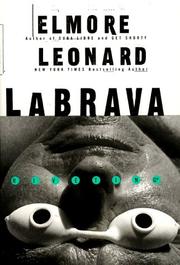
An ex-Secret Service agent turned photographer in South Beach, and an aging film-noir actress. It won the Edgar and is where the mature style locks in.
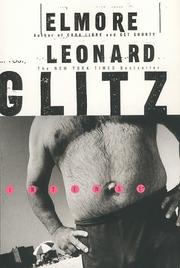
A wounded Miami cop, Puerto Rico, and Atlantic City. This was the bestseller that finally made him famous, and it is the most conventionally thriller-shaped book here.
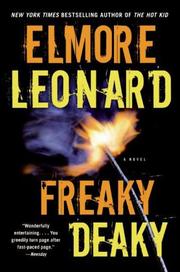
Former 1960s radicals turned blackmailers, and a bomb-squad cop reassigned to sex crimes. Many readers rate it his funniest; read after Glitz for the tonal jump.
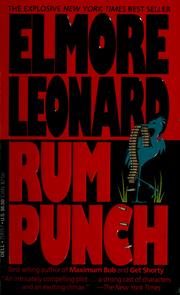
A flight attendant caught between a gun runner and the ATF plays every side at once. The best-plotted of the Florida books, which is why it closes the stage rather than opening it.
The deeper cuts: Detroit and beyond
IntermediateRead the colder, harder novels set away from Miami and see the side of Leonard that the film adaptations mostly ignore.
▸ Study plan for this stage
Pace: Four weeks for the three. Killshot is the one to be careful with — it is genuinely frightening and works best read quickly, over a few days, rather than picked up and put down. Tishomingo Blues is the opposite and can be taken at whatever pace you like.
- City Primeval is the hinge of Leonard's whole career: a Detroit homicide novel with the structure of a western, published as he was leaving the westerns behind. Raylan Givens's world starts here
- The Oklahoma Wildman in City Primeval is a pure Leonard antagonist — dangerous because he is impulsive and vain rather than clever
- Killshot is the coldest thing he wrote. The subject is not the two hitmen but the ordinary married couple, and what being hunted does to a marriage that was already strained
- The contrast between the two killers in Killshot — one professional, one an idiot with a gun — is the source of nearly all its suspense
- Tishomingo Blues is late, relaxed Leonard: a high diver, a Civil War reenactment and a Mississippi drug war, with the plot wandering because the author is enjoying himself
- The film adaptations have shaped Leonard's public reputation around the comic Florida books. These three are the corrective, and they are the reason serious critics took him seriously
- How is City Primeval structurally a western, and what does Leonard gain by transplanting that shape into 1980 Detroit?
- In Killshot, whose story is it — Carmen's, Wayne's, or the killers'? Defend your answer from the page count and the point-of-view distribution
- Why is the incompetent killer in Killshot more frightening than the competent one?
- Tishomingo Blues has the loosest plot here. Does that read as confidence or as carelessness, and what would tighten it cost?
- What can Leonard do in a Detroit novel that he cannot do in a Miami one?
- Read City Primeval with the westerns already on your list. When you reach stage four you will want to come back and check how much of Hombre is in it
- Take the first chapter of Killshot and note exactly where the dread starts. It is earlier and quieter than you will remember
- List what the ordinary couple in Killshot lose that is not physical. That inventory is the novel's real subject
- Compare a Raylan Givens scene in City Primeval with any Chili Palmer scene. Same author, two different ideas of competence
Next up: You have now seen the crime novels at their hardest, which makes the westerns underneath them legible rather than a curiosity.

A Detroit judge is murdered and a homicide detective circles the killer for the whole book. The transitional novel between the westerns and the crime fiction, and the origin of Raylan Givens's world.
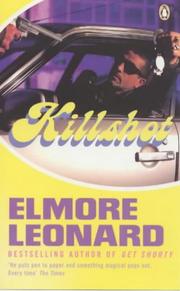
An ordinary married couple become witnesses and two very different hitmen come after them. His most genuinely frightening novel, and the one where the ordinary people are the real subject.
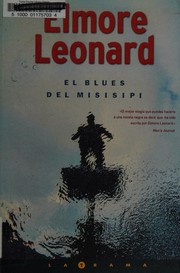
A high diver, a Civil War reenactment and a Mississippi turf war. Late Leonard at his most relaxed and strange — good once the rhythms are familiar enough that the plot can wander.
The completist tail: the westerns
IntermediateGo back to the first twenty years of Leonard's career and be able to explain how the western tightened the crime novels that followed.
▸ Study plan for this stage
Pace: Two to three weeks. All three are short — Hombre and Valdez Is Coming are under 200 pages each and Last Stand at Saber River is not much longer — and they read in a sitting or two. Treat them as one continuous project rather than three separate books.
- Leonard wrote westerns for roughly twenty years before anyone thought of him as a crime writer, and the discipline of the form — short, spare, no wasted motion — is where the famous economy was learned
- Hombre is John Russell, a white man raised Apache, on a stagecoach with passengers who despise him until they need him. It is regularly named one of the best westerns ever written and reads exactly like a Leonard crime novel in period dress
- Valdez Is Coming is the leanest thing he ever published: a part-time constable is humiliated by a rancher and comes back for him, and the plot has no fat on it at all
- Last Stand at Saber River puts a Confederate veteran back on Arizona land that has been taken, and is already about the Leonard subjects — competence, grudges, and a man who will not be moved
- The dialogue discipline transfers directly. Strip the period detail from any of these and the exchanges could sit in Rum Punch
- What the western gave him and the crime novels kept: a genre where a man's word and a man's job are the same thing, and where violence is a consequence rather than a set piece
- Which scenes in Hombre would work unchanged in a modern Leonard crime novel, and which would not?
- Valdez Is Coming is under 200 pages. What has been cut that a longer western would have included, and does the book miss any of it?
- How do the westerns handle race compared with the crime novels — and where does Hombre's premise put the reader?
- Having read City Primeval, what specifically do you now recognise in these three?
- If someone told you Leonard peaked in the 1980s, what evidence from this stage would you use against them?
- Read Valdez Is Coming in one sitting. It is designed for it, and the momentum is half the argument
- Put Hombre's stagecoach sequence next to any Leonard hostage or standoff scene from the crime books and mark the shared moves
- Write a one-page summary of what Leonard learned in the westerns that shows up in Get Shorty. This is the exercise that makes the whole path cohere
- Now pick your next Leonard yourself. Forty-five novels means there is no shortage, and after this path you can tell from a first page whether you want it
Next up: This closes the path: you have the voice, the peak, the hard novels and the origins, and every other Leonard now stands alone in front of you.
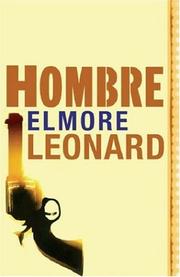
A white man raised Apache, a stagecoach, and passengers who despise him until they need him. Voted one of the best westerns ever written, and completely readable as a Leonard crime novel in period dress.
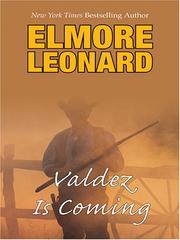
A part-time constable is humiliated by a rancher and comes back for him. The leanest thing he ever published and the clearest demonstration of his economy.

A Confederate veteran returns to Arizona to find his land taken. The right endpoint: it is the early Leonard already writing about competence, grudges and men who will not be moved.
Discussion
Keep reading
Paths that share books, cover the same subject, or open a related topic.