Bass guitar for beginners: the best books to lock in the groove
This four-stage curriculum takes a complete beginner from picking up the bass for the first time all the way to locking in a tight, musical groove with a drummer. Each stage builds on the last — first establishing physical technique and basic notation, then developing rhythm and feel, then expanding harmonic and stylistic vocabulary, and finally sharpening the ear and ensemble instincts that separate a good bassist from a great one.
Foundations: Hands, Notes & First Grooves
BeginnerHold the instrument correctly, produce a clean tone, read basic notation and tab, and play simple grooves in time.
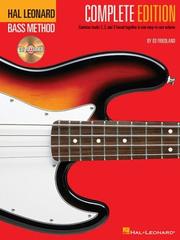
The single most widely used beginner bass method; it systematically covers posture, right- and left-hand technique, note reading, and first grooves in a carefully sequenced, three-book-in-one format. Start here to build correct habits from day one.
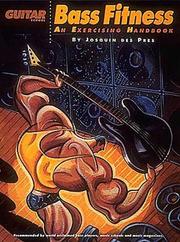
A compact, exercise-focused book of finger-independence and dexterity drills that runs parallel to any method book. Introduced at this stage so physical conditioning keeps pace with musical learning.
Rhythm & Feel: Locking with the Drummer
BeginnerInternalize subdivisions, understand how the bass relates to the kick and snare, and play steady, musical grooves across rock, blues, and funk feels.
▸ Study plan for this stage
Pace: 4–5 weeks, ~20–30 pages/day with daily practice sessions (30–45 minutes)
- Subdivision mastery: understanding sixteenth notes, triplets, and syncopation as the foundation for rhythmic precision
- Kick drum synchronization: locking the bass line with the kick drum to create a cohesive rhythmic foundation
- Snare interaction: using the snare as a guide for phrasing and understanding backbeat placement in grooves
- Funk feel and pocket: developing the ability to sit behind the beat slightly and create space within grooves
- Rock, blues, and funk groove archetypes: recognizing and playing the characteristic bass patterns in each style
- Ghost notes and dynamics: using muted notes and dynamic control to add texture and musicality to bass lines
- Listening and internalization: training your ear to identify rhythmic relationships and feel rather than relying solely on notation
- How do sixteenth-note subdivisions relate to the kick and snare in a standard rock or funk groove?
- What is the difference between playing 'on top of' the beat versus 'in the pocket,' and why does this matter for locking with the drummer?
- How does the bass line interact with the kick drum in funk versus rock, and what are the key differences?
- Can you identify and explain the role of ghost notes in creating a funky, musical bass line?
- What are three characteristic bass patterns in blues, rock, and funk, and how do you adapt them based on the drummer's feel?
- How do you use the snare backbeat as a reference point for phrasing and dynamics in your bass line?
- Daily subdivision drills: practice playing steady eighth notes, sixteenth notes, and triplets at 60–100 BPM with a metronome, focusing on evenness and consistency
- Kick drum transcription: listen to 3–5 classic funk and rock recordings (e.g., James Brown, Led Zeppelin) and transcribe the kick drum pattern, then play your bass line against it
- Lock-in exercises: play a simple one-note bass line locked to a kick drum pattern at varying tempos (60–120 BPM) to develop synchronization feel
- Groove construction: using patterns from 'Funk Fusion Bass,' build 4–8 bar grooves in rock, blues, and funk styles, recording yourself and listening back for pocket placement
- Ghost note integration: take a basic groove and add ghost notes on the 'e' and 'a' of each beat, gradually increasing complexity while maintaining pocket feel
- Drummer conversation: play along with a drummer (live or recorded) and focus on responding to their dynamics and feel rather than playing mechanically to a click
- Snare-aware phrasing: practice playing bass lines that intentionally respond to snare hits, creating call-and-response patterns within a single groove
Next up: This stage equips you with the rhythmic foundation and ear training to lock with a drummer, setting the stage for the next level where you'll expand your harmonic vocabulary and learn to navigate chord changes while maintaining groove integrity.
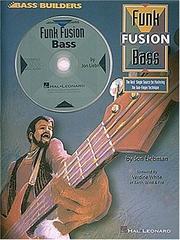
Liebman's groove-centric approach teaches the student to feel subdivisions and syncopation rather than just read them, with lines explicitly designed to sit on top of a drum pattern — perfect for building drummer-awareness early.

A comprehensive style guide covering over 30 genres, each with notated bass lines and drum-pattern context. Reading it now gives the learner a wide rhythmic vocabulary and shows how groove priorities shift from style to style.
Theory & Fretboard Mastery
IntermediateUnderstand scales, modes, chord tones, and arpeggios across the entire neck, and apply them to construct intelligent bass lines rather than just copy patterns.
▸ Study plan for this stage
Pace: 8–10 weeks, ~20–25 pages/day with 3–4 days/week of focused practice
- Interval relationships and their sonic qualities (major, minor, perfect, augmented, diminished) as the foundation for understanding chord construction
- Major and minor scales as the basis for melodic thinking, and how scale degrees relate to chord tones
- Modes (Dorian, Phrygian, Lydian, Mixolydian, Aeolian, Locrian) as tools for color and tension, not just theoretical abstractions
- Chord tones (root, third, fifth, seventh) and their function in harmonic movement, versus passing tones and approach notes
- Arpeggios as the skeleton of bass lines—how to outline chords across the neck using multiple positions and inversions
- Fretboard geography: visualizing scales and arpeggios in all positions to eliminate reliance on single patterns
- Walking bass line construction: the interplay between chord tones, passing tones, approach notes, and rhythmic placement to create movement and groove
- Applying theory to real changes: analyzing and constructing bass lines over jazz standards and common progressions
- What is the difference between a chord tone and a passing tone, and why does their placement in the measure matter for a walking bass line?
- How do you construct a major scale on the bass neck in multiple positions, and how does each mode relate to the major scale?
- Given a chord progression (e.g., ii–V–I), how would you outline the chord tones and fill in the line with approach notes and passing tones?
- What is an arpeggio, and how do you use inversions and different positions to create a more interesting bass line than simply playing root-position arpeggios?
- How do you choose which mode to use over a given chord, and what sonic effect does each mode create?
- What are the key rhythmic and harmonic principles for constructing a walking bass line that swings and supports the harmony?
- Map out all seven modes of the C major scale across the entire bass neck (all positions), labeling each note and its scale degree
- Build arpeggios for major, minor, dominant 7th, and minor 7th chords in at least three different positions on the neck
- Transcribe and analyze a walking bass line from a jazz standard (e.g., Bill Evans trio recordings); identify chord tones, passing tones, and approach notes
- Construct a 4-bar walking bass line over a simple ii–V–I progression in F major, ensuring chord tones land on strong beats and using approach notes to connect
- Practice playing scales and arpeggios in time with a metronome at 80–120 bpm, focusing on clean articulation and consistent intonation across positions
- Improvise a bass line over a 12-bar blues in Bb, consciously alternating between chord-tone outlines and scale-based passages
Next up: Mastery of scales, modes, arpeggios, and walking bass construction on the fretboard equips you to tackle more advanced topics—such as reharmonization, substitution, and stylistic applications across different genres—with a solid harmonic and technical foundation.

Written specifically for bassists, this book connects music theory directly to the fretboard and to groove-making decisions — exactly the bridge needed after building basic technique and feel.

Walking bass is the ultimate exercise in applying chord tones and scales in real time. This book teaches a systematic, step-by-step approach that sharpens both theory knowledge and rhythmic confidence simultaneously.
Discussion
Keep reading
Paths that share books, cover the same subject, or open a related topic.