Diana Wynne Jones books in order: where to start
Diana Wynne Jones wrote around forty books across many small, mostly unconnected series, so there is no single sequence to follow — the useful question is where to enter and what to read next. Enter at Howl's Moving Castle or at Charmed Life, the first Chrestomanci book. Chrestomanci is the one set that raises a real order question, and the answer is publication order rather than internal chronology. The other thing worth knowing early: most of these were published for children, but the difficulty varies enormously, and Fire and Hemlock in particular is a genuinely hard book that adults argue about.
Start Here
BeginnerRead the two obvious entry points and get used to her method — a plot that seems to be a muddle until, in the last thirty pages, every detail turns out to have been load-bearing.
▸ Study plan for this stage
Pace: 2 to 3 weeks. Howl's Moving Castle is about 330 pages and reads fast until the last fifty, which are dense with things being resolved at speed — allow a week and plan to reread the ending. Charmed Life is shorter at around 260 pages and goes in three or four sittings. Read them a few days apart rath
- Her standard structure: the plot looks like a muddle of unconnected incidents for two hundred pages, and then in the last thirty every detail turns out to have been load-bearing. Reading her means tolerating apparent chaos on the promise that none of it is decorative.
- Howl's Moving Castle is built on the John Donne poem 'Go and catch a falling star', and the poem is quoted inside the book as a spell. The curse's shape is the poem's list of impossibilities, which is the first place to look when the ending seems to arrive from nowhere.
- Sophie's own magic is in the book from the first chapter and is never announced: she talks to things and they obey. Almost every reader misses it on a first pass, which is the intended effect.
- The castle door with four colours on its dial — one of them opening onto modern Wales, where Howl is Howell Jenkins — is her habitual move of running a fantasy world and the real one on the same hinge.
- The Miyazaki film keeps the first half and replaces the second with a war plot of its own; it is a good film and a poor guide to the book, and knowing that in advance prevents the commonest confusion about the ending.
- Charmed Life withholds its central fact from Cat and from the reader simultaneously, and everything Gwendolen does in the first half is legible only once you know it. This is why starting Chrestomanci with The Lives of Christopher Chant, which is earlier in internal chronology, spoils the series.
- Both books are ostensibly for children and neither softens anything: sibling exploitation in one, a wizard who consumes hearts in the other, and adults who are unreliable or absent throughout. Her nominal audience never determined her content.
- Chrestomanci is an office rather than a person — a nine-lived enchanter who polices magic across a set of parallel worlds — and the series is a set of separate novels that happen to intersect with that office.
- What is Sophie's power, and where in the first chapter is it demonstrated before anyone names it?
- How does the Donne poem map onto the plot of Howl's Moving Castle? Take the poem's list line by line.
- What exactly has Gwendolen been doing, and what in the first half of Charmed Life should have told you?
- Howl is introduced as a monster who eats hearts. In what sense is that true by the end of the book?
- What does 'Chrestomanci' denote, and why does the series work better if you meet the office before the man?
- Read the Donne poem before starting Howl's Moving Castle, then mark each of its impossibilities as it turns up in the plot. Doing this converts the ending from a scramble into a structure.
- On finishing Charmed Life, go back and reread the first three chapters with the reveal in hand and mark every line that was doing double work. That reread is the standard way of reading her and this is the cheapest book to learn it on.
- Keep a list of everything Sophie says to an inanimate object across Howl's Moving Castle, and note what happens afterwards each time.
- Watch the Miyazaki film only after finishing the novel, then write down the point at which the two diverge and what the film gave up to get there.
Next up: You have met Chrestomanci from the outside; the next stage reads the rest of the set in the order that keeps each reveal intact.
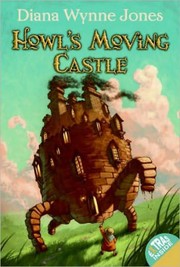
The most popular way in, helped by the Miyazaki film, which diverges sharply from the second half of the book. A girl cursed into old age takes work in a wizard's walking castle; the plot is a tangle of fairy-tale conventions being deliberately mishandled.
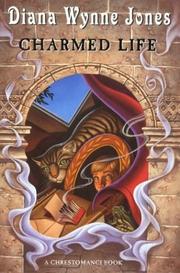
The other entry point, and the first Chrestomanci book. Start Chrestomanci here rather than with The Lives of Christopher Chant — that one comes earlier in the internal chronology but spoils Charmed Life's central reveal and assumes you already know what a Chrestomanci is.
Chrestomanci, in Publication Order
BeginnerRead the loosely linked set of novels about a nine-lived enchanter who polices magic across parallel worlds, in the order that preserves the reveals.
▸ Study plan for this stage
Pace: 8 weeks, and the volumes are unevenly sized. The Magicians of Caprona is around 220 pages and Witch Week about 260 — a week each. The Lives of Christopher Chant runs to roughly 270 pages but is denser than either, with a whole cosmology introduced; ten days. Conrad's Fate is around 400 pages and slo
- The Chrestomanci books are not a serial. Each is a self-contained novel in a different world of the same set, and Chrestomanci himself is frequently a supporting figure who arrives late to sort out something the children have been managing alone.
- The Magicians of Caprona is a Romeo and Juliet transposed into two feuding houses of spell-writers in a fantasy Italy, where the spells are songs and the plot turns on a lost verse — she is at her most formally playful here and Chrestomanci barely appears.
- Witch Week is set in a world where witchcraft is a capital crime, inside a boarding school for the children of the executed, and it is the darkest thing in the set. Its ending does something structural to the world itself rather than merely to the plot.
- The Lives of Christopher Chant is the childhood of the man from Charmed Life: spirit travel through the Place Between, the nine lives being spent one by one, and the Living Asheth. Read here it is a revelation about a character you know; read first it is an introduction to a stranger, and the series
- Conrad's Fate is a country-house novel in which the possibilities of the world are being deliberately shifted for profit, and it assumes you already know Christopher and Millie — it places them as teenagers between the two previous books, which is why chronological order is the wrong tool for this s
- The Pinhoe Egg introduces dwimmer, a hedge-magic tradition running underneath the licensed magic the Castle regulates, and turns the whole series' premise — that magic ought to be policed — into an open question.
- The set has a recurring political subject: who is licensed to use power, who is punished for using it, and what the licensing authority does not know about the country it governs. That is most visible in Witch Week and The Pinhoe Egg.
- Two short-story collections, Mixed Magics and Stealer of Souls, sit inside this sequence and can be read at any point without disturbing anything.
- What does Witch Week do to its own world in the final chapter, and what does that imply about the relationship between the Chrestomanci worlds?
- What is the Place Between, and what are the rules governing Christopher's travel through it?
- How are Christopher's nine lives spent across The Lives of Christopher Chant, and what does the book gain by making the loss incremental?
- What is being manipulated at Stallery in Conrad's Fate, and who benefits?
- What is dwimmer, and what does The Pinhoe Egg suggest the Castle has been getting wrong for a century?
- Which of the six books would still work as someone's first Diana Wynne Jones, and which would be actively ruined by it?
- Keep a single page listing the worlds as they are named, with the series and number the books give them. She is consistent about this and having the map makes Conrad's Fate and The Pinhoe Egg much easier.
- After The Lives of Christopher Chant, reread the chapters of Charmed Life in which Chrestomanci appears and note which of his mannerisms are now explained.
- Track Millie across the three books she appears in, in publication order, and write down what each one assumes you already know about her. The pattern is the argument for reading in this order rather than chronologically.
- Read the spell-songs in The Magicians of Caprona aloud. The plot hinges on a missing verse and the scansion is doing plot work, which is invisible on the page and obvious in the mouth.
Next up: That is the one set with a real order problem solved; the next stage is the other loose sequence, where the sequels are barely sequels at all.
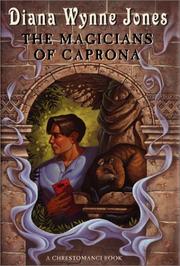
Second by publication, and almost entirely standalone — two feuding families of spell-making magicians in a fantasy Italy. Chrestomanci appears only glancingly, which is why it reads well here.
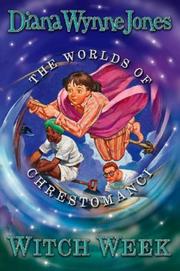
Third, set in a boarding school in a world where witchcraft is capital crime. The darkest of the set, and the one that best shows what she could do with a closed setting.
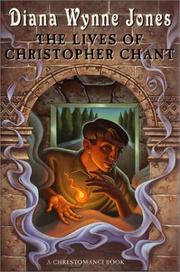
Fourth by publication and first in internal chronology — the childhood of the enchanter from Charmed Life. Read it here: it is much better as a revelation about a character you already know than as an introduction to one you do not.
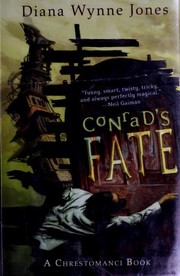
Fifth, written seventeen years later, and set at a country house where a boy is sent to kill someone he cannot identify. Assumes familiarity with Christopher Chant, so it belongs after the previous book rather than in chronological position.

Sixth and last, returning to the characters of Charmed Life some time on. The right place to finish the set — it closes the loop the first book opened.
The Rest of the Howl Books
BeginnerRead the two loose sequels, which are only barely sequels, and see how she treats a series as a set of oblique angles on the same world.
▸ Study plan for this stage
Pace: 3 weeks. Castle in the Air is about 300 pages and moves quickly, though the Arabian Nights pastiche register takes twenty pages to settle into; ten days. House of Many Ways runs to around 400 pages and is the slightest of the three books in this world; two weeks, and it can be abandoned without loss
- Neither book is a sequel in the ordinary sense: each starts with an entirely new protagonist in a different country and lets the Howl cast in late, in disguise, and largely without introduction.
- Castle in the Air runs on Arabian Nights machinery — a carpet, a djinn, a stolen princess, a young merchant who narrates his own life in flowery formal register — and the joke is that the conventions keep failing in the same way fairy-tale conventions fail in Howl's Moving Castle.
- The disguises are the game. Working out which animal, stranger or supernatural functionary is a character you already know is the reading experience of the back half, and it is invisible if you have not read Howl's Moving Castle.
- Abdullah's habit of addressing everyone in elaborate honorifics is a running joke about the narrator's self-image, and it is also how Jones keeps a pastiche from becoming merely pastiche.
- House of Many Ways gives Charmain a house whose corridors do not obey geometry, which is the same idea as the four-coloured door in the first book, worked at greater length and lower stakes.
- The lubbocks are the one genuinely unpleasant thing in House of Many Ways and are a reminder that she never wrote down to the audience even in her lightest book.
- Read in order these three show a writer treating a series as a set of oblique angles on the same world rather than as a continuation — which is the same choice the Chrestomanci books make.
- At what point in Castle in the Air did you identify the first disguised character, and what gave it away?
- What conventions is the Arabian Nights pastiche mishandling, and how does that rhyme with what Howl's Moving Castle does to fairy tales?
- What does Charmain's house do, and what is the rule governing it?
- Why do these two books put the familiar cast so far offstage? What would be lost if Sophie narrated either?
- Which of the three books in this world is doing the least, and does that matter?
- Read the last four chapters of Castle in the Air twice — once to find out who everyone is, and once knowing. The second pass is where the seeding becomes visible.
- List every character in Castle in the Air who turns out to be someone else, with the earliest page at which they could have been identified. She plays fair, and the list proves it.
- Set Charmain's corridors against the four-coloured door in Howl's Moving Castle and write down what each is for, structurally. The same device is doing different jobs in the two books.
- Compare Abdullah's narration with Sophie's for a page each. Both are unreliable about themselves in specific and different ways.
Next up: Those are the famous books; the next stage is the three her long-standing readers rate above them, and they are noticeably harder.
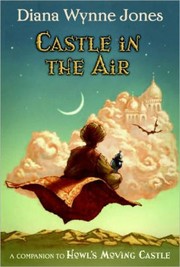
An Arabian-Nights pastiche with an entirely new cast, in which the Howl characters appear late and in disguise. Read after Howl's Moving Castle or the game she is playing is invisible.

The third and last, about a sheltered girl left in charge of a wizard's house whose corridors do not obey geometry. The slightest of the three; read it only if you want more of that world.
The Standalones Her Reputation Rests On
IntermediateRead the three books that readers who know her work tend to rate above the famous ones, and which are noticeably harder.
▸ Study plan for this stage
Pace: 6 weeks. Archer's Goon is around 260 pages and is best read fast, in as few sittings as possible, because the plot depends on holding seven siblings and a time structure in your head at once; a week, then reread it. The Homeward Bounders is about 260 pages and is bleaker than anything else on this p
- Archer's Goon is her tightest construction: a family is told their father's two thousand words are overdue, seven siblings who each farm one function of the town start taking an interest, and every apparently throwaway detail in the first fifty pages is a load-bearing part of the last twenty.
- The seven siblings each control something — power, law, crime, music, the past, the drains, the future — and identifying which sibling owns which domain is the reader's actual task for most of the book.
- Archer's Goon runs on a time structure that is only stated at the end and that reorganises the whole novel, including the identity of the narrator's own household. Rereading it is not optional if you want to see what she built.
- The Homeward Bounders takes a boy who sees something he should not and makes him a piece removed from a board: he walks between worlds and can never stay in one. The premise is a game played by anonymous powers, and the book's refusal to rescue him is the point.
- It is also her most direct book about what stories cost the people inside them — the Flying Dutchman and Prometheus both appear as fellow prisoners, which places the whole thing in a tradition of myths about endless punishment.
- Fire and Hemlock is a retelling of Tam Lin and Thomas the Rhymer in which a young woman discovers she has two contradictory sets of memories, one of them installed. The ballad structure is the key to the ending and the book expects you to go and find it.
- Thomas Lynn sends Polly a reading list across the novel, and the books on it are real; the list is both characterisation and the novel's own bibliography, and Jones is telling you what she is working from.
- The ending of Fire and Hemlock has never been settled among her readers, and Jones herself wrote about the difficulty afterwards. Reading it is a matter of arriving at a defensible reading rather than the correct one.
- In Archer's Goon, which sibling farms which function, and how early could each have been identified?
- What is Howard's real position in Archer's Goon, and what in the opening chapters points at it?
- What are the rules governing Jamie's exile in The Homeward Bounders, and why does the ending have to be what it is?
- In Fire and Hemlock, what is the relationship between Polly's two sets of memories, and who installed the false one?
- What does the Tam Lin ballad require of the woman at the climax, and what does Polly have to do instead?
- Which of Tom's books on the reading list are doing the most work in the novel?
- Read Archer's Goon twice inside a fortnight. The first reading is for the plot and the second is for the construction, and nobody sees the second on the first pass.
- Make a chart of the seven siblings in Archer's Goon with their domain, their first appearance and the moment their domain becomes clear. That chart is the novel's architecture.
- Read the Tam Lin ballad — Child 39 — before the last third of Fire and Hemlock, then map its stages onto Polly's. The disagreement about the ending is largely a disagreement about how closely Jones follows the ballad, and you cannot join it without the source.
- Track the two versions of Polly's memories in Fire and Hemlock, marking every point where a scene is narrated twice or where a remembered event contradicts an earlier one. She is scrupulous about this and the pattern is recoverable.
- After The Homeward Bounders, write down what a conventional children's fantasy would have done with Jamie's ending, and then say what Jones gains by refusing it.
Next up: You have now read her at her hardest; the last stage is her at her funniest, taking apart the genre the previous three books were quietly refusing to write.
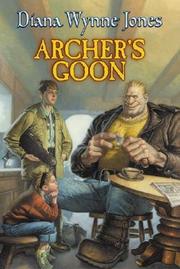
A family is told their father's two thousand words are overdue, and seven siblings who run the town start taking an interest. The best-constructed plot she wrote, and the one that most rewards a second reading.
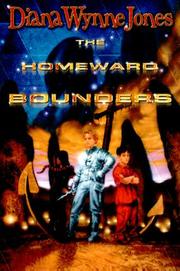
A boy sees something he should not and is thrown out of his world into an endless series of others, as a piece removed from a game. Bleaker than anything else here, and the closest she came to writing an adult novel for children.
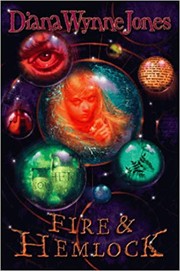
A retelling of the Tam Lin ballad in which a young woman finds she has two contradictory sets of memories. Genuinely difficult, with an ending readers have argued about for forty years — read it last in this stage, and preferably not first of her books overall. Hexwood and Deep Secret are the next two if this register suits you.
For Fantasy Readers, and For Adults
IntermediateRead the two books aimed squarely at people who already read a lot of fantasy, and see her turn the genre's machinery on itself.
▸ Study plan for this stage
Pace: 3 to 4 weeks. The Tough Guide to Fantasyland is about 240 pages arranged as an A-to-Z and is not read straight through — dip into it over a week, or read it cover to cover in two sittings if the joke is landing. Dark Lord of Derkholm is around 500 pages, considerably darker than the Guide leads you
- The Tough Guide is not a novel but a parody reference book: an A-to-Z of commercial fantasy clichés arranged as advice to a tourist, complete with Official Management Terms and the inevitability of stew.
- Its real subject is how much of the genre is produced by the same handful of structural assumptions, and it works as a diagnostic — after reading it you cannot unsee the machinery in the books it is mocking.
- It also functions as a commentary on her own practice: nearly every entry names a convention that one of her novels has already broken, which retrospectively explains a great deal about how she wrote.
- Dark Lord of Derkholm is the Guide turned into a plot: a world is contractually obliged to stage the whole apparatus of a fantasy quest for paying tourists from ours, every year, and someone has to be the Dark Lord.
- The joke turns cruel quickly. The cost of the tours is borne by the people who live there — crops destroyed, cities burned to a schedule, children conscripted into roles — and the book is much angrier than the Guide is.
- Derk's family, including two griffin children he made himself, are the emotional centre, and the novel's real subject is a father who is bad at his job and loved anyway.
- Read as a pair, the two books make an argument about genre exhaustion that she was making in fiction for thirty years before stating it directly, which is the reason this stage sits last.
- The sequel, Year of the Griffin, is lighter, set at a wizards' university, and entirely optional.
- Which Tough Guide entries describe conventions that one of her own novels has already broken? Name three and the book in each case.
- What is the Guide's account of why fantasy landscapes are shaped the way they are, and is it a joke about geography or about publishing?
- In Dark Lord of Derkholm, who is actually responsible for the tours, and how does the novel apportion blame between the contractor and the world that complies?
- What does the novel do with the griffin children that a straight fantasy could not?
- Is Derkholm funnier or angrier than the Guide, and what changes when the joke acquires people who live inside it?
- Read the Guide's entries for STEW, HORSES and the OFFICIAL MANAGEMENT TERM, then open a well-known commercial fantasy novel and check each one against it. The Guide is a test instrument and it should be used as one.
- Read the Guide first and mark ten entries; then read Dark Lord of Derkholm and find each of those ten staged as a scene. The novel is a systematic execution of the reference book.
- Take one entry from the Guide and write down which Diana Wynne Jones novel from earlier stages already refused it, and how.
- After finishing, write one paragraph on what she thinks is wrong with the genre — not with any particular book, but with the production of the thing. Both books are making the same argument and it is stateable in a paragraph.
Next up: That is the shape of her work and every real entry point into it; what remains has no wrong order — Hexwood and Deep Secret if the difficulty of Fire and Hemlock suited you, the Dalemark quartet for her one attempt at a long connected sequence, and the essay collection Reflections on the Magic of Writing for her own account of how the trick is done.

Not a novel — an A-to-Z parody guidebook to the clichés of commercial fantasy, arranged as tourist advice. Funniest if you have read the genre it is mocking, and it explains a great deal about how she wrote her own books.

The novel version of the same joke: a world forced to stage the Tough Guide's fantasy tropes annually for tourists, and what that does to the people living there. Read it directly after the Guide. Its sequel, Year of the Griffin, is lighter and optional.
Discussion
Keep reading
Paths that share books, cover the same subject, or open a related topic.