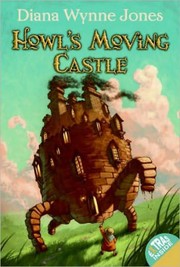
Start with Howl's Moving Castle. It stands alone, it is the funniest thing she wrote, and it is the book most likely to tell you within fifty pages whether her particular trick — a plot that looks like chaos until the last chapter reveals it was a mechanism — is something you enjoy.
The first thing to sort out is that the Howl books and the Chrestomanci books are two completely separate series with no shared characters, world or continuity. Readers often assume otherwise because both feature powerful, vain, well-dressed enchanters. They are unrelated. There is also a great deal of her work that is neither, including some of her best novels.
The Howl books
Three novels: Howl's Moving Castle, then Castle in the Air, then House of Many Ways. Read them in that order, but adjust your expectations for the second and third. Castle in the Air is set in a different country with an Arabian Nights flavour and a new protagonist; Howl and Sophie appear late and largely in disguise, and readers who expect a direct continuation are usually annoyed by it. House of Many Ways does something similar with a different new lead. Both are good books that are not the book people want next.
A note on the film, because it sends a lot of readers here: Studio Ghibli's 2004 adaptation departs substantially from the novel. It invents a war that is not in the book, resolves Sophie's curse on entirely different terms, and changes what the Witch of the Waste is doing and why. Neither version is the flawed one — but knowing the film is not preparation for knowing the book.
The Chrestomanci sequence, and the order argument
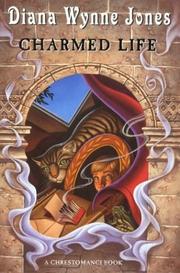
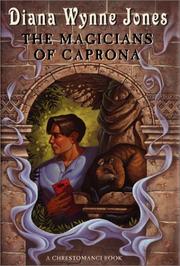
Six novels here: Charmed Life, The Magicians of Caprona, Witch Week, The Lives of Christopher Chant, Conrad's Fate and The Pinhoe Egg (Chrestomanci, Book 6). They are set across a set of parallel worlds policed by a government enchanter, and the two middle books barely involve him at all.
There is a genuine order dispute. Publication order is the sequence above. Internal chronological order puts The Lives of Christopher Chant first, because it is Christopher's childhood, then Conrad's Fate, then Charmed Life and the rest. Jones herself said the books could be read in any order, and the numbering on modern editions follows internal chronology, which is why so many readers start with the prequel.
Read them in publication order. The Lives of Christopher Chant is built as a prequel and much of its pleasure depends on already knowing the composed, impossible adult from Charmed Life and watching the child who becomes him. Reading it first does not break anything, but it spends a reveal you have not earned yet. Conrad's Fate has the same problem in a milder form.
The standalones
Archer's Goon is the one to read if you liked the machinery of the Howl ending — it is her most tightly engineered plot, and it is very funny. The Homeward Bounders is the bleakest thing she wrote, a novel about a boy made into a game piece, and its ending is genuinely unhappy. Fire and Hemlock is a modern retelling of the Tam Lin ballad, aimed older than the rest, and its final chapter is famously difficult; there is a long-running readerly argument about what actually happens in it, which Jones did not settle.
The Fantasyland pair
The tough guide to fantasyland is not a novel. It is a satirical A-to-Z guidebook to the clichés of commercial fantasy, written as a tourist handbook, and it is best read in pieces. Dark Lord of Derkholm is the novel that dramatises the joke: a world forced to stage those clichés annually for paying tourists. The novel works without the guide. Year of the Griffin is its sequel and is not on this list.
What is missing here
The Dalemark Quartet, Deep Secret and The Merlin Conspiracy, Hexwood, A Tale of Time City and Eight Days of Luke are all absent from this path and are worth finding. Hexwood in particular is a favourite among her adult readers and one of the hardest to describe. More reading paths are on Discover.
Follow the full ordered path here: Diana Wynne Jones books in order: where to start.