Denis Johnson Reading Order: Where to Start
Denis Johnson wrote like a poet who had wandered into prose and decided to stay: hallucinatory, funny, suddenly reverent. Everyone should start with Jesus' Son, which is short and contains the whole sensibility. From there the novels get longer and rougher, the big mid-career books test whether he can sustain that voice at scale, and the late work — spare, elegiac — shows what he distilled it down to.
Start With Jesus' Son
BeginnerAbsorb the Johnson voice in its purest form before committing to a novel.
▸ Study plan for this stage
Pace: 1–2 weeks. Only 160 pages and eleven linked stories, so read one a night rather than swallowing it — the collection is short enough that the temptation is to finish it in an evening, and that is exactly the wrong way to meet these sentences. Reread 'Emergency' and 'Beverly Home' at the end of the we
- The Johnson sentence: flat reportage that suddenly and without warning becomes visionary, then drops back — the swerve is the whole style
- A narrator so unreliable he loses the thread mid-scene, and a book that treats the lapses as truthful rather than as a trick
- Poetry underneath the prose — Johnson published verse before fiction, and the images (the drive-in screen in 'Emergency', the seed of rain) work by lyric logic, not narrative logic
- Linked stories with no plot: the collection moves by voice and recurrence, and the chronology is deliberately scrambled
- Grace arriving to people who have no claim on it, which is Johnson's permanent subject and here arrives most often as a joke
- Comedy and horror in the same paragraph — the knife in the eye in 'Emergency' is genuinely funny, and the book does not apologize for it
- The turn at the end of 'Beverly Home', where the addict narrator begins working with the disabled and the register changes to something like tenderness
- Take one sentence where the narration lifts into vision. What in the preceding sentence made the lift possible?
- Why does the narrator so often admit he cannot remember or did not understand, and what does that admission buy the book?
- 'Emergency' is the most anthologized story here. What is it actually about, once the knife is set aside?
- In what order do these stories happen, as far as you can reconstruct it, and why has Johnson not told them that way?
- By 'Beverly Home', what has changed in the voice — and is the change presented as recovery, or as something less clean?
- Copy out the last paragraph of 'Car Crash While Hitchhiking' by hand and mark where the ordinary reporting stops.
- List the eleven stories in the order given, then in the order you think they occurred. Keep the list; it is the shape of the book.
- Read any two pages aloud. Johnson's rhythm is audible in a way it is not on the page, and everything later in this path is built on it.
- Write down five images that stayed with you and, for each, the plain fact it was reporting. The gap between the two is the style.
Next up: You have the voice in its concentrated form; the early novels show where it came from and what it takes to sustain it past twenty pages.
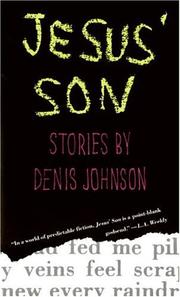
Eleven linked stories narrated by an addict drifting through the Midwest — the most influential American story collection of its generation. Everything else he wrote is a variation on these sentences, so it has to come first.
The Early Novels
IntermediateSee where the voice came from and how Johnson stretched it across book-length narrative.
▸ Study plan for this stage
Pace: 6 weeks, ~20 pages a day. Angels (217 pages) in two weeks. Fiskadoro (228 pages) needs the same again despite its length — the invented dialect slows everyone down, and it should. Resuscitation of a Hanged Man (272 pages) in two weeks, read straight through if you can, since Leonard English's slide
- Angels as the direct ancestor of Jesus' Son: the same buses, motels and Midwestern ruin, but given a plot and a merciless third act
- Bill and James Houston, who recur decades later in Tree of Smoke — Johnson wrote one continuous American family across a whole career
- The structural shock of Angels' second half, where a novel that seemed to be about Jamie hands itself to Bill and ends in an execution chamber
- Fiskadoro's post-nuclear Florida Keys and its half-remembered language, which is Johnson testing whether the voice can survive being taken away from realism
- Memory and forgetting as the actual subject of Fiskadoro — a culture reassembling itself from garbled fragments, which is also a description of his prose
- Resuscitation of a Hanged Man's move into obsession and Catholic faith, where a drifter's paranoia and his conversion become impossible to separate
- Johnson's refusal to make grace respectable: revelation arrives to people mid-crime, mid-relapse and mid-delusion, and is not thereby disqualified
- Where does Angels hand the novel from Jamie to Bill, and what is the effect of the reader having invested in the wrong protagonist?
- How does Johnson write the execution at the end of Angels, and what does the level of detail imply about his position on it?
- What has Fiskadoro's world forgotten, and what has it retained? What does the pattern suggest about what Johnson thinks culture is?
- Is Leonard English converting or breaking down in Resuscitation of a Hanged Man — and does the novel think the distinction is real?
- Which of these three books gets closest to the Jesus' Son voice at full length, and what specifically lets it get there?
- After Angels, reread 'Dundun' and 'Two Men' from Jesus' Son. The overlap in milieu is exact and shows how much the collection was drawing on.
- Read the first two pages of Fiskadoro twice — once for sense, once for sound — before deciding whether the dialect is working.
- Track Leonard English's employment and his religious practice on parallel lines; the two curves cross, and the crossing is the novel.
- Note every appearance of a bus, a motel room or a bar in these three novels. Johnson's America has about six rooms in it, and the repetition is deliberate.
Next up: The voice has now been proved at novel length; the big books ask whether it can carry four hundred and six hundred pages and a war.

His first novel: two ruined people meet on a Greyhound bus and fall further. The direct ancestor of Jesus' Son, with the same milieu given a plot and a devastating third act.

Post-nuclear Florida Keys, told in a half-remembered dialect. The strangest early book and the first sign that he would follow the language wherever it went.
A suicidal man takes a job in Provincetown and slides into obsession and faith. The clearest early statement of Johnson's real subject — grace arriving to people who have no business receiving it.
The Big Books
IntermediateTake on the long, ambitious novels where Johnson pushes the style to its limits.
▸ Study plan for this stage
Pace: 10–12 weeks. Already Dead (448 pages) over four to five weeks — it sprawls on purpose, and a steady 20 pages a day beats bingeing. Tree of Smoke (649 pages) is the hardest climb in the path: give it six weeks at ~20 pages a day, and keep a character list from the first chapter, because it moves betw
- Already Dead as a Northern California noir crossed with a metaphysical argument — the crime plot is a delivery system for a book about damnation
- The problem of deliberate excess: Johnson lets the novel run past its own control, and readers legitimately split on whether that is nerve or indulgence
- Tree of Smoke's structure as a slow institutional decay — the CIA's Vietnam operation told through people who never learn what they are part of
- Skip Sands and Colonel Sands as the book's two versions of American faith: the nephew who wants a meaning and the uncle who manufactures one
- The Houston brothers arriving from Angels twenty-four years later, which retroactively converts two separate novels into one continuous story
- The title's meaning as an operation, a metaphor and a description of what intelligence work produces — nothing you can hold
- Johnson's Vietnam is not about combat: the war is bureaucratic, mistranslated and religious, which is why the novel refuses the genre's set pieces
- How the lyric flare from Jesus' Son survives at 600 pages, arriving rarely and therefore harder
- What holds Already Dead together besides its atmosphere, and is that enough?
- Which parts of Already Dead would you cut, and what would the book lose by being disciplined?
- What does Colonel Sands actually believe, and does Tree of Smoke treat him as a fraud, a visionary or both?
- Skip Sands spends most of the novel waiting. What is Johnson able to show through inaction that a plot-driven war novel could not?
- How does the reappearance of the Houston brothers change your reading of Angels?
- Where in Tree of Smoke does the Jesus' Son voice break through, and why has Johnson rationed it?
- Keep a running cast list for Tree of Smoke from page one, with each character's nationality and employer. The novel will not repeat itself.
- Read a short factual account of the Phoenix Program before or during Tree of Smoke; the novel assumes an outline it does not supply.
- Mark five passages in Tree of Smoke where the prose lifts, and check what each one is describing. The pattern is not random.
- Write a one-page defence and a one-page prosecution of Already Dead's length, and then decide which you actually hold.
- Reread the opening chapter of Angels after finishing Tree of Smoke. Twenty-four years of career sit between them and the sentences are recognisably the same man's.
Next up: Having seen the voice at maximum scale, finish with the late books, where Johnson strips it back to almost nothing and gets his most beautiful writing out of it.
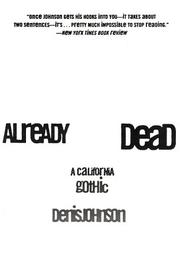
A sprawling Northern California noir of drugs, murder and metaphysics. Divisive and overlong by design; read it after the early novels, when you can tell the excess from the brilliance.
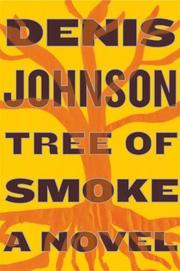
His National Book Award winner: the Vietnam War through a CIA family over two decades. The full-scale novel the whole career was building toward, and the hardest single climb in this path.
The Late Work
IntermediateFinish with the short, stripped-down late books where the voice becomes plain and elegiac.
▸ Study plan for this stage
Pace: 3 weeks. Train Dreams is 116 pages — read it in one or two sittings, and then again a few days later, since it is short enough that a second pass costs almost nothing and changes almost everything. The Largesse of the Sea Maiden (216 pages) at one story a sitting over ten days.
- Train Dreams' compression: a whole life in the logging camps of the American West delivered in about a hundred pages, with decades passing between paragraphs
- Robert Grainier as Johnson's least articulate protagonist, and the discovery that the visionary register works even better on a man who cannot explain himself
- The wolf-girl and the fire as places where the realist frame is allowed to break, without the book ever conceding that it has
- The late plainness: adjectives gone, sentences shorter, the lyric flare arriving perhaps four times in the whole book and landing much harder for it
- The Largesse of the Sea Maiden as a deliberate answer to Jesus' Son — the same voice thirty years on, sober, older, and facing its own death
- 'Triumph Over the Grave' and its closing claim about the dead, written by a man who knew he was dying, as the last word on Johnson's subject
- Mortality replacing addiction as the occasion for grace, with the theology unchanged
- How does Train Dreams manage a whole life in a hundred pages — what does it leave out, and what does it choose to dwell on?
- What happens to the book's realism at the wolf-girl episode, and how does Johnson prevent the reader from simply calling it a hallucination?
- What is the last paragraph of 'Triumph Over the Grave' claiming, and does the rest of the collection support it?
- Set a Largesse story beside a Jesus' Son story on the same page count. What has been added, and what has been given up?
- Having finished the path: is Johnson a religious writer? Argue it from the sentences rather than the subject matter.
- Read Train Dreams in one sitting and write down the four or five moments the prose lifts. In this book you can list them all, which you could not do in Jesus' Son.
- Put the first paragraph of Jesus' Son and the first paragraph of The Largesse of the Sea Maiden side by side and describe the thirty-year difference in concrete terms.
- Choose the one Johnson book you would give someone else, and write the two-sentence case for it — the answer says a lot about which Johnson you actually read for.
- Reread 'Beverly Home' last of all, after the late work. It is the hinge of the whole career and looks different from this end of the path.
Next up: That is the full arc, from the hallucinatory to the elegiac — you can now hear which register any Johnson page is in and why he chose it.
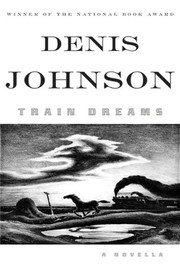
A day laborer's whole life in the American West, in a hundred pages. The perfect counterweight to Tree of Smoke and arguably his most beautiful book.

The posthumous story collection, written by a man who knew he was dying. Placed last because it reads as a deliberate answer to Jesus' Son, thirty years on.
Discussion
Keep reading
Paths that share books, cover the same subject, or open a related topic.