Cormoran Strike Reading Order and Guide
The Cormoran Strike novels are published under the pen name Robert Galbraith, and unlike most detective series they must be read in publication order: the cases are self-contained, but the relationship between Strike and his partner Robin Ellacott is one continuous story that spoils badly out of sequence. The books also get much longer as they go, so the early ones double as a low-commitment test of whether the series is for you. Start with the first two, take the middle books in order, and only then decide whether to commit to the 900-page later volumes.
Start Here: The First Two Cases
BeginnerMeet Strike and Robin, learn the shape of a Galbraith case, and find out whether the long-haul relationship plot is one you want to follow.
▸ Study plan for this stage
Pace: 2–3 weeks. The Cuckoo's Calling is 480 pages and The Silkworm 464 — at 40 pages a night that is about six days each. These are the only two books in the series short enough to read casually, so use them as the trial: if you are not invested in Strike and Robin by the end of The Silkworm, the series
- The books are published under the pen name Robert Galbraith, which is a pseudonym of J. K. Rowling; catalogue records list them under both names, so the same novel can appear credited either way
- Publication order is the only workable order — the cases close inside each book, but Strike and Robin's story is one continuous narrative that spoils badly when read out of sequence
- The standing facts The Cuckoo's Calling installs and every later book assumes: the amputated leg, the debt to Rokeby, the rock-star mother's death, the office above Denmark Street, and Robin arriving as a temp
- The house style — a long list of interviews, an unglamorous London geography, and a solution that comes from someone finally saying the thing they withheld in chapter four rather than from forensics
- Robin's arc is the actual engine: in The Cuckoo's Calling she takes messages, in The Silkworm she runs surveillance and lies convincingly, and the series measures itself by that movement
- Matthew, Robin's fiancé, functions as a structural obstacle rather than a character — noticing that early explains a lot of the middle books
- The Silkworm's publishing-world satire is also a technical exercise: a murder staged to copy an unpublished manuscript, which sets the pattern of cases that are about texts and performances
- What does Strike learn in The Cuckoo's Calling from the sequence of interviews that no piece of physical evidence gives him?
- At which specific moment in The Silkworm does Robin stop being staff and start being a partner, and what does she do that Strike would not have?
- How does Strike's leg change what kinds of investigation he can physically do, and where does the book make you feel that rather than state it?
- The Silkworm's victim wrote a manuscript that describes his own murder — what does that let the book do that a conventional whodunnit cannot?
- Having read both, what is the actual unit of a Galbraith case: the puzzle, the interview, or the London it is set in?
- Keep a one-line-per-suspect page for The Cuckoo's Calling and note the moment each one first lies. You will find the solution was audible earlier than you thought.
- After The Silkworm, write down everything you know about Robin's life outside the office. It will be a short list, and it is the list the next six books lengthen.
- Map the offices, pubs and flats onto an actual London map for one book. The geography is real and the travel time is part of how the investigation is paced.
- Decide now, in writing, whether you are continuing. The next stage is 1,184 pages and the one after that is 2,016.
Next up: You now know the cast and the case shape, which is exactly what the middle books start dismantling as the personal danger comes into the office.
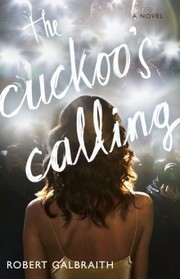
A supermodel's death ruled a suicide, investigated by a broke one-legged veteran who has just hired a temp. The obvious and correct entry point: it establishes Strike's finances, his leg, his mother and Robin's arrival, all of which every later book assumes.
A missing novelist and a grotesque publishing-world murder. Read second because it is where Robin stops being an assistant and starts being an investigator, and it is the last genuinely short book in the series.
The Middle Cases
BeginnerFollow the series as its personal stakes overtake its cases, and see why skipping here ruins later books.
▸ Study plan for this stage
Pace: 3–4 weeks. Career of Evil is 528 pages, Lethal White 656 — the length starts climbing here. Career of Evil reads fast because it is a chase; Lethal White is slower and structurally looser, so budget it a full fortnight and expect the first hundred pages to feel like a different book.
- Career of Evil is the most violent book in the series and carries a genuine content warning: it is narrated in part from inside the killer's head and involves mutilation and sexual violence
- The suspect pool comes from Strike's own past for the first time, which converts the series from cases-Strike-takes to cases-that-come-for-Strike
- The ending of Career of Evil is the hardest cliffhanger in the run — the whole opening of Lethal White is a response to it, and reading them out of order destroys both
- Lethal White jumps roughly a year and is the format change: nearly twice the first novel's length, with a political-blackmail plot that runs on Westminster rather than on Strike's own history
- Robin's PTSD and her marriage stop being subplot and become the material the case is filtered through
- The agency grows — subcontractors, surveillance rotas, a business that has to be run — and procedural texture starts substituting for pace
- This is the pivot in what the series is: it stops being a detective novel with a relationship in it and becomes a relationship novel with cases in it
- Career of Evil gives you the killer's interior voice from the start. What does that do to the suspense, given that you still do not know which of the three men it is?
- How does the year-long gap between the two books change your relationship with Strike and Robin, and why might Galbraith have wanted that gap?
- Lethal White is 656 pages for a case that could be told in 300. What is the extra length actually buying, and where is it not earning its keep?
- Which threads left dangling in Career of Evil does Lethal White resolve, and which does it deliberately leave open?
- Robin makes decisions in Lethal White that Strike disagrees with. Is the book on her side, and how can you tell?
- Before starting Lethal White, write a paragraph predicting where the last scene of Career of Evil leaves them. Compare it to the prologue.
- Track the agency's finances across both books — who is paid, what jobs are taken for money rather than interest. The business is a plot device the series uses repeatedly.
- List the three Career of Evil suspects and what each one is guilty of, since none of them is innocent. This is the book's real trick.
- Note where Lethal White's political material is satire and where it is plot. The line matters when the later books lean on real-world events.
Next up: Lethal White established the doorstop format; the next two books push it to its limit and are where the series is either at its best or beyond your patience.

A severed leg arrives addressed to Robin, and the suspects come from Strike's own past. The most violent book in the series and the one whose ending makes the next volume unreadable out of order.

Blackmail in Westminster, a year after the previous book's cliffhanger. It is nearly twice the length of the first novel, which is the moment the series changes format, and it resolves threads left dangling since Career of Evil.
The Long Books
IntermediateCommit to the doorstop era, where a single case can run 900 pages and the investigative procedure becomes the pleasure.
▸ Study plan for this stage
Pace: 6–8 weeks, and do not fight it. Troubled Blood is 944 pages, The Ink Black Heart 1,072. At 50 pages a day that is three weeks each. Read Troubled Blood in long sittings — the case is built from decades-old notebooks and rewards continuity — and read The Ink Black Heart with a bookmark in the chat-tr
- Troubled Blood is a cold case from 1974 worked almost entirely from paper: witness statements, a missing GP's file, and the case notes of a detective who had become unreliable
- This is where the extra length pays: the reader does the same slow document work Strike does, and the solution lands because you have sat with the material as long as he has
- Astrology as a plot device — the previous detective's notes are organised by horoscope — which the book uses to argue about pattern-finding and self-deception in investigation
- The Ink Black Heart is the most formally experimental book in the run: large sections are real-time chat logs and game-forum posts printed alongside the prose
- Its subject is an online harassment campaign around a cult animation, so the novel is about anonymity, pile-ons and doxxing rather than about a body in a room
- It is also the most divisive book in the series — readers who love Troubled Blood frequently bounce off it, and the transcript format is why
- Strike and Robin's relationship advances by inches here while the page count explodes, which is the trade the doorstop era asks you to accept
- What does Troubled Blood's 1974 case gain from being cold — what can Strike do with old paper that he could not do with a fresh scene?
- The earlier detective's astrological notes are both useless and essential. How does the book have it both ways, and does it convince you?
- Does the chat-log format in The Ink Black Heart give you information the prose could not, or is it mainly texture? Point to a specific passage either way.
- Both books are over 900 pages. Which one justifies its length better, and what would you cut from the other?
- How much does Strike and Robin's personal story actually move across these 2,016 pages, and what does that tell you about how the series now works?
- Keep an index card per witness in Troubled Blood with the date they were last interviewed. The novel is doing this and expects you to be able to follow.
- Read the first fifty pages of The Ink Black Heart's chat sections in print rather than audio, and decide the format question before committing to the rest.
- After Troubled Blood, write down what the solution depended on. It will be a document, not a confession — that is the point of the book.
- If you are flagging, stop after Troubled Blood. It is widely considered the best in the series and works as an endpoint; the next stage is another 2,016 pages.
Next up: With the doorstop format accepted and Robin fully established as an equal, the recent novels can finally move the personal plot the earlier books deferred.

A cold case from 1974, worked from decades-old notebooks. Widely considered the best in the series and the fullest demonstration of what the extra length buys: real, slow, documentary detective work.

An online harassment campaign around a cult animation, told partly in chat transcripts. The most formally experimental book and the most divisive, so read it after Troubled Blood has earned your patience.
The Recent Novels
IntermediateCatch up to the present of the series, where the agency is established and the personal plot finally moves.
▸ Study plan for this stage
Pace: 6–8 weeks. The Running Grave is 1,120 pages and The Hallmarked Man 896 — the two longest stretches in the path back to back. The Running Grave has a long undercover section that reads much faster than its page count suggests once it starts; The Hallmarked Man is more conventional and will go quicker
- The Running Grave (catalogued here under a Spanish-edition title, Tumba Veloz) sends Robin undercover inside a religious cult, which is the biggest operational risk the agency has ever taken
- It is the closest the series has come to a straight thriller: long stretches with no detective work at all, only survival inside a closed community
- Cult psychology is the book's real subject — sleep deprivation, love-bombing, confession sessions — and it is deployed against a character the reader has watched for seven books
- The Hallmarked Man brings you current with the series and pays off relationships built across all seven previous novels, which is precisely why it cannot be read early
- By this point the agency is an established business with staff, and the books have quietly become workplace novels as much as detective novels
- The personal plot finally moves here after being deferred through the doorstop books — whether that payoff is worth 6,000 pages is the honest question the path leaves you with
- There is no ending yet: the series is ongoing, so The Hallmarked Man is the current stopping point rather than a conclusion
- The Running Grave puts Robin somewhere Strike cannot reach her. How does the book generate tension differently once the partnership is physically broken?
- What does the cult material get right about coercion that a thriller version of the same plot would miss?
- The Hallmarked Man rewards seven books of accumulated relationship. Name three specific payoffs a new reader would miss entirely.
- Looking back across all eight novels, when did the series stop being about the cases — and was that a gain?
- Which two books would you tell a friend to read if they were only ever going to read two, and why?
- Before starting The Running Grave, reread the last chapter of The Ink Black Heart. The opening assumes you know exactly where everyone stands.
- Track how the cult's demands escalate week by week during Robin's undercover section — the escalation is designed to be almost imperceptible, which is the argument.
- Write a one-page account of Strike and Robin's relationship as a single story from The Cuckoo's Calling to The Hallmarked Man, ignoring the cases entirely. That story is what the series actually is.
- Note which threads The Hallmarked Man leaves open. They are the shape of the next book.
Next up: You are now current with the series and can judge for yourself whether the doorstop books earned their length — the only remaining reading is whatever Galbraith publishes next.

An undercover job inside a religious cult, and the closest the series has come to a straight thriller. Depends entirely on knowing where Strike and Robin stand after the previous book.

The most recent case, and the point at which you are current with the series. Read last, for the obvious reason, and because it pays off relationships built over seven previous novels.
Discussion
Keep reading
Paths that share books, cover the same subject, or open a related topic.