Contract bridge for beginners: the best books to learn bidding and play
This curriculum takes a complete newcomer from the very basics of contract bridge all the way to confident, strategic partnership play. The four stages build deliberately — first establishing the language and logic of the game, then developing bidding systems, then sharpening declarer technique, and finally mastering the art of defense — so that each book's lessons are fully supported by everything read before it.
Foundations: Learning the Game
BeginnerUnderstand how bridge is played, scored, and structured — including the basics of bidding, playing a hand, and partnership communication — so that every subsequent book makes immediate sense.
▸ Study plan for this stage
Pace: 4–5 weeks, ~25–30 pages/day (Official Rules: 1 week, ~20 pages/day; Bridge for Dummies: 3–4 weeks, ~30 pages/day)
- The 52-card deck structure, hand rankings, and how cards are dealt and distributed among four players in two partnerships
- The bidding process: bid levels, suits, no-trump, pass, double, redouble, and how the auction determines the contract
- Partnership communication through conventional bids and signals—the foundation of bridge strategy
- Playing a hand: the roles of declarer and defenders, trick-taking mechanics, and how to count winners and losers
- Scoring systems: points for tricks, honors, making/failing contracts, and how vulnerability affects scoring
- The structure of a complete bridge session: dealing, bidding, play, and scoring across multiple hands
- Basic defensive principles: leading, following suit, and signaling to partner
- Opening bids, responses, and rebids—the skeleton of constructive bidding
- How are the 52 cards distributed among four players, and what is the significance of partnership positioning (North-South vs. East-West)?
- What are the five possible outcomes of the bidding auction, and how does the final bid become the contract?
- How do you calculate the score for a contract that is made or failed, and what role does vulnerability play?
- What are the key differences in responsibilities between the declarer and the defenders during play?
- How do opening bids, responses, and rebids work together to communicate hand strength and distribution to your partner?
- What are the basic principles for defending a hand, including leading conventions and signaling methods?
- Deal out a full 52-card deck into four hands and verify the distribution; practice identifying which suits are held by each partnership
- Play 5–10 complete hands from 'Bridge for Dummies' sample deals, focusing on counting winners/losers before play begins
- Conduct mock auctions (bidding only, no play) using sample hands to practice recognizing opening bids, responses, and contract determination
- Play the same hand twice—once as declarer, once as a defender—to internalize the different perspectives and responsibilities
- Score 10 completed hands using the official scoring rules, including making, failing, and vulnerable contracts
- Practice leading and signaling in 5 defensive scenarios, explaining your card choices to a partner or study group
Next up: Mastering the foundational rules and mechanics of deal, bid, play, and score positions you to move into the next stage, where you will learn systematic bidding conventions and intermediate defensive techniques that build directly on this structural knowledge.

Establishes the precise rules of contract bridge before any strategy is introduced, preventing bad habits and misunderstandings from the start.

A friendly, comprehensive introduction by a Hall of Fame player that covers bidding, play, and defense in plain language — the ideal first full read for a complete beginner.
Bidding Conventions: Speaking the Language
BeginnerLearn the core bidding conventions and treatments used in modern Standard American bridge so you and your partner can exchange accurate information and reach the right contracts.
▸ Study plan for this stage
Pace: 8–10 weeks, ~25–30 pages/day (with 2–3 review days per week). Allocate roughly 3–4 weeks to Downey, 2–3 weeks to Seagram, and 2–3 weeks to Bergen, allowing time for integration and practice between books.
- Standard American Yellow Card (SAYC) framework: the foundational bidding system that establishes point ranges, bid meanings, and partnership agreements
- Opening bids and responses: how to accurately communicate hand strength and distribution through first and second bids
- The 25 core conventions: when and why to use Stayman, Blackwood, Jacoby transfers, negative doubles, and other essential tools for precise communication
- Point evaluation beyond high-card points: distribution, controls, and fit assessment to determine true hand value and contract viability
- Competitive bidding and interference: how to bid accurately when opponents enter the auction, including overcalls and doubles
- Slam bidding and cue-bidding: conventions and methods for investigating and reaching slam contracts safely
- Partnership agreements and consistency: the importance of explicit understandings so both players interpret bids the same way
- Hand evaluation and judgment: knowing when to bend the rules based on shape, controls, and vulnerability rather than mechanical point counting
- What are the point ranges and hand types for standard opening bids (1NT, 1 of a suit, 2NT, 2 of a suit) in SAYC, and how do they differ from other systems?
- How do Stayman, Jacoby transfers, and Texas transfers work, and when should you use each one in response to 1NT or 2NT?
- What is the difference between a negative double and a penalty double, and in what auction situations does each apply?
- How do you use Blackwood and cue-bidding to investigate slam possibilities, and what are the risks of bidding slams based on points alone?
- Why does hand evaluation go beyond high-card points, and how do factors like distribution, controls, and fit affect your bidding decisions?
- How should you adjust your bidding when opponents interfere with overcalls or doubles, and what conventions help you stay accurate?
- Work through Downey's SAYC framework systematically: for 20 sample hands, identify the correct opening bid and the point range it conveys, then compare your reasoning to the text.
- Practice responding to 1NT: given 15 different responding hands, determine whether to use Stayman, a transfer, or a direct bid, and explain your logic for each.
- Study Seagram's 25 conventions one per day: for each convention, write a one-paragraph summary of when it applies and what it communicates, then create a simple auction example.
- Competitive bidding drills: given 10 auctions where opponents have overcalled or doubled, decide your action (bid, double, pass) and justify it using SAYC principles.
- Hand evaluation exercises from Bergen: re-evaluate 15 hands using his point-adjustment methods (controls, distribution, fit), then compare your adjusted values to the original point count and note the differences.
- Partnership agreement checklist: create a written summary of your partnership's agreements on the 25 conventions, including which ones you use, when, and what they mean—this becomes your reference card.
Next up: Mastering these conventions and hand-evaluation principles gives you the language to communicate with your partner; the next stage will teach you how to apply this language to actual deal analysis, card play strategy, and tournament-level decision-making.

Provides a complete, organized reference for Standard American Yellow Card (SAYC), the official beginner-friendly system — a must-read before exploring more advanced conventions.
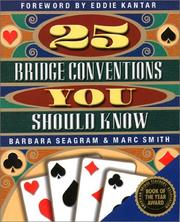
Walks through the most important conventions (Stayman, Blackwood, Jacoby transfers, etc.) one by one with clear examples, turning abstract agreements into practical tools.

Challenges the over-reliance on high-card points and teaches hand evaluation based on shape and distribution — a crucial mindset shift before moving to advanced play.
Declarer Play: Winning the Tricks You Bid
IntermediateDevelop a systematic approach to playing the hand as declarer — counting tricks, managing entries, finessing, drawing trumps, and executing advanced card combinations — so you consistently make your contracts.
▸ Study plan for this stage
Pace: 8–10 weeks, ~25–30 pages/day (Watson first: 4–5 weeks; Root second: 3–4 weeks). Allocate 1–2 weeks for review and hands-on practice between books.
- Counting tricks systematically: identifying sure tricks, potential tricks, and tricks that depend on card combinations or opponent behavior
- Managing entries and timing: preserving communication between hands to execute your plan and avoid blocking yourself
- Finessing technique: understanding when to finesse, how to finesse correctly (leading from the right hand), and recognizing when a finesse is unnecessary
- Drawing trumps strategically: knowing when to draw immediately vs. when to delay trump removal to set up side suits or prevent ruffing
- Establishing long suits: using repeated plays to set up winners in suits where you have length but lack high cards
- Card combinations and percentages: recognizing standard two-card, three-card, and four-card combinations and playing them for maximum probability
- Ducking and unblocking: using low-card plays to maintain entries and control the flow of the hand
- Planning the entire hand before playing to the first trick: analyzing all 52 cards, counting winners and losers, and committing to a logical sequence
- How do you count tricks systematically, and what is the difference between sure tricks, potential tricks, and tricks that require a specific sequence?
- What is the principle of entry management, and how do you avoid 'blocking' your own winners?
- When should you finesse, and what is the correct technique for executing a finesse from both the declarer and dummy hands?
- Under what circumstances should you delay drawing trumps, and what are the risks of drawing trumps too early?
- How do you establish a long suit when you lack the high cards to win tricks immediately?
- What are the key two-card and three-card combinations (e.g., A-J, K-J-10, Q-J-9), and what is the correct play for each?
- Work through Watson's illustrative hands, pausing before each trick to predict the correct play and the reasoning behind it; compare your analysis to Watson's explanation.
- For 10–15 hands from Root's examples, cover the solution and create your own play plan before reading Root's recommendation; score yourself on whether your plan matches the intended line.
- Practice counting tricks on 20 dealt hands: identify all sure tricks, potential tricks, and the sequence needed to make the contract; write out your plan in one sentence.
- Drill finessing technique: lay out 10 two-card and three-card combinations (A-J, K-J-10, Q-J-9, etc.) and practice the correct lead and sequence for each.
- Analyze 8–10 hands where trump management is critical; for each, decide whether to draw trumps immediately or delay, and explain your reasoning.
- Play through 5–6 complete deals (from Watson or Root) at a slow pace, stopping after each trick to verify that your entry management is sound and no winners are blocked.
Next up: This stage equips you with the foundational systematic approach to declaring—counting, planning, and executing individual techniques—which prepares you to tackle more complex scenarios in the next stage, such as competitive bidding decisions, defensive signals, and adapting your plan when opponents interfere or the hand unfolds unexpectedly.

A timeless classic that exhaustively covers every major declarer-play technique with annotated deal-by-deal instruction; widely considered the definitive intermediate text on the subject.
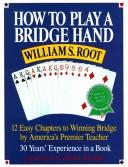
Complements Watson with a more modern, problem-based approach — Root presents hands as puzzles that reinforce planning, counting, and card-reading skills built in the previous book.
Defense: Beating the Contract
ExpertMaster the principles of opening leads, signals, defensive counting, and partnership coordination so you can consistently find the killing defense and defeat contracts that should go down.
▸ Study plan for this stage
Pace: 4–5 weeks, ~25–30 pages/day, with 2–3 days per week dedicated to practice hands
- The hierarchy of opening lead priorities: honor sequences, fourth-best, and top-of-nothing conventions
- How to read partner's hand from the opening lead and adjust your defensive strategy accordingly
- The relationship between bidding, hand patterns, and optimal lead selection against suit and notrump contracts
- Defensive signaling systems (standard vs. reverse) and how they coordinate with opening lead philosophy
- The principle of leading through strength and up to weakness to maximize trick-taking potential
- How to recognize when to lead aggressively (attacking leads) versus passively (safe leads) based on contract and vulnerability
- The mechanics of counting tricks and identifying the 'killing defense' by analyzing declarer's likely distribution and honor placement
- What is the difference between leading fourth-best from a long suit versus leading top-of-nothing, and when does each apply?
- How do you determine whether to make an attacking or passive opening lead against a notrump contract, and what role does the bidding play?
- What information does partner's opening lead convey about your hand, and how should you use it to plan your defense?
- How do you count tricks and identify which defensive plays will defeat the contract before dummy appears?
- What are the standard signaling agreements that must align with your opening lead strategy, and why does consistency matter?
- Given a specific auction and vulnerability, how would you select an opening lead and explain your reasoning using Lawrence's principles?
- Analyze 15–20 hands from Lawrence's book: for each, write down your opening lead choice, your reasoning (bidding analysis, hand pattern, trick count), and what you expect partner to infer from your lead
- Play through 10 complete defensive sequences where you must make the opening lead, then follow partner's signals and adjust your defense in real time
- Create a personal 'lead chart' summarizing Lawrence's recommendations for common auction patterns (e.g., 1NT–3NT, 1♣–3NT, 1♠–4♠) and review it weekly
- Solve 12–15 'killing defense' puzzles: given the auction, your hand, and dummy, identify the one lead that defeats the contract and explain why alternatives fail
- Practice leading against both suit and notrump contracts in a supervised setting (online platform or bridge club), requesting feedback on lead selection and reasoning
- Record and review 5 of your own defensive hands: identify whether your opening lead was optimal in hindsight, and articulate what you would change and why
Next up: This stage equips you with the foundational discipline to make principled opening leads and read partner's hand accurately, setting the stage for the next phase where you will refine advanced defensive techniques such as unblocking, squeezes, and endplay recognition that depend on solid opening lead judgment and partnership coordination.
Lawrence is the foremost writer on bridge defense; this book systematically covers leads, signals, and defensive logic in a way that immediately elevates partnership accuracy.
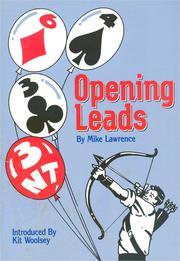
Drills deeply into the single most important defensive decision — the opening lead — with hand after hand showing the reasoning process that separates good defenders from great ones.
Discussion
Keep reading
Paths that share books, cover the same subject, or open a related topic.