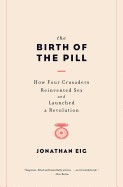
Start with Jonathan Eig's The birth of the pill. It is narrative history built around four people — Margaret Sanger, Katharine McCormick, Gregory Pincus and John Rock — and it carries a reader who knows nothing about the subject without softening the parts that are ugly. Chief among those: the large clinical trials were run in Puerto Rico from 1956, at doses many times higher than anything sold today, on women who were not told they were subjects in an experiment, and three of whom died without an autopsy being performed.
One thing to say plainly before the list. These are works of history and social science, not medical guidance. Nothing here will tell you which method suits you — that is a conversation with a clinician — and the dosages, formulations and safety data described in the older books are of historical interest only.
The story, then the record
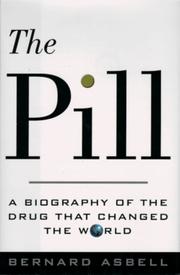
After Eig, Elaine Tyler May's America and the Pill is the short historian's companion: it is organised around what the pill was promised to do — end poverty, save marriages, defuse the population bomb — against what it actually did, and it draws heavily on letters women wrote about their own use. Bernard Asbell's The Pill is the earlier journalistic biography of the drug, from 1995; Eig supersedes it on the invention story, but Asbell remains good on the FDA and on the 1970 Nelson hearings, where women were excluded from testifying about a drug they were taking.
Two academic historians go deeper. Lara V. Marks wrote Sexual Chemistry as a history of medicine, international rather than American, and it is the most careful account of how the trials were designed, who funded them and what the pharmaceutical industry understood at each stage. Elizabeth Siegel Watkins's On the pill is a social history of the drug's first two decades in the United States — the doctor-patient relationship, the fight over the patient package insert, the point at which women's health activists organised.
The longer history of contraception
Andrea Tone's Devices and desires moves off the pill entirely and onto the contraceptive market: the Comstock Act, the enormous illegal trade that flourished under it, condom manufacturing, and the commercial logic that shaped what was available. John M. Riddle's Eve's Herbs is the most argumentative book here. Riddle, a classicist, contends that pre-modern herbal contraceptives and abortifacients genuinely worked and that the knowledge was lost. The claim is contested — pharmacologists and other historians dispute both the efficacy evidence and the reading of the ancient sources — so read it as an argument being made, not a settled finding. Robert Jütte's Contraception, translated from the German, is the calm long-durée survey to set beside it.
The politics, and who paid for it
Linda Gordon's The moral property of women is the political history of the American birth-control movement, and it does not flatter it. A warning worth having: this is the rewritten successor to her 1976 book Woman's Body, Woman's Right, published under a new title. It is the same project, not a companion volume — do not buy both. David M. Kennedy's Birth control in America is the 1970 study of Sanger's career, early and unsentimental, though later scholarship has revised parts of it. Peter Bagge's Woman rebel is a comics biography of Sanger, drawn in a deliberately cartoonish style and annotated with real endnotes; it is a genuine introduction, not a novelty.
The last three books are about the cost. Leslie J. Reagan's When abortion was a crime is the academic history of illegal abortion in the United States from 1867 to 1973, including the women who died and the doctors who were prosecuted. Dorothy E. Roberts's Killing the black body is legal scholarship on the coerced and incentivised sterilisation of Black women, the eugenic strand inside the birth-control movement, and the Norplant campaigns of the 1990s. Loretta Ross's Reproductive Justice, written with Rickie Solinger, is the short primer on the framework Black feminists built in response — which treats the right to have children as inseparable from the right not to.
Follow the full reading path in order and the shape of the subject becomes clear: an invention story, a clinical record, and a long argument about who gets to decide.
Follow the full ordered path here: Contraception and the Pill: The Best Books, in Reading Order.