Connie Willis books in order: where to start with the Oxford time travel novels
Willis's Oxford time-travel novels share a world but not a chronology, and reading them in publication order means following a devastating plague novel with a Victorian farce. That whiplash is deliberate and it is the argument of the sequence, so this path keeps publication order and explains why. After the Oxford books it takes the standalones, then the short fiction, where she has won more awards than almost anyone and where the very best of her work is.
The Oxford Time Travel Sequence, in Order
BeginnerRead the four Oxford historian novels in publication order and understand why tone, not internal chronology, sets that order.
▸ Study plan for this stage
Pace: Seven to eight weeks for about 2,240 pages. Doomsday Book (559 pp) first and only first - two weeks. To Say Nothing of the Dog (512 pp) next, ten days, and it will read faster than its length suggests. Then Blackout (528 pp) and All Clear (641 pp) together, three weeks, and do not begin Blackout wit
- The Oxford premise: historians as fieldworkers sent to the past by a university department, with the net itself acting as a constraint that prevents paradox
- Publication order against internal chronology, and why the sequence is read in publication order - the tonal alternation is the argument, not an accident
- Why To Say Nothing of the Dog only works after Doomsday Book: the comedy depends on knowing she will not spare anyone
- The Jerome K. Jerome model for To Say Nothing of the Dog, down to the boat, the river and the title
- Willis's central recurring device: information that fails to arrive - telephones that do not connect, messages misdelivered, the right person unreachable - used for farce in one book and catastrophe in another
- Coventry Cathedral and St Paul's as fixed points the whole sequence circles
- The specific criticisms of Blackout and All Clear - length, and characters who repeatedly fail to ask obvious questions - and whether the device that drives the plot survives them
- Slippage as a plot mechanism and as a metaphor: the net sends you to the wrong moment, and the sequence is about arriving late
- What does the net actually prevent, and how do the rules of the Oxford world change between Doomsday Book and All Clear?
- Why does reading To Say Nothing of the Dog second rather than first change what the comedy does?
- Trace the failure-to-communicate device through all four novels. Where is it funny, where is it fatal, and does Willis use it identically in both registers?
- What are the strongest criticisms of Blackout and All Clear, and can you defend the books against them without conceding the length?
- What do Coventry and St Paul's mean in this sequence, and why does she keep returning to buildings rather than to people?
- Keep a log of every failed or delayed communication across the four novels - a missed phone call, an unread note, a person just left the room. By All Clear the list will be long enough to constitute a structural argument about the whole sequence.
- Read the closing thirty pages of Doomsday Book and the closing thirty of To Say Nothing of the Dog on consecutive days and write a paragraph on what the second is doing to the first. This is the tonal whiplash the path claims is deliberate; test whether you agree.
- Reconstruct the internal chronology of the Oxford world from the four novels - which drop happens when, who overlaps with whom - and set it against publication order. Then argue, in half a page, for whichever order you would actually recommend.
- Read the first chapter of Jerome K. Jerome's Three Men in a Boat, then the first chapter of To Say Nothing of the Dog. List what Willis has borrowed at the level of sentence rhythm rather than plot.
- Pick one of the obvious questions the characters in Blackout fail to ask, and work out what would happen to the plot if they asked it on page fifty. If the novel collapses, the criticism holds; if it does not, you have a defence.
Next up: The Oxford books share a frame that carries a lot of the weight, so the standalones are where you find out what Willis does without it.
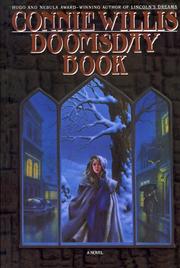
Start here, and only here. A historian is sent to 1320 and lands in 1348 instead, while a modern epidemic closes Oxford around the people who could retrieve her. It won both the Hugo and the Nebula and it is the book the other three are read against — the later ones only work as comedy because you know she will not spare anyone.

Deliberately the opposite: a Victorian screwball comedy of jumble sales, cathedral restoration and a cat, with Jerome K. Jerome as its model. Read it second even though it is set in the same near-future Oxford, because the relief only lands if Doomsday Book came first.
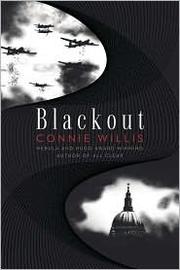
Three historians in the Blitz, each losing their way home. It is the first half of one novel that the publisher split, so do not start it unless you have the second half to hand.
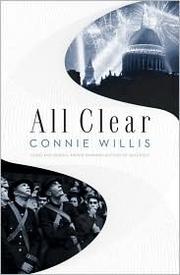
The second half of Blackout, and unresolved without it. The two together won the Hugo and the Nebula; they are also the most criticised books in the sequence for length and for characters who repeatedly fail to ask obvious questions. Read them last, when you already trust her.
The Standalone Novels
BeginnerSee what she does outside the Oxford frame, including the novel that is arguably her most ambitious.
▸ Study plan for this stage
Pace: About four weeks for roughly 1,070 pages. Passage (594 pp) first, two weeks, and go into it knowing nothing: avoid reviews, jacket copy and any discussion of it, because it contains the hardest structural turn in her work and it only lands once. Lincoln's Dreams (228 pp) then takes four or five days
- Passage as her most ambitious book: a labyrinthine hospital as both setting and figure, and a research problem treated with genuine methodological seriousness
- The structural turn in Passage and how thoroughly the first half is engineered to make it possible
- Lincoln's Dreams as her first novel - short, quiet, and much sadder than its premise advertises - and what a first novel already contains of the later work
- Bellwether as the cleanest example of her comic register: fad research, chaos theory, corporate paperwork and a flock of sheep, all doing one job
- The recurring Willis protagonist - competent, obstructed, and surrounded by people who will not stop talking - and how obstruction is her primary source of both comedy and dread
- Research as subject matter: three novels about people trying to find something out, with the institution getting in the way
- How much of the Oxford novels' effect came from the time-travel frame, which these books answer by not having one
- How does the first half of Passage prepare for its central turn? Point to the specific things that had to be established in advance.
- What does the hospital's layout do in Passage beyond being a setting?
- Lincoln's Dreams is her first novel. What is already recognisably hers, and what is not yet?
- Bellwether uses chaos theory as more than decoration. What is the actual argument the novel makes with it?
- Across these three, what is Willis's characteristic source of tension, and is it the same one that drives the Oxford books?
- After finishing Passage, go back to the first hundred pages and list every detail that was doing double duty. The count is the answer to whether the turn was earned or sprung.
- Bellwether opens each chapter with a note on a historical fad. Read those epigraphs straight through on their own and work out how they map onto the plot; they are an argument running parallel to the novel.
- Take the obstruction device - the colleague who will not stop talking, the form that must be filed, the person you cannot reach - and count instances in one hundred pages of Bellwether and one hundred pages of Passage. The same device, at similar density, producing opposite effects.
- Read Lincoln's Dreams immediately after Doomsday Book from the previous stage. Both are about someone experiencing a historical catastrophe at first hand while nobody around them can help. Write a page on what fourteen years of writing changed and what it did not.
Next up: The novels are where her reputation sits, but the awards are in the short fiction, which is the next stage and arguably the best of her.
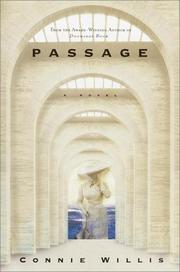
Near-death experiences studied clinically in a Denver hospital whose corridors are a labyrinth in their own right. It contains the single hardest turn in her work; read nothing about the plot before you start. This is the standalone to read first.
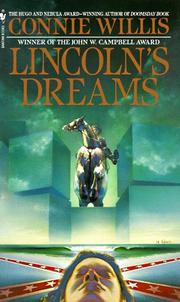
Her first novel — a young woman dreaming Robert E. Lee's dreams during the American Civil War. Short, quiet and much sadder than its premise suggests.

A comic novella-length novel about fad research, chaos theory and a flock of sheep in a corporate research lab. The best short introduction to her comic register.
The Short Fiction, Where She Is Best
IntermediateRead the stories, which is where the awards actually are, and see the Oxford world's origin.
▸ Study plan for this stage
Pace: Four to five weeks for about 1,205 pages across three collections, read in short sittings rather than continuously - one or two stories at a time, because the novelettes are dense and lose by being run together. Fire Watch (273 pp) first, a week: it is her first collection and the title novella is t
- The Fire Watch novella as the origin of the Oxford sequence: a historian sent to St Paul's during the Blitz, and better read as a return than as an introduction
- Willis's command of the novelette, the length at which she is unmatched in the field - long enough for a structure, short enough that the padding criticism cannot apply
- Even the Queen as a comic story that is also a genuine argument, and the model for how she fuses the two
- The Last of the Winnebagos and At the Rialto as the two poles of her range: elegiac and farcical, published in the same collection
- Her habit of withholding the emotional centre of a story until the final page, and how the setups are built to support that
- What the acceptance speeches in The Best Of add - a working writer explaining her own intentions, which is a primary source on the stories
- Why the short fiction is where the criticisms of the late novels do not apply
- How does the Fire Watch novella set up the rules of the Oxford world, and which of them did the later novels change?
- What makes Even the Queen work as both comedy and argument, and what would break if either half were removed?
- Compare The Last of the Winnebagos and At the Rialto. What technique is common to both despite the difference in register?
- Where in these stories does she place the emotional reveal, and how consistent is that placement across a decade of work?
- The overlap between the three collections is substantial. If a reader will buy one, which and why?
- Read the Fire Watch novella after finishing Blackout and All Clear, then write a page on what the novella does in fifty pages that the two novels take 1,170 to do. This is the fairest test of the length criticism.
- Take Even the Queen and mark every joke, then mark every point where the story advances its argument. Where the two marks land on the same line is the technique.
- Read the last page of six different stories in Impossible Things and The Best Of without rereading what precedes them, then go back and find the earliest sentence in each story that made that ending possible. The distance between the two is remarkably consistent.
- Compare the acceptance speech attached to any story in The Best Of with your own reading of it, and note where her stated intention differs from your experience of the story. A writer's account of her own work is evidence, not verdict.
- Build an overlap table across the three collections - story title against which volumes contain it - before buying all three. It is a two-hour job that will change what you purchase.
Next up: With the best of her work read, the last stage fills in the remaining novels and says honestly which of them are minor.
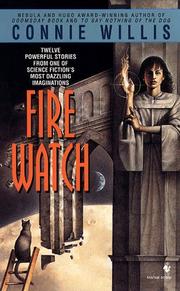
Her first collection, and the title novella is the Oxford time-travel story that started the whole sequence — a historian sent to St Paul's during the Blitz. Read it after the novels rather than before; it is better as a return than as an introduction.
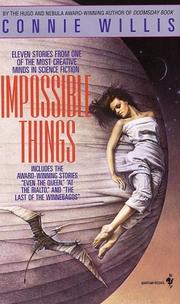
The collection containing Even the Queen, At the Rialto and The Last of the Winnebagos, which is as strong a run of novelettes as anyone in the field has published. If you read one book of her short fiction, make it this.
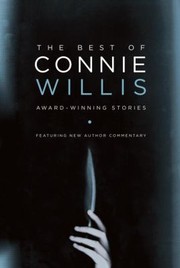
Ten award-winning stories with her acceptance speeches attached. It overlaps with the two collections above, so read it third if you want the greatest hits with commentary rather than as a first purchase.
The Rest
IntermediateFill in the remaining novels, and know which ones are minor before you buy them.
▸ Study plan for this stage
Pace: About three weeks for roughly 845 pages, and this is a completist stage rather than a necessary one. Remake (176 pp) and Uncharted Territory (163 pp) are short - three or four days each. Crosstalk (505 pp) takes ten days and is the weakest of the late novels. Before buying, check what you already ow
- Remake as a slight but genuinely enjoyable book: a Hollywood where nothing new is filmed and old films are digitally recut, written before that was a live commercial question
- Uncharted Territory as an extended joke about bureaucratic forms and gender assumption - a story with a single device, which is what makes it minor
- Crosstalk as telepathy-by-neural-implant romantic comedy, and the book where her characteristic obstruction device stops producing tension and starts producing frustration
- The difference between a book that is minor and a book that is bad, and where each of these three falls
- How her comic register ages: the same technique that carries Bellwether does not carry Crosstalk, and identifying why is the useful part of this stage
- Reading a complete shelf honestly - knowing which books to own and which to borrow is a legitimate outcome of a path like this
- What is Remake actually about beneath the premise, and does the last twenty-five years make it look better or worse?
- Uncharted Territory runs one joke at novella length. At what point does it stop paying, and could the story have been shorter?
- Crosstalk uses the same obstruction and miscommunication devices as Bellwether. Why do they work in one and not the other?
- Which of these three would you actually recommend, and to whom?
- Having read the whole shelf, where would you now tell a new reader to start - and has that answer changed since stage one?
- Read fifty pages of Crosstalk and fifty of Bellwether in the same sitting and count the obstruction beats in each - interruptions, unreachable people, conversations that go nowhere. If the density is similar, the difference is not the device, and you will have to say what it is.
- Check the omnibus editions before buying anything in this stage, and write down what you already own. This is the exercise the stage exists for.
- Write a one-line verdict on every Connie Willis book on this path - four Oxford novels, three standalones, three collections, three minor novels - and order them. The exercise forces you to state what you actually think, which is harder than it sounds after fourteen books.
- Take the Willis technique you identified in the short fiction stage - the withheld emotional centre - and check whether Remake uses it. It does, in under two hundred pages, which is the argument for the book being better than its reputation.
Next up: This closes the path: the full shelf read, in the order that makes the sequence work, with the minor books named as minor.
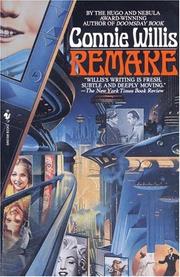
A short novel about a Hollywood where nothing new is filmed and old movies are digitally recut. Slight, but the most purely enjoyable of her minor books.
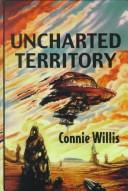
Two surveyors on an alien planet, mostly an extended joke about bureaucratic forms and gender assumptions. Genuinely minor; read it only if you are completing the shelf. Note that it appears alongside Remake and Bellwether in an omnibus, so check what you already own before buying.

Her most recent novel — a telepathy-by-neural-implant romantic comedy. The weakest of the late books and the one most readers skip; included so the list is honest about what is on the shelf rather than as a recommendation.
Discussion
Keep reading
Paths that share books, cover the same subject, or open a related topic.