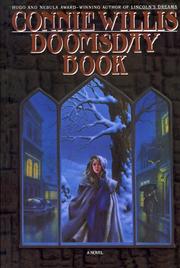
Start with Doomsday book. A historian is sent to 1320 and lands in 1348 instead, while a modern epidemic closes Oxford around the people who could retrieve her. It won both the Hugo and the Nebula, and it is the book the other three Oxford novels are read against — they only work as comedy because you have already watched her decline to spare anyone.
That is the thing most readers are not told, and it is the single most useful fact about her: Willis writes in two almost incompatible modes. One is tragic, patient and willing to kill people you have come to like. The other is screwball farce built on missed telephone calls, lost luggage and characters talking past each other for three hundred pages. Both are her. Readers who arrive at the second expecting the first, or the reverse, come away baffled, and the surprise is much more common than it should be.
The Oxford sequence, in publication order
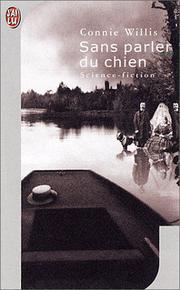
Doomsday book first, and only first. To Say Nothing of the Dog second, which is deliberately its opposite — a Victorian screwball comedy of jumble sales, cathedral restoration and a cat, modelled on Jerome K. Jerome. The relief only lands if the plague novel came before it, which is the whole reason to keep publication order rather than internal chronology.
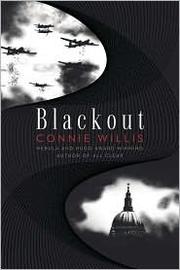
Then Blackout and All Clear, which are one novel split by the publisher into two volumes. Do not start Blackout unless you have All Clear to hand; it stops rather than ends. Together they follow three historians losing their way home from the Blitz, and together they won the Hugo and the Nebula. They are also the most criticised books in the sequence — for length, and for characters who repeatedly fail to ask the obvious question that would end their predicament. Read them last, when you already trust her enough to sit with that.
The standalones
Passage is the one to read first outside the Oxford books, and arguably her most ambitious novel: near-death experiences studied clinically in a Denver hospital whose corridors are a labyrinth in their own right. It contains the hardest turn in her work, and you should read nothing about the plot before you start. Lincoln's Dreams, her first novel, is short, quiet and much sadder than a premise about a young woman dreaming Robert E. Lee's dreams suggests. Bellwether is the best short introduction to the comic register: fad research, chaos theory and a flock of sheep in a corporate lab.
The short fiction, where the awards are
Willis has won more short-fiction awards than almost anyone in the field, and the very best of her work is here. Fire watch is her first collection, and the title novella is the Oxford story the whole sequence grew out of — a historian sent to St Paul's during the Blitz. Read it after the novels; it is better as a return than as an introduction. Impossible Things holds Even the Queen, At the Rialto and The Last of the Winnebagos, as strong a run of novelettes as the genre has produced. If you read one book of her stories, make it that one. The Best Of Connie Willis Awardwinning Stories gathers ten award winners with her acceptance speeches attached; it overlaps heavily with the other two, so treat it as a greatest-hits volume rather than a first purchase.
The rest of the shelf
Remake is slight but the most purely enjoyable of the minor books — a Hollywood where nothing new is filmed and old movies are digitally recut. Uncharted territory is genuinely minor, mostly an extended joke about bureaucratic forms, and it appears alongside Remake and Bellwether in an omnibus, so check what you own before buying. Crosstalk, a telepathy-by-implant romantic comedy, is the weakest of the late novels and the one most readers skip; it is listed here so the shelf is described honestly, not as a recommendation.
Where to stop
Four books give you the writer: Doomsday book, To Say Nothing of the Dog, Passage and Impossible Things. Add Blackout and All Clear as a pair if the Oxford world has hold of you. More science fiction reading orders are on Discover.
Follow the full ordered path here: Connie Willis books in order: where to start with the Oxford time travel novels.