Start with Wolf of the Plains, the first of the Conqueror novels, which follows Temujin from outcast child to the unification of the steppe tribes. It is the better book and the better series, and it has a practical advantage over the obvious entry point: because the material is less familiar to most English-language readers, Iggulden's inventions cost less. You are not constantly checking him against something you already know.
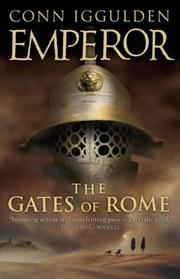
The obvious alternative is The Gates of Rome, the first of the Emperor novels on Julius Caesar. It is a perfectly good adventure story, and it is the most uneven of his sequences — it takes its single largest liberty with the historical record on page one, making Marcus Brutus Caesar's childhood friend and effectively fusing him with a different historical figure. That is fine if you know it going in and irritating if you do not.
Conqueror: the Mongols
Five books, strictly sequential. Wolf of the Plains (published in the United States as Genghis: Birth of an Empire, which is the same novel under another cover) covers the rise. Genghis: Lords of the Bow is the strongest single book in the sequence: the campaign against the Chin and the problem of taking walled cities with an army that had never besieged one. Bones of the Hills is darker and is the moral centre of the series — the Khwarezmid war, the destruction of Persia's cities, and the fracture between Jochi and Chagatai. Empire of Silver moves the leadership away from the character you have followed for three books, which is disorienting by design. Conqueror closes with Kublai and the founding of the Yuan; Iggulden compresses decades hard here and says so, so treat the chronology as impressionistic.
Emperor: Julius Caesar
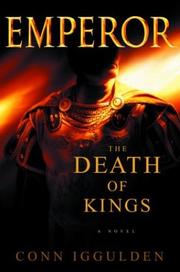
Read this second if Rome is what drew you. The Gates of Rome is the boyhood, told with pace and very little regard for the sources. The Death of Kings is better plotted — the pirates, then Spartacus — and the invented friendship starts paying dramatic dividends even as it departs further from the record. The Field of Swords is the best-executed of the five: Gaul, Britain, and the making of the army. Emperor: The Gods of War takes it through the Rubicon to the Ides of March. The Blood of Gods: A Novel of Rome was written nine years after the fourth book and covers the aftermath with Octavian and Antony; it was not part of the original plan and reads like a coda.
Wars of the Roses
Four books, and the sequence where Iggulden is working with a much better-documented period and is visibly more careful with it. Stormbird is the slowest opening of any of his series and the one that most rewards patience: Henry VI, the loss of France, the beginning of the collapse. Wars of the Roses: Trinity covers York's protectorate and the first battles, with author's notes that flag the departures. Bloodline handles Towton, the bloodiest single day in English history, at length. Ravenspur runs from Edward's return through Barnet and Tewkesbury to Bosworth, and is the strongest of the four.
The standalones, which are where the prose is best
Dunstan is a first-person account of the tenth-century abbot who served seven kings, and by some distance his best-written book. It depends on nothing else, so read it whenever you like; if you read one Iggulden outside the trilogies, make it this one. The Gates of Athens and Protector cover Marathon, Thermopylae, Salamis and Plataea, and he sticks far closer to Herodotus here than to anything in Emperor, which makes them a useful contrast. The standalone Persian-war novel The Falcon of Sparta sits alongside them and can be read independently; it is not in our catalogue.
Where to stop
If you want one series, take Conqueror. If you want two, add Wars of the Roses rather than Emperor — the later sequence is better written and better researched. Emperor is worth reading for The Field of Swords, but go in expecting a novelist's Caesar. Browse the Conn Iggulden reading path for the full sequence with stage notes.
Follow the full ordered path here: Conn Iggulden books in order: where to start.
Ready to learn something deeply?
Build a reading path — free