Cocktail bartending: the best books to mix drinks like a pro
This curriculum takes a beginner from zero bartending knowledge to confident, creative cocktail-making across four progressive stages. It starts with approachable home-bar essentials and classic recipes, builds through technique and flavor theory, and finishes with the advanced craft knowledge used by professional bartenders and serious enthusiasts.
Foundations: Setting Up & First Pours
BeginnerUnderstand essential bar tools, spirits, and classic recipes well enough to confidently stock a home bar and make a core set of cocktails from scratch.
▸ Study plan for this stage
Pace: 4–5 weeks, ~25–30 pages/day. Start with "The Bar Book" (weeks 1–3, ~250 pages), then move to "How to Drink" (weeks 4–5, ~200 pages). Allow 2–3 days between books to consolidate and practice.
- Essential bar tools and their specific functions (jigger, shaker, strainer, bar spoon, muddler, citrus tools) from The Bar Book's equipment section
- The six spirit categories—vodka, gin, rum, tequila, whiskey, and brandy—and their flavor profiles and production methods per The Bar Book
- Core cocktail techniques: shaking vs. stirring, proper dilution and temperature control, and when to use each method as detailed in The Bar Book
- Classic cocktail recipes and their variations (Daiquiri, Margarita, Martini, Manhattan, Old Fashioned) from both books' recipe sections
- How to Drink's framework for understanding spirits by region, style, and food pairing to build a coherent home bar philosophy
- Ingredient quality and selection: choosing spirits, fresh citrus, bitters, and modifiers for a functional home bar setup
- Flavor balance in cocktails: the interplay of spirit, sweetness, acidity, and dilution to achieve harmony
- What are the five essential bar tools you need to make cocktails at home, and what is the specific purpose of each?
- Explain the difference between shaking and stirring a cocktail—when would you use each technique, and why does it matter?
- Name three classic cocktails and describe their base spirit, key ingredients, and the technique required to make them properly.
- What are the six primary spirit categories, and how do their flavor profiles differ? Which would you choose as your first spirit to stock?
- How does dilution and temperature affect the taste and texture of a cocktail, and how do you achieve proper dilution?
- Based on How to Drink's approach, how would you build a home bar that reflects a coherent philosophy rather than random bottles?
- Set up a functional home bar: acquire the five essential tools (jigger, cocktail shaker, Hawthorne strainer, bar spoon, muddler) and organize them for easy access.
- Stock your first three spirits: choose one bottle each from three of the six spirit categories (e.g., bourbon whiskey, London Dry gin, white rum) based on The Bar Book's guidance and How to Drink's philosophy.
- Make five classic cocktails in sequence (Daiquiri, Margarita, Martini, Manhattan, Old Fashioned), practicing proper technique, measuring, and dilution with each one.
- Conduct a blind tasting of three different gins or rums (or whichever spirit you choose), noting flavor differences and how they affect a simple cocktail like a Daiquiri or Gimlet.
- Document your first 10 cocktails: record the recipe, technique used, dilution level, temperature, and your tasting notes to develop palate awareness.
- Create a home bar inventory sheet listing your spirits, modifiers (bitters, syrups, juices), and tools, then cross-reference it against The Bar Book's recommendations to identify gaps.
Next up: Mastering these foundational tools, spirits, and recipes gives you the technical confidence and flavor vocabulary needed to advance to the next stage, where you'll explore advanced techniques, seasonal ingredients, and how to adapt and innovate within classic frameworks.

The perfect first book — it teaches fundamental techniques (shaking, stirring, muddling, carbonating) with clear explanations and photos before worrying about recipes, giving beginners a solid physical foundation.

A warm, readable guide to understanding spirits, wine, and cocktails from a consumer's perspective; builds vocabulary and confidence around flavor and occasion before diving into serious mixing.
The Classics: Essential Recipes & Balance
BeginnerLearn the canon of classic cocktails, understand the templates they follow (sour, old-fashioned, highball, etc.), and develop an intuition for balance between sweet, sour, strong, and weak.
▸ Study plan for this stage
Pace: 6–8 weeks, ~40–50 pages/day (alternating between theory-focused sections of "The Joy of Mixology" and recipe study in "The Savoy Cocktail Book")
- The four foundational cocktail templates: Sour, Old-Fashioned, Daisy, and Highball—and how to recognize and modify them
- Balance as the core principle: the interplay between spirit, citrus, sweetness, and dilution in creating harmony
- The historical context and evolution of classic cocktails from the Savoy era, and why certain recipes became canonical
- Technique fundamentals: proper shaking vs. stirring, dilution through ice, and temperature control as they relate to balance
- Flavor profiles and ingredient roles: how base spirits define character, citrus provides brightness, sweeteners add body, and modifiers (bitters, liqueurs) create complexity
- The concept of 'spirit-forward' vs. 'balanced' cocktails and when each approach is appropriate
- How to taste and evaluate cocktails critically: identifying what is out of balance and why
- What are the four primary cocktail templates, and what is the defining characteristic of each?
- How do the proportions of spirit, citrus, and sweetness differ between a Daiquiri and a Sidecar, and why?
- What role does dilution play in cocktail balance, and how do shaking vs. stirring affect it?
- Why did certain cocktails from the Savoy era become 'classics,' and what makes them enduring templates?
- If a cocktail tastes 'flat' or 'one-dimensional,' what adjustments would you make to improve balance?
- How would you modify a classic recipe to suit a different spirit while maintaining the template's integrity?
- Make 5 classic sours (Daiquiri, Margarita, Whiskey Sour, Gimlet, Sidecar) side-by-side and taste them blind; identify which is which and articulate the flavor differences
- Prepare a single recipe (e.g., Daiquiri) three times with intentional variations: one under-diluted, one properly diluted, one over-diluted; taste and document how balance shifts
- Select 3 Old-Fashioned variants from the Savoy (e.g., Brandy Old-Fashioned, Whiskey Old-Fashioned, Rum Old-Fashioned) and make them back-to-back; compare how the base spirit changes character while the template remains constant
- Create a 'balance tasting flight': make a Margarita, then deliberately throw it out of balance (too sweet, too sour, too weak) and taste each version; practice identifying and naming the imbalance
- Reverse-engineer a recipe: choose a classic from the Savoy, write down its proportions, then make it and evaluate whether the balance matches Regan's principles; adjust if needed
- Host a 'template tasting': make one example each of a Sour, Old-Fashioned, Daisy, and Highball; document the structural differences and explain to a friend why each template works
Next up: This stage builds the muscle memory and palate foundation needed to move into advanced topics like spirit selection, ingredient quality, and creative variation—you'll recognize when and how to break the rules because you've internalized the rules themselves.
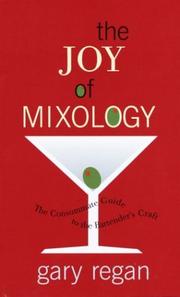
Regan's 'families of cocktails' framework is the clearest system for understanding why recipes work, making it the ideal bridge from technique to recipe knowledge.

The definitive historical reference for classic cocktails — reading it after Regan's framework lets you see the patterns across hundreds of timeless recipes rather than just memorizing them.
Going Deeper: Flavor, Ingredients & Craft
IntermediateDevelop a sophisticated understanding of individual spirits, homemade ingredients (syrups, bitters, infusions), and how flavor components interact to create balanced, memorable drinks.
▸ Study plan for this stage
Pace: 8–10 weeks, ~40–50 pages/day. Start with "Cocktail Codex" (2–3 weeks), move to "The Drunken Botanist" (2–3 weeks), then "Bitters" (2–3 weeks), with 1–2 weeks for overlap and experimentation.
- Spirit categories and production methods: how distillation, aging, and raw materials shape flavor profiles in whiskey, rum, gin, vodka, tequila, brandy, and liqueurs
- Flavor chemistry and balance: understanding how sweetness, acidity, bitterness, and proof interact to create harmony in cocktails
- Homemade ingredients as craft tools: making syrups, infusions, and tinctures to customize flavor and control ingredient quality
- Botanical knowledge: recognizing how plants, herbs, spices, and botanicals contribute distinct flavor compounds and aromatic properties to spirits and cocktails
- Bitters as flavor amplifiers: understanding how bitters function as seasoning agents and how to select, combine, or create them for specific drinks
- Ingredient sourcing and substitution: evaluating quality, terroir, and availability to make informed choices when building a home bar
- Recipe deconstruction: analyzing classic and modern cocktails to understand why specific spirits and ingredients work together
- What are the key flavor differences between whiskey, rum, and brandy, and how do their production methods influence these differences?
- How do you balance sweetness, acidity, bitterness, and alcohol proof in a cocktail, and what role does each element play?
- What are the main botanicals in gin, and how do they contribute to the spirit's flavor profile and versatility in cocktails?
- How do you make a basic simple syrup, infusion, and tincture, and when would you use each in cocktail creation?
- What is the functional difference between bitters and other modifiers, and how do you select or create bitters for a specific drink?
- How does terroir and production method affect the flavor of spirits like tequila, cognac, or rum, and why does this matter for cocktail building?
- Conduct a blind tasting of 3–4 spirits in the same category (e.g., three different rums or whiskeys) and document the flavor differences; correlate your notes to production methods described in 'Cocktail Codex'
- Make three homemade syrups (e.g., honey, ginger, or herb-infused) and use each in a different cocktail; compare the result to the same drink made with store-bought syrup
- Create a simple bitters blend using 2–3 botanicals from 'The Drunken Botanist' (e.g., cardamom, orange peel, gentian root) and test it in a classic cocktail like a Manhattan or Old Fashioned
- Deconstruct five classic cocktails from 'Cocktail Codex': identify the spirit base, modifier, sweetener, and bittering agent, then explain why each component was chosen
- Make a homemade infusion (e.g., vanilla vodka, chili-infused tequila, or herb-steeped gin) over 1–2 weeks and use it to create a custom cocktail
- Build a flavor profile chart for 6–8 spirits you have access to, noting their base flavor (sweet, spicy, fruity, herbal, etc.) and three cocktails where each spirit shines
Next up: This stage equips you with the technical knowledge and hands-on skills to understand how spirits and ingredients work, preparing you to move into the next level where you'll apply this foundation to advanced techniques like molecular mixology, large-format cocktails, or developing your own signature drinks.
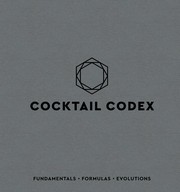
Written by the Death & Co team, this book distills all cocktails into six 'root' templates and teaches you to think like a bartender — essential for moving beyond recipes to true understanding.
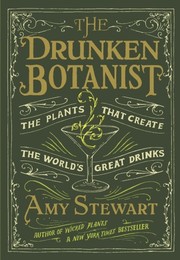
Explores the plants, herbs, and botanicals behind every spirit and liqueur, deepening your appreciation of ingredients and inspiring creative, well-informed flavor pairings.

A focused deep-dive into one of the most overlooked cocktail components; after reading this you'll understand how bitters shape balance and complexity in ways most beginners never consider.
Mastery: Creative Bartending & Professional Craft
ExpertThink and create at a professional level — developing original cocktails, understanding the history and culture of the craft, and refining every detail of technique and hospitality.
▸ Study plan for this stage
Pace: 8–10 weeks, ~40–50 pages/day with 2–3 days per week for hands-on practice and experimentation
- The philosophy of Death & Co's approach to ingredient quality, flavor balance, and menu curation as a foundation for original cocktail design
- Flavor architecture and the interplay of spirits, modifiers, and aromatics in creating balanced, memorable drinks
- The historical and cultural context of classic cocktails and how to build on tradition without merely copying
- Advanced technique refinement: precise dilution, temperature control, stirring vs. shaking, and the science behind each choice
- The role of hospitality and storytelling in professional bartending—connecting with guests and elevating the experience beyond the drink
- Tristan Stephenson's approach to ingredient exploration, experimentation, and unconventional flavor combinations
- Developing a personal bartending philosophy and voice through intentional menu design and creative constraint
- The business and cultural dimensions of craft bartending: sustainability, sourcing, and the bartender's role in the broader food and beverage industry
- What is Death & Co's core philosophy on ingredient selection and how does it inform their approach to cocktail creation?
- How do you balance tradition and innovation when designing an original cocktail, and what role does understanding cocktail history play?
- Explain the concept of flavor architecture: how do spirits, modifiers, and aromatics work together in a well-crafted drink?
- What are the key technical decisions (dilution, temperature, shaking vs. stirring) that affect a cocktail's final character, and how do you make them intentionally?
- How does Tristan Stephenson's approach to experimentation and ingredient exploration differ from classical bartending, and when is each approach appropriate?
- Describe your personal bartending philosophy: what principles guide your menu design, and how do you communicate your vision to guests?
- Deconstruct 5 classic cocktails from Death & Co's menu: identify the flavor architecture, explain the role of each ingredient, and note what makes each drink memorable
- Create 3 original cocktails using Death & Co's principles of balance and ingredient quality; document your process, including failed iterations and why you made each adjustment
- Study 5 recipes from The Curious Bartender Volume II and experiment with one unconventional ingredient substitution or technique in each; taste and evaluate the results
- Design a 6–8 drink menu for a hypothetical bar concept, including a mix of classics and originals; write a brief philosophy statement explaining your selections and how they reflect your vision
- Practice advanced technique: prepare the same cocktail 10 times, varying dilution and temperature; taste blind and identify which variables most affect the final result
- Interview or shadow a professional bartender; ask about their approach to menu design, ingredient sourcing, and how they balance creativity with guest expectations
- Host a tasting session: prepare 3 versions of the same cocktail (classic, Death & Co-inspired, and experimental); gather feedback and refine based on responses
Next up: This stage equips you with both the technical mastery and creative confidence to operate as a professional bartender or bar consultant, positioning you to either specialize further in a particular area (spirits education, molecular mixology, business ownership) or teach and mentor others in the craft.

A landmark book from one of the world's most influential cocktail bars; at this stage you can fully absorb its recipes, philosophy, and behind-the-bar thinking as a model for excellence.

Combines the science of cocktail-making with stunning technique and original recipes, pushing you to understand the 'why' behind every decision at the highest level of the craft.
Discussion
Keep reading
Paths that share books, cover the same subject, or open a related topic.