Classical guitar basics: essential method and technique books
This curriculum takes a complete beginner from their very first chord and note all the way through intermediate-to-advanced classical technique and repertoire. Each stage builds directly on the last: you first establish posture, notation, and right-hand tone; then develop fluency through etudes and scales; then tackle the canonical solo repertoire that defines the classical guitar tradition.
Foundations: Posture, Reading & First Sounds
BeginnerEstablish correct classical posture and hand position, learn to read standard notation on the guitar, and produce a clean, warm tone with the right hand from day one.
▸ Study plan for this stage
Pace: 4–5 weeks, ~20–30 minutes daily (Parkening Vol. 1: 2–3 weeks; Pumping Nylon: 2 weeks)
- Classical posture fundamentals: seated position, foot stool placement, and guitar angle for optimal hand access and comfort
- Hand position and finger independence: proper arch, finger curvature, and wrist alignment for both left and right hands
- Right-hand technique: rest stroke (apoyando) vs. free stroke (tirando), nail-flesh contact, and tone production mechanics
- Reading standard notation on the treble clef: note names on the fretboard, rhythm values, and basic time signatures
- Left-hand fundamentals: finger placement on the fretboard, pressure application, and transitioning between notes cleanly
- Tone development: how posture, hand position, and right-hand mechanics directly affect sound quality and consistency
- Nail care and conditioning: maintaining proper nail length, shape, and strength for reliable tone production
- How should you position your body, feet, and guitar when sitting to play classical guitar, and why does each element matter?
- What is the difference between rest stroke (apoyando) and free stroke (tirando), and when would you use each?
- How do you read a note on the treble clef and locate it on the classical guitar fretboard?
- What does proper left-hand finger position look like, and how does it prevent injury and enable clean note transitions?
- How do nail shape, length, and the flesh-nail contact point affect tone quality and consistency?
- What role does wrist alignment play in both left-hand and right-hand technique, and how do you know if yours is correct?
- How do you produce a warm, resonant tone from the first day, and what common mistakes prevent beginners from achieving it?
- Posture drill: Sit with proper classical position for 5 minutes daily, using a mirror or video to check alignment; adjust foot stool height until your guitar sits at the correct angle
- Right-hand tone production: Practice rest strokes on open strings (E, B, G, D, A, E) for 10 minutes, focusing on nail-flesh contact and consistent tone; record yourself to compare quality across strings
- Left-hand finger independence: Play the Parkening exercises that isolate each finger (typically found in Vol. 1's early sections); hold each note for 3–5 seconds to ensure clean tone
- Note reading practice: Use the staff diagrams in Parkening Vol. 1 to identify notes on paper, then locate them on the fretboard without looking; do this for all six strings daily
- Nail conditioning routine: File and shape your nails 2–3 times per week following Tennant's guidelines in Pumping Nylon; practice the same passage before and after to feel the difference
- Simple melody playthrough: Play the first 5–10 beginner melodies from Parkening Vol. 1 slowly, prioritizing posture and tone over speed; record each attempt to track consistency
- Free stroke vs. rest stroke comparison: Play the same open-string passage using both techniques back-to-back, noting the tonal and mechanical differences; practice switching cleanly between them
Next up: This stage equips you with the physical and technical foundation—correct posture, hand position, notation literacy, and tone control—that makes all subsequent technique development, scale work, and repertoire learning possible without injury or bad habits.

The gold-standard beginner method for classical guitar, written by one of America's greatest players. It introduces posture, notation, right-hand finger strokes (rest and free stroke), and simple pieces in a carefully sequenced, photo-illustrated format — the ideal starting point.

Read alongside the Parkening method as a technique companion. Tennant's clear explanations of right-hand tone production, slurs, scales, and arpeggios fill in the 'why' behind every physical habit you are building, preventing bad technique from taking root early.
Early Development: Etudes & Notation Fluency
BeginnerDevelop reading fluency across the full neck, build finger independence, and internalize the classical etude tradition through the most approachable 19th-century studies.
▸ Study plan for this stage
Pace: 6–8 weeks, ~20–30 minutes daily of focused study and practice
- Reading fluency across the full guitar neck: recognizing note positions on all six strings and upper frets without hesitation
- Finger independence and coordination: developing the ability to move fingers independently while maintaining clean tone and intonation
- Classical etude tradition: understanding how 19th-century studies isolate and develop specific technical challenges in a musical context
- Notation literacy: reading and interpreting standard notation, fingering indications, and performance markings (dynamics, articulation, tempo)
- Sor's pedagogical approach: recognizing how Sor's studies progress from simple rhythmic and melodic patterns to more complex technical demands
- Parkening's systematic method: applying Parkening's structured approach to building hand position, right-hand technique, and left-hand dexterity
- Musicality within technical work: balancing mechanical precision with expressive phrasing, even in studies designed primarily for technique
- How do you identify a note on the guitar neck without counting from the open string, and can you do this fluently across all six strings and up to the 12th fret?
- What is the pedagogical purpose of an etude, and how do Sor's studies differ in their approach to isolating specific technical challenges?
- Can you play a Sor study at a steady tempo with clean tone, accurate intonation, and consistent finger independence?
- How do you interpret fingering indications and performance markings in Parkening's method, and why do they matter for building proper technique?
- What is the relationship between left-hand finger independence and the ability to execute smooth position shifts and rapid note sequences?
- How does the progression within Parkening Volume 2 and across Sor's 20 Studies build toward more complex technical demands?
- Daily neck-reading drills: spend 5 minutes identifying random notes on the fretboard (all strings, frets 0–12) without playing, then verify by playing each note
- Parkening Volume 2 systematic work: complete all exercises and pieces in order, playing each at least 5 times before moving forward, focusing on the hand position and right-hand technique emphasized in each section
- Sor etude rotation: select 4–5 Sor studies at your current level, practice one per day in a rotating schedule, recording yourself weekly to track tone quality and consistency
- Finger independence isolation: practice the left-hand finger exercises from Parkening (e.g., holding one finger down while moving others) for 10 minutes daily
- Tempo progression: choose one Sor study and practice it at 60% of the target tempo for 3 days, then increase by 10% every 3 days until reaching full tempo
- Notation annotation: mark all fingerings, position shifts, and dynamic/articulation changes in a Sor study before playing it, then play without looking at your annotations
- Performance simulation: record yourself playing a completed Parkening piece and a Sor study, then listen back and identify one technical and one musical improvement for next time
Next up: Mastery of reading fluency, finger independence, and the etude tradition in this stage equips you to tackle more virtuosic 19th-century studies and contemporary repertoire that demand rapid position shifts, complex rhythmic figures, and expressive control across the full range of the instrument.

Picks up seamlessly from Volume 1, introducing position playing, more complex rhythms, and early ensemble and solo pieces — bridging the gap between pure beginner work and the etude repertoire ahead.

Edited by Andrés Segovia, these are the most important beginner-to-intermediate etudes in the entire classical guitar canon. Each study isolates a specific technical challenge — arpeggios, slurs, scales — while also being beautiful, self-contained music.
Intermediate Technique: Scales, Arpeggios & the Etude Tradition
IntermediateSystematize scale and arpeggio technique, expand right-hand tone control, and work through the essential 19th-century etude literature that every classical guitarist must know.
▸ Study plan for this stage
Pace: 6–8 weeks, ~20–30 minutes of focused practice daily (scales 10–15 min, etudes 10–15 min), with 2–3 complete run-throughs of each book per week
- Systematic scale mastery: all major and minor scales (natural, harmonic, melodic) in multiple positions and tempos, using Segovia's pedagogical approach
- Right-hand tone production and control: consistent volume, clarity, and tonal color across all strings and registers while executing scales and arpeggios
- Arpeggio patterns and their relationship to scale-based harmonic movement, building fluency across the fretboard
- The etude as a technical and musical vehicle: understanding how Carcassi's Op. 60 studies isolate and develop specific technical challenges within musically coherent pieces
- Tempo and rhythmic precision: executing scales and etudes at gradually increasing speeds while maintaining accuracy and tone quality
- Left-hand efficiency and finger independence: developing clean position shifts, smooth transitions, and minimal finger movement during scale passages
- Musical interpretation within technical study: bringing phrasing, dynamics, and expression to etudes rather than treating them as mechanical exercises
- Can you play all major and minor scales (natural, harmonic, and melodic forms) fluently at a moderate tempo with consistent tone and intonation?
- What are the key technical challenges addressed in each of Carcassi's Op. 60 studies, and how does the etude structure help isolate and solve them?
- How does Segovia's approach to scale practice (as presented in his book) develop right-hand tone control and left-hand efficiency simultaneously?
- Can you execute arpeggio patterns derived from scale positions smoothly and with even tone across all strings?
- How do you apply the technical lessons from individual Carcassi etudes to your broader repertoire and sight-reading?
- What is the relationship between scale mastery and the ability to play fast, clean passage work in actual compositions?
- Daily scale routine from Segovia: practice all 12 major scales in at least two positions, focusing on evenness of tone and consistent right-hand technique
- Minor scale exploration: systematically work through natural, harmonic, and melodic minor scales, noting the technical differences and tonal qualities of each form
- Tempo progression drills: take one scale per day and practice it at 5–6 different tempos (e.g., quarter note = 60, 80, 100, 120, 140 bpm), maintaining tone quality at each level
- Arpeggio extraction: from each scale, extract and practice the primary arpeggio patterns (I, IV, V chords) in multiple positions
- Carcassi etude deep-dives: select one etude per week, analyze its technical focus, practice it slowly for accuracy, then gradually increase tempo while maintaining musicality
- Comparative study: play the same Carcassi etude three times in one session—first for technical accuracy, second for tone and phrasing, third at performance tempo—and reflect on the differences
- Transposition exercises: take a Carcassi etude and transpose it to 2–3 different keys to deepen fretboard knowledge and reduce mechanical memorization
- Sight-reading integration: use scales and arpeggios from Segovia as warm-ups before sight-reading new pieces, then apply the technical lessons to unfamiliar repertoire
Next up: Mastery of systematic scales, arpeggios, and the 19th-century etude tradition provides the technical foundation and interpretive maturity needed to tackle advanced repertoire—including larger-scale works, complex polyphony, and the demanding compositions of the 20th century and beyond.

Segovia's slim but indispensable scale system is the universal standard for classical guitar. Mastering these fingerings builds left-hand strength, right-hand evenness, and the muscle memory needed for all advanced repertoire.

Carcassi's Op. 60 is the natural next step after Sor, introducing more melodic complexity and a wider range of arpeggio patterns. These studies develop the right hand's ability to project a singing melody over an accompaniment — a core classical guitar skill.
Repertoire & Musicianship: The Solo Guitar Tradition
IntermediateLearn to interpret and perform canonical solo repertoire from the Baroque, Romantic, and 20th-century periods, developing musical phrasing, dynamics, and stylistic awareness.
▸ Study plan for this stage
Pace: 8–10 weeks, ~4–6 pieces per week with daily practice (30–45 minutes focused study per piece)
- Tarrega's foundational approach to tone production, right-hand technique, and legato phrasing as the basis for Romantic-era guitar style
- Structural analysis of Tarrega's salon pieces and studies: recognizing form (ternary, rondo), harmonic progressions, and thematic development
- Barrios's expansion of the guitar's expressive range through extended techniques, polyrhythmic complexity, and South American musical idioms
- Period-appropriate interpretation: understanding Romantic rubato, dynamic shaping, and the balance between technical display and emotional restraint
- Comparative stylistic awareness: how Tarrega's Spanish Romanticism differs from Barrios's modernist synthesis of European and Latin American traditions
- Fingering strategy and hand position optimization for both composers' idiomatic writing and the physical demands of their repertoire
- Developing a personal interpretive voice while respecting compositional intent and historical context
- How does Tarrega's approach to legato and tone production in pieces like 'Adelita' or 'Lágrima' establish a model for Romantic guitar phrasing, and how do you apply this in your own playing?
- What are the formal structures (e.g., ternary, rondo, theme-and-variations) in three pieces from the Tarrega Collection, and how does understanding form inform your interpretation?
- How do Barrios's compositional techniques—such as polyrhythm, harmonic innovation, and thematic transformation—differ from Tarrega's approach, and what does this reveal about early 20th-century guitar aesthetics?
- Describe the role of rubato and dynamic shaping in a Tarrega piece and a Barrios piece: where do you add flexibility, and where do you maintain strict time?
- How do the technical demands of a Barrios work (e.g., 'La Catedral' or 'Vals Venezolano') require different hand positioning or fingering strategies compared to a Tarrega salon piece?
- What stylistic and cultural elements distinguish Barrios's music from Tarrega's, and how do you convey these differences in performance?
- Learn and perform 3–4 Tarrega pieces in full (e.g., 'Adelita,' 'Lágrima,' 'Capricho Árabe,' 'Recuerdos de la Alhambra'), focusing on consistent tone production and legato transitions between phrases
- Analyze the harmonic structure and formal outline of two Tarrega pieces; map out cadences, modulations, and thematic returns to understand the architecture
- Record yourself playing a Tarrega piece, listen back, and identify three specific moments where you can improve dynamic shaping or phrasing clarity; re-record after targeted practice
- Learn two contrasting Barrios works (e.g., 'La Catedral' and a Vals or Danza); document the technical and stylistic challenges unique to each
- Perform a side-by-side comparison of a Tarrega and Barrios piece for a teacher or peer; discuss how your interpretation reflects the historical and cultural context of each composer
- Practice a technically demanding passage from Barrios (e.g., the tremolo section in 'Recuerdos de la Alhambra' or rapid scale passages in 'La Catedral') with a metronome, gradually increasing tempo while maintaining clarity and tone quality
- Transcribe or notate your own interpretation of rubato and dynamics for one Tarrega and one Barrios piece, then perform it and refine based on listening and feedback
Next up: Mastery of Tarrega and Barrios's solo repertoire and interpretive frameworks establishes the technical and stylistic foundation needed to explore contemporary and experimental guitar works, as well as to develop your own compositional or improvisational voice within the classical guitar tradition.
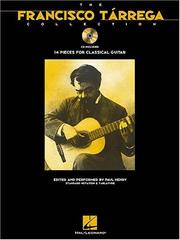
Tárrega is the father of modern classical guitar, and his preludes, mazurkas, and showpieces (Recuerdos de la Alhambra, Lágrima, Adelita) are essential repertoire. Working through his pieces teaches romantic phrasing and the tremolo technique central to the tradition.
Bach's lute works, transcribed for guitar, are the cornerstone of the Baroque repertoire on the instrument. This suite — one of the most accessible — teaches counterpoint, voice leading, and the discipline of making two or three independent voices sing on a single guitar.

Barrios is widely considered the greatest composer-guitarist in history. His collected works introduce the student to a rich variety of styles — Baroque-inspired, Romantic, and Latin — and represent the summit of the intermediate-to-advanced solo repertoire.
Advanced Mastery: Interpretation & Lifelong Practice
ExpertDevelop a personal interpretive voice, understand the deeper principles of practice and performance, and engage with the scholarly and artistic tradition of the classical guitar at the highest level.
▸ Study plan for this stage
Pace: 8–10 weeks, ~25–30 pages/day, with 2–3 dedicated practice sessions per week integrating technical and interpretive work
- Developing a personal interpretive voice through understanding the composer's intent, historical context, and emotional architecture of pieces
- The relationship between technical mastery and artistic expression—how refined technique becomes transparent in service of musical meaning
- Principles of efficient, intelligent practice: deliberate focus on problem areas, mental practice, and the role of physical awareness in preventing injury
- Understanding the classical guitar tradition: historical evolution of technique, major schools of thought (Tárrega, Segovia, modern approaches), and how to synthesize influences into a coherent artistic identity
- Advanced fingering and positioning strategies that support interpretive goals rather than merely solving technical problems
- The psychology of performance: managing tension, building confidence, and maintaining artistic integrity under pressure
- Lifelong practice as a philosophical commitment: how to structure practice for continuous growth rather than plateau, and the role of reflection and self-assessment
- How do you balance technical precision with artistic expression, and what role does Duncan's framework play in achieving this balance?
- What are the key principles of efficient practice outlined by Shearer, and how do they differ from common practice habits?
- How would you analyze a classical guitar piece to uncover the composer's interpretive intentions and historical context?
- What is your personal interpretive approach to a specific work, and how does it reflect your understanding of the classical guitar tradition?
- How do you diagnose and address technical problems using Shearer's approach, and why is mental awareness as important as physical execution?
- What strategies would you employ to maintain artistic growth and prevent stagnation in your practice over the long term?
- Select three contrasting pieces (e.g., Renaissance, Romantic, contemporary) and write detailed interpretive analyses for each, identifying composer intent, historical context, and your personal artistic choices
- Record yourself performing a piece you know well, then listen critically and identify three specific interpretive or technical areas for improvement; create a targeted practice plan using Shearer's principles
- Perform a complete technical audit of your practice routine: document what you practice, how long, and why; then redesign it according to Shearer's framework for deliberate, efficient practice
- Study two different recordings of the same classical guitar piece by renowned artists (e.g., two interpretations of a Tárrega work); analyze how their technical choices support different interpretive visions
- Develop a 12-week practice plan for a challenging work that integrates Duncan's interpretive guidance with Shearer's technical methodology; include mental practice, physical awareness, and performance preparation
- Teach a piece to another guitarist or explain your interpretation to a peer, articulating both the technical reasoning and artistic choices—this deepens your own understanding and reveals gaps
Next up: This stage establishes you as an independent, reflective artist grounded in the classical guitar tradition; the next stage would deepen specialization—whether in performance mastery, pedagogy, composition, or scholarly research—allowing you to contribute meaningfully to the art form itself.
A rigorous, scientifically-informed analysis of classical guitar technique — covering tone production, practice methodology, and the psychology of performance. Reading this at the advanced stage allows the student to critically evaluate and refine every habit built so far.
Shearer's landmark method is the most comprehensive technical treatise written for the classical guitar. At this stage it serves as a master-class reference for solving advanced technical problems and understanding the biomechanical principles behind virtuoso playing.
Discussion
Keep reading
Paths that share books, cover the same subject, or open a related topic.