Civil Wars: The Best Books on Why Societies Turn on Themselves, in Order
Civil war has been studied seriously for sixty years and the field still has no agreed explanation, so a reading path that picks a winner would be lying to you. This one puts the three big competing frameworks — grievance, state capacity and ethnic structure — beside each other before moving to the fieldwork that tested them, then ends with the books on mass killing and rebel rule that the theories struggle to absorb. Read it as an argument in progress rather than a settled subject.
What the Question Is
BeginnerGet a working definition of civil war, learn how the category itself was invented, and see the basic statistical shape of internal conflict since 1945.
▸ Study plan for this stage
Pace: Four to five weeks. All three books here are written for a general reader, which is deliberate — this stage is orientation, not scholarship. How Civil Wars Start is a short trade book and takes a week; read it first for the working vocabulary, and read it critically, because its author is an advocat
- Anocracy and factionalism as the two variables that forecasting models actually use — a regime neither fully autocratic nor fully democratic, and parties organised around identity rather than ideology
- The definitional threshold problem: most datasets require a battle-death count and a state party, which means what counts as a civil war is a coding decision with political consequences
- Armitage's finding that 'civil war' was a contested political category from Rome onward, so that calling a conflict a civil war has always been an argumentative move before it was a measurable variable
- The greed-versus-grievance debate in its popular form: Collier's claim that low income, commodity dependence and small population predict conflict better than ideology does
- Feasibility versus motive as competing logics — whether wars happen because someone is angry enough or because someone can afford to fight
- The limits of prediction: the same variables that give decent aggregate hit rates give very poor country-level forecasts, which is a fact about the models rather than a criticism of them
- Author positioning as something to track deliberately from the first stage on — Walter sits on a forecasting task force, Collier has advised governments, and both have moved position across their own successive books
- The basic statistical shape of internal conflict since 1945: interstate war declining, internal conflict becoming the dominant form, and duration lengthening
- Define anocracy operationally. What Polity range does it cover, and what does the inverted-U relationship with conflict actually claim?
- Armitage argues the category itself has a politics. Give two historical cases where naming a conflict a civil war rather than a rebellion, insurgency or war of liberation changed what was permitted.
- State Collier's argument in one paragraph, then state the strongest objection to it that he himself concedes.
- Walter applies her framework to the United States. Set out the case she makes and the case against applying a cross-national model to a single wealthy consolidated democracy.
- After all three, write the definition of civil war you intend to work with for the rest of the path — and note what it excludes.
- Take the definition used by a major conflict dataset (a battle-death threshold, a state party, a territorial requirement) and apply it to five conflicts of your choosing. At least one will be genuinely ambiguous; write a paragraph on why. This is the coding problem the whole quantitative literature rests on.
- Write out the anocracy-plus-factionalism prediction for a country you know well and then check it against what has actually happened there over the past decade. Note where the model is uninformative rather than wrong.
- Build the running author-position log you will keep for the whole path: name, discipline, method, institutional position, and what they are arguing against. Start it with these three.
- Read Armitage's chapter on the Roman usage alongside Walter's opening chapter and write 300 words on whether they are discussing the same object at all.
Next up: You have the field's working vocabulary from its popularisers; the next stage goes to the three original formulations those popularisers are compressing, and they read nothing like a trade paperback.

The most accessible entry point: a political scientist on the Political Instability Task Force explains the two variables — anocracy and factionalism — that the forecasting models actually use. Read it first because it gives you the field's working vocabulary in one sitting; read it critically, since its application of that framework to the contemporary United States is the most contested part of the book.

A conceptual history of the term itself, from Rome through the Enlightenment to the modern legal definition. Second, because it shows that 'civil war' is a category people fought over politically before it was a variable anyone measured, which reframes everything that follows.

The economists' case, argued for a general audience: that low income, natural resource dependence and small population predict conflict better than ideology does. Read it here as the strongest statement of the greed-over-grievance position, and note that Collier's own conclusions have moved over successive books.
The Competing Explanatory Frameworks
IntermediateUnderstand the three classic explanations — relative deprivation, weak institutions, and ethnic group structure — in their original formulations, and be able to say what each one predicts that the others do not.
▸ Study plan for this stage
Pace: Ten to twelve weeks, and a sharp step up in difficulty from the last stage. These are the founding academic statements, not popular accounts. Why Men Rebel is a full-length work of political psychology from 1970 with formal propositions and an apparatus of hypotheses; give it a month and expect to r
- Relative deprivation as Gurr formulates it: the gap between value expectations and value capabilities, which locates the cause of violence in a perceived shortfall rather than in absolute poverty
- Gurr's causal chain from discontent to politicisation to violence, and the conditions he specifies at each link — the chain, not the first term, is the theory
- Huntington's rival claim: instability comes from political participation outrunning institutional capacity, so the relevant variable is the degree of government rather than the form of it
- Praetorianism and institutionalisation as Huntington's core concepts, and his willingness to treat order as a value in itself — a deeply conservative position that critics on the left concede is seriously argued
- The direct incompatibility of the first two: for Gurr grievance is the engine and institutions are a moderator; for Huntington grievance is ubiquitous and institutions are the whole explanation
- Horowitz's ranked and unranked ethnic systems — whether group boundaries coincide with class hierarchy or cut across it — and the very different conflict dynamics each produces, established by a comparative method that draws deliberately on Asia, Africa and the Caribbean rather than Europe
- Party ethnification and the electoral census: what happens to democratic competition when parties map onto ascriptive groups and elections become headcounts
- How to hold three incompatible frameworks at once: each predicts something the others do not, and none of them has been decisively falsified, which is the honest state of the field
- State Gurr's definition of relative deprivation precisely, and give a case where absolute conditions improved while his predicted violence risk rose.
- What is Huntington's core distinction between form and degree of government, and what does he predict for a rapidly modernising society with weak parties?
- Take one conflict and write the Gurr explanation and the Huntington explanation for it. What observable difference would let you choose between them?
- Explain ranked versus unranked systems with an example of each, and say what each predicts about the likelihood of secession versus of communal riot.
- Horowitz's group-structure variables were later operationalised by quantitative researchers. Which of his concepts survive translation into a coded variable, and which are lost?
- For each of the three: what does this framework predict that the other two do not?
- Build the central comparison table for the whole path — three columns for Gurr, Huntington and Horowitz, with rows for the unit of analysis, the causal mechanism, the key variable, the evidence base, and the unique prediction. Every subsequent book on this path gets added as a column or tested against a row.
- Take a single case you know well and write three one-page explanations of it, one in each framework, using only that framework's vocabulary. Do not decide which is right. The exercise is holding all three.
- Diagram Gurr's causal chain as a flowchart with his own conditions at each link. Then mark which links Huntington would deny.
- Classify five contemporary conflicts as ranked or unranked in Horowitz's terms and note the ones that resist classification. The residual category is where his framework runs out.
- For each of the three books, write down the strongest empirical finding that would refute it. If you cannot construct one, say so — unfalsifiability is a real property of some of this literature.
Next up: You can now state three incompatible macro-level theories in their own terms, which is the precondition for understanding why a generation of researchers who went to the wars themselves concluded that all three were operating at the wrong level of analysis.
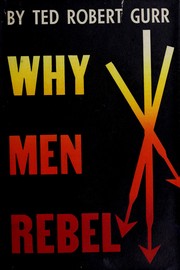
The founding statement of the grievance tradition: political violence as the product of relative deprivation, the gap between what people expect and what they get. Read it first among the three because the later frameworks are largely arguments against it.
The rival claim, published two years earlier and still the sharpest version of it: instability comes not from grievance but from political participation outrunning institutional capacity. A deeply conservative book that critics on the left concede is serious, which is exactly why it belongs here.
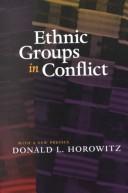
The standard comparative treatment of ethnic conflict, drawing on Asia, Africa and the Caribbean rather than Europe. Third, because it introduces the group-structure variables — ranked versus unranked systems, party ethnification — that the quantitative literature later tried to operationalise.
What the Fieldwork Found
IntermediateSee what happened when researchers went to the wars themselves, and understand why micro-level evidence unsettled every macro-level theory in the previous stage.
▸ Study plan for this stage
Pace: Twelve to fourteen weeks, the heaviest stage on the path. The Logic of Violence in Civil War is a major work of scholarship running past 480 pages with formal models, a coded dataset and statistical appendices — it is a graduate text and reads like one; allow a month and do not skip the theoretical
- Kalyvas's central claim: violence against civilians is produced jointly by armed actors and civilians, driven by the local balance of territorial control rather than by ideology or by macro-level cleavage
- The zones-of-control typology, in which selective violence is most likely under partial rather than complete control, because that is where denunciation is both useful and safe
- Denunciation as the mechanism, and the finding that private grievance is systematically laundered through political conflict — neighbours settling scores using an armed group as the instrument
- The level-of-analysis argument, which is why this book sits immediately after the macro theories: Kalyvas's claim is that the earlier frameworks describe cleavages that do not determine local behaviour
- Weinstein's resource endowment argument: groups with access to material resources recruit opportunists and end up preying on civilians, while resource-poor groups relying on social endowments recruit committed activists and discipline their fighters — a recruitment-to-behaviour path tested comparati
- Wood's finding from El Salvador that campesinos joined an insurgency at extreme personal risk when material calculation said they should not, and her account of participation as moral commitment and as pleasure in agency
- Why that is the strongest available empirical challenge to purely material accounts, and how it can be reconciled — or not — with Weinstein
- Fujii's Rwandan interviews showing many killers mobilised by local social ties, coercion and proximity rather than by ethnic hatred as such, which is the hardest case for every framework in the previous stage including Horowitz's
- Set out Kalyvas's typology of control zones and explain precisely why selective violence peaks where it does. What would his theory predict for an area under total insurgent control?
- What is the evidence for denunciation as a mechanism, and what would count as evidence against it?
- State Weinstein's argument in one sentence and identify the case in his book that fits worst.
- Wood's campesinos acted against material interest. Is that a refutation of Collier from stage one, a refinement, or a different dependent variable?
- Fujii finds that ethnicity operated as a script rather than as a motive. What does that do to Horowitz's group-structure framework — does it undermine it or specify it?
- After all four, state honestly which of the three macro frameworks survives contact with micro-level evidence best, and what 'survives' means here.
- Add four columns to your framework table for Kalyvas, Weinstein, Wood and Fujii, filling the same rows — unit of analysis, mechanism, key variable, evidence base, unique prediction. The change in the unit-of-analysis row across the two stages is the intellectual history of the field in one line.
- Reproduce Kalyvas's control-zone typology as a diagram and place three specific incidents from any conflict you know into the appropriate cells. Where an incident will not fit, note why.
- Take Weinstein's resource-endowment prediction and test it against Wood's El Salvador case using her own data on recruitment. Write a page on whether the two accounts are compatible.
- For Fujii, list the reasons her interviewees gave for participating and code them yourself into categories. Then compare your coding to hers. Disagreements are the point: this is what interpretive fieldwork coding actually involves.
- Write 800 words answering the level-of-analysis question directly: if macro cleavages do not determine local violence, what are the macro theories explaining? Do not resolve it in favour of one side.
Next up: The fieldwork has established that local dynamics drive violence, which raises two questions it cannot answer — what happens at the extreme of mass killing, and what happens when insurgents stop fighting and start governing.
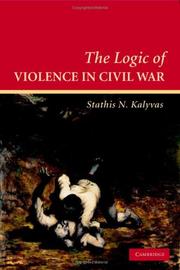
The book that reorganised the field: violence against civilians is driven less by ideology than by the local balance of territorial control and by private denunciation. Read it directly after the classic frameworks, because its whole argument is that they operate at the wrong level of analysis.
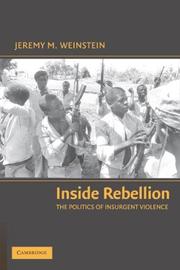
Why some rebel groups discipline their fighters and others prey on civilians, explained through what each group can offer recruits — resources or ideas. The natural companion to Kalyvas: same micro-level move, different dependent variable.

Years of fieldwork with campesinos who joined the insurgency at enormous personal risk when the material logic said they should not. Read it as the strongest empirical challenge to purely material accounts of participation, and note the catalogue files it under its Cambridge series subtitle.

Interview-based work on Rwanda showing that many killers were mobilised by local social ties rather than by ethnic hatred as such. Placed last in this stage because it is the hardest case for every framework above, ethnic structure included.
Mass Killing, Rebel Governance and the Limits of Theory
IntermediateExtend the analysis to the extremes — genocidal violence and functioning insurgent states — and be able to state honestly where the explanatory literature runs out.
▸ Study plan for this stage
Pace: Ten to twelve weeks. The Dark Side of Democracy is a very large comparative work — around 580 pages, covering Armenia, the Holocaust, Rwanda, Yugoslavia and colonial genocides — and it is serious, contested scholarship that documents mass killing in detail; allow a month. The Deadly Ethnic Riot is c
- Mann's thesis that murderous ethnic cleansing is a recurring pathology of democratisation rather than a relapse into pre-modern barbarism, arising where two rival ethnonationalisms claim the same territory
- The escalation sequence Mann specifies, in which cleansing is rarely the original intention and emerges from radicalisation under conditions of war and factional competition
- Perpetrators as ordinary and as organised: Mann's insistence on studying the mid-level cadres and paramilitaries rather than on either monsters or bureaucratic banality
- Horowitz's riot as a distinct object from sustained war — short, intense, locally organised, with precipitants, lulls, rumour and target selection following identifiable patterns
- The disagreement between Mann and Horowitz over how much of this violence is state-directed versus locally generated, which is a live and unresolved dispute worth holding open
- Mampilly's rebel governance: insurgents holding territory build courts, taxation, schools and health systems, and the variation in how well they do so is explicable by pre-war civil society and by the group's need for legitimacy
- The shift of question from why wars start to how they are lived, which almost nothing earlier on this path addresses and which is now a substantial subfield
- Arendt's separation of power from violence, arguing that they are opposites rather than degrees of the same thing and that violence appears precisely where power is failing — a philosophical check that asks whether the thing the social science has been measuring was correctly identified at all
- Reconstruct Mann's escalation sequence and identify the point at which he says cleansing becomes the intended outcome. What evidence does he use to establish intent?
- How does Horowitz's riot differ analytically from Kalyvas's selective violence? Are they explaining the same phenomenon at different scales or two different phenomena?
- Where exactly do Mann and Horowitz disagree about state direction, and what evidence would settle it?
- What explains variation in the quality of rebel governance, in Mampilly's account, and does it fit or contradict Weinstein's resource-endowment argument?
- State Arendt's distinction between power and violence in your own words. Does it apply to any of the empirical cases in this stage, and if not, what is she doing?
- Having read the whole path: name three things about civil war that the literature has genuinely established, and three questions on which it remains unresolved.
- Complete the framework table with columns for Mann, Horowitz's riot book, Mampilly and Arendt. The finished table is the deliverable of the entire path — one page holding eleven positions without collapsing them into one.
- Take a single case Mann covers and test it against Kalyvas and Fujii from the previous stage. Write two pages on whether the macro-comparative account and the micro-interpretive account of the same events can both be true.
- Build Horowitz's riot anatomy as a timeline — precipitant, lull, rumour, mobilisation, target selection, aftermath — and apply it to one documented riot. The fit or misfit is the finding.
- Chart Mampilly's three cases on the services they provided (courts, tax, schools, health) and rank them. Then explain the ranking using Weinstein's variables and note where the explanation fails.
- Read Arendt's opening twenty pages immediately after finishing Mann and write 500 words on whether her distinction survives contact with the case material. Do not resolve it; state what each side would have to concede.
- Write the final 1,500-word assessment: given everything on this path, what would you now want to know before predicting whether a given country is heading for civil war? Name the data you would want and the framework you would use to interpret it, and say explicitly what your choice assumes.
Next up: You can now read a new study of political violence and place it — level of analysis, method, framework, and what it is arguing against — which is the working competence this literature actually demands.
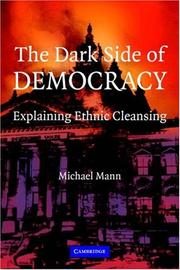
A comparative account of ethnic cleansing arguing that it is a recurring pathology of democratisation, not a relapse into pre-modern barbarism. A large, contested and genuinely serious book; read it after the fieldwork stage so you can test its cases against Kalyvas and Fujii.
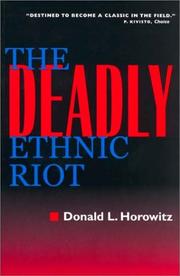
Horowitz's second appearance, on a different object: the short, intense, locally organised riot rather than sustained war. Read it alongside Mann because the two disagree about how much of this violence is state-directed.

What insurgents do when they hold territory — courts, taxation, schools, health systems — studied in Sri Lanka, Sudan and eastern Congo. It shifts the question from why wars start to how they are lived, which almost none of the earlier books address.

A short essay separating violence from power and arguing that they are opposites rather than degrees of the same thing. Read it last, as the philosophical check on a stage of social science: it asks whether the thing being measured has been correctly identified at all.
Discussion
Keep reading
Paths that share books, cover the same subject, or open a related topic.