The Punic Wars and Hannibal: books to read, in order
Rome and Carthage fought three wars across 118 years, and the reading divides cleanly: a modern narrative to fix the sequence, then the case for Carthage as a civilization rather than a villain, then Hannibal's war in close detail, then the two ancient historians everything else is built from. The path ends with the scholarly synthesis and the military-institutional background, which are where the real disagreements — over who started it, and whether the destruction of 146 BC was policy or panic — actually live.
The narrative, and the other side of it
BeginnerHold the whole 264-146 BC sequence in your head — Sicily, Hannibal, Zama, the third war — and understand why the story looks different depending on which capital you tell it from.
▸ Study plan for this stage
Pace: Seven to eight weeks. The Fall of Carthage is around 400 pages of general-audience military history and reads faster than its length suggests; three weeks at forty pages a sitting. Carthage Must Be Destroyed is around 500 pages and much denser — it is archaeological and religious history as much as
- The full shape of the sequence, which most readers cannot state: a long naval war for Sicily, a generation of peace and Carthaginian expansion in Spain, Hannibal's war in Italy, Scipio's counter-invasion of Africa, then a third short war ending in the city's destruction in 146 BC
- The first war as primarily naval and enormously costly — Rome built fleets, lost them to storms, and built them again, which is a fact about Roman resources rather than Roman seamanship
- Carthage as a Phoenician city-state with its own religion, oligarchic politics and commercial empire, rather than as a mercantile shadow of Rome
- Melqart, Baal Hammon and the tophet evidence, which Miles handles carefully and which is where most popular accounts substitute Roman propaganda for evidence
- The mercenary question: Carthage's reliance on hired and allied troops versus Rome's citizen levy, and why that difference mattered more after a defeat than during a battle
- Goldsworthy's discipline about the sources — he is unusually explicit about what the ancient accounts can and cannot support, and reading him teaches the habit before you meet the ancient historians directly
- That the destruction of 146 BC is a live argument — deliberate long-held policy or a decision taken in the moment — and that the reading in this stage is where you first meet both positions
- Why the story looks different told from each capital, which is the reason this stage has two books rather than one
- Lay out the three wars with their approximate dates and their causes as Goldsworthy states them. Which cause is best evidenced and which is most disputed?
- What did Carthage's government actually look like, and how did its structure constrain what its generals could do?
- Miles argues Carthage should be understood as a Phoenician city rather than as Rome's opposite. What evidence carries that argument, and what does it change about the wars?
- Rome lost multiple fleets in the first war and kept building. What does that tell you about the Roman system that no battle narrative would?
- Where do Goldsworthy and Miles disagree, and is the disagreement about evidence or about emphasis?
- Build a one-page chronology from Goldsworthy covering 264 to 146 BC with the major battles and treaties. Every later book on this path is an argument about entries on that page.
- Draw the western Mediterranean and mark Sicily, Sardinia, Spain, Carthage and Rome. Most of the strategic logic becomes obvious the moment you can see the distances.
- Summarise Miles's account of Carthaginian religion in 200 words, marking which claims rest on archaeology and which on Roman authors.
- List each war's stated cause and the evidence behind it, then mark the ones where Goldsworthy hedges. Those hedges are where the scholarly disputes are.
- Write two paragraphs telling the outbreak of the second war first from Rome's perspective and then from Carthage's, using only what these two books give you.
Next up: With the whole sequence in place and Carthage restored as a real state, the second war can be read as a campaign rather than as a legend — which is what the close detail in the next stage requires.
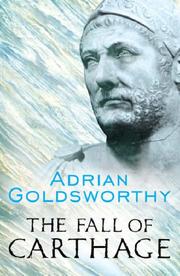
The best single modern narrative of all three wars, written for general readers by a military historian who is unusually careful about what the sources can and cannot support. Start here because everything later assumes you know the shape of the sequence.

Reconstructs Carthage as a Phoenician city-state with its own religion, politics and empire, rather than as Rome's foil. Read second, as a deliberate corrective: Goldsworthy tells the wars, Miles tells you who the other party was.
Hannibal and the second war
IntermediateWork through the war that dominates the subject in enough detail to argue about it — the Barcid family's Spanish empire, the Alpine crossing, Cannae, and why sixteen years of tactical victory did not produce a strategic one.
▸ Study plan for this stage
Pace: Eight to ten weeks. Hannibal's Dynasty is around 290 pages of scholarly but readable political history; three weeks. Lancel's Hannibal is around 350 pages and stronger on archaeology and North African material than on narrative, so it goes faster if you have the political context already. Daly's Can
- The Barcid enterprise in Spain as a family project across three generations — Hamilcar, Hasdrubal, Hannibal — which is the frame that makes the second war's origins intelligible
- Spain's silver as the material basis of the whole war: Carthage's Iberian revenues paid for an army Rome had not budgeted for
- The Ebro treaty and Saguntum as the immediate flashpoint, and the reason historians still argue about who broke what
- The Alpine crossing as a logistical problem rather than a romantic one — elephants, attrition, and a force much reduced before it fought anyone
- Cannae's double envelopment as the most studied tactical achievement in ancient warfare, and Daly's argument about what made it possible against a numerically superior enemy
- The experience of encirclement from inside the Roman formation, which is Daly's real subject and which converts a diagram into an event
- The central puzzle of the war: sixteen years of tactical victory in Italy that never produced a strategic result, and the competing explanations — Roman manpower, allied loyalty, Carthaginian reinforcement failures, Hannibal's own strategic choices
- Lancel's archaeological perspective, which gives you Punic North Africa as a physical place rather than as a set of names in Livy
- What did Hamilcar and Hasdrubal build in Spain, and how independent was it of the government in Carthage?
- Who broke the Ebro agreement? Set out the case each way and identify which ancient source each rests on.
- How does Daly explain the double envelopment at Cannae — terrain, formation, cavalry, or Roman command decisions? He weights them, and you should be able to say how.
- Why did Rome's allies mostly not defect after Cannae, and how much of the war's outcome rests on that single fact?
- Hannibal won repeatedly and lost the war. Construct the three strongest competing explanations before deciding which you find most persuasive.
- What does Lancel's material evidence add that a narrative history cannot, and where does it contradict the literary sources?
- Map the Barcid expansion in Spain from Hoyos, marking each city founded or taken. The map is the war's cause in visual form.
- Draw the Cannae deployment and its development in three stages from Daly's reconstruction. Doing it by hand is the only way the manoeuvre becomes intuitive.
- Write 300 words on why Hannibal did not march on Rome after Cannae, setting out the arguments rather than settling them.
- List every Roman consular army destroyed or mauled between 218 and 216 BC with its approximate size. The cumulative figure is the reason the strategic question is interesting.
- After Daly, reread Goldsworthy's account of Cannae from the first stage. The difference between a chapter and a book on the same afternoon is itself a lesson in historical writing.
Next up: Every claim you have now absorbed comes ultimately from two ancient writers, so the next stage is where you find out what they actually said and how much of the modern consensus is interpretation.

Treats Hannibal as the third generation of a family enterprise in Spain rather than as a lone genius, which is the frame that makes the war's origins intelligible. Scholarly but readable, and the necessary setup for the campaign narrative.
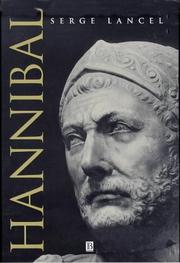
A biography by an archaeologist of Carthage, so it is stronger than most on the Punic and North African material evidence. Read it after Hoyos, when you already know the political context it moves through quickly.
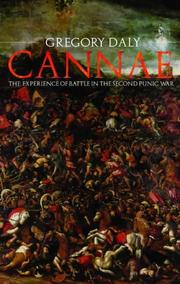
A single-battle study that reconstructs what a Roman legionary's experience of encirclement actually was. Placed here because the close reading only pays off once you know the campaign it sits inside.
The ancient historians
IntermediateRead the two surviving accounts everything modern is built from, and learn to see where each is arguing rather than reporting.
▸ Study plan for this stage
Pace: Ten to twelve weeks. Polybius first — the widely available Penguin volume runs around 570 pages and is a selection rather than the complete work, which is worth knowing before you assume a gap is his rather than the editor's. Read four weeks at a book of the history per week. Livy's account of the H
- Polybius as a Greek deported to Rome as a hostage, writing within living memory of the second war and with access to participants, which is as close to a primary account as this subject offers
- His declared purpose — explaining to a Greek audience how Rome conquered the Mediterranean in roughly fifty years — which shapes every selection he makes
- Polybius's openly pro-Scipio position, arising partly from his relationship with the Scipionic family, which does not make him unreliable but does make him an advocate
- His famous analysis of the Roman constitution as a mixed system, which is an argument rather than a description and has had an enormous afterlife
- That the surviving Polybius is fragmentary and the standard translation is a selection, so absences may be the manuscript tradition's, the editor's, or genuinely his
- Livy writing more than a century later, from Polybius among others, and shaping the material as literature and moral argument as much as record
- Livy's speeches as composed rather than reported, which was a normal convention of ancient historiography and is where much of his characterisation lives
- How to read either one: separate what the author witnessed, what he was told, what he read, and what he inferred, and notice that he frequently does not distinguish these for you
- What does Polybius say his history is for, and how does that purpose shape what he includes about Carthage?
- Find a passage where Polybius defends or explains Scipio. What is he arguing against, and who held the position he is rebutting?
- Take one episode narrated by both — the Alpine crossing is the obvious case — and list every difference. What kind of differences are they?
- Livy's speeches are composed. What are they doing that a reported speech could not, and does that make them worthless as evidence?
- Where does the modern consensus you absorbed in the last two stages come from — Polybius, Livy, or archaeology? Pick three specific claims and trace each.
- Both authors are writing about a state that no longer exists. What can either of them possibly know about Carthaginian deliberations, and how do they present that knowledge?
- Read Polybius's account of the Roman constitution as a standalone essay before the war narrative. It is short, self-contained, and explains what he thinks the whole history is proving.
- Take the Alpine crossing in both authors and set the two accounts in parallel columns. It is a day's work and it is the single most instructive exercise on this path.
- Mark every place Polybius names his source or says he spoke to someone. The list is short, and its shortness is the finding.
- Pick one Livy speech and rewrite it as a two-line summary of the position it argues. What remains is what a modern historian would have written; what you removed is Livy.
- Check your Polybius volume's contents against a full list of the surviving books, so you know what your edition has left out.
Next up: Having read the sources, you can enter the scholarly arguments as someone who knows what the evidence actually consists of rather than accepting a historian's summary of it.
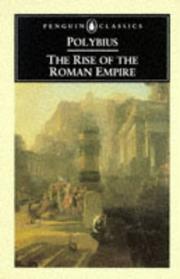
A Greek hostage in Rome writing within living memory of the second war, with access to participants — the closest thing to a primary account we have. The Penguin selection is partial, and Polybius is openly pro-Scipio; read him knowing that.
Books 21-30 of Livy's history, written over a century later and shaped as literature and moral argument as much as record. Read after Polybius so you can feel the difference between a near-contemporary and a great stylist working from him.
The scholarly end
IntermediateEngage the arguments historians are still having — about Roman aggression, Carthaginian strategy, and how a citizen militia system beat the better general.
▸ Study plan for this stage
Pace: Eight to ten weeks. Mastering the West is around 360 pages and is denser than anything in the first stage; three to four weeks, and it assumes you know the events, which by now you do. Caven's older full-scale narrative is around 300 pages and argues its way through the source problems in the open r
- The Roman aggression debate: whether Rome's expansion was defensive, opportunistic or systematically predatory, which is the field's oldest and most persistent argument
- The competing readings of 146 BC — a long-held policy finally executed, or a decision taken under specific political pressures in that decade — and what evidence each side leans on
- Carthaginian strategy as a genuine question rather than an absence: what the government in Carthage was trying to achieve during Hannibal's Italian years, and why reinforcement was so limited
- How a citizen militia system beat the better general, which is Goldsworthy's underlying subject in Roman Warfare — replaceable armies, an unusual willingness to absorb catastrophic losses, and a political culture that kept raising new legions
- The manpower argument in its precise form: Rome's alliance system in Italy converted into a recruitment base of a size Carthage could not match by any means available to it
- Reading an older scholarly narrative alongside current work as a method: Caven's conclusions have been overtaken in places, and seeing where and why teaches more than reading only the current consensus
- The historiographical layer itself — that what you can know about these wars is partly a function of which ancient author survived, and the field is unusually honest about this
- The Punic Wars as the hinge of Roman history rather than an episode in it, which is the frame Roman Warfare supplies by stepping back to the whole military system
- State the case for and against Roman defensive imperialism, citing a specific episode from the first war for each.
- Was the destruction of Carthage a policy or a panic? Marshal the evidence on both sides before committing.
- What was Carthage's war aim after Cannae? The sources are thin, so say what can be inferred and how confidently.
- How does Goldsworthy explain Rome's capacity to absorb defeat, and does the explanation depend on institutions, culture, or demography?
- Where has Caven been overtaken, and in each case is it because new evidence appeared or because the questions changed?
- Having read the path, write your own answer to why Rome won. Which stage did most of the work in your account?
- Take three disputed questions and write half a page on each setting out the positions, with the historian and the ancient source behind each. That document is the real output of this path.
- Compare Caven and Hoyos on the outbreak of the third war, marking every point where they differ. The differences are the historiography made concrete.
- From Roman Warfare, chart Roman military manpower and organisation before, during and after the Punic Wars. The wars' place in the longer story becomes obvious.
- Return to the chronology you built in the first stage and annotate each entry with the ancient source that establishes it. Some entries will have none, which is worth knowing.
- Write a 1,000-word account of the destruction of Carthage citing at least four books from this path, and mark every sentence that is a judgement rather than a finding.
Next up: This is the end of the path. The natural next step is Appian's Punic Wars, the late account that preserves the fullest surviving narrative of the third war and of the destruction — a source everything in this last stage argues about but which no book here lets you read directly.

The current scholarly synthesis of all three wars, and the place to go for the historiographical disputes the narrative books smooth over. Denser than Goldsworthy and assumes you already know the events.

An older (1980) full-scale scholarly narrative that argues its way through the source problems in the open. Some of its conclusions have been overtaken by Miles and Hoyos, which is exactly why it is worth reading alongside them rather than instead.
Steps back from Carthage to the Roman military system across its whole history, which is the underlying answer to why Rome could lose Cannae and still win. A good closing book because it puts the Punic Wars in a longer frame.