Carlo Rovelli Reading Order: Which of His Physics Books to Read First
Rovelli's books get steadily harder, and English publication order does not track that difficulty at all — the eighty-page introduction came out in translation after some of the denser material. This path reads him by difficulty instead: the two short lyrical books first, then the two that carry the actual physical argument, then the essays and a rival interpretation of quantum mechanics so you can see that his position is a position, and finally the technical monographs where loop quantum gravity is stated properly.
Eighty pages to find out if he is for you
BeginnerMeet Rovelli's voice and the shape of the argument he makes everywhere else, at minimum cost.
▸ Study plan for this stage
Pace: One or two sittings, a week at the outside. Seven Brief Lessons on Physics is seven short essays and under a hundred pages in most printings, and it is designed to be read straight through rather than studied. Read it once at speed, then reread the lesson on time and the closing lesson on ourselves,
- The seven subjects Rovelli picks as the whole of modern physics: general relativity, quantum mechanics, the architecture of the cosmos, particles, quantum gravity, thermodynamics and probability, and finally ourselves
- Space as the gravitational field rather than a container the field sits inside — the single idea Rovelli returns to in every later book
- The claim that heat and the direction of time are the same problem, stated here in a paragraph and argued at length in The Order of Time
- Rovelli's register: physics written as literature, with Dante and Democritus load-bearing rather than decorative. Deciding whether this works for you is the actual purpose of the stage
- The distinction he keeps between established physics and his own research programme — relativity and quantum mechanics are settled, quantum gravity is not, and he marks the seam
- What a 'sketch' book can and cannot do: this one asserts results it has no room to argue, which is why Reality Is Not What It Seems exists
- Which of the seven lessons covers physics that is uncontested, and which one is Rovelli reporting from his own unfinished research?
- What does Rovelli mean when he says that Einstein's field is not in space but is space?
- How does the lesson on thermodynamics connect heat to the passage of time, and what is left unexplained at this length?
- In the final lesson, what is his answer to where human beings fit into the picture the previous six lessons draw?
- After eighty pages, can you state the difference between what Rovelli knows and what he hopes?
- Write a one-sentence summary of each of the seven lessons — seven sentences total, no jargon — and keep the page. You will check it against Reality Is Not What It Seems in stage three.
- Mark every place Rovelli uses a poetic image to stand in for a technical claim (the granular sea, the shimmering of space). List them; these are the debts the later books pay.
- Decide explicitly, in writing, whether the lyrical style helps or irritates you, and why. If it irritates you at eighty pages it will irritate you at three hundred, and Smolin's Three Roads to Quantum Gravity in stage four covers overlapping ground in a plainer voice.
Next up: The lessons on time and on thermodynamics are compressed almost to the point of assertion here, which is exactly the gap the two short books in the next stage are built to fill.

Seven short essays, under a hundred pages, covering relativity, quantum mechanics, cosmology and thermodynamics. It is a sketch rather than an explanation and that is exactly why it comes first: it tells you within an hour whether his lyrical register works for you before you commit to a longer book. The catalogue record for this title is a bookseller's display listing; the work is the ordinary short book.
Time, and the short books about it
BeginnerFollow his central claim — that time as we experience it is not fundamental — in the two books built entirely around it.
▸ Study plan for this stage
Pace: Three to four weeks. The Order of Time runs a little over two hundred pages but is structured in three movements — the demolition of time, the world without it, the reconstruction of our experience of it — and the middle section is far harder than its page count suggests; slow down there. White Hole
- The layered demolition in The Order of Time: no single present, no universal now, no single direction, no continuity — each property of time removed separately and for a different reason
- Thermal time — the proposal that the flow we experience is a consequence of our coarse-grained, blurred view of the world rather than a feature of the world itself
- Entropy as perspective-dependent: the claim that the low-entropy past may be a fact about our particular vantage point, which is the most contested move in the book
- The reconstruction in the final third — why, if time is not fundamental, memory, anticipation and grief are still real, and why Rovelli thinks this is the interesting part
- White holes as the time-reverse of black holes, and Rovelli's group's proposal that a black hole ends by tunnelling into one
- How Rovelli signals uncertainty. White Holes reports live, unsettled research from his own collaboration and says so explicitly; note how the hedging is phrased and hold him to it later
- What are the distinct properties of time that The Order of Time removes, and what is the argument for removing each?
- What does it mean for the flow of time to be a consequence of blurring, and blurring by whom or by what?
- If there is no preferred direction to time in the fundamental equations, why does the book still have an account of memory and expectation?
- In White Holes, which claims are derived from established general relativity and which come from Rovelli's own quantum-gravity calculations?
- Rovelli says the low-entropy past may be perspectival. What would have to be true of the universe for that to be wrong?
- Diagram the structure of The Order of Time on one page: three movements, and under each the specific property of time being dismantled or rebuilt. Keep it — the same argument reappears compressed in Helgoland.
- Find the passage where Rovelli introduces thermal time and rewrite it in 200 words without metaphor. Where the metaphor turns out to be doing the explaining rather than decorating it, note that.
- In White Holes, list every sentence that hedges ("we think", "our calculations suggest", "if this is right") and count them. Compare with the density of hedging in The Order of Time — the difference is the point of reading them together.
- Return to the seven one-sentence summaries from stage one and rewrite the time and thermodynamics entries now that you have the long version.
Next up: You now have Rovelli's conclusions about time but not the physics that produces them; the next stage supplies the argument these two books assume.

Published as The Order of Time, and his most popular book: an argument that the flow of time is a feature of our perspective rather than of the world, tying thermodynamics to the structure of spacetime. Ask for it without the leading article, which is the form that returns the book rather than a study guide to it.

A short, speculative 2023 book on what happens at the end of a black hole's life under his own group's calculations. Explicitly a report from unsettled research rather than established physics, and he says so — a useful demonstration of how he flags the difference.
The argument stated properly
IntermediateGet the physics rather than the atmosphere: how general relativity and quantum mechanics conflict, and what loop quantum gravity proposes instead.
▸ Study plan for this stage
Pace: Five to six weeks. Reality Is Not What It Seems is the longest and hardest book so far and is built as a historical chain from Democritus forward — read it in order, roughly a section a week, because each step is used by the next. Helgoland is shorter but denser per page; give it two weeks and expec
- The historical spine of Reality Is Not What It Seems: atomism, Newton's space, Faraday and Maxwell's fields, Einstein's merger of field and space, then quanta — the argument is that each step removed one more entity from the world
- The three discoveries Rovelli says loop quantum gravity rests on: general relativity, quantum mechanics, and the incompatibility between them stated precisely rather than gestured at
- Granularity, relationality and indeterminacy as the three quantum features, and why granularity of space specifically follows from quantising the gravitational field
- Spin networks and the claim that space is not a fine fabric but a graph of relations — the picture the popular books in earlier stages were sketching without justifying
- The relational interpretation in Helgoland: properties are not possessed by objects but exist only in the interaction between them, so there is no observer-independent state
- The Heisenberg-on-Helgoland framing, and how Rovelli uses the 1925 matrix-mechanics story to argue that the original formulation was already relational before it was reinterpreted
- What the theory predicts that could in principle be checked, and Rovelli's own account of why that check has not happened
- State the conflict between general relativity and quantum mechanics as Reality Is Not What It Seems states it — not 'they disagree', but where and how the mathematics fails.
- Why does quantising the gravitational field imply that space itself is granular, rather than merely that things in space are?
- What is a spin network, and what is it a network of?
- In Helgoland, what exactly is being denied when Rovelli says an object has no properties independent of its interactions — and what is left for the object to be?
- Rovelli claims Heisenberg's original approach was relational in spirit. What is the evidence he offers, and how much weight can a historical reading bear in an argument about physics?
- Which claims across these two books are consensus physics and which are Rovelli's programme? Mark the boundary.
- Draw the chain in Reality Is Not What It Seems as a single timeline — Democritus, Newton, Faraday, Einstein, Bohr and Heisenberg, loop quantum gravity — and under each write the one entity that step deleted from the picture.
- Summarise the relational interpretation of quantum mechanics in 200 words, in your own words, without using the word 'observer'. If you cannot, you have not got it yet.
- Find the point in Helgoland where Rovelli addresses the measurement problem and write down what his interpretation does with it — dissolves it, solves it, or relocates it. Be able to defend which.
- Go back to stage one's seven summaries a final time. Every one of them should now read as too confident somewhere; annotate where.
- List three things loop quantum gravity would have to get right for you to believe it. Keep the list for stage four.
Next up: Having Rovelli's argument in full makes it possible to see it as one position among several, which is what the next stage puts to the test.

The keystone popular book and the one that actually does the work — a history from Democritus to loop quantum gravity, with the granularity of space argued rather than asserted. Longer and harder than everything before it, and the reason the short books come first.

His case for the relational interpretation of quantum mechanics, built around Heisenberg's 1925 summer on the island. It goes after Reality Is Not What It Seems because it assumes you can already hold the quantum formalism's strangeness in mind without needing it re-introduced.
Where he is one voice among several
IntermediateUnderstand that Rovelli's interpretation of quantum mechanics and his approach to quantum gravity are both minority positions, and read the leading alternatives making their own case.
▸ Study plan for this stage
Pace: Four to five weeks. Read There Are Places in the World Where Rules Are Less Important Than Kindness first and in pieces — it is collected essays and journalism, so it works as a change of pace rather than a sustained argument. Then take Something Deeply Hidden and Three Roads to Quantum Gravity in s
- Rovelli off duty: Newton's alchemy, Nabokov, anarchism, drug policy and the ethics of research — the essays are the clearest statement of what he thinks science is for and are not physics
- Carroll's Many-Worlds case in Something Deeply Hidden: the wavefunction is all there is, it never collapses, and branching is what measurement looks like from inside
- Where the two interpretations actually conflict — Rovelli denies observer-independent states, Carroll affirms a single universal wavefunction; they cannot both be describing the same ontology
- The methodological disagreement underneath the physical one: Carroll argues Many-Worlds is the austere reading of the bare formalism, Rovelli argues relationality is. Both claim to be adding least
- Smolin's map in Three Roads to Quantum Gravity: loops, strings, and the approaches between, written by a founder of the loop programme who is candid about its difficulties
- That both interpretations and all three roads are minority or unsettled positions held by working physicists — no consensus exists to appeal to, and none of these authors pretends otherwise
- How a popular book advocates: watch what each author does with the strongest objection to his own position
- State Carroll's Many-Worlds position and Rovelli's relational position each in two sentences, in terms their own author would accept.
- On what exactly do they disagree — the mathematics, the interpretation of the mathematics, or what a physical theory is supposed to deliver?
- Each author claims his view is the one that adds the fewest assumptions to the bare formalism. Which of those claims do you find better supported, and what would change your mind?
- Smolin was there at the founding of loop quantum gravity. Where in Three Roads does he concede a genuine weakness in the programme, and how does that compare with Rovelli's candour on the same point?
- How does Smolin characterise string theory's case, and does his account read as fair to it?
- Does anything in the essay collection change how you read the physics books — or is Rovelli's view of what science is for independent of which quantum interpretation he holds?
- Build a two-column comparison of Something Deeply Hidden and Helgoland: what each says exists, what each says measurement is, and what each does with probability. Fill both columns from the books, not from memory.
- Take the three-things list you made in stage three and write, for each, whether Carroll or Smolin gives you a reason to move it.
- Find one passage in Something Deeply Hidden that Rovelli's relational view would have to answer, and one in Helgoland that Carroll's would. Write the two objections out as fairly as you can — the exercise fails if either sounds obviously wrong.
- Using Smolin, sketch the three roads on one page with the open problem that each is currently stuck on. This is your map for the technical stage.
Next up: Knowing the shape of the disagreement and where loop quantum gravity is stuck is the only sensible preparation for reading the technical statement of it.

Collected essays and journalism on Newton's alchemy, Nabokov, drugs, anarchism and the ethics of science. Not physics, and the best single view of what he thinks the enterprise is for. Read it whenever; placed here as a change of pace before the technical material.
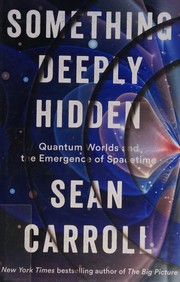
Carroll argues for the Many-Worlds interpretation, which is squarely incompatible with Rovelli's relational view — both are respectable minority positions among physicists and the disagreement is live and unresolved. Reading them together is the only honest way to see that Helgoland is an argument rather than a report of consensus.
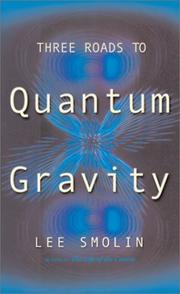
By one of the founders of loop quantum gravity alongside Rovelli, and the best popular map of the rival programmes — loops, strings, and the approaches in between. It makes clear how contested the whole field is, string theory included, without pretending the question has been settled.
The physics underneath all of it
BeginnerSee loop quantum gravity as it is actually written down, and understand what the popular books are translating.
▸ Study plan for this stage
Pace: Open-ended, and honestly assessed: these are graduate textbooks and not hard popular books. If you have general relativity and quantum field theory, Covariant Loop Quantum Gravity is a one-semester course and Quantum Gravity is a reference to work through over months. If you do not, plan on reading
- The Cambridge monograph Quantum Gravity as the canonical statement of the programme in its Hamiltonian, canonical form — spin networks as a basis for the kinematical Hilbert space rather than as a picture
- The covariant or spinfoam formulation in Covariant Loop Quantum Gravity, which recasts the theory as a sum over histories and is the more current line of work
- Why area and volume come out with discrete spectra — the technical version of 'space is granular', derived rather than asserted
- Background independence as a mathematical requirement, not a slogan: no fixed spacetime is put in by hand, and this is what makes the theory hard to write down
- The exercises and course structure of Covariant Loop Quantum Gravity as the practical entry point, and the reason it is the more teachable of the two
- Which results in these volumes are theorems and which are conjectures with strong support — the same seam the popular books mark, drawn here with much less generosity to the reader
- How much of Reality Is Not What It Seems turns out to be a faithful translation and how much was compression
- What mathematical structure does Quantum Gravity use to make 'the geometry of space is quantised' precise?
- How does the covariant formulation in Covariant Loop Quantum Gravity differ from the canonical one, and what problem was it introduced to address?
- What does background independence require of the theory formally, and where does that requirement make the construction difficult?
- Which of the results that Reality Is Not What It Seems presented as settled are, in these volumes, still conjectural?
- What is the current status of recovering ordinary general relativity in the classical limit, as these books describe it?
- Work the exercises in the opening chapters of Covariant Loop Quantum Gravity. It is written as a course precisely so this is possible; skipping them turns it into a book you have looked at.
- Take the derivation of the discrete area spectrum and follow it as far as your background allows, writing down the exact step where you stop. That step names what you would need to learn next.
- Pick three claims from Reality Is Not What It Seems, locate their technical counterparts in either monograph, and note for each whether the popular book simplified, hedged or overstated.
- Compare the two volumes' treatments of the same object — spin networks — and write a paragraph on why the covariant presentation is considered more teachable.
Next up: This is the end of the path: from here the honest next step is the research literature the two monographs cite, not another book about Rovelli.
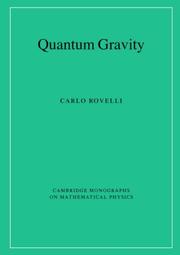
The 2004 Cambridge monograph — the canonical technical statement of the programme, assuming general relativity and quantum field theory throughout. This is a graduate textbook, not a hard popular book, and should be approached as one.

With Francesca Vidotto, and the more current and more teachable of the two: the spinfoam formulation, written as a course with exercises. If you are going to attempt one technical volume, this is the more approachable, though it still assumes a physics degree.
Discussion
Keep reading
Paths that share books, cover the same subject, or open a related topic.