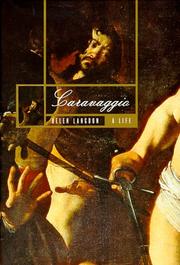
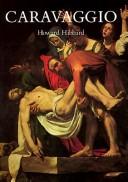
Five books on this path are titled simply Caravaggio, and they are not interchangeable. Andrew Graham-Dixon's is a narrative biography for general readers. Helen Langdon's is a scholarly biography. Howard Hibbard's is a critical study of the paintings. Catherine Puglisi's is a monograph with a catalogue of the works. John Varriano's is a study of the artist's materials, food, and physical Rome. Buying by title alone is how people end up with the wrong one, so this guide names the author every time.
Start with Graham-Dixon. It is the most propulsive account of the life, well written, strong on the Roman street world of taverns, brothels and swordsmen that the painter lived in, and it makes the case for reading the paintings against that world. It is also the most interpretively adventurous book here, which is a virtue and a warning at once.
The biography is contested, and the books disagree
Two episodes drive almost all the disagreement. In May 1606 Caravaggio killed Ranuccio Tomassoni and fled Rome with a capital sentence on his head. The long-standing account, repeated for centuries, made it a brawl over a wager on a ball game. Documentary work published from the 1990s onward reframed it as a regulated duel over honour, and Graham-Dixon argues specifically that the fatal wound was a botched attempt at castration in a quarrel with a sexual dimension. Langdon and Hibbard are more cautious, and other scholars regard the castration reading as an inference the documents do not compel. The second dispute is his death in July 1610 near Porto Ercole at thirty-eight. Fever, usually described as malaria, is the traditional explanation; proposals since have included lead poisoning from his own pigments, sepsis from an earlier wound, and murder by enemies from Malta or by the Tomassoni family. There is no settled answer, and a book that gives you one without flagging the alternatives is telling you more than it knows.
The scholarly biographies and critical studies
Helen Langdon's Caravaggio is the more disciplined life, careful with what the documents support and better than Graham-Dixon on patronage and the religious context of the commissions. Howard Hibbard's Caravaggio is not a biography at all but a critical study, work by work, with a psychological reading of the paintings that was influential and is now often disputed; it remains the clearest guide to how the pictures are constructed. Catherine R. Puglisi's Caravaggio is the reference monograph, pairing an art-historical account with a catalogue of the accepted works and their documentation. If you want one book that answers factual questions about a specific painting, it is that one.
Sebastian Schutze's Caravaggio: The Complete Works is a large-format volume with full-page reproductions and a catalogue — a looking book, and the reason to own it is the plates. The Genius of Rome 1592-1623 is an exhibition catalogue that places him among his Roman contemporaries and rivals, which is the fastest cure for treating him as a lone genius. Creighton Gilbert's Caravaggio and his two cardinals is a specialist study of his patrons and what they wanted, and it changes how the religious pictures read.
The specialists and the arguments
John Varriano's Caravaggio is the materials and daily-life study: pigments, models, studio practice, and the food that turns up on his tables. Michael Fried's The moment of Caravaggio is a demanding work of art theory built from the Mellon Lectures, arguing about absorption, the painter's own presence in the pictures, and the act of painting itself; it assumes real familiarity with the works. Leo Bersani and Ulysse Dutoit's Caravaggio's secrets is a short, dense reading of the early paintings through psychoanalysis and queer theory, and it is the most contested book on the list.
Francine Prose's Caravaggio Painter Of Miracles is a brief popular biography, a good hundred-page summary if the longer lives are too much. Lives of Caravaggio gathers the seventeenth-century biographical accounts — including Giovanni Baglione, a rival painter who had sued Caravaggio for libel and lost, and whose hostility is on every page. Read those as evidence about what contemporaries said, not as neutral reporting. Jonathan Harr's The Lost Painting closes the path with the true story of tracing a lost canvas to a Dublin residence, and it is the most purely enjoyable book here.
More art-history reading sits on Discover.
Follow the full ordered path here: Caravaggio: Which Books to Read, and in What Order.