Bowling: the best books to raise your average and roll strikes
This curriculum takes a bowler from absolute beginner to a strategically advanced competitor across three carefully sequenced stages. Each stage builds on the last — starting with physical fundamentals and equipment basics, moving into lane reading and spare systems, and finally diving into the mental game and advanced targeting strategies that separate good bowlers from great ones.
Foundations: Stance, Swing, and the Basics
BeginnerUnderstand the core mechanics of bowling — proper stance, approach, armswing, release, and how to choose your first ball — so you can build consistent, repeatable form from day one.
▸ Study plan for this stage
Pace: 4–5 weeks, ~25–30 pages/day (approximately 150–170 pages total across both books)
- The four-step approach and how footwork drives consistency in your delivery
- Proper stance and alignment: shoulder position, knee flex, and balance throughout the approach
- The pendulum swing mechanics—how to generate power from gravity rather than muscular effort
- Release technique and finger action: how to control the ball's rotation and direction at the point of release
- Ball selection: weight, coverstock, and core dynamics for a beginner bowler
- The relationship between your target line, ball path, and pin action
- Common form faults and how to diagnose and correct them early
- What are the four steps of the approach, and how should your weight transfer through each step?
- Describe proper bowling stance: where should your feet be positioned, and what role does knee flex play?
- How does the pendulum swing work, and why is it more effective than using arm muscles to generate power?
- What happens at the moment of release, and how do your fingers control the ball's rotation?
- What factors should a beginner consider when selecting their first bowling ball?
- How do your stance, swing, and release work together to create a repeatable delivery?
- Practice the four-step approach without a ball 10 times daily for one week, focusing on smooth weight transfer and consistent stride length
- Perform pendulum swing drills: hold a light ball at your side and let it swing naturally 20 times, feeling gravity do the work rather than muscling it
- Bowl 3 practice frames focusing solely on stance and approach—ignore pins and score, just refine your footwork
- Record yourself bowling from the side and front; compare your form to the photos and descriptions in Mullen's chapters on stance and swing
- Throw 10 practice shots concentrating on release only: focus on finger action and how the ball leaves your hand
- Visit a pro shop and test at least two different ball weights; bowl a few frames with each and note how weight affects your swing and control
Next up: Mastering these foundational mechanics—stance, swing, and release—gives you the stable platform needed to learn targeting, lane reading, and adjustments in the next stage.
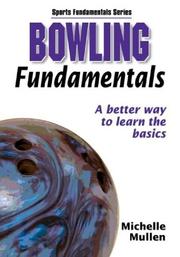
The single best starting point for beginners: it covers stance, footwork, the four- and five-step approach, and release in clear, illustrated detail. Read this first to build the physical vocabulary every other book assumes you have.
Uses a structured, drill-based progression to reinforce what Mullen introduces, adding self-assessment checklists and practice routines. Reading it second lets you immediately apply and test the fundamentals you just learned.
Spare Shooting and Scoring Strategy
BeginnerMaster a reliable spare-shooting system for every pin leave on the lane, understand basic scoring, and start thinking strategically about how to raise your average through consistency rather than just strikes.
▸ Study plan for this stage
Pace: 2–3 weeks, ~20–25 pages/day, with 2–3 practice sessions per week at the lanes
- The spare shooting system: identifying pin leaves and selecting the correct target line for each spare combination
- Angle and trajectory adjustments needed to convert different spare leaves (10-pin, 7-pin, 3-pin, split attempts, etc.)
- Bowling scoring fundamentals: frame structure, strike and spare bonuses, and how they compound to affect your final score
- The relationship between consistency and average improvement: why reliable spare conversion is more valuable than occasional strikes
- Targeting and alignment techniques: using the arrows, dots, and lane markings to execute spare shots with precision
- Mental approach to spare shooting: treating each leave as a separate game and building confidence through repetition
- What is the systematic approach Jowdy recommends for identifying and shooting different pin leaves?
- How do strike and spare bonuses work in bowling scoring, and why does converting spares have a larger impact on your average than you might initially think?
- What are the key targeting landmarks (arrows, dots, boards) you should use to adjust your approach for common spare leaves like the 10-pin, 7-pin, and 3-pin?
- How does building a reliable spare-shooting system contribute to raising your bowling average more effectively than relying on strikes alone?
- What mental strategies does Jowdy suggest for maintaining focus and consistency when shooting spares under pressure?
- How should you adjust your angle and ball speed when converting different types of spare leaves?
- Drill: Shoot 10 consecutive 10-pin spares, focusing on target line and consistency; record your conversion rate and note any adjustments needed
- Drill: Practice the 7-pin and 3-pin spares (5 each) using Jowdy's recommended targeting system; video yourself to verify your approach and release
- Drill: Set up a series of random pin leaves (using a reset machine or asking your center to set them) and shoot 20 spares without knowing the leave in advance; this builds adaptability
- Scoring exercise: Bowl a full game (10 frames) and calculate your score frame-by-frame, noting how each spare conversion affects your running total and final average
- Spare conversion challenge: Over one week, track your spare conversion percentage across all practice sessions; aim to identify your weakest leave and dedicate extra practice to it
- Visualization practice: Before each practice session, mentally rehearse 5–10 different spare leaves and your approach to each; then execute them on the lanes
Next up: Mastering spare shooting and understanding how scoring rewards consistency sets the foundation for the next stage, where you'll learn to read lane conditions and adjust your technique to optimize strike potential while maintaining your newly developed spare-shooting reliability.

Jowdy is a legendary coach whose work bridges spare shooting and full-game execution. This book reinforces spare systems while introducing the idea of repeatable targeting, preparing you for the lane-play concepts ahead.
Ball Motion, Lane Play, and Reading Oil
IntermediateUnderstand how lane oil patterns affect ball motion, how to select and fit a reactive resin ball, and how to adjust your line and speed to stay in the pocket as conditions change throughout a session.
Clifton's coaching expertise shines here as he explains ball dynamics, coverstock selection, and how to read lane transition — the essential next layer once your mechanics are solid. Start here to build your equipment and oil-pattern vocabulary.
Advanced Strategy and the Mental Game
ExpertDevelop a tournament-level mindset, learn to compete under pressure, manage in-game adjustments systematically, and understand the psychological habits that distinguish high-average bowlers from the rest.
Jowdy's most advanced work synthesizes physical technique, lane play, and competitive strategy into a unified system. It rewards readers who have worked through the earlier stages and are ready to think like a coach about their own game.
Discussion
Keep reading
Paths that share books, cover the same subject, or open a related topic.