Start with the short scholarly overview, not the fat industry history. Ashish Rajadhyaksha's Indian Cinema: A Very Short Introduction runs about a hundred and forty pages and does the one job the popular books skip: it explains that Indian cinema is several industries in several languages, that Bollywood names only the Hindi-language commercial cinema made in Bombay, and that the term itself is recent and disputed. Get that straight first and every other book on the list falls into place.
The confusion is worth naming because it is the single most common error in English-language writing on the subject. India has produced films continuously in Tamil, Telugu, Bengali, Malayalam, Kannada, Marathi and more, several of those industries larger in output than Hindi cinema in some years. This reading path is heavily Hindi-centred with a Bengali auteur strand, and that is a real gap rather than a claim about importance.
Industry history and how the films get made
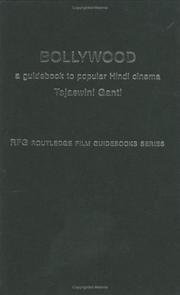
Tejaswini Ganti's Bollywood is an anthropologist's guidebook to popular Hindi cinema — genre conventions, the star system, playback singing, financing, and how the industry describes itself. It is scholarship, but written to be used, and it carries a filmography. Mihir Bose's Bollywood: A History is the journalistic narrative counterpart: a chronological account from the silent era through the studio system to the corporatised present, strong on money and personalities, looser on analysis.
Nasreen Munni Kabir's Talking Films is a book of interviews with the screenwriter Javed Akhtar, and it is the best thing on the list about craft — how a masala screenplay is constructed, why dialogue carries so much weight, what the writing partnerships actually did. Anupama Chopra's Sholay, the making of a classic takes the single most important Hindi film of 1975 and reconstructs its production and its extraordinary afterlife; single-film books are usually thin, and this one is not. Her King of Bollywood uses Shah Rukh Khan's career as a frame for the industry's transformation in the 1990s, and is a biography with reporting rather than a fan book.
The auteurs
Satyajit Ray's Our films, their films is a primary source: essays and criticism by the director himself, half on Indian cinema and half on the Hollywood and European films he learned from. It is where the argument between popular and art cinema in India is stated by someone standing inside it. Andrew Robinson's Satyajit Ray : the Inner Eye is the standard English-language biography, thorough on the making of the Apu films and on Ray's relationship with Bengali literature. Nasreen Munni Kabir's Guru Dutt covers the director of the 1950s Hindi cinema most admired by later critics, built largely from interviews with people who worked with him.
The scholarship
The last group is academic and each book has a thesis. M. Madhava Prasad's Ideology of the Hindi film reads the industry's production conventions politically, arguing that the form of the popular film encodes a particular relationship between state, family and audience; it is dense and assumes some film theory. Vijay Mishra's Bollywood Cinema works through the melodramatic and mythological inheritance and the diaspora audience. Ranjani Mazumdar's Bombay Cinema is the most vivid of the three, reading the films as an archive of the city — its crowds, its interiors, its violence. Priya Joshi's Bollywood's India argues for the popular film as a form of social thought about the nation.
Finally, the Encyclopaedia of Indian cinema, compiled by Rajadhyaksha with Paul Willemen, is a reference volume rather than a read: entries on films, directors and performers across all the major industries, and the one book here that partly repairs the Hindi bias. Editions differ significantly in coverage, so check what you are buying.
If you want to build your own version of this list, the path builder takes any books you add and checks them against real catalogue records.
Follow the full ordered path here: How to Learn About Indian Cinema and Bollywood from Books, in Order.