Bernie Gunther Reading Order: Where to Start
Philip Kerr wrote fourteen Bernie Gunther novels and deliberately did not write them in order: after the first three he leaves the series alone for fifteen years, comes back with a two-timeline structure, and eventually finishes with a prequel set before the first book begins. Read them in publication order anyway. Kerr reveals Bernie's wartime past gradually and out of sequence on purpose, and a chronological read-through hands you those revelations before the books that are built around withholding them. This path takes the first twelve published, which is the whole spine of the series, and ends with the prequel.
Start Here: The Berlin Noir Trilogy
IntermediateMeet Bernie in the three original novels — pre-war Berlin, the run-up to war, and the ruins — and learn the voice: a decent man doing compromised work under a regime he despises.
▸ Study plan for this stage
Pace: 3 weeks, ~40 pages a day. March Violets (245 pages) and The Pale Criminal (272) go quickly. A German Requiem (313) is slower — it moves to Vienna and the plot is genuinely convoluted, so give it the last ten days. Before you buy, check what your edition contains: these three are commonly sold togeth
- The trilogy is a complete reading experience on its own — 1936, 1938, 1947, the pressure and the aftermath — and stopping here is a legitimate way to read Bernie Gunther rather than a failure to finish the series
- The moral position of the narrator is the design, not a defect: Bernie despises the Nazis, insults them to their faces, and goes on working for them, and Kerr never lets him off for it
- Chandler's machinery — wisecracking first-person detective, rich client, missing person, corrupt city — dropped into a state where the police are the criminals, which is what makes a worn formula do new work
- The jokes are load-bearing. Bernie's mouth is the only resistance available to him, and it costs him something almost every time he opens it
- Kerr writes the Third Reich as a functioning bureaucracy with career rivalries — Goering against Himmler, Kripo against Gestapo — and Bernie survives by being useful to whoever is currently winning
- The war years are skipped between the second book and the third, and A German Requiem only hints at what Bernie did in them; that withholding is the engine of everything Kerr published later
- Real historical figures appear and behave broadly as the record says they did, so the invention is fitted around events rather than replacing them
- In March Violets, what does Bernie actually agree to do for his client, and at what point does he work out who he is really working for?
- Bernie will not join the Party and says what he thinks to men who could kill him for it. What does that refusal protect, and what does it conspicuously fail to protect?
- Heydrich puts Bernie back in uniform in The Pale Criminal. Could he have said no, and does the novel let you decide, or does it decide for you?
- A German Requiem is full of people inventing new pasts for themselves in 1947. What has Bernie left out of his own account by the end of it?
- If you stopped after these three, what would you say the series is about? Write the answer down — the later books are built to test it.
- Check your edition first. Berlin Noir is an omnibus of all three novels, so buying it alongside the individual titles gets you the same books twice.
- Keep a one-page list of the dates — 1936, 1938, 1947 — and note what Bernie says about the missing years each time they come up. It is never much, and the pattern is deliberate.
- Mark the first moment you feel uncomfortable being on Bernie's side. That reaction is the series working as intended, and it gets pressed much harder in stage three.
- Write down what Bernie does for a living in each book. The job changes every time, and it tracks exactly how much freedom he has left.
Next up: Kerr left the series alone for fifteen years after this, then picked Bernie up in 1949 and started cutting back into the war he has been avoiding.

Berlin, 1936, during the Olympics: a private detective hired by a steel magnate whose daughter has been murdered. Chandler transplanted into the Third Reich, and the only correct starting point — everything about Bernie's politics and his mouth is set here.

1938, and Bernie is pushed back into the Kripo by Heydrich to catch a killer of Aryan schoolgirls. The pressure that will define the rest of the series — being useful to men he loathes — starts in this book.

1947, Berlin and Vienna in rubble, with the Americans and Soviets already recruiting former Nazis. The last of the original three, published in 1991, and the first time you glimpse what Bernie did during the war years the trilogy skips.
The Return
IntermediatePick up the series Kerr restarted fifteen years later, and get used to the two-timeline structure that governs every book from here on.
▸ Study plan for this stage
Pace: 5-6 weeks, ~35 pages a day. These are much longer books than the trilogy — The One from the Other 488 pages, A Quiet Flame 416, If the Dead Rise Not 455, about 1,360 pages together. Each splits between two periods, so read in blocks large enough to hold both timelines at once; fifty pages at a sitti
- The two-timeline structure arrives here and governs the rest of the series: a postwar frame, a long flashback, and a present-day crime whose explanation sits in the earlier strand
- The books stop running chronologically. From this point publication order and story order come apart, and readers who expect a straight line find the jumping around genuinely disorienting — it is intentional and worth expecting
- The ratlines are the historical spine of this stage: Nazis escaping through church and Argentine networks with official help, which is documented history rather than thriller invention
- Bernie's postwar survival runs on false names, and on the fact that other people's need for him keeps outrunning their disgust at him
- Moving the action to Buenos Aires and Havana tests whether the series is about Berlin or about Bernie; Kerr's answer is Bernie, and the geography stays open from here on
- The 1930s halves are where Bernie is still a working detective, so the pleasure of the early books survives inside the later, heavier structure
- Each flashback reaches a little further into the war, and each one makes Bernie's position worse; the stage is a controlled approach to the reckoning in stage three
- In The One from the Other, who is Bernie actually helping, and how long does the novel keep that from him?
- State in one sentence, for each of the three books, what the earlier timeline explains about the later one. If you cannot, you read it too fast.
- A Quiet Flame surrounds Bernie with men who committed far worse crimes than he did. Does the novel offer that as exoneration or as accusation?
- If the Dead Rise Not runs 1934 Berlin against 1954 Havana. What has changed in Bernie across twenty years, and what has not moved at all?
- These books keep showing Bernie deciding that every available choice is a bad one. Is that true in the scene in front of you, or is the novel protecting him?
- Keep a two-column timeline for each book, the earlier strand on one side and the later on the other, and mark the page where the two finally touch.
- After A Quiet Flame, spend twenty minutes reading about the ratlines. The historical outline makes the last third of the book much less confusing.
- List every name Bernie operates under across these three novels and who knows the real one. It is a short list and it is effectively the plot.
- Read the first chapter of A German Requiem and the first chapter of The One from the Other back to back. Fifteen years separate them, and the change in the prose is visible in two pages.
Next up: Everything these books hint at about Bernie's war gets put on the table in the next three, which is why they are the hardest and the best of the series.

1949 Munich, war criminals escaping down the ratlines, and the first novel to cut between the postwar present and Bernie's wartime service. Read it directly after A German Requiem — the gap in the publication history is not a gap in the story.
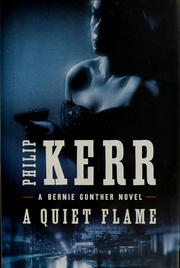
Buenos Aires, 1950, Bernie among the Nazi exiles under Peron, intercut with a 1932 Berlin case. It moves the series out of Germany and shows how far Kerr is willing to take the geography.
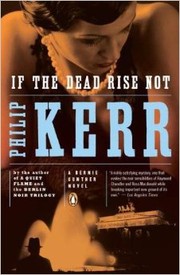
1934 Berlin and 1954 Havana, and the book that won the CWA Ellis Peters award. The two halves are thirty years apart and the second only works if you have watched the first happen.
Inside the War
IntermediateRead the run of novels set during the war itself, where Bernie is closest to the crimes and the moral position gets hardest to hold.
▸ Study plan for this stage
Pace: 5 weeks. Field Grey is the longest book in the series at 503 pages and the most demanding — give it two weeks on its own. Prague Fatale and A Man Without Breath are ordinary-length novels; a fortnight for the pair is comfortable. Do not be tempted to read Field Grey early. It only lands if the earli
- Field Grey is the reckoning the series has been deferring since 1989: an American interrogation forces Bernie to account for his entire war, and the answers are worse than the earlier books implied
- Bernie holds an SS rank he did not seek, and Kerr refuses to let that be a technicality — a reader who wants a clean hero will misread these three books badly, and the discomfort is the point rather than a flaw
- Complicity here is an accumulation of small usefulnesses rather than one dramatic betrayal, which is the historically accurate shape of it and the reason the discomfort never discharges
- Prague Fatale sets a country-house locked-room puzzle among the men organising mass murder, and the comfort of the genre against the setting is the whole effect
- A Man Without Breath sends Bernie to Katyn to establish a real Soviet atrocity on behalf of a German ministry, so the truth he is proving is true and the use being made of it is propaganda
- Kerr's working rule seems to be that Bernie can refuse to commit murder and can refuse to lie about facts, and can refuse almost nothing else; watch how narrow that leaves the moral space
- The research load rises sharply in this stage, and the invented plots are fitted into events that actually happened rather than around them
- By the end of Field Grey, what is the worst thing Bernie has done, and does the novel offer any defence of it that you accept?
- Who is interrogating Bernie in 1954, and what do they want from him? The frame is not incidental — it decides which parts of the war get told.
- In Prague Fatale, does solving the murder resolve anything? Ask what a solved killing means in a house full of men planning far larger ones.
- A Man Without Breath has Bernie proving a massacre for a regime that has committed more of them. What does he think he is doing, and what is he doing?
- Find one point in these three books where Bernie could have refused and did not. Then work out what refusing would actually have cost him.
- Before starting Field Grey, write down what you currently believe Bernie did during the war. Read it again when you finish; the gap is the book.
- Read a reference entry on Katyn before A Man Without Breath — who did it, when it was discovered, and who announced it. The novel assumes all three.
- Keep a running note of the real historical figures Bernie meets across the stage, then check afterwards which encounters are invented and which are placed at events that happened.
- If you want to stop, this is the second natural place. Field Grey answers the question the series has been asking since March Violets; what follows opens new ground rather than closing this.
Next up: The last books move Bernie out of the war and into the Cold War, where he is less a detective than a man being blackmailed by his own past.
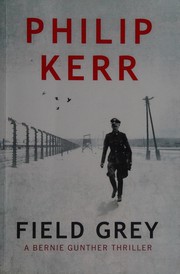
The pivotal book of the series: an American interrogation in 1954 forces Bernie to account for his whole war, from the Eastern Front to a Soviet prison camp. Read the earlier novels first — this one is the reckoning they have been deferring.

A country-house locked-room mystery in 1941, hosted by Heydrich outside Prague. The most conventional detective plot in the series, set among the men running the Final Solution — the contrast is the point.

1943, Bernie sent to Katyn to help prove the Soviets massacred Polish officers, on behalf of a ministry that has murdered far more. The bleakest and probably the best-researched book Kerr wrote.
The Last Novels, and the Prequel
IntermediateFinish the sequence, and understand where it stops — Kerr died shortly after completing the final book.
▸ Study plan for this stage
Pace: 5 weeks, ~35 pages a day. The Lady from Zagreb 421 pages, The Other Side of Silence 400, Metropolis 440 — about 1,260 together. Metropolis moves faster than the other two and should be read last even though it happens first; if you read the final fifty pages in one sitting, the ending does what it i
- This path holds twelve of the fourteen Bernie Gunther novels Kerr wrote. Prussian Blue and Greeks Bearing Gifts fall between The Other Side of Silence and Metropolis and are not in this catalogue; read them or don't, the sequence still closes
- The later novels are a looser, more sprawling project than the trilogy — celebrity cameos, Cold War espionage, ever-longer flashbacks — and readers who came for tight Berlin detective stories often prefer the early three. That is a taste, not a mistake
- The Lady from Zagreb carries the Ustase material, which is the most brutal history in the series and is almost absent from English-language fiction elsewhere
- By The Other Side of Silence, Bernie is a hotel concierge on the Riviera under a false name, and the series has quietly become a book about a man with no route back to his own life
- Metropolis is a prequel to everything: 1928, the Berlin murder squad, Weimar still functioning, and all its force comes from a reader who knows what is five years away
- Kerr died in 2018, shortly after finishing Metropolis, so a series that had jumped around in time ends by accident at the place a designed ending might have chosen
- Reading the prequel last rather than first is the strongest argument for publication order anywhere in the series; put Metropolis at the front and it is a competent period mystery with no charge in it
- In The Lady from Zagreb, what is Goebbels using Bernie for, and how much of it does Bernie understand while it is happening?
- The Other Side of Silence brings in Somerset Maugham and the Cambridge spies. Does Cold War material suit Bernie, or does he work better in the 1930s?
- Metropolis is set in 1928. What in that Berlin is already the Third Reich, and what is genuinely still open?
- Having finished, was Bernie a good man? Build the case both ways from specific scenes rather than from the impression the voice leaves.
- Kerr wrote these deliberately out of order. Now that you have read them, name what a strictly chronological read would have spoiled.
- Build a one-page chronology of Bernie's life from 1928 to the late 1950s and mark which novel covers each stretch. Some years are covered twice over and a few are covered by nothing.
- Reread the first chapter of March Violets straight after Metropolis. Same city, eight years later, and the change in what Bernie assumes about his own safety is the entire series in miniature.
- Decide about Prussian Blue and Greeks Bearing Gifts before you reach Metropolis, so you can slot them in rather than adding them as an afterthought.
- Write two sentences on what you now think Kerr was arguing about survival under a regime like this one. If your answer is comfortable, go back and reread Field Grey.
Next up: That is the spine of the series, 1928 to the late fifties — enough that you can pick up either of the two remaining novels and place it inside the arc within twenty pages.

1942 and 1956, Goebbels sending Bernie to find a film star's father in Ustase Croatia. The Yugoslav material is the most horrifying in the series and is not widely covered in fiction.

1956 on the Riviera, with Somerset Maugham, blackmail and the Cambridge spies. Bernie is a hotel concierge under a false name here, and the series turns into a Cold War novel. Two further books, Prussian Blue and Greeks Bearing Gifts, continue from this point if you want the complete run.

The last book Kerr wrote and a prequel to all of them: 1928 Berlin, Bernie newly promoted to the murder squad, Weimar at its most decadent and most doomed. It is the right place to end even though it is chronologically first, because its whole force comes from knowing what the city is about to become.
Discussion
Keep reading
Paths that share books, cover the same subject, or open a related topic.