Ben Okri Reading Order: Where to Start with the Famished Road Trilogy and Beyond
The Famished Road won the Booker in 1991 and begins a trilogy that a great many readers never finish — the second and third books are denser and less narratively driven than the first. That is worth knowing before you start rather than after. This path opens with the more conventional novel that precedes it, so the spirit-world method arrives explained rather than as a wall.
Start here: the accessible one
BeginnerMeet Okri in realist mode before the trilogy changes the rules.
▸ Study plan for this stage
Pace: 2-3 weeks for about 370 pages, at roughly 25 pages a day. It is the most conventionally readable book on this path, so use it to build the pace you will need for the trilogy rather than rushing it.
- Omovo, a young painter working a clerical job in Lagos, and painting as the novel's model for seeing a country
- Ifeyiwa, married to a violent older man, and a love story that has nowhere to go
- The compound as the novel's real unit - a shared yard, shared walls, no privacy, and everybody's business in common
- That this book is Okri's own rewriting of his earlier novel, so you are reading a mature writer redoing his younger self's material
- Largely realist technique here, with only occasional pressure on the surface - the baseline against which the trilogy's method will register
- Post-civil-war Lagos: scarcity, corruption, censorship and the constant low hum of political threat
- What happens to Omovo's paintings, and art as something the state notices
- How does Okri use Omovo's painting to describe Lagos - what does the reader see through the canvases that the narration does not say directly?
- Where does the realism thin out? Mark the first passage that could belong in The Famished Road.
- What does the compound setting make possible that a novel about a private household could not?
- This is a rewriting of his own earlier book. What is a novelist looking for when he redoes his own material fifteen years on?
- Ifeyiwa's situation has no solution available inside the novel's world. Is that a political statement or a narrative constraint?
- Track every painting Omovo makes or attempts, and note what happens to each one. The sequence is a history of the artist under a military government in about ten entries.
- Mark the first three passages where the prose leaves realism, with page numbers. Return to them after reading The Famished Road - they will look completely different.
- Read the compound scenes consecutively, skipping the rest, and write a paragraph describing the yard as a character.
- Write half a page of description of a street in Okri's realist register - concrete, sensory, unhurried - and keep it, so you can compare it with the register of the next stage.
Next up: Lagos, the compound and the painter's way of looking are now established as the ordinary world, which is exactly what the Booker winner is going to dissolve.
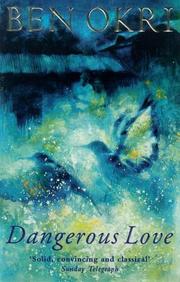
A Lagos love story, largely realist, and a rewriting of his own earlier novel. It is the gentlest way into his Nigeria and it makes the trilogy legible.
The Booker winner
IntermediateRead the book he is known for, and decide honestly whether to continue.
▸ Study plan for this stage
Pace: 5-6 weeks for about 500 pages, at roughly 20 pages a day. Do not try to read this fast. The repetition is structural, the plot advances very little, and skimming destroys the only effect the book has. Read it in daily sessions rather than long weekend bursts.
- Azaro as an abiku - a spirit-child born to die and be reborn - who keeps choosing to stay alive against the pull of his spirit companions
- Dad, known as Black Tyger, and the sequence of fights that structure the book in place of a plot
- Mum hawking goods, and the family's economy of debt, hunger and small triumphs
- Madame Koto's bar, which grows, electrifies and corrupts across the novel as the political money arrives
- The Party of the Rich and the Party of the Poor, and an election that offers no real choice
- The road itself as the novel's central image: always being built, always consuming, never finished
- Repetition and recursion as method rather than as accident - scenes recur with small differences and the differences are the narrative
- That this is where most readers either commit or stop, and that stopping is a legitimate outcome
- What is an abiku, and what does the novel gain by giving the narration to one?
- Dad's fights escalate in kind rather than in stakes. What is each one actually against?
- Trace Madame Koto's bar from its first appearance to its last. What does it acquire, and who pays?
- Is the political material an allegory, or is the spirit world the literal condition the politics happen inside?
- Why is the road the title image rather than the forest or the bar?
- At page 150, did you want to continue? What made the difference?
- Keep a tally of Dad's fights - opponent, outcome, and what he says it was for. The list is the plot, and reading it whole shows how little forward motion the book actually contains.
- Note every change to Madame Koto's bar as it happens, with the page number. Read the notes at the end as the novel's political history in a page.
- At page 150, write down explicitly whether you are continuing and why. This path recommends the decision be made consciously rather than by attrition.
- Pick a two-page passage of hallucinated spirit-world material and one of household material, and read them aloud one after the other. The prose is nearly identical, which is the argument of the book.
- Go back to the passages you marked in Dangerous Love where the realism thinned, and reread them now. Write two sentences on what the earlier novel was holding back.
Next up: You have now decided honestly whether Okri's method works for you, which is the only sound basis for taking on the two harder volumes that follow.
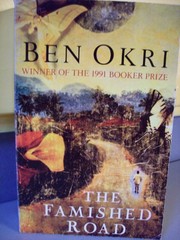
Azaro is a spirit-child who keeps choosing to stay alive. It is dense, repetitive by design, and unlike almost anything else — and it is where most readers either commit or stop.
The rest of the trilogy
IntermediateContinue only if the first book worked — these are harder, not easier.
▸ Study plan for this stage
Pace: 6-8 weeks for around 700 pages combined, and only if the first volume worked. Songs of Enchantment is about 300 pages and Infinite Riches about 415; both are slower going than The Famished Road despite Songs of Enchantment being shorter. Read them close together, at 15-20 pages a day, so the recurri
- Songs of Enchantment as the darker second volume: the community fractures, the spirit world presses harder, and the family comes apart
- The narrowing of narrative event - less happens per page than in The Famished Road, deliberately
- Infinite Riches as the most abstract of the three, where the prose becomes closest to incantation
- The colonial Governor-General redrawing the map of the country, so that history itself is shown being rewritten by hand
- The old woman of the forest and the mythic register taking over from the domestic one
- Azaro's narration becoming less a child's account and more a channel for the collective
- That finishing the trilogy is a real commitment, and that there is no shame in stopping after the first book
- What actually happens in Songs of Enchantment? Write it in five sentences and consider what the other 290 pages are doing.
- How does the family's situation change across the second and third books, and is the change narrative or atmospheric?
- In Infinite Riches, what is the effect of showing the map being redrawn - what does it claim about how a country gets made?
- Azaro's voice changes across the three books. Whose voice does it become?
- Do the later volumes deepen The Famished Road or dilute it? Answer honestly - many readers say the second.
- Keep a one-line-per-chapter log of what happens in Songs of Enchantment. Reading the log at the end shows exactly how the book distributes its material.
- Find the passages in Infinite Riches where the Governor-General rewrites the record, and read them against the election chapters of The Famished Road. Write half a page on the two kinds of forgery.
- Mark every appearance of the road across the two volumes and note what it is doing each time. It is the one image that carries all three books.
- Give yourself a written permission slip to stop, with a date. Readers who commit to finishing on principle usually finish badly, and this trilogy in particular is worth abandoning rather than resenting.
Next up: After the trilogy's length and abstraction, the short fiction and the essays show the same imagination working in forms that give it edges.

The second volume, shorter and stranger.

The third, and the most abstract of the three. Completing the trilogy is a real commitment and there is no shame in stopping after the first.
The stories and the essays
IntermediateThe shorter work, which many readers prefer and which can be read at any point.
▸ Study plan for this stage
Pace: 5-6 weeks for four short books totalling about 730 pages, and this stage can be read at any point in the path, including instead of the trilogy's later volumes. Read the two story collections a few stories at a time, Astonishing the Gods in one or two sittings, and A Way of Being Free in short doses
- Incidents at the Shrine as early stories: the most economical version of what the novels do at length
- Nigerian civil war material and childhood viewpoints handled in fifteen pages rather than five hundred
- Stars of the New Curfew as the harder second collection - Nigeria under military rule, at close range, with the satire sharpened
- 'What the Tapster Saw' in Stars of the New Curfew as the clearest single bridge to the trilogy's method
- Astonishing the Gods as a short allegorical novel about a man born invisible, and the most divisive thing here - either luminous or weightless depending on the reader
- A Way of Being Free as Okri's own account of what he thinks storytelling is for, including his aphorisms on the subject
- That many readers prefer the short work, and that this is a defensible position rather than a failure of stamina
- How the short forms impose the discipline that the trilogy deliberately refuses
- Which stories in Incidents at the Shrine contain material the trilogy later expands? What did the expansion add?
- Stars of the New Curfew is angrier than the first collection. What is it angry about, and how does the satire work?
- Read 'What the Tapster Saw' and then a chapter of The Famished Road. What is the same, and what did the novel need that the story did not?
- Is Astonishing the Gods a fable or a mood? Does it survive being asked what it means?
- In A Way of Being Free, does Okri's account of his own project match what the fiction actually does?
- After all seven books, which form suits this imagination best - the story, the allegory, or the very long novel?
- Read 'What the Tapster Saw' and immediately reread any twenty pages of The Famished Road. Write half a page on what the compression buys and what it loses.
- Pick the three most fully realised stories in Incidents at the Shrine and the three in Stars of the New Curfew, and note what each of the six is about in one line. The two lists date themselves - the second collection is a country in a worse condition.
- Read Astonishing the Gods in a single sitting, then write down in one sentence what the invisible man's journey is for. If you cannot, that is the honest verdict on the book, and plenty of good readers share it.
- Take three of the aphorisms on storytelling from A Way of Being Free and test each against a specific passage of the trilogy - one that supports it and one that does not.
- Write a single page in Okri's short-story register, which is quite different from his novel register: concrete, quick, and with the strangeness arriving once rather than continuously.
Next up: With the realist novel, the trilogy, the stories and the essays behind you, the later novels and poetry can be approached in any order, because you now know which Okri you are reading for.
Early stories, and the most economical version of what the novels do at length.
The second collection — Nigeria under military rule, at close range.
A short allegorical novel about a man born invisible. Divisive; either luminous or weightless depending on the reader.
Essays on writing and imagination, and the clearest statement of what he thinks he is doing.
Discussion
Keep reading
Paths that share books, cover the same subject, or open a related topic.