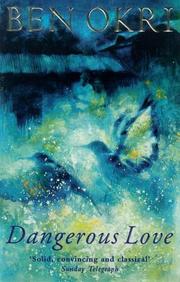
Start with Dangerous Love. It is a realist novel about a young painter in Lagos, told in ordinary chronological time, and it gives you Okri's Nigeria — the compounds, the power cuts, the political violence at the edge of the frame — without the machinery that stops most people reading him.
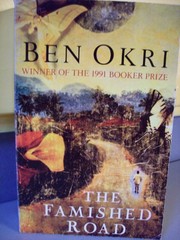
The obvious alternative is to open The Famished Road, which won the Booker in 1991 and is the book his name is attached to. Here is the plain fact worth knowing first: it is one of the most abandoned prize-winning novels in English. It runs to around five hundred pages, its narrator is a spirit-child who keeps being reborn, and its structure is deliberately non-cumulative — hallucinatory episode follows hallucinatory episode, and the novel resists building toward anything, because a spirit-child's time does not work that way. Readers who go in expecting a story with a shape often give up around page two hundred feeling that they have missed something. They have not. That is the book.
The order that works
Read Dangerous Love first. Then, if you want the famous one, read The Famished Road second, and read it the way you would read a long poem: in sittings, without trying to hold the plot, letting the images accumulate. Approached that way it is extraordinary, and the sequences around Madame Koto's bar are among the best things in African fiction. Approached as a novel with a plot, it is a slog.
An alternative second book, if five hundred pages of that is not what you want: the stories.
The stories are the shortcut
Incidents at the shrine and Stars of the new curfew are the two collections, and they are the most efficient way to find out whether Okri is for you. Both are short, both mix realism and the uncanny in the same proportions as the novels, and Stars of the new curfew contains his angriest and most direct political writing. Read one before committing to the trilogy and you will know within forty pages.
The rest of the trilogy
Songs of enchantment and Infinite Riches continue Azaro's story. Most readers who finish The Famished Road stop there, and that is a completely reasonable decision — the sequels are shorter but not easier, they intensify the dreamlike mode rather than resolving it, and the general critical view is that neither matches the first. If the first book worked on you as a poem rather than a story, they will work the same way. If you finished it out of stubbornness, stop.
The short late books
Astonishing the gods is a brief allegory about an invisible man travelling to an island of invisible people. It is a fable, not a novel, and readers split hard on whether it is luminous or empty. A Way of Being Free is a collection of essays on writing, storytelling and politics, and it is the clearest statement of what Okri thinks he is doing — useful either as preparation for the trilogy or as an explanation afterwards.
Where to stop
Two books are a complete reading for most people: Dangerous Love and The Famished Road. Add Stars of the new curfew if the short form suits you better. Go on to Songs of enchantment and Infinite Riches only if the first book left you wanting more of the same rather than an answer, because more of the same is precisely what they are.
One last honest note. Okri divides serious readers more than almost any other Booker winner — the same qualities get described as visionary and as self-indulgent, sometimes in the same review. Neither camp is being unreasonable. It is worth finding out which one you are in with the shortest book rather than the longest.
More African fiction is on Discover.
Follow the full ordered path here: Ben Okri Reading Order: Where to Start with the Famished Road Trilogy and Beyond.
Ready to learn something deeply?
Build a reading path — free