Banana Yoshimoto in Order: Where to Begin with Her Novels
Yoshimoto's books are short, quiet and easily misread as slight, and the English editions bundle novellas together in ways that make the sequence confusing. This path starts with the book that made her famous at twenty-four, moves through the novella pairs, and ends with the longer and stranger later work.
Start here
BeginnerRead the book that defined her — grief, food, and improvised families.
▸ Study plan for this stage
Pace: About a week. The volume is short - two novellas, well under 200 pages together - and each can be read in a single sitting. The recommendation is to read Kitchen on one evening and Moonlight Shadow on another rather than running them together, because the second one is easy to lose behind the first.
- Mikage sleeping beside the refrigerator after her grandmother dies - grief located in a room rather than in a feeling
- The kitchen as the one place the narrator can be, and food as the novel's only reliable form of care
- Yuichi and Eriko as an improvised family assembled out of people who are not related to each other
- Eriko, who transitioned after her wife's death, treated by the novel as a mother without argument or explanation
- Moonlight Shadow as a second treatment of the same subject: Satsuki, Hitoshi, a river, and a one-off phenomenon that grants a single goodbye
- The deliberately flat, unliterary surface, which is how the books get misread as slight
- Why the two novellas belong in one volume: identical material, one told through domestic detail and one through a folk-tale device
- Why the kitchen specifically? What does Mikage get from that room that she cannot get anywhere else?
- The book is famous for its food. What is each meal doing at the moment it appears?
- How does the novel present Eriko, and what does it refuse to make an issue of?
- Moonlight Shadow allows one supernatural event and no more. What would be lost if it allowed a second?
- Both novellas are about surviving a death. Which one consoles, and which one refuses to?
- Read the two novellas on separate days, and write one sentence after each on what the survivor is allowed to keep.
- List every meal in Kitchen with who cooks it and who eats it. The list is a diagram of the improvised family.
- Mark the passage where Eriko's history is explained, note who explains it and how many lines it takes, and consider what the brevity is doing.
- Read the final page of Moonlight Shadow aloud. Yoshimoto's sentences are plainer than almost anything else in literary fiction and hearing them is the fastest way to stop mistaking plain for slight.
Next up: Kitchen sets the pattern - a young person absorbing a loss inside a very small world - and the next three books are variations on exactly that.

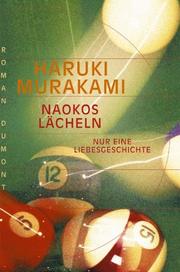
Two novellas published together: the title piece about a young woman who sleeps beside the refrigerator after her grandmother dies, and Moonlight Shadow. It sold in enormous numbers in Japan and it is still the best introduction.
The novellas
BeginnerStay in the mode she is best at — short books about young people absorbing a loss.
▸ Study plan for this stage
Pace: 3 weeks for roughly 550 pages across three books, none over 200 pages. Read Goodbye, Tsugumi in two or three sittings; treat Asleep as three separate novellas, one per evening; read Lizard's six stories two at a time. Do not batch them - these books blur if read consecutively without a gap.
- Maria narrating Goodbye, Tsugumi from a distance, so the whole summer is remembered rather than lived
- Tsugumi as Yoshimoto's one genuinely cruel character - ill, spoiled, malicious, and the warmest thing she has written
- The seaside inn and the town about to change, so the loss in the book is of a place as much as a person
- Asleep as three novellas organised around sleep, exhaustion and the dead, and the most formally consistent of her collections
- Sleep as a way of not being present for a loss, rather than as rest
- Lizard's six short stories, which show the range she can get out of one situation
- The single situation she keeps rewriting: a young person, a death or a disappearance, and a small domestic space in which it becomes survivable
- Why is Tsugumi allowed to be genuinely unpleasant when every other Yoshimoto character is gentle?
- What does Maria's retrospective narration do that a present-tense account of the summer could not?
- In Asleep, what is each sleeper avoiding, and does the novella say so or leave you to work it out?
- Across Lizard's six stories, what stays constant - the situation, the voice, the ending, or none of these?
- These are all short books about small events. Where does Yoshimoto put the weight so that they do not feel weightless?
- Read the three novellas of Asleep across three consecutive nights and write one line after each naming what the sleeper is not facing. Compare the three lines.
- In Goodbye, Tsugumi, mark the point where Maria stops needing the town. It is stated obliquely and finding it is the reading.
- Read any two Lizard stories back to back and write down the situation they share in one sentence. That sentence is Yoshimoto's whole engine and it will be true of the next two books as well.
- Take the cruellest thing Tsugumi says and rewrite the scene with a kind character in her place. The exercise shows why the novel needs her.
- Copy out a paragraph of Yoshimoto's description of a room, then write one of your own in her register - concrete objects, short sentences, no interpretation.
Next up: Having seen what she does at novella length, the two long books show what happens when the same drifting method is stretched to a size it was not designed for.
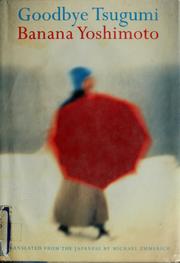
A summer at a seaside inn with a cruel, dying cousin. The warmest of her books.
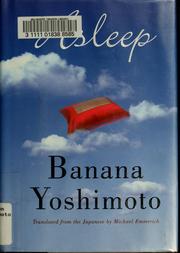
Three novellas about sleep, exhaustion and the dead, and the most formally consistent of the collections.

Six short stories, and the quickest way to see the range of what she does with the same materials.
The longer books
IntermediateSee what happens when she works at length, which is a genuinely different experience.
▸ Study plan for this stage
Pace: 3-4 weeks. Amrita is her longest novel at around 375 pages and is deliberately slack, so read it in long sittings and expect to go a while without a plot event; The Lake is under 200 pages and works best across two or three evenings straight after.
- Amrita's premise: Sakumi loses much of her memory after a fall, in a household already reorganised by her sister's death
- Her brother Yoshio and the novel's willingness to treat psychic sensitivity as ordinary household fact
- The travel sections and the associative, drifting structure - the book moves by mood rather than by consequence
- Why Amrita divides her readers: the same method that makes a 180-page novella feel weightless can make a 375-page novel feel formless
- The Lake as the opposite experiment - a short late novel circling a childhood trauma it never states outright
- Nakajima's past and the point at which the reader guesses what happened, well before the novel confirms anything
- Restraint as the mature form of the same technique: what Kitchen left out for lightness, The Lake leaves out for pressure
- How many pages of Amrita pass before something happens that changes the situation, and is the delay a flaw or the design?
- What does memory loss let Yoshimoto write about that ordinary grief would not?
- In The Lake, at what point did you know what had happened to Nakajima, and what gave it away?
- The Lake never states its central event plainly. Is that restraint, evasion, or a kindness to the character?
- Set side by side, which book is better served by its length - and does that answer the question of whether Yoshimoto is a novelist or a novella writer?
- Note the page number of each significant event in Amrita as you reach it. Do the same for The Lake. Comparing the two lists is the most direct evidence of what length does to her method.
- In The Lake, write down your guess about Nakajima's childhood the moment you form it, with the page number. Check it against the novel's eventual account.
- Read the household scenes in Amrita and the household scenes in Kitchen back to back and note what six years and two hundred extra pages changed.
- Pick the twenty pages of Amrita you found slackest and write one sentence on what they contribute. If you can answer, the book is working; if you cannot, you have located the divisive part honestly.
Next up: With both the short and the long form behind you, the final pair can be read as a return to the shape she is best at, made after everything she learned from stretching it.
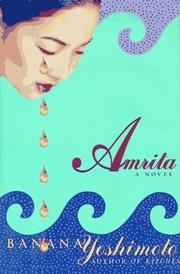
Her longest novel, and the one where the drifting, associative method is stretched furthest. Divisive among her readers.
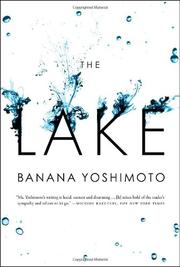
A late novel that circles a childhood trauma without ever quite naming it. Restrained and, for some readers, her best.
The tail
IntermediateThe remaining pair, for readers who have taken to her.
▸ Study plan for this stage
Pace: About four days. Two novellas in roughly 160 pages, and they are designed to be read together - one evening each, or both in a single long sitting if you want the pairing to land.
- Two late novellas returning to the material of Kitchen with fifteen years of practice behind them
- Hardboiled: a woman walking a mountain trail on the anniversary of a lover's death, in a landscape that will not leave her alone
- Hard Luck: a sister at the bedside of a sister who will not recover, and a family waiting for a decision
- The ghosts and shrines treated, as always, as unremarkable features of the world rather than as intrusions
- The harder edge in these two - the consolation is thinner and less freely given than in the early books
- How little Yoshimoto's method changed across a career, and what improved inside it
- Reading these as a natural stopping point rather than a climax, which is how her body of work is actually shaped
- What does the walking structure of Hardboiled do that a domestic setting could not?
- Hard Luck is about waiting rather than about a death. How does Yoshimoto sustain a novella on a situation with no forward motion?
- Set Hard Luck beside Moonlight Shadow: both are about a survivor and a person who cannot come back. What has changed in fifteen years?
- Are these books consoling? If they are less consoling than Kitchen, is that maturity or exhaustion?
- Having read the whole path, what is the single situation Yoshimoto keeps rewriting, and why is it worth rewriting?
- Read both novellas in one evening, then write down the last line of each and what it refuses to promise.
- Set Hard Luck beside Moonlight Shadow from the first stage and list the concrete differences - what the earlier book grants the survivor that the later one does not.
- Write one paragraph in Yoshimoto's register describing an ordinary room belonging to someone who has just died: objects only, short sentences, no interpretation. Then reread the opening page of Kitchen.
- Rank the seven books on this path by how much consolation they offer and see whether the ranking follows the chronology. The answer is the argument of the whole reading order.
Next up: You now have the full arc from the twenty-four-year-old debut to the late novellas, which is enough to pick up any of her untranslated-order paperbacks and know immediately where it sits.
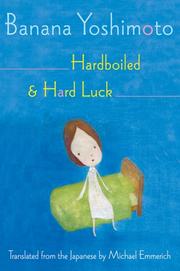
Two more novellas, and a good final stop — same preoccupations, later and harder.