Start with Kitchen. This is one of the few reading orders where the obvious answer is also the right one: her 1988 debut is short, it sold in numbers that briefly became a national news story in Japan, and every theme she has worked on since is already there — a young person loses the last member of their family, moves in with someone almost as unmoored, and slowly becomes able to eat, sleep and cook again.
The volume is usually printed with a second story, Moonlight Shadow, bound after it. Read that too, immediately. It is the more concentrated of the two and it is where the strangeness in her work is clearest: grief handled as something with rules, almost a physics, rather than as an emotion to be described.
What to read second
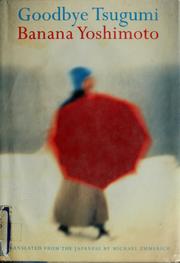
Goodbye, Tsugumi. A summer at a seaside inn, an invalid cousin who is spectacularly unpleasant, and the last season before a town changes for good. It is the warmest and least mannered book she has written, and it is the one that tends to convert readers who found Kitchen slight. Pick it up here rather than saving it.
Then The Lake. This is the mature version of the same machine — two damaged people circling each other, one of whom is carrying something specific and genuinely dark from childhood. It is more controlled than the early books and it withholds its central fact for a long time. Some readers find that patient; others find it evasive.
The story collections
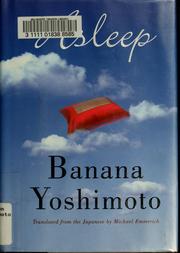
Asleep and Lizard are where the tone is purest. Asleep is three novellas about women who cannot stay awake, told with an eerie flatness that is much closer to ghost fiction than her reputation as a comfort writer suggests. Lizard collects six shorter pieces. Hardboiled and Hard Luck pairs two novellas, one a genuinely unsettling walk through mountains with a dead ex-lover somewhere in the vicinity, the other a hospital vigil.
If you like Yoshimoto at all, the short fiction is where she is strongest. The novels dilute; the novellas do not.
The one to leave until last
Amrita is her longest novel and the one readers most often abandon. A woman loses her memory after a fall and the book follows the loose, drifting years afterwards, taking in psychic children, a trip to Saipan and a great deal of conversation. Everything that makes the short books work — compression, a single clear loss, a hard stop — is absent by design. Read it only if you already love her, and expect the middle two hundred pages to test that.
About the translations
Worth knowing before you decide the prose is thin: the English editions have been rendered by several different translators over three decades, and the early ones in particular have been criticised for flattening her Japanese into something plainer than it is. Whether Kitchen reads as artfully simple or merely simple is a judgement readers genuinely split on, and part of what they are splitting on is the English. If a book of hers feels weightless, it is worth trying a different title before concluding the writer is.
Where to stop
Three books is a full reading: Kitchen, Goodbye, Tsugumi and The Lake. Add Asleep if you want the eerie version rather than the consoling one — and if you only ever read one thing by her, that collection is the connoisseur's answer, even though Kitchen is the correct beginner's one. Skip Amrita unless you are going all the way.
More Japanese fiction is on Discover.
Follow the full ordered path here: Banana Yoshimoto in Order: Where to Begin with Her Novels.