Start with Artemis Fowl, the 2001 first book, and read the main eight in publication order. There is no chronological alternative and no good place to jump in, for one specific reason: Artemis begins the series as its antagonist — a twelve-year-old criminal who kidnaps a fairy police officer for ransom — and the arc across eight books is him slowly becoming something else. Start at book four and you meet a hero. Start at book one and you watch one get built.
The alternative people are pushed toward is the 2020 Disney film, which changed the premise substantially and made Artemis sympathetic from the opening scene. Anyone arriving from it should treat the books as an unrelated property.
The eight main books in order
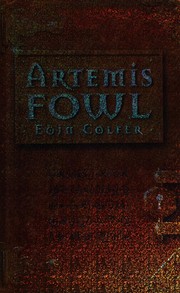
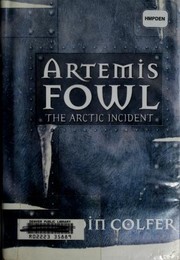
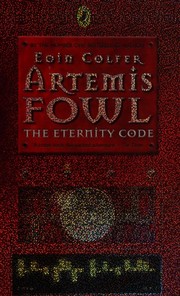
Artemis Fowl (2001), Artemis Fowl and the Arctic Incident (2002), Artemis Fowl and the Eternity Code (2003), The Opal Deception (2005), Artemis Fowl. The Lost Colony (2006), Artemis Fowl and the Time Paradox (2008), Artemis Fowl and the Atlantis Complex (2010), The Last Guardian (2012).
Three of those are catalogued under short forms and are worth knowing if you are hunting spines: book four was published as Artemis Fowl and the Opal Deception, book five as Artemis Fowl and the Lost Colony, and book eight as Artemis Fowl: The Last Guardian.
The series does not have a slow patch so much as an uneven one. Most readers find books three and four the peak — Artemis Fowl and the Eternity Code is the tightest heist in the run and The Opal Deception is the point where the stakes stop being reversible. Artemis Fowl and the Atlantis Complex is generally rated the weakest of the eight; it is not skippable, because it sets up the ending.
The companion volume
The Artemis Fowl files is not a novel. It collects two short stories with interviews, character files and background material, and it sits between books three and four. Read it if a child has run out of the series and wants more; skip it without consequence otherwise.
The Fowl Twins spin-off
The Fowl twins, The Fowl Twins Deny All Charges and Fowl Twins Get What They Deserve are a separate trilogy with different protagonists — Myles and Beckett, Artemis's younger brothers — set after the main series. They are lighter in tone and pitched slightly younger. They are a good read on their own terms and they are not a continuation; readers who go in expecting more Artemis are usually disappointed.
For the adult choosing these
Two adults arrive at this question, and they need different answers.
If you are handing them to a child: the books are pitched at roughly nine to twelve, each runs 280 to 400 pages, and the prose stays at about the same level all the way through while the content does not. Book one is a heist with jokes. Book seven is built around a character developing a compulsive disorder, treated seriously and named in the title. Book eight is about death and sacrifice and kills characters who have been present since the beginning. Stated as fact rather than warning: there is frequent violence, on-page deaths of recurring characters, a kidnapping in book one, a missing parent and the grief around it in books one and two, and torture in The Opal Deception.
If you are reading it yourself: book one is short and will read as slight, because it is doing setup and the humour is broad. The series is worth the eight books for the plotting, which is genuinely intricate by the middle, and for a protagonist whose intelligence is written as a real handicap rather than a superpower. If you want Eoin Colfer without the children's-series frame, two standalones are in this path — Airman, a nineteenth-century adventure about a boy imprisoned on a Saltee island who builds a flying machine, and Half Moon Investigations, a self-contained comic detective novel. Airman is the one most often recommended to adults.
Where to stop
The Last Guardian is a genuine ending. It closes the arc, resolves the fairy-world plot, and does not leave a hook. Stopping there is a complete experience, and the spin-off trilogy is an optional extra rather than the next chapter.
More on the series sits on the Artemis Fowl hub.
Follow the full ordered path here: Artemis Fowl Reading Order: Where to Start.