Vampire Chronicles books in order: where to start with Anne Rice
The Vampire Chronicles run to thirteen books and the Mayfair Witches to three, they eventually merge, and the merger is where most readers give up. The honest shape of Rice's career is a superb opening trilogy, a strong second act, a long crossover stretch that is only for the committed, and a late revival. This path reads the Chronicles in order to the point where they are still doing something, treats the Mayfair trilogy as a separate and genuinely different book, shows you where and how the two series join, and says plainly which volumes you can skip without losing the thread.
The Opening Trilogy
BeginnerRead the three books that made the modern vampire novel, and understand how each one reverses the previous narrator's account.
▸ Study plan for this stage
Pace: Six to eight weeks, and the three books are wildly unequal in length: Interview with the Vampire is 349 pages and reads in under a week, The Vampire Lestat is 606 and The Queen of the Damned 573, each taking two to three. Read them in this order and without a long gap, because Lestat is written as a
- The unreliable narrator as the trilogy's structural principle: each book is told by someone contradicting the last
- Louis's guilt as a moral position the series will spend two more books dismantling
- Claudia, and the specific horror the series builds out of an adult mind in an unchanging child's body
- Lestat as the rebuttal — unrepentant, funny, and reaching back into pre-Christian history for an origin the first book never asked about
- The Vampire Lestat's move from confession to performance, and the rock-star frame as a deliberate change of genre
- Akasha and the Legend of the Twins: the origin myth that retrofits a cosmology onto a small, mournful first novel
- Multiple viewpoints in Queen of the Damned as an escalation of the trilogy's one-narrator-per-book logic
- That the trilogy has a real ending, and that many readers stop here entirely reasonably
- What does Louis claim about Lestat in Interview, and which of those claims does The Vampire Lestat directly contest?
- What is Claudia's situation, and why is it the part of the first novel that survives every later reframing?
- Why does Rice give Lestat a rock band, and what does the device let her do that the confessional frame could not?
- What does Queen of the Damned's origin myth explain, and what does explaining it cost the earlier books?
- Where would you stop if you were only going to read three Anne Rice novels, and why?
- Make a two-column list of every factual disagreement between Louis's account in Interview and Lestat's in The Vampire Lestat, and mark which the third book adjudicates. Rice never fully settles them, and seeing which she leaves open is the trilogy's actual method.
- Track the rules of vampirism as each book states them — the Dark Gift, the effect of age on power, sunlight, fire, the connection to Akasha — and note where Queen of the Damned retrofits a rule the first novel contradicted.
- Read the interviewer's framing chapters at the start and end of Interview and write a paragraph on what the boy with the tape recorder is for. Rice returns to him, and the frame is not decoration.
- Take one scene narrated by Louis and rewrite a page of it in Lestat's voice as The Vampire Lestat establishes it. Doing this makes the difference between the two books' prose registers unmissable.
Next up: The trilogy closes its own mythology; the next three books are what Rice does with a series that has already explained itself, and they get progressively stranger.
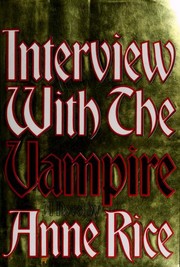
Louis tells a boy with a tape recorder about two centuries of guilt. It is short, mournful and nothing like its reputation, and everything after it is written against its narrator's version of events.
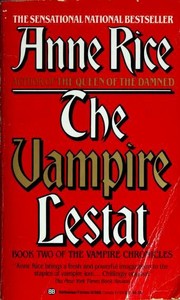
Lestat's rebuttal, and the book where the series becomes what people love: bigger, funnier, unrepentant, and reaching back into pre-Christian history. Read it immediately after Interview, because the whole effect depends on the contradiction.

The origin myth of the entire species, told through a dozen viewpoints. The most ambitious of the three and the natural end of the opening movement — many readers stop here quite happily.
The Chronicles Continue
BeginnerFollow the three books that keep the series' momentum after the trilogy closes its mythology.
▸ Study plan for this stage
Pace: Six to eight weeks, roughly 1,300 pages across three novels. The Tale of the Body Thief (507 pages) is the tightest plot in the series and a deliberate reduction in scale after Queen of the Damned. Memnoch the Devil follows — Open Library files it under a mangled bracket-and-bookseller string, but i
- The body swap as a device for asking whether Lestat wants to be human, and the answer the novel gives
- Scale reduction as a deliberate strategy after a cosmic climax
- David Talbot and the Talamasca as the series' recurring human institution, and the beginning of its structural importance
- Memnoch's theological argument, and Rice's Catholic preoccupations arriving in the foreground
- Veronica's veil and the question of whether the vision is true, which the novel deliberately refuses to settle
- The single-character life story as the Chronicles' late default form, with Armand as its best instance
- Renaissance Venice and the sequence of historical settings the series uses to extend backwards rather than forwards
- What does Lestat learn from being mortal in The Tale of the Body Thief, and does the novel endorse his conclusion?
- What is Memnoch's argument, and how much of it does the novel appear to accept?
- Does Memnoch the Devil settle whether what Lestat sees is real, and what does the ambiguity accomplish?
- What does The Vampire Armand explain about events in The Vampire Lestat, and where does it contradict them?
- How does the single-character biography form change what a Chronicles novel can do?
- Write out Memnoch's case as a numbered argument and Lestat's objections beside it. Whatever you make of the novel, it is a book-length theological dispute and reading it as one clarifies why it divides people.
- Compare the plot machinery of The Tale of the Body Thief with that of Queen of the Damned — number of viewpoints, geographical range, number of characters — and write a paragraph on what Rice gains by shrinking.
- Take Armand's account of his own history and set it against what Lestat says about him in The Vampire Lestat, listing every contradiction. The unreliable-narrator method from the trilogy is still running.
- Note every appearance of the Talamasca across these three books; the institution is being quietly built into the load-bearing structure that the crossover stage needs.
Next up: The Chronicles have now established the Talamasca and a taste for long historical biography; the Mayfair trilogy is a separate and denser project that uses both, and it has to be read before the two series meet.
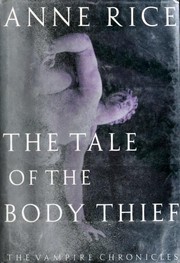
Lestat swaps bodies with a mortal and discovers he has no interest in being human after all. The tightest plot in the whole series and a deliberate step down in scale after Queen of the Damned.
Lestat is given a tour of Heaven and Hell by the Devil, and the series turns into a theological argument. Polarising and unignorable — it is the hinge of Rice's whole career. Open Library files it under a mangled bracket-and-bookseller title, but it is the 1995 novel.
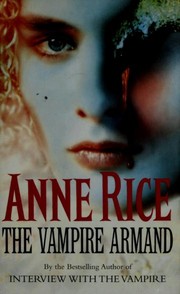
Armand's life from Renaissance Venice onward, and the strongest of the single-character books that follow Memnoch. Read it here; the ones after it get thinner fast.
The Mayfair Witches
IntermediateRead the separate New Orleans trilogy, which is denser, more domestic and more concerned with inheritance than anything in the Chronicles.
▸ Study plan for this stage
Pace: Ten to twelve weeks and roughly 2,040 pages — by far the heaviest stage on the path. The Witching Hour alone is 965 pages, much of it a thirteen-generation family history delivered as a document within the novel, and it needs three to four weeks and patience; it is also, on many readings, Rice's bes
- The Talamasca file as a novel-within-a-novel, and why Rice makes the reader work through a case history before the plot
- Thirteen generations of Mayfair women as an inheritance structure rather than a family saga
- Lasher as an entity defined by what it wants from the line, which the first book withholds and the second delivers
- New Orleans as property, legacy and money in these books, against New Orleans as atmosphere in the Chronicles
- Rowan Mayfair as a scientist protagonist, and the series' interest in genetics as the mechanism behind the supernatural
- The Taltos as a species explanation, and the cost of explaining a mystery the first novel sustained for nine hundred pages
- That this trilogy is domestic, dynastic and interior where the Chronicles are picaresque and historical
- What is the Talamasca file, and what does reading it before the present-day plot do to your understanding of the family?
- What does Lasher want, and at what point in The Witching Hour can an attentive reader work it out?
- How does Rowan's medical and scientific training change how the novel handles the supernatural?
- What does Taltos explain, and is the trilogy better or worse for the explanation?
- Why does this trilogy read so differently from the Chronicles, given the same author and the same city?
- Build the Mayfair family tree yourself from the Talamasca file as you read, generation by generation, marking the designee of the legacy in each. The novel expects you to hold thirteen generations in your head, and a drawn tree is the difference between following it and drowning.
- Mark the point in The Witching Hour where you first understood what Lasher is after, and note what specific detail gave it away. Rice plants it early.
- Compare a New Orleans scene from The Witching Hour with one from Interview with the Vampire and write a paragraph on what the city is doing in each book. It is not the same city.
- After Taltos, list what the trilogy has explained and what it has left alone, and decide for yourself whether the explanation improves Lasher retrospectively.
Next up: Both series are now in view, which is the only condition under which the crossover books make sense — and the next stage says plainly which of them are worth your time.
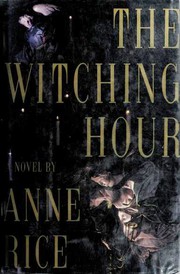
A thirteen-generation family history of witches and the spirit attached to them, and arguably her best single book. Enormous, patient and completely separate from the vampires — you can start Rice here instead if you prefer.
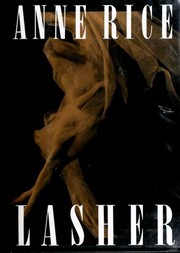
The direct sequel, following the entity the first book spends nine hundred pages introducing. Read straight on; the two were conceived as one story.
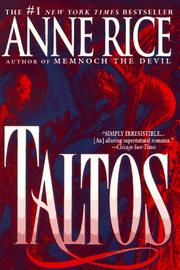
Closes the trilogy and explains what the Taltos actually are. Weaker than the first two but necessary, and it sets up the crossover with the Chronicles that comes next.
Where the Two Series Merge
IntermediateRead the crossover books that matter, understand which of the late Chronicles you can skip, and see where the series was left.
▸ Study plan for this stage
Pace: Eight to ten weeks, about 1,940 pages. Pandora (353 pages) first — a short life story from Augustan Rome told by one of the oldest characters, and the last Chronicles book that still works standalone. Then Merrick (431 pages), which is where the vampires and the Mayfair world actually meet through a
- The Talamasca as the hinge between the two series, which is why its earlier appearances mattered
- Merrick's function as a bridge rather than as a novel with its own centre of gravity
- Louisiana family gothic — inheritance, house, dependents — improving the Chronicles rather than diluting them, which is Blackwood Farm's achievement
- Quinn Blackwood and Mona Mayfair as the point where the two casts genuinely combine
- The late-series problem of an ensemble too large for any single book to serve
- Prince Lestat's political turn: giving the species a governing structure, which no earlier book wanted
- That a reading path can legitimately say which volumes to skip, and that Blood Canticle is the clearest case in Rice's work
- Why does Pandora work standalone when the books around it do not?
- What does Merrick require you to know from the Mayfair trilogy, specifically?
- What does Blackwood Farm take from The Witching Hour, and why does it work better there than in Merrick?
- What has changed about Lestat between The Vampire Lestat and Prince Lestat, and how much of it is the character rather than the author?
- Where does the series actually end, in your judgement, and what is your criterion?
- List every element of Merrick that comes from the Mayfair books and every one that comes from the Chronicles, then decide whether the novel needed both. This is the concrete test of whether the crossover was a good idea.
- Take the Blackwood family history and set it beside the Mayfair family history from your tree. Rice is writing the same structure twice, and the comparison shows what she learned the second time.
- Read a chapter of Blood Canticle before deciding whether to take this path's advice to skip it. A skip recommendation is worth testing once, and the test costs an hour.
- Track Lestat's voice across The Vampire Lestat, Memnoch and Prince Lestat by copying out one paragraph from each. Twenty-eight years of the same first person is unusual and the drift is visible on the page.
Next up: With the supernatural series finished, the last stage is the two historical novels where Rice's research and her preoccupations arrive without any of the machinery.
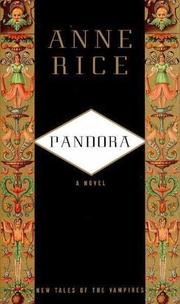
The first of the New Tales of the Vampires, a short life story from Augustan Rome told by one of the oldest characters. Read it before the crossovers — it is the last of the Chronicles books that still works standalone.
The book where the vampires and the Mayfair world actually meet, via a Talamasca witch and a request from Louis. It only works if you have read both series, which is why it sits here.
The best of the merged books, and the one where the Louisiana-family material of the Witching Hour finally improves the Chronicles rather than diluting them. Its sequel Blood Canticle is the weakest book in the series, and skipping it costs you nothing.
The 2014 return after eleven years away, gathering the surviving cast and giving the species a political structure. Read it as the late revival it is, and be aware the two books after it are for completists only.
Rice Without Vampires
IntermediateSee the historical novels, which are where her research and her preoccupations arrive without the supernatural machinery.
▸ Study plan for this stage
Pace: Eight to ten weeks, about 1,190 pages. Cry to Heaven (546 pages) first, then The Feast of All Saints (640 pages) — both are long, densely researched historical novels with no supernatural element at all, and both are slower than the Chronicles because nothing in them is being explained by a myth. Cr
- The voice as subject: mutilation, art and what is paid for a sound, which is Cry to Heaven's whole argument
- Historical research carried in the prose rather than in exposition, which is how these books differ from the Chronicles' history
- The gens de couleur libres as a real social class with its own institutions, hierarchy and precariousness
- Plaçage as an arrangement the novel presents in full rather than in summary
- Antebellum New Orleans as documented history, and how much of the vampire novels' city turns out to have been researched rather than invented
- Outsiderness and constructed identity as the preoccupation shared with the supernatural books, arriving here without a metaphor
- That these two novels are the best-written things Rice did outside the Chronicles, and are almost unread by her own audience
- What does Cry to Heaven argue about the relationship between what was done to the castrati and what they could do?
- How does Rice handle the sexual and social position of the castrati without either sensationalising or evading it?
- What does The Feast of All Saints establish about the legal and social position of the free people of colour, and how does the plot depend on it?
- Which details of New Orleans in this novel reappear in Interview with the Vampire and The Witching Hour?
- Having read all five stages, what is Anne Rice actually writing about across a supernatural series and two historical novels?
- Read Cry to Heaven and then a chapter of The Vampire Lestat set in the same century, and write a paragraph on how differently Rice uses eighteenth-century Europe when there is no vampire in it.
- Take The Feast of All Saints and list every institution of free New Orleans society it describes — schools, property, marriage arrangements, occupations. Then go back to Interview with the Vampire and mark which of them are visible there.
- Find the passages in Cry to Heaven where Rice describes a voice, and write half a page on how a novel conveys a sound. It is the technical problem the book is built around.
- Finish by writing a one-page answer to the last question above, citing at least one book from each of the five stages. That is the point of having read them in this order rather than by series.
Next up: This closes the path: the trilogy that made the modern vampire novel, the books that follow it while they are still working, the Mayfair trilogy, the crossover with its skips named, and the two historical novels underneath all of it.
Eighteenth-century castrati in Venice and Naples — a novel about voice, mutilation and art with no fantasy element at all, and the best-written thing she did outside the Chronicles.
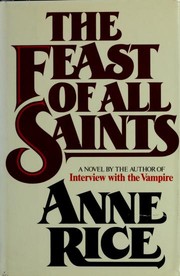
The free people of colour in antebellum New Orleans, researched at length and told straight. Read it last: it is the book that shows how much of the vampire novels' New Orleans was history rather than atmosphere.
Discussion
Keep reading
Paths that share books, cover the same subject, or open a related topic.