The Vampire Chronicles Reading Order: Where to Start with Anne Rice
Anne Rice wrote The Vampire Chronicles across four decades and the series changes shape at least three times — a single gothic confession, then a rock-star mythology, then a set of biographies of individual vampires, then a merger with her Mayfair Witches novels. Publication order is the right order because each shift only makes sense as a reaction to the one before, and this path lays out the five phases so a reader knows which one they are in and where it is reasonable to stop.
The Original Trilogy
BeginnerRead the three books that make the core of the series and that most readers mean by The Vampire Chronicles. ORDER CHOSEN: publication order throughout the path. Internal chronology would put Marius's and Pandora's ancient histories first, but Rice wrote them as retrospective revelations, and reading them early destroys the reveals they exist to deliver.
▸ Study plan for this stage
Pace: Six to eight weeks for 1,528 pages, and the three books are very unevenly sized: Interview With the Vampire is 349 pages, The Vampire Lestat 606 and The Queen of the Damned 573. Interview reads fastest and can be done in a week; the two that follow are denser, with long embedded histories that stop
- The confession as form: Interview is one narrator telling one listener his life in a single night, and the frame is doing argumentative work
- Louis's account as a version rather than a record — everything after 1976 is in some sense a rebuttal of it
- Lestat's counter-narration and what changes when the antagonist of book one narrates book two
- The rock-star reinvention in The Vampire Lestat as a deliberate genre swerve away from gothic confession
- Akasha and the origin mythology established in The Queen of the Damned, which every later book assumes
- Immortality as a problem of meaning rather than of survival, which is Rice's actual subject
- The vampire as an outsider figure carrying questions about desire, guilt and religion
- Interview is told to a listener who occasionally interrupts. What does the frame let Rice do that a plain first-person narration could not?
- The Vampire Lestat contradicts Louis on specific points. List three, and decide which narrator you believe and why.
- Claudia is transformed as a child and cannot age. What is that plotline actually about, and how does each narrator treat it differently?
- The Queen of the Damned supplies an origin for vampires. Does the mythology strengthen the earlier books or reduce them?
- Across the three, Rice changes register twice. Are these the same series, and what holds them together?
- Keep a two-column log of events narrated by both Louis and Lestat and note every discrepancy; the list is the argument the first two books are having.
- Mark each place in Interview where the interviewer interrupts and ask what the interruption is preventing Louis from saying.
- After The Queen of the Damned, return to a scene in Interview that the mythology now explains and judge whether the explanation improves it.
- Write a paragraph describing Lestat as Louis presents him and another as Lestat presents himself, using only text from each book.
Next up: With the intended trilogy closed and the mythology established, the next stage follows Rice as she keeps Lestat narrating and pushes him toward the theology that dominates the rest of her career.
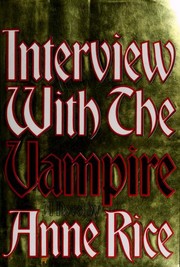
Louis tells a reporter his life over one night in San Francisco. The 1976 original and the entry point: it is a self-contained gothic novel, and everything after it is in some sense a rebuttal of Louis's account.
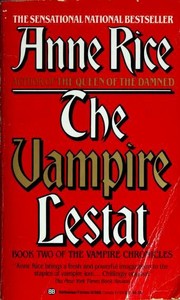
Lestat's own version, from eighteenth-century Auvergne to a 1980s rock band. Second, and the book that transforms the series — read it directly after Interview so the contradiction between the two narrators is unmissable.

Akasha wakes, and the origin of vampires is finally given. Third, and the intended conclusion of the trilogy; the mythology it establishes is assumed by every later book.
Lestat Alone
IntermediateRead the two novels where Rice keeps Lestat as narrator and pushes him toward the theological questions that dominate the second half of her career.
▸ Study plan for this stage
Pace: Four to six weeks for two books, of which we can only size one: The Tale of the Body Thief is 507 pages and our record for Memnoch the Devil carries no page count, so budget it by its section divisions instead — it is a shorter book than Body Thief but a much slower one, since long stretches are the
- The body-swap premise as a device for asking what a vampire actually misses about being mortal
- Lestat as a narrator who is now unambiguously the series' centre, with no rival account to check him against
- Rice's turn from gothic to theological: Heaven, Hell and a Devil who makes an employment offer
- The unresolvable question Memnoch poses — whether its supernatural content is true within the fiction or a deception
- Why the series divides sharply over this book, and what each side is objecting to
- The difference between a novel that argues and a novel that dramatises an argument
- The Tale of the Body Thief gives Lestat a mortal body. What does he discover he misses, and does the answer fit the character of the first three books?
- Memnoch presents a theological account of the world. Does the novel commit to its truth, and where is the evidence either way?
- Rice's Catholicism is visible throughout Memnoch. Is the book arguing a position, testing one, or neither?
- Body Thief is described as her most conventional novel. What is conventional about it, and what does the convention buy?
- If you stop after Memnoch, is the series finished in any meaningful sense? Make the case.
- List what Lestat does first when he has a mortal body, in order; the sequence is Rice's most direct statement of what immortality costs.
- Track Memnoch's claims about the origin of Heaven and Hell and mark which are consistent with the mythology established in The Queen of the Damned.
- Write down, at the end of Memnoch, whether you believe Memnoch — then find the passage that most supports the opposite reading.
- Decide in writing whether you are continuing, and record what specifically about the last two books drove the decision.
Next up: Those who continue enter the phase where Rice hands narration to other vampires entirely and writes their histories as separate books.
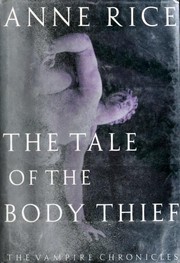
Lestat swaps bodies with a mortal and finds out what he actually misses. The tightest book after the original trilogy and the one that most resembles a conventional novel.
The Devil takes Lestat on a tour of Heaven and Hell and asks him to take a job. The most divisive book in the series and the hinge of the whole thing — read it here, then decide whether you want the rest. Our catalogue holds this under a junk marketplace display string beginning [Memnoch the Devil ] [By; the work is Rice's 1995 novel.
New Tales of the Vampires
IntermediateMove into the phase where Rice hands the narration to other vampires and writes their histories as separate books, ordered by publication.
▸ Study plan for this stage
Pace: Six to eight weeks for 1,444 pages — The Vampire Armand 500, Pandora 353 and Blood and Gold 591. The order inside the stage is not just publication order but dependency: Armand establishes the format, Pandora is the shortest book in the series and the cleanest demonstration of it, and Blood and Gold
- One vampire, one confession, centuries at speed — the New Tales format and what it gives up in favour of scope
- Armand's history from Kievan Rus to Venice to the Theatre des Vampires, filling gaps the first trilogy only gestured at
- Pandora as a first-century Roman senator's daughter, and Rice's use of the ancient world
- Overlapping testimony: three narrators describing the same two thousand years, and where they disagree
- Marius as the series' link between the ancient mythology and the modern vampires
- The shift from a series with a protagonist to a series with a cast, and the cost in momentum
- Armand's account fills in events the earlier books referred to. Which of those references turn out to have been misleading?
- Pandora is the shortest book here. What does the compressed length force Rice to do well?
- Blood and Gold covers the same centuries as parts of Armand and Pandora. List the discrepancies and say whether they read as deliberate.
- The New Tales hand narration to characters who were previously objects of narration. Does that consistently make them more sympathetic?
- Is this phase an expansion of the series or a substitute for advancing it? Argue from what changes across the three.
- Build a single timeline from the first century to the present and place each narrator's life on it; the overlaps are exactly where the three books can be checked against each other.
- Take one event described in two of these books and set the two accounts side by side; the discrepancy is the most interesting thing in the phase.
- After Blood and Gold, go back to Marius's appearances in The Vampire Lestat and note what has been retrofitted.
- Write a one-paragraph summary of the vampire mythology as it now stands, using only what these three books add to the trilogy.
Next up: The next stage is the point where the Vampire Chronicles merges with Rice's other major series, which requires reading one Mayfair Witches novel for the crossover to mean anything.
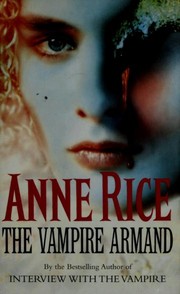
Armand's life from Kievan Rus to Renaissance Venice to the Theatre des Vampires. First of this phase, and the book that establishes the new pattern — one vampire, one confession, centuries covered fast.
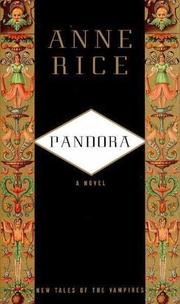
A Roman senator's daughter made vampire in the first century, written as a short companion volume. Read after Armand: it is the shortest book in the series and the best demonstration of the New Tales format.
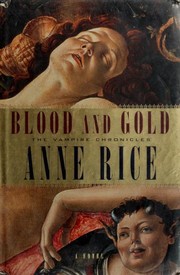
Marius's own account, filling in two thousand years the earlier books only gestured at. Placed last of the three because it depends on both Armand's and Pandora's versions of the same events.
The Mayfair Crossover
IntermediateRead the point where the Vampire Chronicles merges with Rice's Lives of the Mayfair Witches — including the one Mayfair novel you genuinely need for the crossover to work.
▸ Study plan for this stage
Pace: Three months or more for 2,435 pages, the heaviest stage on the path by a wide margin, and the one where the reader needs to be clearest about what they are signing up to. The Witching Hour alone is 965 pages, the longest book on this path by a wide margin; it is a separate series' opening novel, co
- The Mayfair Witches as a separate thirteen-generation family saga with its own spirit, Lasher, and its own rules
- The Talamasca as the institution linking both series, and what a shared organisation does for a crossover
- David Talbot's role as the character who has already crossed between the two worlds
- Merrick as a formal merger rather than a cameo, and what merging two magic systems costs each of them
- Quinn Blackwood in Blackwood Farm as a new protagonist introduced very late in a long series
- Blood Canticle as an intended ending, and how it reads as one
- The practical question of scope: which Mayfair books are required and which are optional
- The Witching Hour is nearly a thousand pages and belongs to a different series. Having read it, was it necessary for the crossover, or only helpful?
- How do the Mayfair rules about spirits and the vampire mythology fit together? Where does Rice have to fudge?
- The Talamasca has been present since Body Thief. What has it been doing across the whole series, and does the crossover reward that setup?
- Blackwood Farm introduces a new central character very late. Does he earn the space?
- Blood Canticle was written as an ending. What does it resolve, and what does it leave open despite itself?
- Draw the Mayfair family line from The Witching Hour to the present day; the novel is a genealogy and the diagram is the only practical way through it.
- List the rules of Mayfair spirit-work and the rules of Rice's vampirism in two columns, then mark the points where Merrick requires them to be compatible.
- Track the Talamasca's appearances from The Tale of the Body Thief forward and judge whether the crossover was planned or retrofitted.
- Write a paragraph deciding whether to stop at Blood Canticle, listing what the final stage would add.
Next up: The last stage covers the books Rice wrote after a ten-year gap, which reboot the mythology on a much larger scale and assume everything before them.
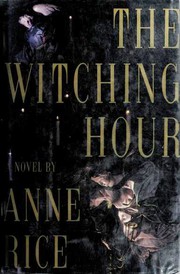
The first Mayfair Witches novel: a New Orleans family, thirteen generations, and the spirit Lasher. Read it before Merrick — it is a separate series, continued in Lasher and Taltos, but the crossover books assume its world.
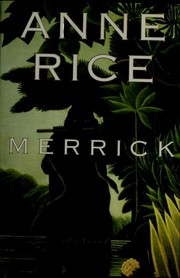
The formal merger: a Mayfair witch, Louis, David Talbot and the Talamasca in one book. Read straight after The Witching Hour so both halves of the crossover are fresh.
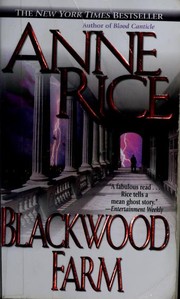
Quinn Blackwood's story, with Lestat and the Mayfairs both in play. Here because it continues Merrick directly and sets up the finale.

The end of the merged storyline, and Rice's intended close to the series before she returned a decade later. A legitimate stopping point for readers who want a finished shape.
The Late Return
IntermediateFinish with the books Rice wrote after a ten-year gap, which reboot the mythology on a much larger scale and are for readers who have followed the whole run.
▸ Study plan for this stage
Pace: Three to four weeks for 792 pages, the lightest stage on the path — Prince Lestat is 520 pages and Blood Communion 272, the shortest book on the whole path. Read Prince Lestat only after Blood Canticle: it was published in 2014 after Rice had left the series for a decade, and it is a direct answer t
- Returning to a series after a decade away, and what a writer has to do to make a resumed ending stick
- The gathering of every surviving vampire under a single throne, and the shift from confession to court politics
- Rice's mythology enlarged rather than deepened — the late books scale the cosmology up
- Lestat as ruler rather than rebel, and whether the character survives the promotion
- Blood Communion as a final word, and the difference between a last book and an ending
- How to judge a long series by its late volumes rather than by its best ones
- Prince Lestat answers an ending Rice had already written. What does it undo, and is the undoing justified in the text?
- Lestat becomes a ruler. Does the character established in book two support that, or is he replaced?
- The late books enlarge the cosmology considerably. Compare their scale with The Queen of the Damned's — which mythology is more effective?
- Blood Communion is the last novel Rice published in the series. Does it read as a planned conclusion?
- Having read the whole run, where would you now tell a new reader to stop? Give a book and a reason.
- Write your own summary of the vampire mythology before starting Prince Lestat, then mark everything the late books change.
- List the characters carried from the original trilogy who appear in these two books and note what has become of each.
- Compare the opening pages of Interview With the Vampire and Blood Communion and describe, concretely, what forty years did to the prose.
- Write a stopping-point recommendation covering all five stages: after Queen of the Damned, after Memnoch, after Blood Canticle, or the whole run — and give the reader you have in mind.
Next up: This is the end of the path: five distinct phases of a series written across four decades, with three defensible stopping points named along the way — from here, the Mayfair Witches novels Lasher and Taltos are the natural continuation rather than more vampires.
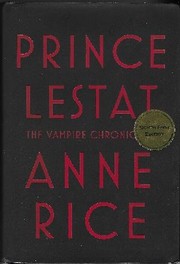
Published in 2014 after Rice had left the series for a decade, gathering every surviving vampire under a single throne. Read it only after Blood Canticle — it is a direct answer to the ending she gave up on.
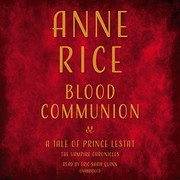
The last Vampire Chronicles novel Rice published, and Lestat's account of his court. Read last: it is the closest thing the series has to a final word, and it assumes everything before it.
Discussion
Keep reading
Paths that share books, cover the same subject, or open a related topic.