Anne of Green Gables Reading Order: Where to Start
The Anne books are read in the order of Anne's life, which runs from an eleven-year-old orphan arriving at a Prince Edward Island farm to a mother in her fifties watching her children go to war — eight novels, and the change in register across them is the whole reward. Publication order is not quite life order: Montgomery wrote Anne of Ingleside last, in 1939, and dropped it into the middle of the sequence, so following the story rather than the copyright dates is the right call and the one every edition now numbers. One edition trap: Anne of Windy Poplars and Anne of Windy Willows are the same novel under its American and British titles, so buying both means reading the fourth book twice.
Start Here: Green Gables
BeginnerMeet Anne at eleven and at sixteen, and get the two books that most readers think are the whole series.
▸ Study plan for this stage
Pace: 2–3 weeks for 586 pages. Both books are chapter-episodic and read comfortably at a chapter or two a sitting; Anne of Green Gables can easily be finished in a week. If you are reading aloud to a child, budget roughly 25 chapters per book at one chapter a night.
- The premise and its consequence: Matthew and Marilla Cuthbert send for a boy to help on the farm and receive Anne Shirley instead — the mistake the entire series is built on
- Anne's imagination as both her gift and her liability, and Montgomery's pattern of scrapes that are funny at the time and cumulative in effect (the liniment cake, the currant wine, the dyed hair, the ridgepole)
- Marilla's arc, which is the real subject of the first novel — an undemonstrative woman learning to love in the open, told almost entirely through what she does not say
- The Gilbert Blythe quarrel established at the slate-breaking, and the fact that Montgomery makes you wait three full books to resolve it
- Prince Edward Island as a character: the named places (Lover's Lane, the Lake of Shining Waters, the Haunted Wood) and Anne's habit of renaming the landscape
- The tonal turn in the last thirty pages of Anne of Green Gables, where a comic children's novel becomes something else and earns its reputation
- Why Anne of Avonlea is deliberately gentler and more episodic, and the Avonlea adults it introduces — Mr Harrison, Miss Lavendar, the Keith twins — whom the later books keep returning to
- What does Marilla want at the start of Anne of Green Gables, and what does she want by the end? Point to the specific scenes where the change is visible.
- Montgomery makes Anne's scrapes funny and then stops. Where in the first novel does the comedy begin to carry weight, and how does she signal it?
- Why is the slate-breaking scene worth three novels of consequence? What does Anne's refusal actually cost her?
- How does Anne of Avonlea change register from the first book, and what does Montgomery gain and lose by it?
- Which characters introduced in Anne of Avonlea rather than Anne of Green Gables turn out to matter later, and what does that say about the shape Montgomery was planning?
- Keep a character list from the first chapter onward — name, household, relationship to Anne — and add to it as you read. By Rilla of Ingleside it will run to fifty names, and starting it now is much easier than reconstructing it later.
- Mark the chapter in Anne of Green Gables where you first felt the book was not only funny, then write 150 words on what Montgomery did in that chapter to change it.
- Write down every place-name Anne invents and what she renamed. The list is a map of how she takes possession of a place she was nearly sent away from.
- Read the last three chapters of Anne of Green Gables and then reread chapter 1. Write half a page on what the opening looks like the second time.
- Pick one of Anne's scrapes and write 200 words on how the same event would read if it happened to Marilla instead. The exercise makes Montgomery's control of point of view visible.
Next up: Anne has grown from eleven to a teacher at sixteen; the next three books take her off the Island and out of girlhood, and the novels change with her.
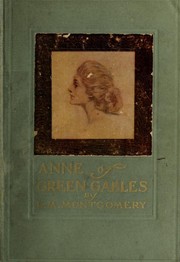
The only place to begin. An elderly brother and sister send for a boy to help on the farm and are sent a talkative red-haired girl instead. Everything the sequence later does quietly is done loudly here, and the last thirty pages are why the series has lasted a century.

Anne at sixteen, teaching in the school she used to attend. Second: it is gentler and more episodic than the first book on purpose, and it introduces the Avonlea adults the later novels keep returning to.
Anne Away From Home
BeginnerFollow Anne through college, her first job and her marriage, and watch Montgomery quietly change what kind of novel she is writing.
▸ Study plan for this stage
Pace: 3–4 weeks for 746 pages. Anne of the Island is short and fast; Windy Poplars is epistolary and can be read in short sittings; House of Dreams should be given a slower week because the tonal break in its middle deserves it. Buy carefully before starting: Anne of Windy Poplars and Anne of Windy Willow
- Redmond College and Patty's Place: Anne among peers rather than adults for the first time, and the introduction of Philippa Gordon as a foil for everything Anne is not
- The Gilbert resolution in Anne of the Island, and Montgomery's use of Roy Gardner as the beautiful wrong answer — the reader is meant to see it long before Anne does
- The end of girlhood as an explicit subject: Ruby Gillis's death and Anne's response to it, which is the first time the series treats mortality directly
- The epistolary structure of Anne of Windy Poplars and what letters let Montgomery do — Anne narrating herself, and the Pringle clan feud told as gossip
- That Windy Poplars was written in 1936, decades after the books on either side of it, and the seams that shows: the tone is closer to late Montgomery than to 1915
- Anne's House of Dreams as the sharpest tonal break in the sequence — the harbour, Captain Jim's life story, Leslie Moore's marriage, and a grief that the series does not soften
- Montgomery quietly changing genre: by the fifth book these are novels about adult women's constrained lives with a children's-book heroine still at the centre
- Why does Montgomery give Anne a suitor as attractive as Roy Gardner, and what does the reader see about him that Anne does not?
- What does Ruby Gillis's death do to Anne of the Island, and how does Montgomery keep it from wrecking a comic novel?
- What does the letter form allow in Anne of Windy Poplars that a third-person narrative would not? Name two effects.
- Windy Poplars was written twenty years after the books it sits between. Where can you feel it?
- Anne's House of Dreams contains the series' first real grief. How does Montgomery prepare for it, and how does the tone of the book change afterwards?
- Leslie Moore's situation would be unusable in a children's book. What is it, and why does Montgomery include it here?
- Before buying anything, check the title page of the fourth book you own: Windy Poplars and Windy Willows are one novel. Note which edition you have and why the texts differ slightly.
- Track the Gilbert thread across the first three novels by marking every scene in which he appears, then write 250 words on how Montgomery keeps a foregone conclusion suspenseful for three books.
- Write a 200-word character sketch of Captain Jim using only what he says, not what the narrator says about him. He is the best-drawn adult in the series and it is done almost entirely in dialogue.
- Take one letter from Anne of Windy Poplars and rewrite a page of it as third-person narration. Compare the two and write a paragraph on what was lost.
- Mark the exact chapter where Anne's House of Dreams stops being a book you could hand to a nine-year-old, and write half a page on what changed.
Next up: Anne is married and settled, which in this series means she is about to stop being the protagonist — the next three books belong increasingly to her children.
Redmond College, Patty's Place, and the long-delayed resolution of the Gilbert question. Third, and the book that ends Anne's girlhood — reading it out of order flattens the payoff of two whole novels.
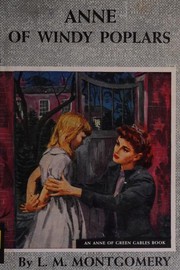
Three years as a principal in Summerside, told largely in letters. Fourth by story order though written late; published in Britain as Anne of Windy Willows, which is the same book, not a companion.
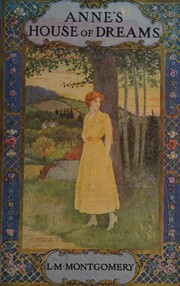
Marriage, a house on a harbour, and the series' first real grief. Fifth, and the sharpest tonal break in the sequence — Captain Jim and Leslie Moore belong to an adult novel.
Ingleside
BeginnerRead the three books where Anne moves to the edge of her own series and her children take the foreground, ending with the novel most critics think is Montgomery's best.
▸ Study plan for this stage
Pace: 4 weeks for 860 pages. Anne of Ingleside is episodic and can be read a chapter at a time; Rainbow Valley is short and quick; leave a clear run for Rilla of Ingleside, which is the one book in the series that should be read in as few sittings as possible. Read strictly in this order — placing Anne of
- Anne of Ingleside's position: written last, in 1939, but set sixth — Anne with six children, a full house, and Montgomery writing an already-old series at the end of her life
- The Aunt Mary Maria section as the book's spine, and the darker, more constrained view of domestic life that late Montgomery brings to it
- Anne's demotion in Rainbow Valley from protagonist to background adult, and the deliberateness of the move — the children are now the story
- The Meredith children of the manse — Jerry, Faith, Una and Carl — and Mary Vance, introduced in Rainbow Valley purely so that the last book can take them away
- Walter Blythe as the series' most carefully prepared character: the poet, the coward by his own reckoning, and the fact that Montgomery signals his fate for two books before it arrives
- Rilla of Ingleside as a contemporaneous home-front novel of the First World War, written by someone who had just lived through it and published in 1920
- The Piper motif running from Rainbow Valley into Rilla, and Montgomery's use of it to bind a children's book to a war novel
- What Rilla is unrecognisable as without the preceding seven novels — the emotional cost of each loss depends entirely on having watched those children grow up
- Anne of Ingleside was written thirty years after Anne of Green Gables. What does it show about how Montgomery had come to see marriage and motherhood?
- Why does Montgomery move Anne into the background in Rainbow Valley, and does the book work as a result?
- Trace the preparation of Walter Blythe from his first appearance to Rilla. Name three specific passages that foreshadow the ending.
- What does the Piper image mean in Rainbow Valley, and what has it become by Rilla of Ingleside?
- How does Rilla handle the home front — rationing, the Red Cross, the reading of casualty lists — and what does it record that a later historical novel could not?
- Rilla's growth is the fastest in the series. What is she like in chapter one and what is she like at the end?
- Draw the Blythe family tree with ages and birth order, then add the Meredith children and Mary Vance. Rainbow Valley and Rilla both assume you have this straight.
- Mark every mention of the Pied Piper across Rainbow Valley and Rilla, and write 200 words on how Montgomery converts a children's game into the frame for a war.
- Read the Susan Baker passages in Rilla as a set. Write half a page on how Montgomery uses a comic character to carry the grief the Blythes cannot voice.
- After finishing Rilla, reread the first chapter of Anne of Green Gables. Write 300 words on the distance travelled — this is the exercise the whole eight-book order exists for.
- Keep a dated timeline of the war as it appears in Rilla — the battles named, the news as it arrives at Ingleside — and set it against the actual chronology. Montgomery is writing from memory of very recent events and the accuracy is part of the book's value.
Next up: The eight-novel sequence is complete; what remains is optional — the Avonlea stories and the Montgomery novel most likely to make you a Montgomery reader rather than an Anne reader.
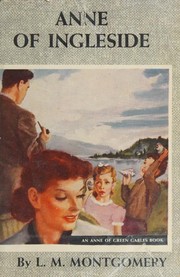
Written last, in 1939, but set sixth: Anne with six children and a house full of noise. Read it here rather than at the end — placed by publication date it reverses the ageing that gives the sequence its shape.
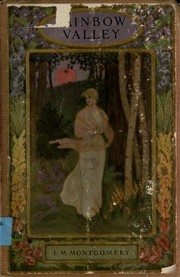
The Blythe children and the motherless Meredith family next door, with Anne now a supporting character. Seventh: the manse children introduced here are the reason the final book hurts.
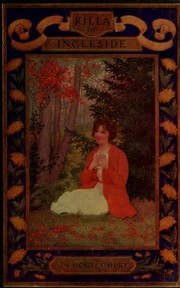
Anne's youngest daughter through the First World War, written by someone who had just lived it. Eighth and last — one of the very few contemporaneous novels of the home front by a woman, and unrecognisable as the sequel to a children's book unless you have read the seven before it.
Around Avonlea
IntermediateRead the optional companions — the Avonlea short stories and the two Montgomery novels most likely to convert an Anne reader into a Montgomery reader.
▸ Study plan for this stage
Pace: 3–4 weeks for 735 pages, and genuinely optional. The two Chronicles volumes are short-story collections that can be dipped into over months; Emily of New Moon is a novel and deserves a clear week. Read Chronicles of Avonlea any time after Anne of the Island, when the village is furnished in your hea
- Chronicles of Avonlea as village fiction rather than Anne fiction — twelve stories about the adults of the district, with Anne at the edges or absent
- Montgomery's short-story register: the ironic courtship, the long-held grudge, the spinster's reversal — the forms she wrote for magazines for years before the novels
- That Further Chronicles of Avonlea was published in 1920 against Montgomery's wishes, from stories she had set aside, and that she litigated over it — the quality difference is real and she knew it
- Emily Byrd Starr as the deliberate counter-Anne: darker, prouder, a writer by vocation rather than a talker, and much closer to Montgomery herself
- The New Moon Murrays and the clan pride that constrains Emily, which is a harder world than Green Gables in every respect
- The 'flash' — Emily's moment of transcendent perception — as Montgomery's most direct attempt to describe her own creative experience
- Why Emily of New Moon is the natural next series: it needs no Anne knowledge, it is the closest Montgomery came to autobiography, and it is the book her admirers most often prefer
- What do the Chronicles stories do that the novels do not, and what does that tell you about Montgomery's apprenticeship in magazine fiction?
- Compare a strong story from Chronicles of Avonlea with a weak one from Further Chronicles. What specifically is weaker — structure, ending, characterisation?
- Why did Montgomery object to the publication of Further Chronicles, and does reading it bear her out?
- How is Emily different from Anne as a character, and how is her world different from Avonlea?
- What is the 'flash', and why does it matter that Montgomery gave it to a heroine who wants to be a writer rather than to Anne?
- Read three stories from Chronicles of Avonlea and write one sentence for each identifying the twist or reversal. The pattern that emerges is Montgomery's magazine formula, visible in a way it is not in the novels.
- Write 250 words comparing Anne's arrival at Green Gables with Emily's arrival at New Moon. The two openings are doing deliberately different work.
- Take Emily's descriptions of the flash and write a paragraph on what Montgomery is trying to convey about the origins of writing.
- Pick one Avonlea adult who appears in both the novels and the Chronicles, and write half a page on whether the two portrayals are consistent.
- Write a short recommendation — 200 words — of where a reader who has finished Anne should go next and why, choosing between Emily, the Chronicles and Montgomery's journals.
Next up: This is where the Anne path ends and the wider Montgomery shelf begins — Emily's two sequels, The Blue Castle, and the published journals.
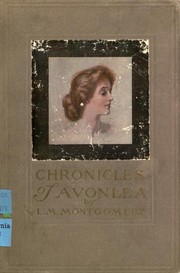
Twelve short stories set in and around Avonlea, with Anne appearing only at the edges. Genuinely optional, and best after Anne of the Island so the village is already furnished in your head.
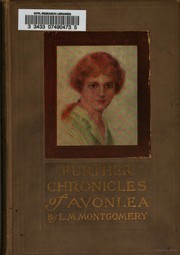
The second story collection, published against Montgomery's wishes from work she had set aside — weaker than the first, and worth reading only if the first left you wanting more.
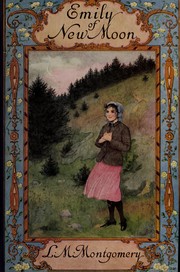
The other orphan: darker, stranger, and the closest Montgomery came to autobiography. The natural next series once Anne is finished, and no Anne knowledge is required.
Discussion
Keep reading
Paths that share books, cover the same subject, or open a related topic.