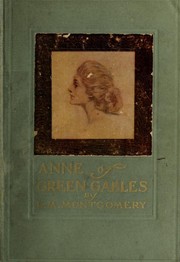
Start with Anne of Green Gables. That is the easy part. The real question for this series is what to do afterwards, because L. M. Montgomery wrote the eight Anne novels badly out of order — two of them were written in the 1930s and slotted into gaps in a story she had already finished in 1921.
The recommendation here is chronological order, following Anne's life rather than Montgomery's publication dates. That is the order this reading path uses, and the case for it is unusually strong.
Why not publication order
Publication order runs Anne of Green Gables, Anne of Avonlea, Anne of the Island, Anne's House of Dreams, Rainbow Valley, Rilla of Ingleside — and then doubles back twenty years to Anne of Windy Poplars and Anne of Ingleside, both written much later to fill gaps in the middle.
Two things go wrong if you do that. First, Rilla of Ingleside is set during the First World War and ends the sequence with real weight; following it with a light epistolary novel about Anne's engagement years is a tonal collapse. Second, publication order ends on Anne of Ingleside, which most readers consider the weakest of the eight. Chronological order ends on the strongest.
The honest case for publication order is that it shows you Montgomery's development as a writer, and that the two late books do read differently from their neighbours — the seams are visible either way. If you are re-reading, or reading as a student of her work, publication order has a point. For a first read, go chronologically.
The core: Anne at Green Gables and beyond
Anne of Green Gables is a nearly perfect book and needs no argument. Anne of Avonlea follows her as a young teacher and is gentler and more episodic. Anne of the Island covers her college years and contains the romantic resolution the first two books set up; many readers rate it the best of the sequels.
Anne of Windy Poplars comes next chronologically. It is largely letters, structured as a series of village vignettes, and it is the most skippable book in the series — you will lose almost nothing in the main story if you leave it out. It is also charming in its own right if episodic small-town comedy appeals to you.
The Ingleside books
Anne's House of Dreams is where the series grows up. It contains the most serious material Montgomery wrote about marriage, loss and a neighbour's very unhappy life, and readers who dismissed the sequels as cosy often change their minds here.
Anne of Ingleside is the second of the late-written novels and shifts to the childhood of Anne's children in linked short episodes. Rainbow Valley continues that shift, and by this point Anne herself is essentially a background adult. Some readers find this frustrating; others think the children's books are where Montgomery's real subject — the inner lives of imaginative children — comes back.
Rilla of Ingleside is the last and the most remarkable. Told through Anne's youngest daughter on the Canadian home front from 1914 to 1918, it is one of very few novels written about that war by a woman who lived through it, published within three years of the armistice. It is also very much a book of its moment: the patriotism is uncomplicated and there is period language about race and nationality that will land badly on a modern reader. Both things are true at once.
Where to stop, and what sits alongside
Stop after Rilla of Ingleside. That is a real ending.
If you want more, Chronicles of Avonlea and Further chronicles of Avonlea are short story collections set in the same village, with Anne appearing only at the margins. The second has a genuinely odd history — Montgomery's former publisher issued it over her objection, and she went to court over it — so read it as an assembled leftovers volume rather than a sequel.
Emily of New Moon is not an Anne book at all. It opens a separate trilogy about a different girl, and a substantial number of readers, including many critics, think it is the better piece of writing — darker, more interior, more honest about ambition. It belongs here as the natural next step, not as part of the sequence.
One gap worth naming: Montgomery's final Anne-related volume, published in complete form only decades after her death, is not currently in our catalogue. That absence is ours. Browse more series reading orders.
Follow the full ordered path here: Anne of Green Gables Reading Order: Where to Start.