Alison Weir Reading Order: Where to Start
Alison Weir writes two quite different kinds of book under the same name — narrative history, footnoted and argued from sources, and historical novels about the same people — and the single most useful thing a reading order can do is keep the two apart, because readers who meet the fiction first often carry its invented interiority back into the history. This path takes the non-fiction first, beginning with the book that made her name rather than with her earliest, and only then turns to the novels, where the Six Tudor Queens sequence has a fixed order matching the wives themselves.
Start Here: The Tudor Court (non-fiction)
BeginnerGet the Henrician court straight, and see what Weir's method is: dense, chronological, source-quoting narrative history written for a general reader.
▸ Study plan for this stage
Pace: 3-4 weeks, ~45 pages a day. The Six Wives of Henry VIII is 643 pages and Henry VIII: King and Court is 656, so this stage alone is about 1,300 pages of dense narrative history. Read the wives first and do not try to hold every name at once; the second book walks the same court more slowly and will f
- Alison Weir writes two different kinds of book under one name, and readers buy the wrong one constantly. The first three stages of this path are non-fiction, argued from documents; the last two are novels. Nothing on this path mixes the two, and you should not either
- The Six Wives of Henry VIII is six biographies rather than one story, and that design is what keeps her Anne Boleyn inside the surviving evidence in a way the later novel deliberately does not
- Her method is chronological narrative built on heavy quotation from letters, household accounts and ambassadors' dispatches, with the interpretation kept in plain view rather than buried in theory
- Weir works outside the universities, which is part of why the source-quoting apparatus is so visible on the page — the argument has to carry itself
- Henry VIII: King and Court is organised by institution instead of by chronology: households, favourites, palaces, money. It explains as structural what the wives book often has to present as personal
- The rule that distinguishes these books from the novels is simple. Here, when someone speaks, a document records the words. In the novels there is no such rule
- Where does Weir signal that she is inferring rather than reporting, and what phrases does she reach for when the evidence runs out?
- What does treating the six wives as six separate lives let her show that a single narrative of Henry's reign would hide?
- In King and Court, what is the money actually paying for, and how does the household explain decisions the wives book has to present as private feeling?
- Which of the six leaves the least documentary trace, and what does Weir do with that silence rather than filling it?
- By the end of this stage, whose account of Anne Boleyn's fall are you holding, and which documents is it resting on?
- Keep a one-page timeline of the reign with the six marriages, the annulments and the executions dated. You will use it again when you reach the novels, and it is the fastest way to catch a novel bending a date.
- Check the spine before you buy. Henry VIII: King and Court is the British title; the same book is sold in the United States as Henry VIII: The King and His Court. One book, two covers.
- Pick five quoted documents in the first hundred pages and note who wrote each and who they were reporting to. Almost every eyewitness at this court was somebody's servant or somebody's ambassador.
- Write one sentence on what Weir thinks happened to Anne Boleyn and keep it. You will hold it against what she writes as a novelist in stage four.
Next up: You have her method and the reign everything else assumes; now follow her back into the fifteenth and twelfth centuries, where she stops narrating and starts arguing a case.
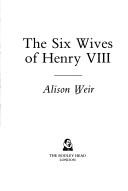
The book to start with, and the one that established her. It treats the six as six separate biographies rather than a single anecdote, and it gives you the cast and the chronology that almost everything else she has written assumes.

The companion volume, shifting from the wives to the machinery around the king — households, favourites, palaces, money. Read second, because it fills in the world the first book moves through at speed.
Back Before the Tudors (non-fiction)
BeginnerFollow her back into the fifteenth and twelfth centuries, and meet her as a historian willing to argue a contested case rather than only narrate.
▸ Study plan for this stage
Pace: 3-4 weeks, ~40 pages a day. The Princes in the Tower is 287 pages, The Wars of the Roses 462 and Eleanor of Aquitaine 444 — about 1,190 in total. Read the Princes book first and fast, then slow down for The Wars of the Roses, which carries most of the names, then take Eleanor at whatever pace you li
- The Wars of the Roses and Lancaster and York are the same book. It was published in the United States as The Wars of the Roses and in Britain as Lancaster and York, with the same text inside. Readers buy it twice every year without noticing, so check before you order
- The Princes in the Tower is an argument, not a survey: she examines the disappearance of Edward V and his brother and names Richard III. The case is genuinely disputed among historians, and the honest way to read it is as one historian's case rather than a settled finding
- This stage deliberately reverses chronology, putting the 1483 disappearance before the 1455-1485 dynastic collapse that produced it. The verdict is easier to follow first and the background makes more sense once you know what it is background to
- Eleanor of Aquitaine jumps back three centuries and changes the problem entirely: the sources are chronicles written by men with reasons to dislike a powerful woman, and Weir spends much of the book saying what cannot be known
- Compare the hedging across the three. In the Tudor books phrases like probably and must have are rare; in Eleanor they do a great deal of the structural work, because that is all twelfth-century evidence allows
- These books are where you see that she is not only a Tudor writer, which matters later — the novels are Tudor-only, and it is easy to mistake the fiction for the whole of her
- What is Weir's actual case against Richard III, laid out as a chain, and which link in it is weakest?
- The Princes in the Tower reaches a verdict and The Wars of the Roses mostly narrates. What changes in her prose when she is arguing rather than reporting?
- How much of Eleanor's life is documented, and how much is reconstructed from what a queen in her position would have had to do?
- Why does reading the Princes book before the Wars of the Roses work, given that it reverses the order of events?
- How much of these three books would survive if you removed every chronicle written by someone with a stake in the outcome?
- Before you buy anything in this stage, check the copyright page. The Wars of the Roses and Lancaster and York are one book under two national titles. If you already own either, you do not need the other.
- Draw the Lancaster and York descent on a single sheet as you read. Weir moves through five generations of repeated first names without giving you a chart.
- Write out her reasoning about the princes as numbered steps, then mark every step that depends on a single source. There are fewer independent sources than the confidence of the prose suggests.
- In Eleanor of Aquitaine, mark the first ten sentences that rest on inference rather than record. That count is the difference between twelfth-century and sixteenth-century history.
Next up: You have seen her narrate and seen her prosecute; the Elizabethan pair combines both, and closes the non-fiction before the path crosses into fiction.
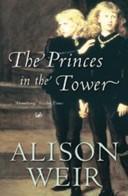
Her most argumentative book: she examines the disappearance of Edward V and his brother and concludes firmly that Richard III was responsible. Read it knowing the case is genuinely disputed among historians — it is the best place to see her weighing evidence in public.
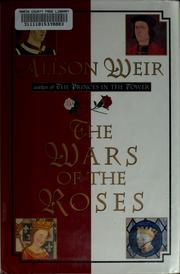
The narrative background the Princes book presupposes, covering the dynastic collapse from Henry VI to Bosworth. Published in Britain as Lancaster and York, so make sure you are not buying the same book twice.
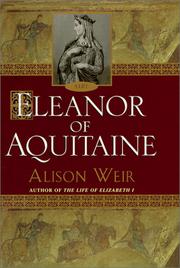
A jump back three centuries to the queen of both France and England, and the best single demonstration that Weir is not only a Tudor writer. It is also her most careful book about the limits of the sources for a medieval woman's life.
The Elizabethan Books (non-fiction)
IntermediateComplete the non-fiction spine with the reign that follows Henry's, and with the two set-piece investigations she is best known for.
▸ Study plan for this stage
Pace: 3-4 weeks, ~40 pages a day. The Life of Elizabeth I is 532 pages and Mary, Queen of Scots and the Murder of Lord Darnley is 621. Read Elizabeth first and steadily; read the Darnley book more slowly, because it is a case file and skimming it destroys the point of it.
- This is the last of the non-fiction. Everything after this stage is a novel, so read the crossing deliberately rather than drifting over it
- The Life of Elizabeth I starts at the accession rather than the birth, which makes the reign a consequence of the Henrician books you have already read instead of a fresh start
- The Darnley book is a single-question investigation — who killed him, and what the casket letters actually show. It is the sharpest example of her forensic mode and the closest she comes to writing a detective story from documents
- The authenticity of the casket letters is contested and has been for four centuries; the originals do not survive. Note where Weir's verdict on Mary depends on them and where it does not
- Elizabeth is built from the same apparatus as King and Court — household, money, patronage — so the two books read as a matched pair on how a Tudor monarchy actually ran
- Read the source notes and bibliography here rather than skipping them. They are the clearest picture you will get of what a Weir book is made of, and the reason the novels feel different will be obvious afterwards
- What does Weir conclude about the casket letters, and how much of her verdict on Mary would survive if the letters were removed entirely?
- Beginning at the accession costs her Elizabeth's childhood. What does she gain in exchange?
- Anne Boleyn and Mary Stuart are both women destroyed by a court. Does Weir extend the same benefit of the doubt to each?
- Where in the Darnley book does she rule out an alternative suspect, and on what grounds?
- Having now read seven works of history, how would you state her standard of proof in one sentence?
- Build a suspects table for Darnley: name, motive, opportunity, and the evidence Weir gives for and against. The book is organised for exactly this and reads better with the table open.
- Read the bibliography and source notes of the Darnley book before you read its final chapter. Knowing what she had to work with changes how the verdict lands.
- Write down three things you now believe about Anne Boleyn, Mary Stuart or Elizabeth, and mark beside each whether a document says it or a historian inferred it. Keep the page; the novels will test it.
- Count the pages given to the two years around Darnley's death against the pages given to the rest of Mary's life. The proportion is the argument.
Next up: You now know what Weir does when she is bound by evidence, which is the only way to see clearly what she does next when she is not.

Picks up where the Tudor books leave off and runs the whole reign. Read it after the Henry volumes so the Elizabethan settlement reads as a consequence rather than a fresh start.
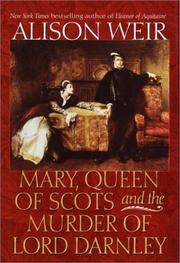
A single-question book: who killed Darnley, and what the casket letters actually show. The natural companion to The Princes in the Tower, and the sharpest example of her forensic mode.
The Novels: Six Tudor Queens, in Order
IntermediateCross over into her fiction, understanding that this sequence is invented interiority laid over the history you have just read, and read the six in their fixed order.
▸ Study plan for this stage
Pace: 4-5 weeks. Katherine of Aragon, The True Queen is 602 pages; our catalogue records no page count for the Anne Boleyn or Jane Seymour volumes, so plan by time instead — roughly ten days to a fortnight each at a novel's pace. These read far faster than the histories despite being about as long.
- You have crossed the line. These are novels: the thoughts, the dialogue and many of the scenes are invented, and nothing in them is evidence for anything
- Three things change when you cross. Characters get interiority the documents never recorded; disputed events get a verdict, because a novelist has to choose where a historian can leave the question open; and scenes are staged that no source places anyone at
- The sequence is one novel per wife in the order they married Henry, so Katherine of Aragon is the only correct starting point. Each stands alone, but the later books assume you watched the earlier annulments happen
- Weir puts an author's note at the back of each novel separating what the record supports from what she invented. These notes are the most useful pages in the books and are worth reading in full — but read them after the novel, not before
- The Anne Boleyn novel is the clearest demonstration on the path: it gives Anne motives that Weir the historian carefully declined to assert in The Six Wives of Henry VIII. Same author, same evidence, different rules
- Jane Seymour left almost no personal record, so her novel is close to pure construction. That is not a criticism of it; it is the reason it exists, and it is the sharpest illustration of what fiction is for here
- Katherine's novel gives you her interior account of the annulment. Where exactly does that account go beyond anything in The Six Wives of Henry VIII?
- Read the author's note at the end of the Anne Boleyn novel. Which of its inventions had you already taken as fact while reading?
- Weir the historian leaves several questions about Anne open; Weir the novelist closes them. Was that forced by new evidence or by the form?
- Jane Seymour is a documentary silence. What has the novel put in the space, and can you feel it being constructed?
- Name one false belief about the reign that someone would carry away from reading only these three novels.
- Read each author's note at the end, never at the start, and then turn back to the line in your stage-one timeline that it contradicts.
- Take one scene in the Anne Boleyn novel that moved you and try to source it from the history you have read. If you cannot, that is the exercise working.
- Keep a two-column page as you read: documented on the left, invented on the right. Check it against the author's note when you finish and see how well you did.
- Note which characters carry over from Katherine's novel into Anne's, and what each book quietly assumes you have already watched happen.
Next up: Three wives down and three to go, and the last three are where the novelist departs furthest from the historian you spent three stages reading.

The first of six novels, one per wife, in the order they married Henry — so this is the only correct starting point. Each is self-contained, but characters recur and the later books assume you watched the earlier annulments happen.

The second, and the one that most obviously diverges from the non-fiction: Weir gives Anne motives she carefully declined to assert in The Six Wives of Henry VIII. Read the two side by side to see where a historian draws the line.

The third, and the hardest to write, since Jane left almost no personal record. It is the clearest case in the sequence of fiction filling a genuine documentary silence.
The Novels: Six Tudor Queens, the Last Three
IntermediateFinish the sequence with the three wives of Henry's final years, and see the series close on the one queen who outlives him.
▸ Study plan for this stage
Pace: 5 weeks, ~45 pages a day. Anna of Kleve, Queen of Secrets and Katheryn Howard, the Tainted Queen are 480 pages each and Katharine Parr, the Sixth Wife is 528 — about 1,490 pages. Read them in this order; the series is cumulative even though each volume stands alone.
- These three complete the Six Tudor Queens sequence, so this path holds all six novels across stages four and five. It does not hold everything Weir has written — she has produced a great deal of other non-fiction and other fiction, and no reading order covers the whole output
- Anna of Kleve builds on a secret the historical record does not support, and the author's note says so plainly. It is the clearest single case on this path of a historian choosing, in a novel, to invent
- The Katheryn Howard novel deals directly with the grooming of a teenage girl. It benefits most from having read the history first, because the case rests entirely on how young she was and how fast events moved
- Katharine Parr closes the sequence after Henry's death, and she is the only one of the six who gets to outlive him. That changes the shape of a series where every earlier volume ends in annulment or a scaffold
- Reading the same events twice, first as documents and then as invention, is the whole point of the path. The second version will be the one you remember more vividly, which is exactly why the warning at the start matters
- Cover copy does not reliably tell you which kind of book you are holding. Both the histories and the novels are sold with portraits, gold lettering and a queen's name, and readers mix them up in bookshops constantly
- Anna of Kleve rests on an invention. Does the novel still work once the author's note tells you it did not happen, and what would be lost without it?
- What does having read the history first change about how the Katheryn Howard novel reads?
- How does a wife surviving alter the shape of a six-book series built on disposal?
- Across all six novels, which wife does Weir most obviously like, and what in the writing gives it away?
- You have read the same reign as history and as fiction. Which version is more vivid to you now, and what does that tell you about why the two need keeping apart?
- Read the author's note in Anna of Kleve before the other two notes. It is the most candid statement Weir makes anywhere about where she stops being a historian.
- Set the Katheryn Howard chapters against the dates on your stage-one timeline. The novel's case is a chronology, and seeing it as dates rather than scenes is sobering.
- Write two paragraphs on Anne Boleyn, one using only what The Six Wives of Henry VIII establishes and one using the novel. Notice which came more easily and why.
- Sort all thirteen books on this path into two piles from memory, history and fiction. If any title gives you pause, that is the pair of covers to look at again.
- Pick the one Weir book you would hand to someone who has read none, and write the two-sentence case for it — naming which kind of book it is.
Next up: You can now pick up any Alison Weir in a shop, tell within a page which of her two trades it belongs to, and place it against the reign you already know.

The fourth, and the most revisionist — it invents a secret that the historical record does not support and says so in its author's note. Keep reading in order; the note is part of the point.

The fifth, and the darkest, dealing directly with the grooming of a teenage girl. It is the novel that most benefits from having read the history first, because the chronology is what makes the case.

The last of the six, closing the sequence after Henry's death. Finish here: it is the only one of the novels that gets to show a wife outliving him, and it is where the series pays off.
Discussion
Keep reading
Paths that share books, cover the same subject, or open a related topic.