Alexander Pushkin Reading Order: Where to Start with Russia's Founding Writer
Every Russian writer after Pushkin assumes you have read him, and almost no English reader has — partly because his greatest work is in verse, which survives translation badly, and partly because the obvious entry point, Eugene Onegin, is the hardest thing to get right in English. So this path inverts the usual advice: start with the prose, which is short, fast and translates beautifully, work up to The Captain's Daughter, and only then take on Onegin and the plays, by which point you will know why the Russians treat him as the beginning of everything.
Start Here: The Short Prose
BeginnerRead the stories first, not the poetry, and discover that the founder of Russian literature wrote the plainest and quickest prose in it.
▸ Study plan for this stage
Pace: Three weeks and it is a gentle three. The Queen of Spades is about thirty pages and can be read in a sitting; do that, then reread it the same week, because the second reading is where the structure shows. The Tales of Belkin is five short stories — one a sitting, five sittings. Dubrovsky is around
- Pushkin's prose is deliberately stripped: short declarative sentences, almost no simile, no interior monologue, and the reader left to infer the feeling from the action. This was a programme, written against the ornamental prose of his contemporaries, and it is why he translates so well when his ver
- The Queen of Spades is built on a single ambiguity the story never resolves — whether Hermann is given a supernatural secret or goes mad and invents one. Every detail supports both readings, including the final card, and Pushkin declines to choose.
- The Tales of Belkin are framed twice over: presented as manuscripts left by a dead provincial landowner, forwarded by a neighbour, published by an editor with initials. That apparatus is a joke about literary respectability and also a real distancing device — nobody in the frame vouches for anything
- Each Belkin tale takes a stock plot of the period — the duel, the elopement in a snowstorm, the seduced daughter — and either deflates it or reverses it. The pleasure depends on knowing what the reader of 1830 expected, so read the setup as a promise Pushkin intends to break.
- The Stationmaster is the load-bearing story of the whole collection. A minor official loses his daughter to an officer and dies of it, and the prodigal-son pictures on his wall tell a story his life refuses to match. A century of Russian fiction about small humiliated clerks starts here.
- Dubrovsky is unfinished and posthumously published, and it reads like a writer trying out material: the wronged nobleman, the arbitrary powerful neighbour, the rebellion of dependents. All three come back, better handled, in The Captain's Daughter.
- Notice how little Pushkin explains. Motive is supplied by circumstance and by what characters do next, not by analysis — the opposite of the technique Dostoevsky would build on the same material.
- In The Queen of Spades, list the details that support the supernatural reading and the details that support the madness reading. Which list is longer, and does that settle anything?
- What do the double frame and the invented author do to the Belkin tales that a plain collection of stories would not?
- Take any two Belkin tales. What convention is each one setting up, and where exactly does the story break it?
- The Stationmaster hangs pictures of the prodigal son on his wall. What does the story do with that parallel, and how is that different from what a moralising writer would do?
- Dubrovsky was abandoned. Reading it after the other two, what problem do you think Pushkin could not solve?
- Copy out the first page of The Queen of Spades by hand and mark every adjective. Then do the same with the first page of any nineteenth-century novel you have to hand. The comparison is the fastest way to see what Pushkin was doing.
- Reread The Queen of Spades and write 200 words arguing the supernatural reading, then 200 words arguing the madness reading, using only textual evidence. Do not conclude.
- For each Belkin tale, write one sentence stating the story the title and opening lead you to expect, and one sentence on what you got instead.
- Mark the passages in Dubrovsky that reappear in altered form in The Captain's Daughter once you reach it — the arbitrary landowner, the loyal servant, the peasants siding with the outlaw.
Next up: You have his prose method in miniature; The Captain's Daughter is the same method sustained across a whole novel, and it is the book Dubrovsky was rehearsing for.

The right first Pushkin: thirty pages, a gambling obsession, a dead countess and a card trick, and an ending that Dostoevsky spent a career trying to match. Nothing about it feels two hundred years old.
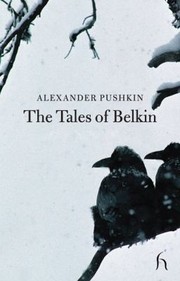
Five short stories presented as the papers of a fictional dead landowner — a duel, a snowstorm, a coffin-maker, a station master, a peasant girl who is not one. Read second. The Station Master alone launched a century of Russian stories about small humiliated officials.
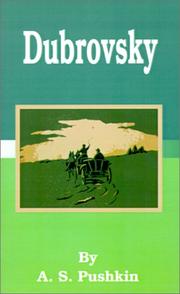
An unfinished novel about a dispossessed nobleman turned bandit, published after his death. Slighter than the two above and worth reading here because it shows him working out the material he would perfect in The Captain's Daughter.
The Historical Novel
BeginnerRead Pushkin's one completed novel and see the model of clarity and speed that Tolstoy and Gogol both said they were working from.
▸ Study plan for this stage
Pace: Two to three weeks. The Captain's Daughter is under two hundred pages and moves fast — a week is plenty, but read the epigraphs rather than skipping them, and read the chapter titles. A Journey to Arzrum is about a hundred and ten pages of travel notes and can be taken in short pieces alongside.
- The novel is narrated in old age by a man remembering his eighteenth year, and the double vision — the boy acting, the old man judging — does the work that psychological analysis does in later Russian fiction.
- The plot turns on a coat given to a stranger in a snowstorm. That the stranger turns out to be Pugachev, and that the debt is honoured across a rebellion, is the moral architecture of the book: personal obligation cutting across political catastrophe.
- Pugachev is the achievement. Pushkin had written a history of the same rebellion and knew what the man had done, and the novel still presents him as generous, theatrical and doomed without excusing the killings. Holding both is the point.
- The line about a Russian revolt being senseless and merciless is the most quoted sentence in the book and is regularly cited on its own. In context it is spoken within a narrative that has just shown you why the rebels rose, which complicates it considerably.
- Every chapter carries an epigraph from a folk song or a proverb rather than from a European poet. That is a claim about where Russian literature should get its authority, made typographically.
- The proportions are the thing writers admire: no scene is longer than it needs to be, the reversals arrive without preparation, and Masha's journey to the Empress resolves the plot in a few pages without feeling hurried.
- A Journey to Arzrum is the anti-romantic companion. Pushkin travels with the army into the Caucasus, and where his contemporaries found sublime exoticism he records heat, boredom, dirt and administrative detail — including the encounter with a cart carrying the body of the writer Griboyedov back fro
- Where does the narrator's older self intrude on the younger one's account, and what does each intrusion do?
- How does Pushkin make Pugachev sympathetic without softening what he does? Point to a specific scene where both are on the page at once.
- Read the senseless-and-merciless sentence in its full context. Who says it, about what, and how does the surrounding narrative pressure it?
- What is the effect of taking every epigraph from folk material rather than from Horace or Byron?
- In A Journey to Arzrum, what is Pushkin refusing to do that a Romantic traveller would have done? Give two examples.
- Chart the novel scene by scene on one page, with the number of pages each takes. The proportions are the lesson and they only become visible when you can see the whole thing at once.
- Track the coat: every appearance, every reference, every consequence. Write 200 words on what the object is doing structurally.
- Take the two scenes where Grinyov and Pugachev are alone together and write out what each man knows about the other at that moment. The gap between them is where the tension lives.
- Read the Griboyedov passage in A Journey to Arzrum and write a paragraph on the tone. It is the clearest example on this path of Pushkin declining an emotion the situation invites.
Next up: You have now read the best case for Pushkin that survives translation intact, which is exactly the ground you need before taking on the work where translation becomes the problem.
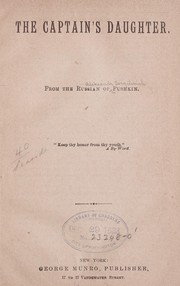
A young officer caught up in the Pugachev rebellion, and by common consent the most perfectly proportioned novel in Russian. Under two hundred pages. Read it fourth — it is the bridge from the stories to the verse, and the best single argument for his greatness that survives translation intact.

His account of travelling with the Russian army into the Caucasus in 1829 — dry, funny, and completely unromantic about a landscape his contemporaries treated as pure exotica. A good companion piece to The Captain's Daughter.
Eugene Onegin
IntermediateTake on the verse novel that is the central text of Russian literature, understanding before you start why the translation question is unavoidable rather than pedantic.
▸ Study plan for this stage
Pace: Six to eight weeks, and the pace is deliberate. Onegin is around four hundred stanzas across eight chapters — a chapter a week, read aloud, is right. The Bronze Horseman is a single evening but reread it three times. Ruslan and Ludmila and The Gypsies are short narrative poems, a week each.
- Onegin is written in a stanza Pushkin invented for it: fourteen lines of iambic tetrameter in a fixed rhyme scheme, used for four hundred consecutive stanzas including the digressions, the letters and the narrator's asides. The form never varies and the tone varies constantly, and that tension is th
- The plot is thin on purpose — a bored young man rejects a country girl's letter, kills his friend in a pointless duel, and is rejected in turn years later when she has become a great lady. What the novel is about is the narrator's voice moving over that story.
- Tatyana's letter and Onegin's final letter are the two set pieces, and they are deliberately mirrored. Compare the two directly; the whole moral judgement of the book sits in the difference.
- The translation question is unavoidable and it is a genuine, unsettled disagreement. Some translators keep the stanza and its rhymes and accept losses in literal sense; Nabokov abandoned verse entirely for a literal rendering with an enormous commentary, and argued that any rhymed version was a diff
- The narrator is a character. He digresses about his own life, his lost youth, women's feet, publishing, and the Russian climate, and the digressions are not padding — the elegiac register they build is what makes the ending land.
- The Bronze Horseman sets a small clerk who loses his fiancée in the Petersburg flood against the statue of the emperor who built the city on a swamp. It is the founding text of the Petersburg tradition: the state as a magnificent achievement and a personal catastrophe at once, with Pushkin refusing
- Ruslan and Ludmila is the twenty-one-year-old's book — a fairy-tale epic with a stolen bride, a sorcerer and a talking severed head, told with a lightness that offended the classicists. Read after the mature work and it reads as promise rather than as achievement.
- The Gypsies is the hinge. Aleko leaves society for a Roma camp and discovers that the jealousy he was escaping came with him, and the old man's speech expelling him is Pushkin dismantling the Byronic hero he had spent years writing.
- Read three stanzas aloud in whatever translation you have. Can you hear the rhyme scheme? What has your translator prioritised, and what has it cost?
- Set Tatyana's letter beside Onegin's. What has changed in each character, and which of them does the poem finally judge?
- The narrator interrupts constantly. Pick three digressions and say what each does to the story it interrupts.
- In The Bronze Horseman, is Peter the Great vindicated or indicted? Assemble the evidence on both sides before answering.
- What does the old man's final speech in The Gypsies say about freedom, and how does it read as a verdict on the Byronic hero Pushkin himself had been writing?
- Having read Ruslan and Ludmila last, what is present in the early poem that survives into the mature work, and what is entirely gone?
- Take one Onegin stanza and map its rhyme scheme letter by letter. Then find the same stanza in a second translation and map that. Twenty minutes here settles more about the translation question than any amount of reading about it.
- Copy Tatyana's letter and Onegin's letter into two columns and annotate the parallels. They are numerous and deliberate.
- Read The Bronze Horseman aloud in full, twice: once following the clerk, once following the city. Write 200 words on what the second reading gave you that the first did not.
- For The Gypsies, write out Aleko's justification for what he does and the old man's answer to it as a two-sided argument, in your own words, without deciding it.
- Keep a running list of the digressions in Onegin with a one-line summary of each. By chapter six the list itself is a portrait of the narrator.
Next up: With the verse behind you, the plays make sense as the same writer refusing another set of conventions, and the biography becomes readable as a life rather than as a shrine.

Four hundred sonnet-like stanzas in a single invented rhyme scheme, telling a story of a rejected letter and a fatal duel. English versions differ enormously — some keep the rhyme and lose the sense, Nabokov's keeps the sense and abandons the verse entirely — so read a rhymed version first and treat the argument itself as part of the book.

A short narrative poem in which a clerk loses everything in the Petersburg flood and shakes his fist at a statue of Peter the Great, which then pursues him. The most quoted poem in Russian, and the direct ancestor of the whole Petersburg tradition. Read it straight after Onegin.

The early fairy-tale epic that made his name at twenty-one — a bride stolen by a sorcerer, told with a lightness that scandalised the classicists. Read after the mature verse, as the youthful work it is.
A short Byronic poem about a man who joins a Roma camp to escape society and discovers he has brought his jealousy with him. The hinge between the romantic early Pushkin and the ironic later one.
The Plays and the Life
IntermediateFinish with the drama, where Pushkin was deliberately breaking Russian theatrical convention, and with the biography that explains the duel everyone knows about and little else.
▸ Study plan for this stage
Pace: Eight to ten weeks, most of it Binyon. Boris Godunov is around a hundred and sixty pages in twenty-odd short scenes and reads in a week — read it aloud or not at all. Little Tragedies is four one-act plays, one a sitting. Binyon is 729 pages of dense biography; four to six weeks at twenty-five pages
- Boris Godunov was written against the French classical rules that governed Russian tragedy — unity of time and place, verse throughout, no crowds, no comedy. Pushkin took Shakespeare's chronicle plays as the model instead: many short scenes, several years, blank verse alternating with prose, and a p
- The play has two centres and refuses to rank them: Boris, ruling well and haunted by a murdered child, and the runaway monk who declares himself that child and wins. Guilt and imposture are given equal weight.
- The final stage direction — the people saying nothing — is the most argued-over moment in Russian drama, partly because Pushkin altered the ending under censorship pressure. Know that the textual history is contested before you decide what the silence means.
- Most people know this story through the Mussorgsky opera, which reorders and rewrites substantially. If the opera is in your head, notice how differently the play distributes sympathy.
- The four Little Tragedies each isolate one appetite — avarice, envy, lust, and the appetite for pleasure in the face of death — and push it to its end in a few pages. Written in a single extraordinarily productive autumn, they are the most concentrated things Pushkin produced.
- Mozart and Salieri invents, on almost no evidence, the story of Salieri poisoning Mozart, and its real subject is the line that genius and villainy cannot coexist — a proposition the play is testing rather than asserting.
- Binyon's biography is a corrective to a century of shrine-keeping: it gives the debts, the gambling, the womanising, the political liability, the humiliating court appointment and the wretched last year, alongside the work.
- The duel is the one thing everybody knows and the least interesting thing in the life. Binyon's value is the surrounding machinery — the censorship arrangement under Nicholas I, the exiles, the money — that makes the duel legible as an endpoint rather than an anecdote.
- Name three specific conventions Boris Godunov breaks, and say what each break buys Pushkin dramatically.
- Does the play consider Boris guilty? Distinguish what the characters believe, what the text shows, and what is left open.
- What are the possible readings of the crowd's silence at the end, and how does the play's censorship history bear on them?
- Take two of the Little Tragedies. What is the single appetite in each, and at what line does the play commit to destroying its holder?
- Is Mozart and Salieri arguing that genius and villainy are incompatible, or dramatising somebody who needs to believe that? Cite lines for both readings.
- After Binyon, which of the received images of Pushkin survives contact with the documented life, and which does not?
- Read Boris Godunov aloud with the scene list in front of you, marking beside each scene whose point of view it serves. The alternation is the structure.
- Write 300 words comparing the play's ending with the opera's, if you know the opera. If you do not, compare the play's structure with any Shakespeare history you have read.
- For each Little Tragedy, write the plot in three sentences and the argument in one. Four cards, twenty minutes, and the collection's design becomes obvious.
- While reading Binyon, keep a two-column note: on the left what the work led you to assume about the man, on the right what the record says. Review it at the end.
- Use the collected prose volume to read one fragment or unfinished piece — a historical fragment, an unfinished tale — and write a paragraph on what it shows him attempting that the finished work does not.
Next up: This completes the path: prose, novel, verse, drama and life, which is the whole of what a Russian reader is assumed to have when a later novelist alludes to Pushkin in a single word.
A Shakespearean chronicle play about a tsar, a pretender and the guilt of a murdered child, banned from the stage for years and known to most people only through the opera. Read late — it assumes the historical instincts you will have built up through The Captain's Daughter.
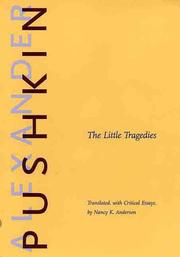
Four one-act plays including Mozart and Salieri, each about a single vice pushed to its limit. Written in a single autumn and among the most concentrated things he produced. The natural companion to Boris Godunov.
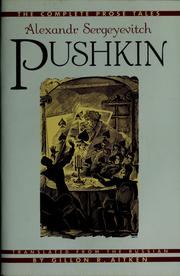
The collected prose in one volume, catalogued as The Complete Prose Tales of Alexandr Sergeyevitch Pushkin. Overlaps with the first stage, so use it as the completist's route to the fragments and unfinished pieces rather than as a substitute.
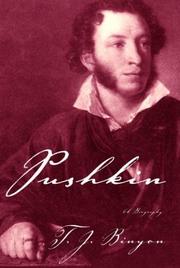
The standard English biography, and the right last book here — it takes the shrine-keeping tradition apart and gives you the gambler, the debtor and the political liability alongside the poet. Read it after the work, never instead of it.
Discussion
Keep reading
Paths that share books, cover the same subject, or open a related topic.