Start with The Queen of Spades. It runs about thirty pages, it is the most immediately gripping thing Pushkin wrote in prose, and it does the job an entry point has to do: it shows you quickly why Russian writers treat this man as the source of nearly everything after him. A gambler, an obsession, a dead countess, and a final line that Dostoevsky spent a career answering.
The obvious alternative is Eugene Onegin, and Eugene Onegin is the greater work. But it is a novel written in rhymed stanzas, and in English you meet it through a translator's decision: keep the rhyme and bend the sense, or keep the sense and lose the music. Begin there and your first impression of Pushkin is really an impression of somebody else's compromise. Read the prose first, where the translation problem is far smaller, and arrive at the verse already caring.
The prose tales
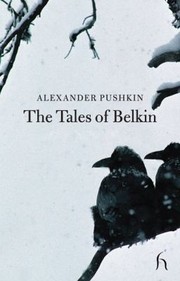
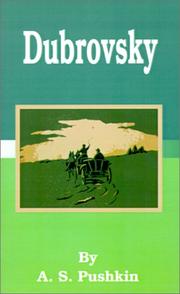
After The Queen of Spades, read The Tales Of Belkin — five short stories framed as the papers of a fictional dead landowner, light and ironic and the seedbed for an enormous amount of later Russian fiction. Dubrovsky is an unfinished bandit novel and reads like one; take it as a pleasure rather than an obligation. The captain's daughter is the one to slow down for: a short historical novel about the Pugachev rebellion, and the closest Pushkin came to a finished large work in prose. A journey to Arzrum is travel writing from the Russian campaign in the Caucasus, and it is where he sounds most like a modern reporter.
One buying warning. The complete prose tales of Alexandr Sergeyevitch Pushkin is an omnibus containing most of the titles above. It is a good way to own the prose, but buy it instead of the separate volumes, not in addition to them.
The verse
Now Eugene Onegin. Tatyana's letter, the duel, the terrible symmetry of the ending — this is the book Russian readers quote from memory. On translations there is a real and unresolved argument: Nabokov's version is deliberately unrhymed and literal, with a commentary longer than the poem, while the rhymed versions by Charles Johnston and James Falen try to keep the stanza singing. Most first-time readers get further with a rhymed version and keep the literal one on the shelf as a reference. Neither camp is going to concede.
The bronze horseman is a short narrative poem about a flood, a statue and a small man crushed by an empire, and it is the single most argued-over text in Russian literature. Ruslan and Ludmila is the early fairy-tale romp that made his name; The gypsies is the Byronic one, and you can feel him outgrowing Byron inside it.
The plays, and the life
Boris Godunov is a Shakespearean history play about a usurper and a pretender, more often read than staged in English. Little tragedies is four very short verse dramas — Mozart and Salieri among them — and they are the quickest way to see how much Pushkin could do in how little space.
Finish with the biography. Pushkin by T. J. Binyon, published as Pushkin: A Biography, is the standard English life: unromantic, heavily documented, and refreshingly unwilling to turn the duel that killed him at thirty-seven into a myth.
Where to stop
If you read only two things, make them The Queen of Spades and Eugene Onegin. If you read four, add The captain's daughter and The bronze horseman. Everything else is for readers who have decided they want the whole writer. If you would rather browse other literature paths first, Discover has them.
Follow the full ordered path here: Alexander Pushkin Reading Order: Where to Start with Russia's Founding Writer.
Ready to learn something deeply?
Build a reading path — free