Alex Rider Reading Order: Where to Start
Alex Rider is straightforward to read in order right up to the point where it is not. The first nine books run in publication sequence and tell one continuous story: a fourteen-year-old is blackmailed into working for MI6, and the series steadily refuses to pretend that this is fun for him. Then Horowitz went back and wrote a prequel about a different character, added a short-story collection, and eleven years after apparently finishing, restarted the series with a new arc. This path reads the original run straight through, then handles the out-of-sequence books, and says where each one actually belongs.
The First Five, in Order
BeginnerRead the opening arc as published — this is a genuinely continuous story, and the fifth book depends on all four before it.
▸ Study plan for this stage
Pace: Three to four weeks for about 1,500 pages. These are fast books — 250 to 360 pages each, short chapters, and most readers finish one in two or three sittings. Read them strictly in publication order, because this is a genuinely continuous story and Scorpia depends on every book before it. One catalo
- The recruitment: Alex does not volunteer, and MI6's leverage over him is renewed in every book — this is the engine of the whole series
- The mission structure Horowitz uses almost unchanged for nine books: ordinary life, a death or a threat, coercion, briefing, gadgets, infiltration, capture, escape, a set-piece finale
- Point Blanc's twist as the moment the series proves it can build a plot rather than just a chase
- The Cray and Sarov villains as two different templates — the megalomaniac with a plan and the ideologue with a grievance
- The CIA agents introduced in Skeleton Key, whose fate is the series' longest-running consequence
- Escalating cost: Alex is progressively more injured, more isolated and more resentful, and Horowitz refuses to reset him between books
- Scorpia as an intended ending — Horowitz wrote it to close the series, and the revelation about Alex's father reframes the four books before it
- What exactly does MI6 hold over Alex in each of the first five books, and how does the leverage change?
- Point Blanc's twist depends on something the reader has been shown but not told. Where is it planted, and did you catch it?
- Why does Skeleton Key have to be read even though its plot is self-contained?
- What does Eagle Strike reveal that makes Scorpia compulsory rather than optional?
- Scorpia was written as a final book. What in it reads as an ending, and what would have been left unresolved if the series had stopped there?
- Keep a mission log across the five books: who dies in the opening chapter, what MI6 threatens him with, which gadget he is given, and how he is captured. By book five you will have Horowitz's formula written out, which is what the rest of this path is about testing.
- Mark the page in each book where Alex first says he does not want to go. The distance from the front of the book shrinks steadily, and that shrinking is the series' actual character arc.
- Reread the first chapter of Stormbreaker immediately after finishing Scorpia. Every detail about Ian Rider now means something different; list five of them.
- Before starting Scorpia, write down what you think the truth about Alex's father is. Eagle Strike gives you enough to guess, and having your guess on paper is the best way to see how carefully Horowitz has been laying the ground since book one.
Next up: You have reached the ending Horowitz originally intended, which is the right place to notice that the four books after it had to justify continuing.
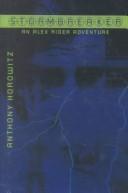
The first book and the only sensible entry: Alex's uncle is killed, MI6 turns out to have been training him without his knowledge since childhood, and he is sent into a computer magnate's Cornish plant. Short, fast and the template for everything after.

An Alpine academy for difficult rich boys, and the series' best single plot twist. Read second: this is where Horowitz shows he can build a real thriller structure rather than a chase, and where Alex starts resenting the job.

Wimbledon, then Cuba, then a Russian general with a nuclear device. The book that introduces the CIA agents whose fate haunts Alex for the rest of the series, so it cannot be skipped even though the plot is self-contained. The year on this catalogue record is wrong.

A pop star, the south of France, and the first villain with a personal grudge. It ends on the revelation that reframes Alex's whole recruitment, which is why the next book is compulsory rather than optional.

The peak of the series and the payoff for the first four: Alex learns the truth about his father and changes sides. Horowitz originally intended it as the last book, and it reads that way. If you stop anywhere, stop here.
The Second Half of the Original Run
BeginnerFollow the series past its intended ending, through four more missions to the conclusion Horowitz wrote to close it for good.
▸ Study plan for this stage
Pace: Four weeks for about 1,540 pages. Ark Angel, Snakehead, Crocodile Tears and Scorpia Rising run 330 to 420 pages each and read at the same speed as the first five, though Snakehead and Scorpia Rising are noticeably heavier going in subject matter. Read them in order — the personal cost accumulated in
- Writing past an ending: Scorpia resolved the series' central question, so these four books have to find a new reason for Alex to keep going
- Ark Angel as necessary machinery — it is the weakest book and it installs the personal stakes the last three depend on
- Snakehead turning the series toward real-world harm rather than invented supervillainy, which is the strongest thing about the later run
- Crocodile Tears and the plausible villain: a scheme built on charity fraud and agricultural science rather than a doomsday device
- Diminishing coercion — by this point MI6 barely needs to blackmail Alex, which is itself the point Horowitz is making about what has happened to him
- Scorpia Rising as a deliberate closing of every open thread, including the one the series had been protecting since book one
- How a children's thriller series handles a permanent death, and what it refuses to soften
- What does Ark Angel set up that Snakehead, Crocodile Tears and Scorpia Rising each spend?
- Snakehead is about real crimes. Where does Horowitz change register from thriller to something closer to reportage, and does the book survive the shift?
- Crocodile Tears has the most plausible villain plan in the series. Does plausibility make it more frightening or less exciting?
- Scorpia Rising returns to Cairo and to Scorpia itself. What is Horowitz closing, and which threads does he deliberately leave alone?
- Compare the ending of Scorpia with the ending of Scorpia Rising. Which is the better final book, and why did the series need two of them?
- Extend the mission log from the previous stage across these four books. Two of Horowitz's formula elements drop out entirely; identify which, and write one sentence on why the series no longer needs them.
- Read the last chapter of Scorpia and the first chapter of Ark Angel consecutively. The join is visible — note what Horowitz has to undo in order to continue.
- In Snakehead, mark every passage that describes something real rather than invented. Then check one of them. The book is doing something the first five never attempted and it is worth confirming.
- After Scorpia Rising, go back to the character who dies and find their first appearance in the series. Read that scene again; Horowitz has been writing toward this since the early books and the earlier scene reads as preparation.
Next up: With the original nine finished, you can now safely read the two books that sit outside the sequence — which would have spoiled almost all of it had you read them earlier.
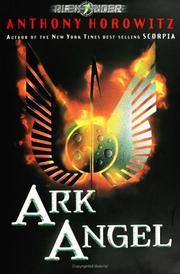
Alex out of hospital and into a space-tourism plot. The weakest of the run and structurally necessary, since it sets up the personal cost that the following books collect on.
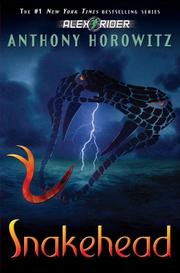
Australia, people smuggling in Southeast Asia, and the return of Alex's godfather. The most serious of the later books about real-world harm, and much better than Ark Angel.
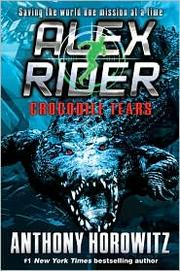
A charity fraud and genetically modified crops in Kenya, with a villain whose scheme is closer to plausible than most in the series. Reads well on its own but sits after Snakehead chronologically.
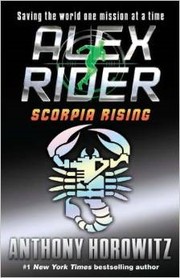
Written as the definitive ending: Cairo, the British Museum, and a death that the series does not undo. Read it last of the original nine, and be aware it is genuinely bleak for a children's thriller.
The Prequel and the Side Stories
IntermediateHandle the two books that sit outside the sequence, and understand why reading them in publication order is better than reading them chronologically.
▸ Study plan for this stage
Pace: Two weeks for about 720 pages. Russian Roulette is a full novel at 384 pages and Alex Rider: Secret Weapon is a short-story collection at 336 that can be read in pieces. Order within this stage does not matter much, but the placement of the whole stage does: Russian Roulette is chronologically a pre
- Publication order against chronological order, and the general rule this series demonstrates: a prequel written later is written for readers who already know the ending
- Yassen Gregorovich as the series' most important secondary character, and what changes when the story is told from his side
- The mirror structure — Yassen's recruitment is deliberately built to rhyme with Alex's, which is only visible if you already know Alex's
- Short stories as gap-filling: Secret Weapon slots between existing novels rather than extending the arc
- Why the collection is minor and still worth reading — it shows the formula at its smallest scale, where the machinery is easiest to see
- Series bookkeeping: how an author adds to a finished sequence without contradicting it
- Reading order advice as a genuine question rather than a formality, and the argument for publication order in a series with a prequel
- Which specific revelations from books one to five would Russian Roulette have given away if read first? List at least three.
- How does Yassen's recruitment parallel Alex's, and what is Horowitz arguing by making them rhyme?
- Does Russian Roulette make Yassen more sympathetic, more frightening, or both — and does the novel decide?
- In Secret Weapon, which story most usefully fills a gap in the original run, and where exactly does it sit?
- Having read the prequel last, would you now recommend anyone read it first? Make the argument for the other side before rejecting it.
- Before opening Russian Roulette, write down everything you know about Yassen from the original nine. Then read the novel and mark each item as confirmed, complicated or contradicted.
- Lay Yassen's early chapters beside the first three chapters of Stormbreaker and note the structural echoes — the loss, the recruitment, the training, the first job. The parallel is deliberate and close.
- For each story in Secret Weapon, write down which two novels it sits between. Half of them tell you outright; the rest have to be dated from what Alex knows.
- Take your mission log and add Russian Roulette to it as if Yassen were the protagonist. Most of the columns still fill in, which is the point the book is making.
Next up: Everything up to here is one closed story with its margins filled in; the last stage is a genuine restart, eleven years later, and reads differently for that.
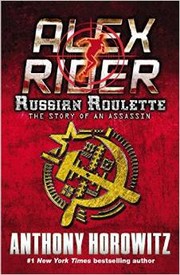
The life of Yassen Gregorovich, the assassin from the early books, told from his side. Chronologically it precedes Stormbreaker and it must not be read first — almost everything in it is a spoiler for books one to five. Catalogued here as Russian Roulette - Alex Rider #10.

A collection of short stories slotted between the novels, including one that fills the gap between Stormbreaker and Point Blanc. Minor, but the right place to read it is here, after the original run, rather than trying to interleave the stories chronologically.
The Revival
IntermediatePick up the later arc Horowitz began after a long gap, and judge whether the series still needed continuing.
▸ Study plan for this stage
Pace: Two to three weeks for about 770 pages. Never Say Die is 349 pages and Nightshade 421, both at the same pace as the original run. Read Never Say Die first without exception — it exists entirely to respond to the ending of Scorpia Rising and is close to meaningless without it. Nightshade is the first
- Restarting a finished series: Horowitz returned after eleven years, and Never Say Die's whole job is to reopen a door he had deliberately closed
- Undoing a death — whether the revival earns it, and what it costs the original ending if it does not
- The changed world: the revival books are written in and about the 2010s, and the technology, the geopolitics and the reader have all moved
- Nightshade's premise as the series' darkest, and its structural inversion — children raised into the job Alex was blackmailed into
- An open-ended series versus a closed one, and what changes about the reading experience when there is no planned ending
- The revival's prose against the original run's: shorter chapters, faster cuts, a visibly more experienced writer
- Where to stop, honestly assessed: Nightshade ends a story and opens a series, so it works as an endpoint only if you decide it does
- What does Never Say Die actually reverse from Scorpia Rising, and does the reversal cheapen the earlier book?
- Compare the opening chapter of Never Say Die with the opening of Stormbreaker. What has changed in Horowitz's writing in seventeen years?
- Nightshade's children are raised into the role Alex was forced into. What is the series saying about its own premise by doing that?
- Is Alex the same character in the revival books, and if not, is the difference growth, retcon, or a different author's instincts?
- Having reached the end of this path, is Scorpia, Scorpia Rising or Nightshade the right place to stop — and what would you be giving up in each case?
- Read the final chapter of Scorpia Rising immediately before starting Never Say Die. The revival is written as a direct answer and the join is only visible if the two are read back to back.
- Apply the mission log one last time to both revival books. Compare it with the version you built for books one to five — the elements that survive eleven years and a restart are the ones that were actually load-bearing.
- In Nightshade, list every way the cult's methods resemble MI6's treatment of Alex. Horowitz makes the comparison available and does not force it; assembling the list yourself is the exercise.
- Write a one-paragraph reading order recommendation for someone starting the series today: which book first, which prequel when, and where you would tell them to stop. You have now read enough to answer that question from evidence rather than from a wiki.
Next up: This closes the path: the original arc read as published, the out-of-sequence books placed where they do least damage, and the revival judged on whether it needed to exist.

Written years after Scorpia Rising and starting from its ending, with Alex in California and a message suggesting the death in that book might be undone. Read it only after Scorpia Rising, which it exists entirely to respond to.
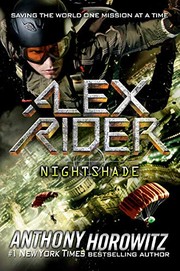
A cult raising children as assassins, and the first half of a two-part story continued in later volumes. It is the strongest of the revival books and the point at which the series becomes open-ended again — a reasonable place to stop, or to carry on from into the newest novels.
Discussion
Keep reading
Paths that share books, cover the same subject, or open a related topic.