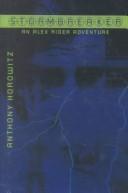
Start with Stormbreaker. It is the first book, it is barely two hundred pages, and it sets up the premise the whole series runs on: a fourteen-year-old discovers that the uncle who raised him was an MI6 agent, and that the agency now considers the boy a usable asset because nobody suspects a teenager.
Read in publication order, and specifically do not start with the prequel. Russian Roulette - Alex Rider #10 tells the life story of the assassin Yassen Gregorovich and was published tenth, and it is one of the few prequels in any series that genuinely must be read late — its entire effect depends on you already knowing Yassen from Stormbreaker, on the revelation in Eagle Strike, and on what happens in Scorpia. Chronological order is available and it is the wrong order. This is not a close call.
The opening books
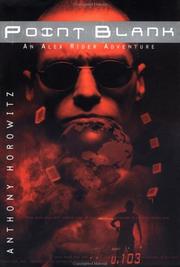
Stormbreaker is the weakest book in the series and also the necessary one. It is essentially a pilot episode: fast, thin, and closer to a Bond pastiche than to what the series becomes. Point Blanc, set in an Alpine school for the difficult children of the very rich, is a marked step up, and Skeleton Key is better again. If Stormbreaker leaves you unconvinced, the honest advice is to read Point Blanc before deciding.
The Yassen arc
Eagle Strike and Scorpia are where the series stops being an adventure serial and becomes a story about a boy being used by adults who tell themselves it is justified. Eagle Strike delivers the reveal about Alex's father; Scorpia is the consequence, and it is the best book in the run by most readers' reckoning. These two, plus Stormbreaker and the prequel, form the spine.
The middle books
Ark Angel, Snakehead and Crocodile Tears return to the mission-of-the-book structure, with the running thread of Alex's deteriorating ability to live a normal life underneath. Snakehead is the strongest of the three and connects directly back to Scorpia. Crocodile Tears, built around a fraudulent aid charity, is the most grounded plot in the series.
The ending, and what came after
Scorpia Rising was written as the conclusion and reads like one — it closes the Yassen and Scorpia material and contains a death that reframes the whole series. It is a genuine ending, and stopping there is a completely respectable way to read Alex Rider. Russian Roulette - Alex Rider #10 follows as the prequel, and belongs here rather than at the front.
Horowitz then returned to the character years later. Never Say Die picks up after the supposed ending and softens some of its finality, which is the main criticism of it. Nightshade is a stronger book and starts a new arc; its sequel, Nightshade Revenge, is not in our catalogue. Alex Rider : Secret Weapon is a short-story collection that sits outside the sequence entirely and can be read any time after Scorpia Rising.
Honest warnings
These are written for readers of roughly ten and up, and the violence is real: people die, Alex is repeatedly hurt, and the books do not pretend otherwise. The most interesting thing about the series is also its least comfortable — it is consistently clear that MI6 is exploiting a child, that the adults around him rationalise it, and that the damage accumulates. Adults handing these over should know that is the actual subject.
Where to stop
Scorpia Rising, book nine, is the designed ending. Add Russian Roulette - Alex Rider #10 immediately after for the best single book Horowitz wrote in this world, and treat the later novels as a separate, optional sequence. More adventure reading is on Discover.
Follow the full ordered path here: Alex Rider Reading Order: Where to Start.