Alan Moore Reading Order: Where to Start and What Order to Read His Comics In
Almost everyone starts Alan Moore with Watchmen, which is right, and then jumps straight to From Hell or Jerusalem, which is not — those are the two books most likely to end a reader's interest in him. The sensible order goes outward from the self-contained works to the sprawling ones: the three books that made his reputation, then the superhero runs where he was reinventing existing characters, then his own line of comics, then the enormous late projects. One catalogue note worth having up front: the collected editions of his Swamp Thing run are held unevenly here, so that stage is placed with the gap stated rather than promised as complete.
Start Here: The Self-Contained Books
IntermediateRead the three works that made Moore famous, all of which are complete in one volume and none of which require any comics background.
▸ Study plan for this stage
Pace: About two weeks for roughly 800 pages of comics. Watchmen is twelve chapters and is best read one chapter a night — each ends on a deliberate hinge and the supplementary prose at the back of each chapter is part of the reading, not an extra. V for Vendetta takes four or five evenings. The Batman Noi
- The nine-panel grid in Watchmen as a constraint Moore and Gibbons impose so that any departure from it carries meaning — the page shape is doing narrative work, not decoration
- Formal symmetry: chapter V of Watchmen, 'Fearful Symmetry', mirrors itself page for page around its centre spread
- The prose appendices — Under the Hood, the Rorschach case file, the ornithology paper — as documents that contradict the comic they are attached to
- Moore writing to a specific artist: Gibbons's clean draughtsmanship, David Lloyd's shadow masses with no sound effects, Brian Bolland's smooth precision are each answered by a different scripting method
- The deconstructed superhero — asking what kind of person would actually do this, and what a world containing one would look like
- V for Vendetta's refusal to settle its own argument: it will not tell you whether V is right, and Evey's imprisonment sequence is where it stops being a thriller
- The Killing Joke's 'one bad day' thesis, and the fact that Moore has publicly disowned the book — the author's own verdict is part of the material
- What does the nine-panel grid let Watchmen do that a conventional layout could not, and where in the book is the grid abandoned?
- In 'Fearful Symmetry', which page pairs with which, and what does that pairing say about Rorschach that the dialogue does not?
- Where do the prose documents in Watchmen contradict the comic pages around them, and which version does the book want you to believe?
- V for Vendetta was written under Thatcher and finished years later — what does Moore refuse to give the reader that a conventional political thriller would supply?
- Why does Moore now disown The Killing Joke, and what exactly does the book do to Barbara Gordon that later comics spent decades responding to?
- Read chapter V of Watchmen twice: once straight through, then again with the book open at the centre spread, checking each page against its mirror. Write down three details that only exist because of the symmetry.
- Track the smiley-face-and-blood motif through all twelve chapters of Watchmen, noting the page each variant appears on. Gibbons plants the shape in clock faces, ketchup, a crater and the final panel; the list is the argument for reading the art as closely as the script.
- Read the first three pages of V for Vendetta and count the sound effects and thought balloons. There are none — Moore removed both for Lloyd. Then compare a comparable action sequence in Watchmen and describe what changes.
- Read The Killing Joke in the black-and-white Batman Noir edition, then find any colour reproduction of the same pages. Bolland recoloured the book himself in 2008 because he disliked the original; decide which version the storytelling actually needs.
Next up: You now know Moore's formal method on books he built from nothing, which is what you need to see what he did next: the same techniques applied to characters somebody else already owned and had run out of ideas for.
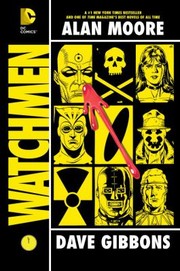
The correct first Moore for essentially everyone: a murdered vigilante, an alternate 1985, and a nine-panel grid used with a formal rigour nobody had attempted in the medium. It is self-contained, it is the most influential comic ever published in English, and Dave Gibbons's art is half the argument.
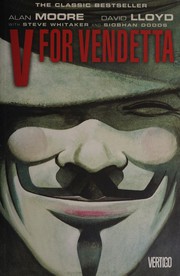
Earlier, angrier and less controlled — a fascist Britain and an anarchist terrorist Moore refuses to make comfortable. Read it second: it shows the politics that Watchmen formalises, and David Lloyd's shadow-heavy art is the clearest early example of Moore writing to an artist's strengths.

Forty-eight pages on the Joker's origin, and the most argued-over thing Moore wrote — including by Moore, who has disowned it. Short enough to read in one sitting and useful as the bridge into the superhero stage. Our catalogue holds the Batman Noir edition, which is the same story printed without colour.
The Superhero Runs
IntermediateSee what Moore actually did for a living in the 1980s — taking over cancelled or exhausted characters and rebuilding them from the inside.
▸ Study plan for this stage
Pace: Three weeks for four collections, around 700 pages. Swamp Thing Vol. 1 and Saga of the Swamp Thing books two and three run continuously and should be read within a fortnight of each other so the American Gothic sequence holds together. A shelf-labelling note that matters: this catalogue holds the 19
- The retcon as a literary move: 'The Anatomy Lesson' does not extend Swamp Thing's origin, it reverses it — the creature was never a man who became a plant
- American Gothic as a formal exercise, working through a different American horror subgenre issue by issue
- Horror comics used for political argument — the run's monsters are racism, gun culture, nuclear anxiety and misogyny, named as such
- John Constantine arriving as a structural device: a character whose only function at first is to move the protagonist toward things he would not otherwise go near
- Moore taking over cancelled or exhausted properties, which is what he was actually paid to do throughout the 1980s
- Miracleman as the earlier, less controlled version of the Watchmen idea — the superhero taken literally, with the consequences left in
- Reading a serialised monthly comic in collection: the beats are built for a month's gap, and reading them back to back changes their pacing
- What does 'The Anatomy Lesson' actually claim about Swamp Thing, and why does that single revelation make the rest of the run possible?
- Name the horror subgenre each American Gothic issue is working in. What is Moore's argument for arranging them in that order?
- How does Constantine's introduction change who drives the plot, and what does the run lose or gain by making the protagonist reactive?
- Miracleman was begun before Watchmen. Which ideas arrive here first, and where is the writing visibly less controlled?
- The Swamp Thing collections in this catalogue change series name mid-run. Where exactly is the seam, and does the story skip anything across it?
- Read 'The Anatomy Lesson' in Swamp Thing Vol. 1 twice — once for plot, then again counting how many panels are given to Jason Woodrue reading a report. The horror is entirely in the pacing of an autopsy write-up.
- Keep a one-line log through Saga of the Swamp Thing books two and three: issue, horror subgenre, and what American institution it is aimed at. By the end of book three you will have Moore's structural plan written out.
- Mark Constantine's first appearance and every subsequent one across books two and three. Note that he never explains himself; list what the reader is expected to infer instead.
- After Miracleman, Book One, go back to the first chapter of Watchmen and read them side by side. Write a paragraph on what Moore had learned to do differently — the exercise is comparative, and the answer is mostly about restraint.
Next up: Having watched Moore dismantle superheroes for a decade, you are in position to read the line he created in reaction to the grim comics that dismantling produced.

The 1998 Vertigo collection of the opening of his Swamp Thing run, including the issue that reveals the creature was never a man at all. This is where the American comics of the 1980s changed, and it is the entry point to the run. Note the later volumes are catalogued under a different series name, below.

The run continues into the horror anthology stretch and the American Gothic sequence. Our catalogue holds the reissue series from Book Two onward but not Book One under that name, so the volume above stands in for it — the reading is continuous, the shelf labels are not.

American Gothic proper, working through a different horror subgenre each issue, and the arrival of John Constantine. The strongest stretch of the run and the point at which most readers stop treating it as a monster comic.

Moore's other deconstruction of the superhero, begun before Watchmen and legally stranded for decades afterwards. Read it after Watchmen rather than before: it is rougher, and its interest is mostly in watching the same idea arrive first and less elegantly.
America's Best Comics
IntermediateRead Moore's own line, written in the late 1990s in deliberate reaction against the grim comics his 1980s work had produced.
▸ Study plan for this stage
Pace: Two to three weeks for three volumes, around 500 pages. The League of Extraordinary Gentlemen - Volume One and Top 10 read quickly and pleasurably; Promethea (Book 1) does not, because the page layouts require you to work out the reading order of the panels before you can follow the dialogue. Budget
- The ABC line as deliberate reaction — Moore setting out to write optimistic, formally playful superhero comics after a decade of the opposite
- The League's method: every character is borrowed from Victorian fiction, and the pleasure is in recognition rather than invention
- Kevin O'Neill's densely packed backgrounds as a second, parallel text running underneath the plot
- Top 10 as a police procedural whose premise is a genre joke that then gets taken entirely seriously
- J.H. Williams III's layouts in Promethea, where the page design encodes the subject rather than merely presenting it
- Moore's occultism moving from background colour to explicit subject — Promethea is a guided tour of Western esoteric tradition wearing a superhero costume
- Writing for an ongoing line versus writing a finite book: these were built to continue, and it shows in how they open
- How many characters in the first chapter of The League are borrowed rather than invented, and what does Moore gain by never introducing them properly?
- What does Top 10 do with its premise beyond the initial joke — where does it stop being funny and start being a procedural?
- Which page of Promethea (Book 1) first breaks conventional panel grammar, and how did you work out the reading order?
- These books were written against the tone of Moore's own 1980s work. What specifically is he reacting to, and does it read as a correction or a retreat?
- Where in Promethea does the esoteric material stop being metaphor and start being the actual plot?
- Take any single page of The League of Extraordinary Gentlemen - Volume One and list every background element you suspect is a reference. Then check your list — the point is to find out how much O'Neill packs in below the level you were reading at.
- Read one Top 10 issue for plot, then reread the same issue reading only the background characters and signage. Count how many separate gags run past without comment.
- Photocopy or photograph two facing pages of Promethea (Book 1) and number the panels in the order you read them. Compare with a second attempt a day later; where the two numberings disagree is where Williams's layout is doing the most work.
- Write down, in one sentence each, what each of these three books thinks a superhero comic is for. The three answers are incompatible, which is the point of reading them together.
Next up: You have now seen Moore at his most generous and most entertaining, which is exactly the credit you need to spend on the two books that ask for months rather than evenings.
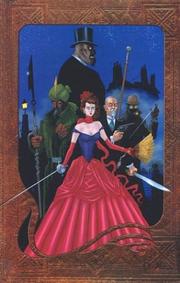
Victorian literary characters assembled as a covert team, drawn by Kevin O'Neill and stuffed with references. The most immediately enjoyable thing Moore has written, and the correct entry to this stage — the later volumes get progressively more allusive and less welcoming.
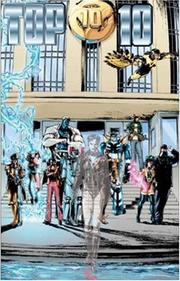
A police procedural in a city where everyone has superpowers, and the best-structured of the ABC books — genuinely funny, densely staged, and a complete story. Read it second here as the counterweight to the darkness of the previous stage.
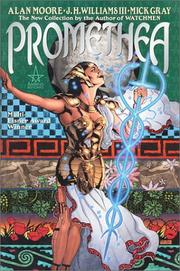
A superhero comic that turns into a guided tour of Western esotericism, drawn by J.H. Williams III with page layouts that no other comic attempts. This is where Moore's occultism becomes the subject rather than the background; read it last in this stage, and do not start with the volume numbered Vol. 1, which is a Spanish-language edition.
The Long Projects
IntermediateTake on the two comics that ask most of a reader, once you already trust him enough to give them the time.
▸ Study plan for this stage
Pace: Six to eight weeks, almost all of it on one book. The Ballad of Halo Jones is short and can be read in a few evenings. From Hell is around 570 pages of dense black-and-white artwork plus two appendices — the first a chapter-by-chapter source commentary nearly as long as some of the chapters, the sec
- From Hell is not a whodunnit: the killer is named early, and the Royal conspiracy theory is used as a fiction Moore openly does not believe in order to argue about the twentieth century
- Psychogeography — Gull's carriage tour of London in chapter four is the book's thesis, and everything after it is the demonstration
- Eddie Campbell's scratchy monochrome as a deliberate refusal of spectacle, and what that does to the murder sequences
- The appendices as an argument about method: Moore shows his sources, including where he invented, which is unusual and is the book's honesty mechanism
- Halo Jones as the counter-example: an ordinary woman with no destiny, in a series that keeps declining to make her special
- The three books of Halo Jones as escalating scale — an estate, a ship, a war — and a serial cancelled before its arc completed
- Moore's late 1980s move away from plot toward argument, which is what makes both of these books demanding rather than merely long
- Why does From Hell tell you who the killer is in the first chapter, and what does that free the rest of the book to be about?
- What is Gull actually claiming in the chapter four carriage ride, and how does the rest of the book test that claim?
- Where in the appendix does Moore admit to inventing something, and does the admission strengthen or weaken the chapter it refers to?
- Halo Jones is unfinished. Does book three read as an ending anyway, and what would the remaining books have had to be?
- Both books are about ordinary people inside enormous systems. What does From Hell say about that relationship that Halo Jones does not?
- Read chapter four of From Hell with the corresponding appendix entry open beside you, checking each London site as Gull names it. This is the only way to see how much of the tour is documented and how much is Moore.
- Pick any three of From Hell's footnotes and look up the source cited. The appendix is a working bibliography, and testing it is the intended use.
- After finishing From Hell, reread chapter two. Almost every image in it recurs later; list the ones you now recognise and what they turned into.
- Read the three books of Halo Jones back to back in one weekend and mark the point in each where the scale jumps. Then write one sentence on what Moore does to keep Halo unexceptional as the setting inflates.
Next up: You have now read the most demanding comics Moore made, which is the only honest preparation for the two prose novels where nobody is drawing the pictures for you.
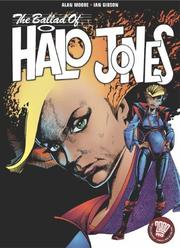
Moore's unfinished 2000 AD serial about an ordinary woman leaving a future welfare estate, and the best thing in his early British work. Short, and a deliberate step down in scale before the two enormous books that follow.
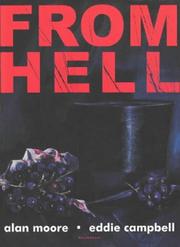
The Whitechapel murders as an argument about the birth of the twentieth century, drawn in scratchy black and white by Eddie Campbell, with appendices nearly as long as the story. It is slow, difficult and genuinely brilliant — and it is the book that ruins Moore for readers who attempt it too early.
The Prose
IntermediateFollow him out of comics entirely, into the two novels about the single square mile of Northampton he has written about all his life.
▸ Study plan for this stage
Pace: Three to four months, and be realistic about it. Voice of the Fire is 320 pages but its first chapter is written in an invented Neolithic idiom with no glossary — expect that chapter alone to take several days, and expect it to feel like decoding rather than reading, which is exactly what Moore inte
- One square mile as a subject: both books are about the Boroughs district of Northampton, and both argue that place, not time, is the organising unit of a life
- Voice of the Fire's structure — twelve narrators across six thousand years, each in a distinct idiom, connected by objects and locations rather than descent
- Eternalism, the claim that all moments exist simultaneously, which is Jerusalem's governing metaphysics and the reason its chapters can be read as coexisting rather than sequential
- Difficulty as a designed threshold: the opening chapter of Voice of the Fire and the Lucia Joyce chapter of Jerusalem both exist to filter and to slow the reader down
- Moore writing himself and his own family into the fiction, and the resulting problem of where memoir stops
- Prose after comics — Moore without an artist has to do all the visual work in sentences, and the density of both books is partly that
- The Boroughs as a real, documented place undergoing real slum clearance, which is the political grievance underneath the metaphysics
- How much of the first chapter of Voice of the Fire did you understand on first pass, and what recovered the meaning — vocabulary, syntax, or simply the second chapter looking back at it?
- What connects the twelve narrators of Voice of the Fire, given that they are not related and do not share a period?
- What does eternalism commit Jerusalem to structurally — which conventional novelistic effects does it give up?
- Why write the Lucia Joyce chapter in neologisms rather than describing her condition, and did the choice earn its cost across those pages?
- Both books are about one square mile. What is Moore's argument for that being enough, and does Jerusalem make the case that Voice of the Fire only asserts?
- Read the first chapter of Voice of the Fire aloud. The idiom is largely phonetic and a great deal of it becomes intelligible spoken that would not on the page — this is the single most useful thing you can do with the book.
- Keep a location index while reading Voice of the Fire: for each of the twelve narratives note the specific site in or around Northampton. The recurrences are the novel's actual plot.
- Before starting Jerusalem, read its opening chapter and its final chapter. Moore's structure is circular and knowing where it lands makes the 1,100 pages between them navigable rather than merely long.
- Take four pages of the Lucia Joyce chapter and transcribe them into plain English. It is slow and it is the only way to establish whether the neologisms encode meaning or gesture at it — form your own verdict rather than accepting either the book's admirers or its detractors.
- After finishing both, go back to From Hell's chapter four. The psychogeographic method is identical; write a paragraph on what changes when Moore applies it to his own street instead of somebody else's crime.
Next up: This is the end of the path — you have read Moore from the most accessible book he wrote to the least, and you now have the equipment to judge the late work on its own terms rather than on Watchmen's.

Twelve linked narratives set in one place across six thousand years, opening with a chapter written in an invented Neolithic idiom that defeats a lot of readers. Short enough to survive, and the necessary rehearsal for the next book.

Around 1,200 pages on the Boroughs district of Northampton, eternity, and his own family, including a chapter written entirely in Lucia Joyce's neologisms. The final destination of this path and not a place to start; read it only after Voice of the Fire has told you what you are in for.