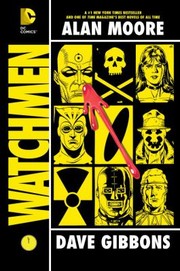
Start with Watchmen. It is the most formally complete thing Moore made, it is self-contained, and it trains you in the reading habits the rest of his work assumes — dense page architecture, recurring visual motifs, text pieces between chapters that are load-bearing rather than decorative. Twelve issues, one ending, no continuity homework.
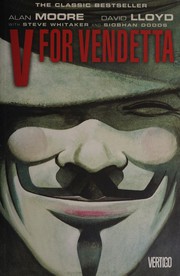
The obvious alternative is V for Vendetta, and it is the weaker choice for a first book even though it is the earlier one. It was serialised in two halves years apart, for two different publishers, and the seams show in the pacing; its politics are also blunter than Watchmen's, which is part of why it has had a louder afterlife and a thinner one. Read it second. The other tempting alternative — start chronologically with the British work — puts you in the middle of the 2000 AD and Warrior magazines of the early 1980s, which is interesting once you already care.
The DC years
Swamp Thing Vol. 1, Saga of the Swamp Thing book two and Saga of the Swamp Thing Book Three are where Moore first showed what he could do with a character nobody wanted, and the famous second issue of his run — which reveals that the monster is not a man who became a plant but a plant that believes it was a man — is still the cleanest example of his method. The run continues past the third volume; only these three are in our catalogue.
Batman Noir the Killing Joke is here too, and it needs a caveat. It is short, superbly drawn by Brian Bolland, enormously influential, and Moore himself has repeatedly said he does not think it is good and regrets the cruelty of what it does to Barbara Gordon. Read it knowing that the author agrees with its critics.
Miracleman, Book One predates Watchmen and is arguably the first place the deconstructed-superhero idea appears fully formed. Rights disputes kept it out of print for decades, which is why it is less famous than it should be. Only the first book is in our catalogue.
The America's Best Comics line
By the late 1990s Moore was writing an entire imprint. Top 10 is the accessible one — a police procedural in a city where everybody has powers, funny and humane, and the best entry point to this phase. The League of Extraordinary Gentlemen - Volume One is a Victorian adventure assembled from other people's characters and is far better than the film adapted from it. Promethea (Book 1) begins as a superhero comic and turns, over its later volumes, into an illustrated course in ceremonial magic and the Kabbalah; readers split hard on whether that transformation is the point or the problem. Book one is still a comic.
The British work
The Ballad of Halo Jones is a 2000 AD serial about an ordinary young woman escaping a future welfare estate, and it is the warmest thing Moore ever wrote. It is also unfinished — three books exist of a projected nine, and it stops rather than ends.
From Hell
From hell is the big one: a Jack the Ripper novel of nearly six hundred pages, drawn in scratchy black and white by Eddie Campbell, with appendices as long as some graphic novels. It is a book about the nineteenth century producing the twentieth, and the murders are depicted in clinical, unbearable detail. It is not a starting point and it is not a book to read quickly.
The prose
Voice of the fire, Moore's first novel, opens with a chapter written in an invented Neolithic dialect that many readers cannot get through; the eleven chapters after it are conventional English and reward the effort. Jerusalem runs past a thousand pages, covers half a square mile of Northampton across several centuries, and includes a chapter written entirely in Joycean portmanteau. Both are for readers who already want more Moore, not for anyone deciding whether they do.
Not on this list
Several major works are absent from our catalogue, including Lost Girls, Providence, Neonomicon, Supreme, Tom Strong and his short DC pieces such as For the Man Who Has Everything. More comics reading is on Discover.
Follow the full ordered path here: Alan Moore Reading Order: Where to Start and What Order to Read His Comics In.