Swim better as an adult
This curriculum takes an adult beginner from zero water confidence to efficient, relaxed freestyle technique. Each stage builds on the last: first establishing comfort and safety in the water, then layering in stroke mechanics, then refining efficiency through drills and feel, and finally deepening understanding through the science and mindset of adult athletic development.
Water Confidence & First Strokes
BeginnerOvercome fear of the water, learn to float, breathe safely, and take first coordinated strokes without panic.
▸ Study plan for this stage
Pace: 3–4 weeks, ~15–20 pages/day; pair each reading session with a short pool visit (30–45 min) the same day or the day after to immediately apply what you read
- Fear as a learned response: Dash explains that fear of water is not a character flaw but a conditioned reaction that can be systematically unlearned through gradual, self-paced exposure
- Self-directed progression: The book's core philosophy is that the learner — not a coach or clock — controls the pace; rushing any step resets trust and confidence
- Water's buoyancy and support: Understanding that water physically holds the body up when relaxed, countering the instinct that one must 'fight' to stay afloat
- The relaxation-flotation link: Muscular tension causes sinking; Dash repeatedly returns to the idea that letting go of tension is the single most important physical skill at this stage
- Breath management and the exhale: Learning to exhale slowly underwater removes the panic reflex; controlled breathing is framed as the gateway to all future technique
- Incremental water entry: Dash structures exercises so the learner enters the water in tiny, celebrated steps — feet, ankles, knees — building positive associations before full immersion
- Positive self-talk and internal narrative: Recognizing and rewriting the internal 'danger' story the brain tells when near water
- First coordinated movement: Once floating and breathing are stable, gentle arm and leg movements are introduced as natural extensions of a calm body — not as athletic technique
- According to Dash, what is the root cause of adult water fear, and why is it important to distinguish it from a physical inability to swim?
- What does Dash identify as the single biggest physical mistake fearful swimmers make, and how does correcting it change what the body does in the water?
- Describe the incremental water-entry sequence Dash recommends. Why does she insist on not skipping steps even when a step feels 'too easy'?
- How does Dash connect breath control — specifically the exhale — to reducing the panic reflex? What happens physiologically when you hold your breath underwater?
- What role does self-pacing play in Dash's method, and how should a learner respond if they feel anxiety returning during a pool session?
- After completing the book, how would you define a 'successful' first pool session using Dash's criteria — and why does that definition differ from a traditional swim-lesson definition of success?
- Bathtub/basin exhale drill (Week 1): Fill a basin with water, submerge your face, and practice slow, steady exhales through your nose and mouth. Do 5 rounds per day to desensitize the breath-holding panic reflex before you ever enter a pool.
- Incremental pool entry log (Week 1–2): Following Dash's step-by-step entry sequence, enter the pool one body part at a time. Keep a short journal after each visit: which step you reached, how it felt, and one thing that surprised you. Do not advance a step until the current one feels genuinely calm.
- Wall float with support (Week 2): Stand in chest-deep water with your back against the pool wall. Let your feet rise off the bottom for 3–5 seconds while holding the gutter. Gradually extend the float time, focusing on releasing tension in your hips and legs rather than kicking to stay up.
- Bubble blowing progression (Week 2–3): (a) Blow bubbles at the surface. (b) Submerge mouth only and blow. (c) Submerge nose and mouth. (d) Full face submersion with a slow 5-second exhale. Repeat each sub-step until it feels routine before moving on.
- Relaxed back float with a partner or noodle (Week 3): Use a pool noodle under your lower back or have a trusted partner place a hand beneath you. Practice releasing your neck, shoulders, and hips one at a time. Notice how tension in any one area causes the body to sink, reinforcing Dash's relaxation-flotation link.
- First stroke integration (Week 3–4): Once floating is calm, add gentle, slow arm sweeps (no speed, no splash) while kicking softly. The goal is not distance but continuity — keep breathing rhythmically for at least 10 seconds of movement. Reflect in your journal on how this felt compared to your Week 1 entry.
Next up: Completing "Conquer Your Fear of Water" gives you a calm, buoyant, breathing body in the water — the essential blank canvas onto which the next stage will paint structured freestyle and backstroke technique with confidence rather than panic.

Written specifically for adult non-swimmers with water anxiety, this book addresses the psychological and physical barriers to floating and breathing first — the exact starting point for a true beginner.
Freestyle Foundations
BeginnerUnderstand and practice the core mechanics of freestyle — body position, kick, arm pull, and side breathing — well enough to swim a full lap without stopping.
▸ Study plan for this stage
Pace: 3–4 weeks, ~20–25 pages/day; read each chapter once for comprehension, then re-read the technique-focused sections poolside before each practice session
- Horizontal body alignment — keeping the body flat and high in the water to minimize drag, as Taormina frames it through the lens of elite swimmer biomechanics
- The 'vessel' concept — treating the body as a streamlined hull whose position determines everything else downstream
- Freestyle arm pull mechanics — the high-elbow catch, the underwater pull path (Early Vertical Forearm / EVF), and how Taormina breaks down each phase (entry, catch, pull, push, exit)
- Two-beat vs. six-beat kick — understanding the role of the kick in balance and propulsion rather than as the primary engine, and when each pattern is appropriate for beginners
- Hip and shoulder rotation — how controlled rotation around the body's long axis powers the arm stroke and reduces muscular strain
- Side breathing technique — the 'bow-wave trough' breathing position, head rotation (not lifting), and timing the breath to the arm cycle
- Stroke rate vs. distance per stroke (DPS) — Taormina's emphasis on maximizing DPS as the foundation before adding speed
- Self-diagnosis using video/mirror checkpoints — Taormina's method of comparing your own stroke to the elite model photos and drills in the book
- According to Taormina, what is the single most important body-position principle that elite freestylers share, and how does a beginner achieve it from the first push-off?
- What is the Early Vertical Forearm (EVF) catch, why does Taormina consider it the 'engine room' of freestyle propulsion, and what common beginner mistake does it replace?
- How does hip and shoulder rotation connect the kick to the arm pull — what does Taormina say happens to stroke power when rotation is absent?
- Describe the correct head position and timing for side breathing as explained in Swim Speed Secrets. What cue does Taormina give to avoid lifting the head?
- What is the difference between a two-beat and a six-beat kick, and which does Taormina recommend a beginner focus on first and why?
- How does Taormina define 'distance per stroke,' and what drill or checkpoint does she provide to help a swimmer measure and improve it?
- Body-position float drill: Push off the wall in a tight streamline, close your eyes, and hold the position for 5 seconds — use Taormina's 'vessel' checklist (ears submerged, hips up, toes near surface) to self-assess before each lap
- Catch and EVF drill: Stand in shallow water or use a resistance band on land to rehearse the high-elbow catch position described in Swim Speed Secrets; film your arm from the front and compare it side-by-side to the elite photos in the book
- Kick-only laps: Swim 4×25m with a kickboard focusing solely on ankle flexibility and a compact kick originating from the hip — count how many kicks per length and note whether your hips stay level
- Rotation drill ('side-kick' or 'side-glide'): Kick on your side with the lower arm extended and the upper arm on your hip for one full length, then switch sides — this isolates the hip-rotation axis Taormina emphasizes
- Breathing timing drill: Swim 4×25m focusing only on the breath — rotate the head so one goggle stays submerged, inhale in the bow-wave trough, and return the face to the water before the recovering arm re-enters; count strokes between breaths
- Full-lap integration swim: Swim 1×50m (or 2×25m) putting all elements together — count your strokes per length at the start of the stage and again at the end to track DPS improvement as Taormina prescribes
Next up: Mastering the foundational mechanics in Swim Speed Secrets — especially the EVF catch and efficient body rotation — gives the reader the biomechanical vocabulary and muscle memory needed to tackle more advanced topics such as open-water sighting, flip turns, or structured endurance training in the next stage of the curriculum.

An Olympic swimmer breaks down freestyle mechanics with exceptional clarity and photography, making it the ideal first dedicated technique book once a beginner can stay afloat.
Covers all four strokes with drill progressions and training plans; reading it here reinforces freestyle fundamentals and introduces the vocabulary needed for more advanced coaching texts.
Efficiency & the Total Immersion Method
IntermediateShift focus from 'surviving' laps to swimming with minimal drag and maximum propulsion — the hallmark of an efficient adult freestyle swimmer.
▸ Study plan for this stage
Pace: 6–8 weeks total: Weeks 1–4 cover "Total Immersion" (~20–25 pages/day, including re-reading key drills sections); Weeks 5–8 cover "Extraordinary Swimming for Every Body" (~15–20 pages/day with slower pacing to absorb the self-coaching and customization frameworks). Budget 2–3 pool sessions per week a
- Drag reduction as the primary lever of speed — Laughlin's core argument in Total Immersion that eliminating drag yields more speed gains than increasing stroke power
- The 'vessel before engine' philosophy — shaping a sleek, balanced body position in the water before worrying about arm or kick mechanics
- Spearing and front-quadrant timing — keeping one arm extended forward while the other completes its stroke, maintaining forward momentum and reducing dead spots
- Hip-driven freestyle — using torso rotation powered from the hips/core as the engine of the stroke, not the arms alone
- The 'sweet spot' balance drill — lying on your side in the water with one arm extended, finding neutral buoyancy and eliminating a sinking lower body
- Stroke Length (SL) over Stroke Rate (SR) — counting Strokes Per Length (SPL) as the primary metric of efficiency, and training to reduce it progressively
- Customization and self-coaching from Extraordinary Swimming — Laughlin's framework for diagnosing your own inefficiencies and tailoring drills to your body type, age, and fitness level
- The 'kaizen' mindset for adult learners — continuous incremental improvement through mindful, deliberate practice rather than yardage accumulation
- According to Laughlin in Total Immersion, why does reducing drag produce greater speed improvements than increasing propulsive force for most adult recreational swimmers?
- What is front-quadrant timing, and how does it differ from the 'catch-up' stroke? Why does Total Immersion favor it?
- Describe the 'sweet spot' drill: what body position does it train, and which inefficiency is it specifically designed to correct?
- In Extraordinary Swimming for Every Body, how does Laughlin suggest an adult swimmer diagnose their own stroke faults without a coach present?
- What is SPL (Strokes Per Length), and how does Laughlin recommend using it as a feedback tool during pool practice?
- How does Extraordinary Swimming for Every Body adapt the Total Immersion framework for swimmers with different body types or athletic backgrounds — what is the core customization principle?
- SPL Baseline Test: Swim 4×25m at a comfortable pace, counting every stroke (each hand entry = 1). Record your average SPL. Return to this number weekly throughout the stage to track efficiency gains.
- Sweet Spot Drill (from Total Immersion): Practice lying on your side in the water — bottom arm extended, head resting on shoulder, top arm along your side — and flutter-kicking gently for 25m each side. Focus on a relaxed, horizontal body with ears submerged. Do this at the start of every pool session.
- Spear-and-Rotate Drill: From the sweet spot position, practice the 'mail slot' entry — spearing your recovering arm forward as you rotate to the other side. Do 4×25m focusing solely on the hand entry angle and hip rotation timing, not speed.
- Stroke-Count Reduction Challenge (inspired by Extraordinary Swimming): Pick a target SPL that is 2 strokes fewer than your baseline. Swim 10×25m trying to hit that target using only technique adjustments (longer glide, better rotation) — no slowing down excessively. Log what worked.
- Self-Diagnosis Video Review: Record yourself swimming one length from an underwater side angle (use a waterproof phone mount or ask a friend). Watch it against Laughlin's checklist from Extraordinary Swimming for Every Body — note one drag fault and one timing fault to work on next session.
- Mindful Yardage Session: Swim a continuous 400m (or 8×50m) at a pace where you can maintain your target SPL throughout. The rule: if SPL rises, slow down. This trains the habit of prioritizing form over pace — the central practice philosophy of both books.
Next up: Mastering the efficiency-first mindset and low-SPL baseline from these two books gives the reader a stable, drag-reduced stroke to build upon, making the next stage — which introduces structured endurance training and pacing strategy — far more productive, since fitness gains compound only when the underlying technique is sound.
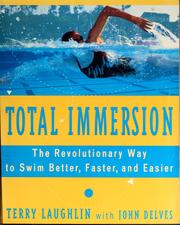
The canonical adult-swimmer efficiency book; Laughlin's fish-like swimming philosophy and drill sequences are the single most influential framework for transforming effortful splashing into smooth, low-drag freestyle.

A follow-up that deepens the Total Immersion concepts with more drills and self-coaching tools, best read after the original to consolidate and troubleshoot specific weaknesses.
Feel, Drills & Stroke Refinement
IntermediateDevelop proprioceptive 'feel for the water,' master targeted drills, and begin self-correcting technique without a coach on deck.
▸ Study plan for this stage
Pace: 6–8 weeks total: Weeks 1–4 on "The Swimming Drill Book" (~20–25 pages/day, including pool sessions after each chapter); Weeks 5–8 on "Swim Speed Workouts for Swimmers and Triathletes" (~15–20 pages/day, pairing each workout section with an actual pool practice).
- Proprioceptive awareness ('feel for the water'): learning to sense pressure, resistance, and body position without visual feedback, as emphasized throughout Guzman's drill progressions
- Drill-to-stroke transfer: Guzman's core principle that every isolated drill must be consciously linked back to whole-stroke swimming within the same practice set
- Stroke phase isolation: breaking freestyle, backstroke, breaststroke, and butterfly into entry, pull, kick, and recovery phases and drilling each independently before reassembling
- Body rotation and balance: understanding how hip-driven rotation generates power and reduces drag, a recurring mechanical theme in Guzman's freestyle and backstroke drills
- The 'catch' and early vertical forearm (EVF): Taormina's central technical concept — anchoring the hand and forearm early in the pull to maximize propulsive surface area
- Self-correction feedback loops: using Taormina's technique cues and Guzman's drill checkpoints to identify and fix errors mid-swim without external coaching
- Structured drill integration into workouts: Taormina's method of embedding short drill sets inside speed-focused workouts so technique is reinforced under mild fatigue
- Pacing and perceived effort calibration: using Taormina's workout zones and effort descriptors to develop internal rate-of-perceived-exertion (RPE) awareness across different intensities
- After working through Guzman's drill sequences, can you explain the purpose of at least three specific drills (e.g., Catch-Up, Fingertip Drag, Fist Drill) and describe exactly which phase of the stroke each one isolates and corrects?
- How does Guzman recommend transitioning from a drill set back to full-stroke swimming, and why is that transition moment critical for ingraining technique?
- According to Taormina, what is the early vertical forearm (EVF), how does it differ from a straight-arm pull, and what common mistake causes swimmers to lose the catch before propulsion begins?
- How does Taormina structure her workouts to develop technique under fatigue, and what does that tell you about the difference between drilling in isolation versus drilling inside a training set?
- What are the key proprioceptive checkpoints — drawn from both books — that you can mentally scan during a swim to self-assess body position, pull mechanics, and kick timing without stopping?
- How would you design a single 45-minute pool session that incorporates Guzman's drill progressions for one stroke phase and at least one of Taormina's structured workout sets, and what is your rationale for the ordering?
- Drill isolation journal (Guzman): After each pool session using a Guzman drill chapter, write 3–5 sentences describing what you physically felt — where water pressure was, where it disappeared, and what changed when you returned to full stroke. Build a personal 'feel dictionary' over the 4 weeks.
- Video self-check (Guzman + Taormina): Record yourself from underwater (side and front angles) performing a full-stroke 25m before and after a drill set. Compare the footage against Guzman's technique checkpoints and Taormina's EVF description; note one concrete change per session.
- Fist Drill → Open Hand contrast sets (Guzman): Swim 4×25m with closed fists, then 4×25m open hand immediately after. Focus on the sensation of 'finding' the catch again. Repeat weekly and log whether the contrast feeling sharpens over time.
- EVF catch drill progression (Taormina): Using Taormina's catch cues, practice 'front-quadrant' swimming with a deliberate pause at full extension to set the forearm before pulling. Do this as 6×50m at easy pace, then attempt to carry the same catch feel into a 200m time trial.
- Self-correction checklist swim (both books): Write a 5-point mental checklist (one cue per stroke phase) drawn from both books. Swim a 400m continuously, mentally scanning the checklist every 50m. After the swim, score each cue 1–3 and identify the weakest link to drill next session.
- Workout integration test (Taormina): Select one complete workout from Taormina's book and execute it as written. Afterward, annotate your copy of the workout: circle where technique broke down under fatigue, and prescribe a specific Guzman drill to address each breakdown point.
Next up: Mastering Guzman's drill vocabulary and Taormina's technique-under-fatigue framework gives the swimmer a reliable self-correction toolkit, which is the essential prerequisite for the next stage — applying consistent, efficient mechanics to structured training loads focused on building speed and endurance.
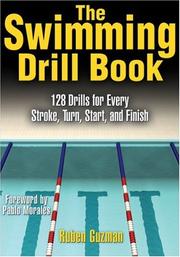
The most comprehensive drill reference available, organized by stroke phase; after absorbing the TI philosophy, this book gives swimmers a concrete library of exercises to fix specific technique flaws.

Translates technique knowledge into structured pool sessions with measurable benchmarks, bridging the gap between understanding good form and actually ingraining it through deliberate practice.
The Science & Psychology of Adult Athletic Mastery
ExpertUnderstand the neuroscience of skill acquisition and adult learning so you can continue improving independently, set smart goals, and sustain motivation long-term.
▸ Study plan for this stage
Pace: 5–6 weeks total: Weeks 1–3 cover "The Talent Code" (~20–25 pages/day, including reflection time); Weeks 4–6 cover "Mastery" (~15–20 pages/day, shorter but denser — journal after each session). Read both books with your swim training log open beside you.
- Myelin & Deep Practice (The Talent Code): Skill is literally built by wrapping neural circuits in myelin through slow, targeted, mistake-rich repetition — directly applicable to drilling stroke mechanics in the pool.
- The Three Rules of Deep Practice (The Talent Code): Chunk it up (break strokes into micro-segments), repeat it (high-repetition with full attention), and learn to feel it (proprioceptive awareness over speed).
- Ignition & Motivation (The Talent Code): Coyle's concept of 'ignition' — the emotional spark that sustains long-term practice — and how adult swimmers can deliberately cultivate and re-ignite their own motivation.
- Master Coaching (The Talent Code): What distinguishes great coaches (precise, targeted feedback; economy of words; deep observation) and how to self-coach using the same principles when training alone.
- The Five Stages of Mastery (Mastery): Leonard's arc from Beginner → Advanced Beginner → Competent → Proficient → Master, and recognizing which stage you currently occupy as an adult swimmer.
- The Plateau as a Feature, Not a Bug (Mastery): Leonard's central argument that the plateau is the true home of mastery — learning to love and sustain practice during flat periods rather than chasing constant peaks.
- The Three Paths That Lead Away from Mastery (Mastery): The Dabbler, the Obsessive, and the Hacker — recognizing these anti-patterns in your own swimming history and correcting course.
- Energy & Homeostasis (Mastery): Leonard's framework for understanding how the body and mind resist change (homeostasis) and practical strategies to push through resistance without burning out.
- According to Coyle, what is myelin and exactly how does targeted, error-focused repetition cause it to grow — and what does this mean for how you should structure a swim drill session?
- What is the difference between 'practice' and 'deep practice' as defined in The Talent Code, and can you give two concrete examples of each from your own swimming?
- Leonard identifies three character types who fail to reach mastery (the Dabbler, the Obsessive, the Hacker). Which pattern have you most exhibited in your swimming journey, and what specific behavior will you change?
- How does Leonard define a 'plateau' and why does he argue it should be embraced rather than escaped? How does this reframe the frustrating periods you've experienced in your stroke development?
- How do Coyle's concept of 'ignition' and Leonard's concept of sustaining energy through homeostasis complement each other as a unified theory of long-term athletic motivation?
- If you were to design a 4-week deep practice block for one specific weakness in your swimming technique (e.g., catch mechanics, flip turns, bilateral breathing), what would it look like using principles from both books?
- Deep Practice Drill Log: For every pool session during these 6 weeks, identify ONE micro-skill to isolate. Practice it at 60–70% speed, deliberately make and notice errors, and write 3 sentences afterward describing what the mistake felt like and what you adjusted — this is Coyle's deep practice made concrete.
- Myelin Mapping: Draw a simple diagram of your freestyle stroke broken into 6–8 micro-segments (entry, catch, pull, push, recovery, rotation, kick, breath). Rate each segment 1–5 for automaticity. Use this map to prioritize which segments need the most myelination-focused repetition.
- Ignition Inventory (The Talent Code): Write a one-page personal 'ignition story' — the moment(s) you felt most compelled to improve your swimming. Identify the emotional trigger. Then design one ritual (a video you watch, a phrase you repeat, a warm-up routine) that reliably re-ignites that feeling before hard sessions.
- Mastery Stage Self-Assessment (Mastery): After finishing Leonard's book, honestly place yourself on his mastery arc for three separate skills: freestyle technique, open turns, and pacing/race strategy. Write one paragraph per skill explaining your evidence and your next developmental step.
- Plateau Practice Protocol (Mastery): Deliberately schedule two 'plateau weeks' — sessions with no new drills, no PRs chased, just calm repetition of fundamentals. Journal daily on your emotional response. This trains the psychological muscle Leonard says separates masters from dabblers.
- Synthesized Goal-Setting Document: After both books, write a 90-day swimming development plan that includes: one deep-practice focus per month (Coyle), explicit plateau periods with no outcome goals (Leonard), a re-ignition ritual, and a self-coaching checklist modeled on Leonard's master-coach observation principles.
Next up: By internalizing the neuroscience of myelin-driven skill acquisition from Coyle and the psychological resilience framework from Leonard, the reader is now equipped to approach advanced technical refinement and competitive or open-water challenges not just as physical problems, but as deliberate, self-directed mastery projects — setting the foundation for whatever specialized or performance-focused

Explains myelin-based deep practice and why targeted, mistake-focused drilling (exactly what TI and Guzman prescribe) accelerates skill acquisition — giving the swimmer a scientific framework for their own continued improvement.
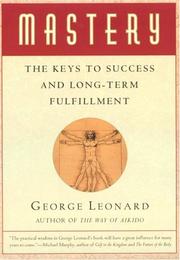
A short, powerful book on the long-game mindset of adult skill mastery; read last to reframe plateaus as normal and sustain the patient, consistent practice that efficient swimming demands.
Discussion
Keep reading
Paths that share books, cover the same subject, or open a related topic.