A Song of Ice and Fire Reading Order and Guide
This curriculum guides you through George R.R. Martin's A Song of Ice and Fire universe in a carefully sequenced order: starting with the five main novels to build your command of the world and its characters, then deepening your understanding with the Dunk and Egg prequel novellas, and finally enriching your mastery with the official world-building reference book. Each stage builds the lore vocabulary and character intuition needed for the next, ensuring no reader feels lost.
The Main Saga — Act One
BeginnerEstablish a firm grasp of the core characters, the great houses, the political landscape of Westeros, and Martin's narrative style before the story's complexity multiplies.
▸ Study plan for this stage
Pace: 12–16 weeks total: ~4–5 weeks per book at roughly 25–35 pages/day. A Game of Thrones (~694 pages): weeks 1–5; A Clash of Kings (~768 pages): weeks 6–10; A Storm of Swords (~973 pages): weeks 11–16. Allow extra buffer on A Storm of Swords given its length and density. Weekend "catch-up + reflect" ses
- The Great Houses and their words, sigils, seats, and allegiances — especially Stark, Lannister, Baratheon, Targaryen, Tully, Arryn, and Greyjoy
- Martin's multi-POV narrative structure: how each chapter is anchored to a single character's perspective and why that creates dramatic irony and unreliable information
- The Iron Throne and the political mechanics of Westeros — the Small Council, the Hand of the King, feudal loyalty, and the cost of honor in a corrupt system (embodied by Ned Stark's arc in A Game of Thrones)
- The War of the Five Kings: its causes, the competing claimants (Joffrey, Stannis, Renly, Robb, Balon), and how alliances shift across A Clash of Kings and A Storm of Swords
- The theme of honor vs. survival — illustrated through contrasting characters such as Ned, Robb, Tyrion, Cersei, and Jaime — and how Martin subverts traditional fantasy heroism
- The Wall and the Night's Watch: their history, purpose, and the escalating supernatural threat from beyond — Jon Snow's arc as the bridge between the political south and the existential north
- Key turning-point events that reshape the entire story: the execution of Ned Stark, the Battle of the Blackwater, the Red Wedding, and the trial and escape of Tyrion Lannister
- Martin's use of foreshadowing, prophecy, and dramatic irony — e.g., Daenerys's visions in the House of the Undying, Melisandre's fires, and the recurring motif of 'words are wind'
- By the end of A Game of Thrones, why does Ned Stark's rigid sense of honor lead directly to his downfall, and what does Martin seem to be saying about the relationship between virtue and power?
- How does the War of the Five Kings begin, and what are the specific grievances, claims, and motivations of each of the five kings as depicted across A Clash of Kings?
- How does the Battle of the Blackwater (A Clash of Kings) function as a turning point — politically, militarily, and for the character arcs of Tyrion, Cersei, and Stannis?
- What makes the Red Wedding (A Storm of Swords) narratively shocking yet, in retrospect, carefully foreshadowed? Identify at least three textual signals Martin plants beforehand.
- How does Jon Snow's journey from Winterfell to the Night's Watch to beyond the Wall develop his identity, and what does his arc reveal about duty, belonging, and the larger threat to Westeros?
- Trace Jaime Lannister's transformation across A Storm of Swords: what events change him, and how does Martin use the shift in his POV chapters to reframe everything the reader thought they knew about him from A Game of Thrones?
- House Map Exercise: After finishing A Game of Thrones, draw a hand-made diagram of the major houses, their geographic seats (the North, the Westerlands, the Stormlands, etc.), and their allegiances at the start of the war. Update it with colored annotations as alliances shift through A Clash of Kings and A Storm of Swords.
- POV Journal: For each book, pick two POV characters on opposing sides of a conflict (e.g., Sansa and Tyrion in King's Landing). After every 100 pages, write 3–5 sentences per character summarizing what they know, what they don't know, and what the reader knows that they don't — to actively practice tracking dramatic irony.
- Character Motivation Tracker: Create a simple table with columns: Character | Goal | Obstacle | Method | Outcome. Fill it in for at least six major characters (Ned, Robb, Tyrion, Cersei, Daenerys, Jon) at the end of each book to see how motivations evolve or are extinguished.
- Red Wedding Reread: After completing A Storm of Swords, go back and reread the Catelyn and Robb chapters from the Twins sequence, then trace backward through 5–6 earlier chapters to find and annotate every foreshadowing detail you missed on first read. Write a one-page reflection on how Martin constructed the dramatic irony.
- Thematic Essay (short-form): Write a 400–600 word response to the prompt: 'Martin has said he wanted to write a fantasy that took war seriously. Using specific scenes from all three books, explain how A Game of Thrones, A Clash of Kings, and A Storm of Swords portray the human cost of war differently from traditional epic fantasy.'
- Timeline Construction: Build a single chronological timeline of major political and military events across all three books, noting which POV character 'witnesses' each event. This will prepare you for the non-linear complexity ahead and reveal how much is happening simultaneously off the page.
Next up: Completing Act One gives the reader a stable mental map of Westeros's power structures and surviving characters — the essential foundation for navigating the dramatically expanded geography, new POV voices (including Dorne and the Iron Islands), and the fracturing political landscape introduced in the later books of the saga.
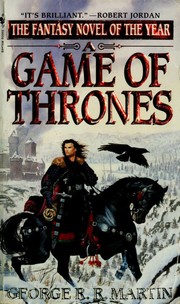
The entry point to the entire saga; it introduces the Stark, Lannister, and Targaryen storylines and teaches you how Martin's multi-POV structure works. Everything else in the curriculum assumes you have read this first.

Expands the world dramatically with the War of the Five Kings, new POV characters, and the first deep look at Essos. Reading it immediately after the first book keeps the momentum and political threads clear.

Widely considered the saga's peak; it pays off every thread built in the first two books and raises the stakes to a new level. You need the full context of books one and two to feel its impact.
The Main Saga — Act Two
IntermediateNavigate the saga's most complex and sprawling volumes, tracking a greatly expanded cast across multiple continents, and reach the current end of the published story.
▸ Study plan for this stage
Pace: 8–10 weeks total: ~4–5 weeks per book at roughly 25–35 pages/day. A Feast for Crows (~1,060 pages) and A Dance with Dragons (~1,125 pages) are dense and reward slower, more deliberate reading. Aim for 5 reading days per week, leaving 2 days for review, mapping, and reflection. Consider reading the t
- Narrative bifurcation: A Feast for Crows and A Dance with Dragons cover the same time period from different POV characters across different continents, making them two halves of one story rather than a strict sequence.
- Proliferation of POV characters: Martin dramatically expands the cast with new perspectives (Cersei, Jaime, Brienne, Samwell, Areo Hotah, Arys Oakheart, Aeron Greyjoy, Victarion Greyjoy, Asha Greyjoy in AFFC; Jon, Daenerys, Tyrion, Davos, Theon/Reek, Quentyn Martell, Barristan Selmy in ADWD), requir
- The Iron Islands and Dorne as political theaters: AFFC introduces the Kingsmoot succession crisis in the Iron Islands and the Martell revenge plot in Dorne, both of which reshape the broader political landscape of Westeros.
- Cersei's arc and the consequences of power: AFFC centers heavily on Cersei's paranoid, self-destructive regency, illustrating how unchecked power, mistrust, and poor counsel lead to catastrophic political collapse, culminating in her arrest by the Faith Militant.
- Essos and the limits of idealism: ADWD follows Daenerys's struggle to rule Meereen, exploring the tension between abolishing slavery and maintaining political stability, and the gap between conquest and governance.
- Jon Snow's leadership at the Wall: ADWD traces Jon's increasingly difficult command of the Night's Watch — balancing the wildling alliance, the threat of the Others, and the political pressures of Stannis and the lords of Westeros — ending in his assassination.
- Tyrion's exile and transformation: ADWD tracks Tyrion's journey from King's Landing fugitive to Essos wanderer to (reluctant) player in Meereenese politics, deepening his cynicism while testing his survival instincts.
- The 'unreliable geography' of the story's end-state: By the close of ADWD, major characters are scattered, story threads are deliberately unresolved, and the reader must synthesize information across both books to understand the true state of the world heading into the unwritten The Winds of Winter.
- How does the structural decision to split the narrative between AFFC and ADWD (same timeline, different characters) affect your understanding of events — what information did you have to retroactively revise once you began ADWD?
- Trace Cersei Lannister's arc across AFFC: what specific decisions accelerate her downfall, and how does Martin use her POV chapters to create dramatic irony for the reader?
- What is the significance of the Kingsmoot in AFFC, and how do the competing claims of Euron, Victarion, and Asha reflect broader themes about legitimacy and power in the series?
- By the end of ADWD, what is Jon Snow's strategic vision for the Night's Watch and the war against the Others, and why does it make him enemies among his own brothers?
- How does Daenerys's experience ruling Meereen complicate or challenge the heroic narrative built around her in earlier books? What does her storyline suggest about the difference between liberation and lasting justice?
- Where are the following characters at the close of ADWD, and what unresolved threads surround each: Tyrion Lannister, Arya Stark, Bran Stark, Jaime Lannister, and Stannis Baratheon?
- Build a dual-continent character tracker: create a two-column living document (Westeros / Essos) and after every 50 pages update each POV character's location, goal, and one key development. This combats the disorientation of the split narrative.
- After finishing AFFC, write a one-page 'state of the world' summary from memory — then do the same after ADWD. Compare the two to see how your mental model of the story shifted and what ADWD retroactively clarified.
- Select one 'parallel' character pair — one from each book who occupies a thematically similar role (e.g., Cersei and Daenerys as rulers; Jon and Victarion as commanders) — and write a 300–500 word comparative analysis of how Martin uses their POV chapters differently.
- Map the Meereenese political factions in ADWD (the Sons of the Harpy, the Yunkai'i, the freedmen, Daenerys's court) on a simple diagram, noting each group's goals and how Daenerys's decisions affect each. Update the diagram at key plot turning points.
- Choose any chapter in either book narrated by a character you found least compelling and re-read it after finishing the full stage. Write a short reflection on whether your appreciation of that chapter changed with hindsight, and why Martin may have included that perspective.
- Create a 'cliffhanger log': each time a major POV chapter ends on an unresolved note (e.g., Jon's final chapter, Jaime's disappearance, Brienne's reappearance), write one sentence predicting the resolution. Revisit your predictions at the end of ADWD to assess how Martin manages suspense across hundreds of pages.
Next up: Completing AFFC and ADWD leaves every major storyline at a deliberate, unresolved precipice — making this the ideal moment to transition into supplementary and companion material (such as The World of Ice and Fire or the Dunk & Egg novellas) that deepens the lore, history, and foreshadowing embedded in the saga, while the reader awaits The Winds of Winter.
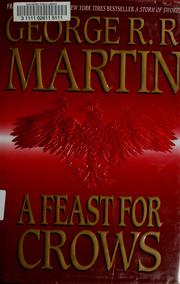
Shifts focus to Cersei, Jaime, Brienne, and the Iron Islands; its slower, political tone is best appreciated after the catharsis of A Storm of Swords. It and the next book are set concurrently, so read this one first.
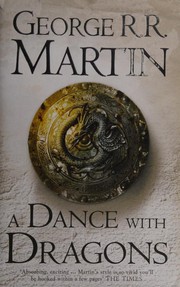
Runs parallel to A Feast for Crows and then continues the story beyond it; reading it second lets you see how the two halves of the world reconnect and sets up all unresolved threads.
The Dunk and Egg Novellas
IntermediateExplore Westeros roughly 90 years before the main saga through the eyes of hedge knight Ser Duncan the Tall and young Aegon Targaryen, deepening your understanding of house histories and the seeds of the Dance of Dragons' aftermath.
▸ Study plan for this stage
Pace: 3 weeks, roughly 40–60 pages per sitting, 3–4 sittings per week — read one novella per week, allowing time mid-week for reflection and note-taking before moving to the next
- The hedge knight's place in Westerosi society — Ser Duncan the Tall as a lens into the lives of smallfolk and low-born knights, contrasting sharply with the highborn lords of the main saga
- The Targaryen succession crisis and the aftermath of the Dance of the Dragons — understanding how Aegon V ('Egg') fits into the contested Targaryen lineage and why the throne's legitimacy remains fragile 90 years before the War of the Five Kings
- Chivalry vs. reality — the Trial of Seven in The Hedge Knight exposes how ideals of knightly honor collide with political power and noble privilege
- House histories in miniature — The Sworn Sword deepens knowledge of House Osgrey and the Blackwoods vs. Brackens rivalry, illustrating how ancient grudges calcify into the political landscape of the main saga
- The Blackfyre Rebellions as background radiation — The Mystery Knight centers on the Second Blackfyre Rebellion conspiracy, showing how pretender claims and secret loyalties shape Westerosi politics across generations
- Egg's hidden identity and the theme of disguise and truth — Egg traveling incognito forces both characters and readers to question how identity, name, and power are intertwined in Westeros
- Foreshadowing and dramatic irony — readers who know the main saga can trace how Dunk and Egg's relationship, choices, and the people they meet plant seeds for events a century later
- World-building through the margins — the novellas reveal castles, regions (the Reach, the Riverlands), and institutions (tournaments, the Kingsguard) from a ground-level perspective unavailable in the main saga
- After reading The Hedge Knight, how does the Trial of Seven reflect the tension between knightly ideals and the unchecked power of the nobility, and what does Dunk's victory (or survival) cost him morally and socially?
- In The Sworn Sword, what does the water-rights dispute between House Osgrey and Lady Rohanne Webber reveal about how minor lords experience and perpetuate the cycle of grudges that defines Westerosi politics?
- How does The Mystery Knight use the tournament setting as a cover for political conspiracy, and what does the unmasking of the Blackfyre plot reveal about the lasting instability caused by the Dance of the Dragons?
- Across all three novellas, how does Egg's concealed Targaryen identity shape his relationship with Dunk, and what does each novella add to your understanding of who Aegon V will become as king?
- What recurring motifs — loyalty, disguise, fire, smallfolk suffering — appear across The Hedge Knight, The Sworn Sword, and The Mystery Knight, and how do they connect thematically to the main saga?
- How do the Blackfyre Rebellions, as depicted or referenced in The Mystery Knight, help explain the political paranoia and dynastic anxiety that still haunts the Targaryen rule seen in the backstory of A Song of Ice and Fire?
- Character relationship map: After each novella, draw a diagram connecting Dunk and Egg to every named character they meet, noting each character's house, motivation, and whether they reappear or have descendants in the main saga — update the map as you progress through all three books
- Dual-perspective journal: For one key scene per novella (e.g., the Trial of Seven, the confrontation at Standfast, the tournament unmasking), write a short paragraph from the POV of a smallfolk bystander — this forces you to interrogate what the 'heroic' narrative leaves out
- Blackfyre Rebellion timeline: Using only information found in The Mystery Knight and any references in the other two novellas, reconstruct a written timeline of the Targaryen succession disputes from the Dance of the Dragons through the Second Blackfyre Rebellion, noting gaps in your knowledge to research further
- Chivalry scorecard: Create a two-column table labeled 'Chivalric Ideal' and 'Westerosi Reality' and populate it with at least 10 examples drawn specifically from the three novellas, then write a one-paragraph thesis on what Martin (and Avery's adaptations) argue about the myth of knighthood
- Foreshadowing log: Keep a running list of every person, place, event, or institution in these novellas that you recognize as having significance in the main saga — note the novella, the page, and the connection, then review the full list after finishing The Mystery Knight to identify the most consequential seeds
- Comparative setting analysis: Choose one location visited across multiple novellas or one type of setting (e.g., a tournament ground, a crumbling castle) and write a short essay on how Martin uses physical spaces to reflect the social and political decay — or resilience — of Westerosi institutions
Next up: Mastering the dynastic fractures, house rivalries, and ground-level Westerosi social order established in the Dunk and Egg novellas gives the reader the historical and thematic scaffolding needed to fully appreciate the political machinations and noble house conflicts at the heart of the main saga's earlier volumes.
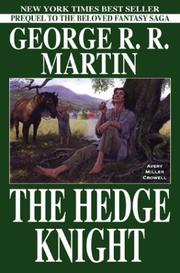
The first Dunk and Egg story; it is best read after the main saga so you can appreciate the historical references and house names you already know. It is collected in the anthology Legends.

The second novella, continuing Dunk and Egg's adventures and expanding on the Blackfyre Rebellion's aftermath — lore that resonates far more once you have finished the five main novels.

The third and most lore-dense novella, packed with Targaryen history and Blackfyre intrigue; placing it last in this stage lets the earlier two novellas build the necessary context.
Discussion
Keep reading
Paths that share books, cover the same subject, or open a related topic.