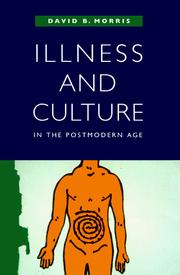
Illness and culture in the postmodern age
David B. Morris · 1998 · 345 pages
As an Amazon Associate we earn from qualifying purchases. Some book links are affiliate links; you pay the same price and we may earn a small commission.
About this book
We become ill in ways our parents and grandparents did not, with diseases unheard of and treatments undreamed of by them. Illness has changed in the postmodern era—roughly the period since World War II—as dramatically as technology, transportation, and the texture of everyday life. Exploring these changes, David B. Morris tells the fascinating story, or stories, of what goes into making the postmodern experience of illness different, perhaps unique. Even as he decries the overuse and misuse of the term "postmodern," Morris shows how brightly ideas of illness, health, and postmodernism illuminate one another in late-twentieth-century culture. Modern medicine traditionally separates disease—an objectively verified disorder—from illness—a patient's subjective experience. Postmodern medicine, Morris says, can make no such clean distinction; instead, it demands a biocultural model, situating illness at the crossroads of biology and culture. Maladies such as chronic fatigue syndrome and post-traumatic stress disorder signal our awareness that there are biocultural ways of being sick. The biocultural vision of illness not only blurs old boundaries but also offers a new and infinitely promising arena for investigating both biology and culture. In many ways Illness and Culture in the Postmodern Age leads us to understand our experience of the world differently. We become ill in ways our parents and grandparents did not, with diseases unheard of and treatments undreamed of by them. Ill
Appears in these reading paths


Medical Anthropology: The Best Books on Illness, Culture and Care, in Order
Related reading guides
Reader reviews
Ratings and notes from readers — tagged with how deep into the subject they were.
Loading reviews…